Electric vehicle pioneer Tesla (NASDAQ: TSLA) reported Q1 CY2026 results topping the market’s revenue expectations, with sales up 15.8% year on year to $22.39 billion. Its non-GAAP profit of $0.41 per share was 15.2% above analysts’ consensus estimates.
Is now the time to buy Tesla? Find out by accessing our full research report, it’s free.
Tesla (TSLA) Q1 CY2026 Highlights:
- Revenue: $22.39 billion vs analyst estimates of $22.06 billion (1.5% beat)
- EPS (non-GAAP): $0.41 vs analyst estimates of $0.36 (15.2% beat)
- Gross Margin: 21.1%, up from 16.3% in the same quarter last year
- Operating Margin: 4.2%, up from 2.1% in the same quarter last year
- Free Cash Flow Margin: 6.5%, up from 3.4% in the same quarter last year
- Market Capitalization: $1.45 trillion
Revenue Growth
Tesla proves that huge, scaled companies can still grow quickly. The company’s revenue base of $35.94 billion five years ago has more than doubled to $97.88 billion in the last year, translating into an incredible 22.2% annualized growth rate.
Over the same period, Tesla’s automotive peers Rivian, General Motors, and Ford put up annualized growth rates of 168%, 9.4%, and 9.6%, respectively. Just note that while Rivian has the most similar vehicles to Tesla, comparisons aren’t exactly apples-to-apples because it’s growing from a much smaller revenue base. 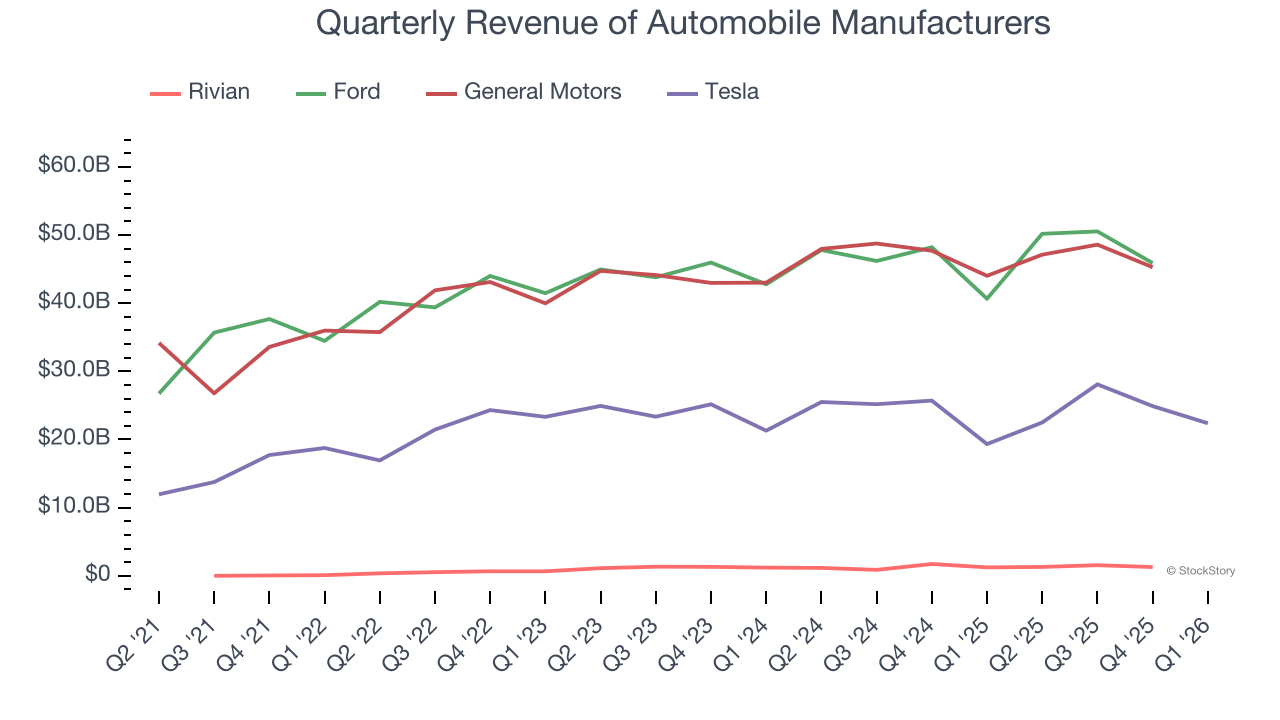
We at StockStory emphasize long-term growth, but for disruptive companies like Tesla, a half-decade historical view may miss emerging trends in autonomous vehicles and energy. Tesla’s recent performance shows its demand has slowed significantly as its annualized revenue growth of 1.6% over the last two years was well below its five-year trend. 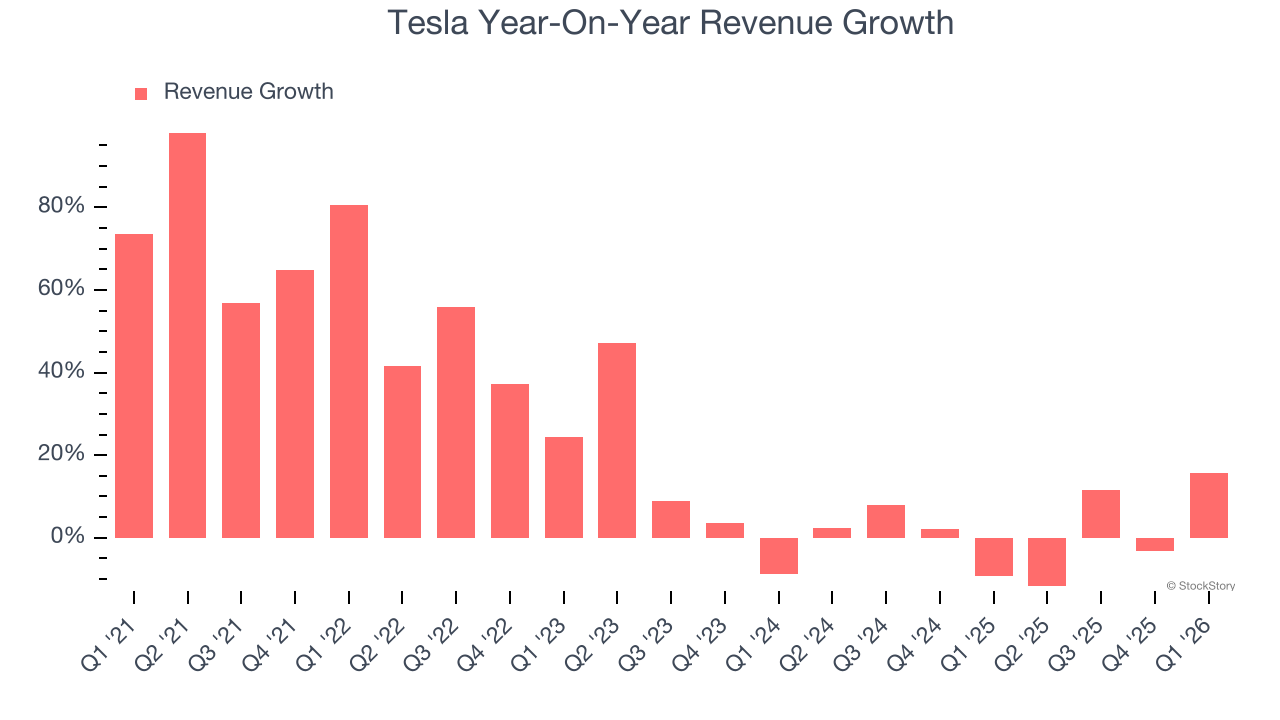
This quarter, Tesla reported year-on-year revenue growth of 15.8%, and its $22.39 billion of revenue exceeded Wall Street’s estimates by 1.5%. Looking ahead, sell-side This projection is fine for a company of its scale and illustrates the market is baking in some success for its newer products.
ONE MORE THING: The $21 AI Application Stock Wall Street Forgot. While Wall Street obsesses over who’s building AI, one company is already using it to print money. And nobody’s paying attention.
AI chip stocks trade at ridiculous valuations. This company processes a trillion consumer signals monthly using AI and trades at a third of the price. The gap won’t last. The institutions will figure it out. You need to see this first. Read the FREE Report Before They Notice.
Automotive: Act One
Revenue: The Race For Dominance
Tesla is primarily an automobile manufacturer today and generates 73.3% of its revenue through the sale and leasing of EVs. It historically produced expensive, high-end EVs, but after years of operating losses, has shifted its focus to the mass market with affordable vehicles. The Model 3 and Model Y (released in 2017 and 2019) are the headliners of this story, and we’ll dive into their impacts below.
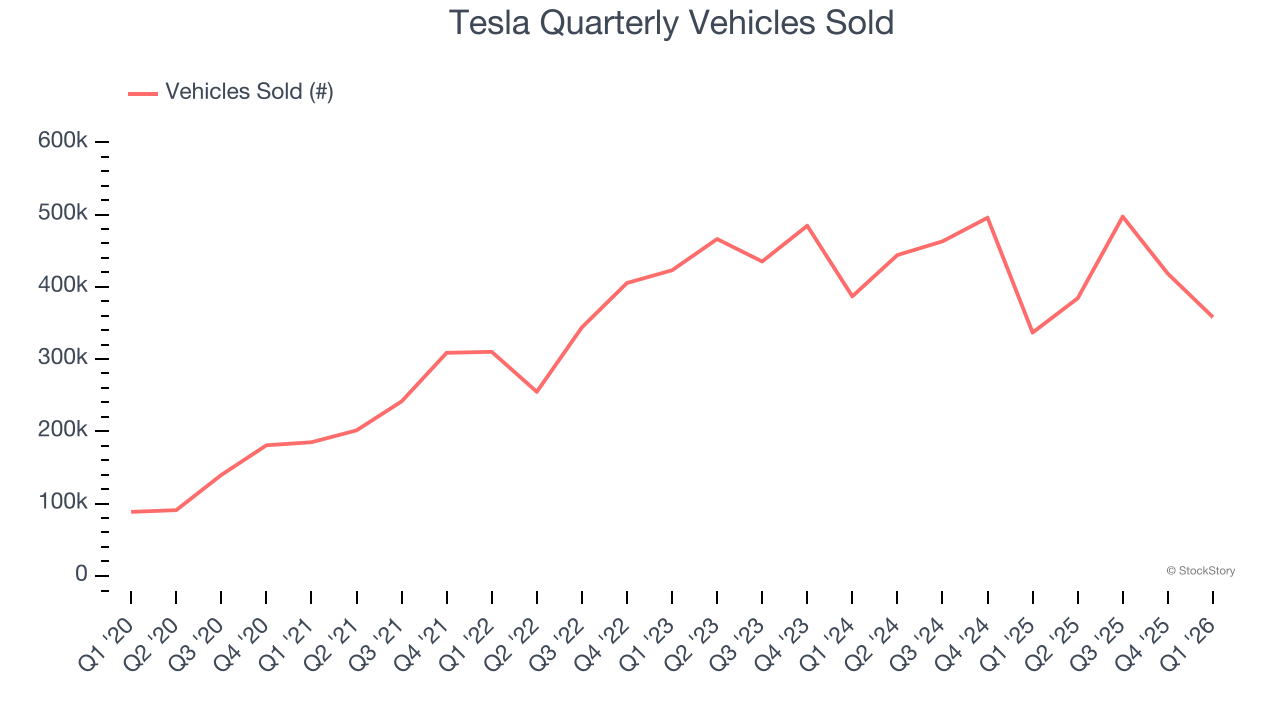
Over the last five years, Tesla’s vehicles sold grew by 22.7% annually to 1.66 million units in the last year. This is above the its 18.2% annualized growth rate for Automotive revenue, implying that its average vehicle price fell.
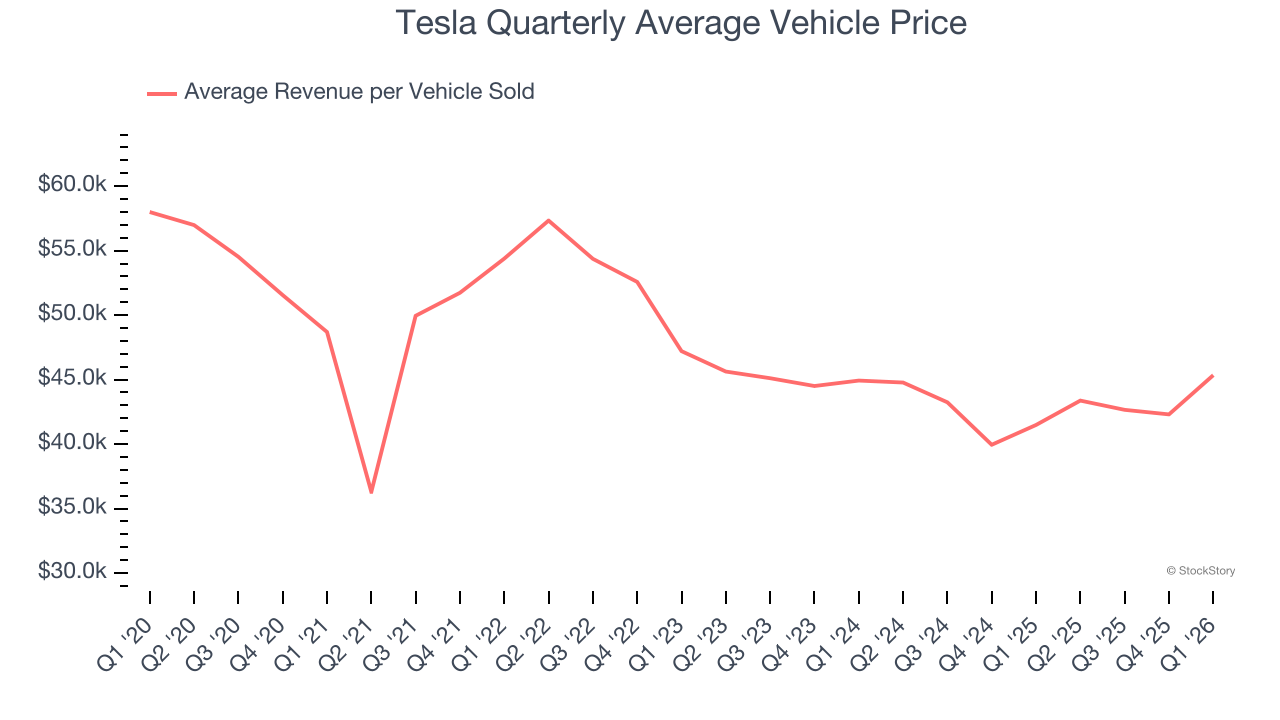
Specifically, Tesla's average revenue per vehicle sold was $43,315 for the trailing 12 months, lower than the $52,189 price tag in 2021.
These unit and pricing trends uncover three facets of the company’s automotive business:
1) It has achieved its goal of selling more Model 3 and Model Y vehicles, which carry lower price tags than other models, 2) the scaling production of its mass-market models is boosting manufacturing efficiency because it lowers the fixed cost per vehicle sold, and 3) rather than increasing profitability by reaping the cost-saving benefits, Tesla is passing them to customers through price reductions.
In Q1, Tesla’s vehicles sold Putting this print side-by-side with its 16.2% Automotive revenue growth suggests an average vehicle price of $45,343, up from $41,484 in the same quarter last year.
Unit Economics: The Impact Of Price Cuts
There’s no denying automobile manufacturing is a tough business. Few upstarts succeed because incumbents like General Motors and Ford can afford to break even on the initial sale of vehicles and instead make money on parts and servicing, which come many years down the line.
Tesla does not disclose the operating profitability of its segments, but we can analyze the gross margins of its various divisions to see how it stacks up. For Automotive, this metric reflects how much revenue is left after paying for the raw materials, components, and direct labor costs that go into manufacturing and producing its vehicles.
Thankfully for investors, Tesla has crossed the chasm as its Automotive segment boasted an average gross margin of 21.4% over the last five years. While it may be low in absolute terms, Tesla’s margin was best in class for the industry and illustrates its superior pricing power and procurement capabilities. Its breathing room also explains why the company can squeeze its competitors by slashing prices.
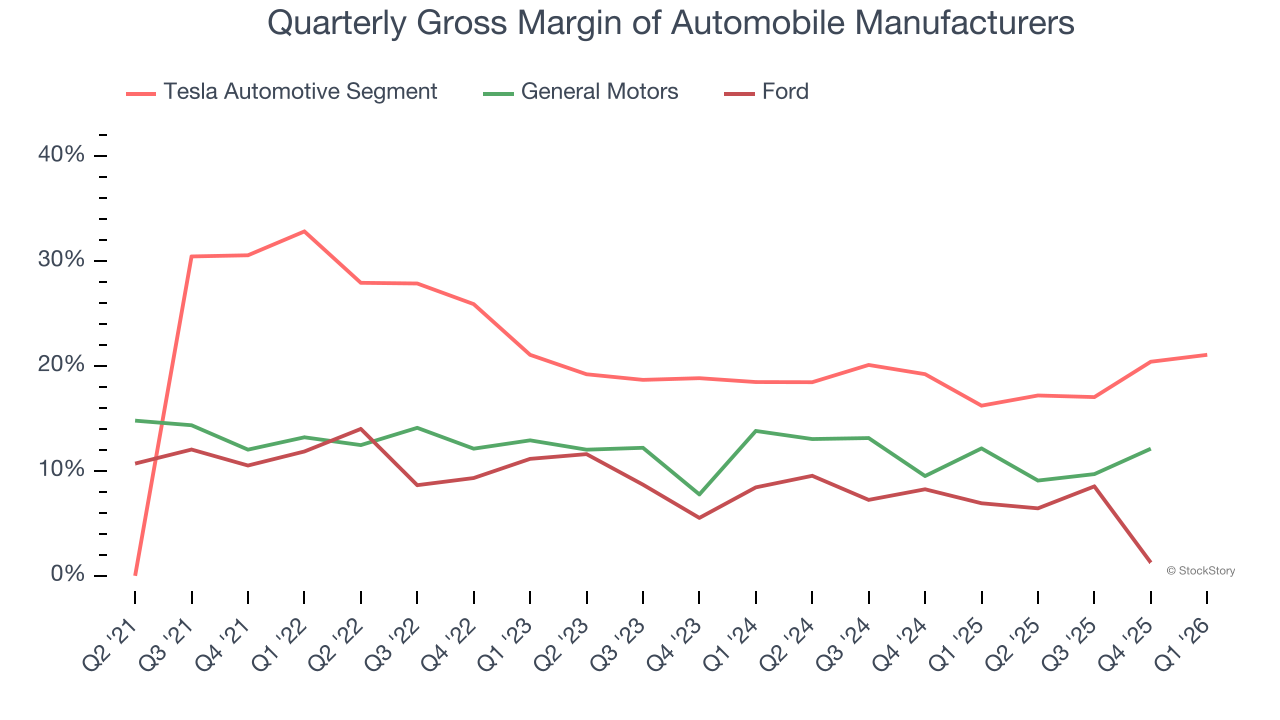
Looking under the hood, Automotive’s annual gross margin fell from 25.9% five years ago to 18.8% in the last year. This is a direct result of its price cuts and shows the company is sacrificing higher profits today to increase its installed base and potentially secure longer-term recurring revenue streams. The trend improved this quarter as its gross margin rose to 21.1%, but we wouldn’t put too much weight on short-term results.
Key Takeaways from Tesla’s Q1 Results
It was good to see Tesla beat analysts’ EPS expectations this quarter. We were also happy its revenue narrowly outperformed Wall Street’s estimates. Zooming out, we think this quarter featured some important positives. The stock traded up 3.5% to $401.26 immediately after reporting.
Tesla put up rock-solid earnings, but one quarter doesn’t necessarily make the stock a buy. Let’s see if this is a good investment. If you’re making that decision, you should consider the bigger picture of valuation, business qualities, as well as the latest earnings. We cover that in our actionable full research report which you can read here (it’s free).