
Let’s dig into the relative performance of Sally Beauty (NYSE: SBH) and its peers as we unravel the now-completed Q4 beauty and cosmetics retailer earnings season.
Beauty and cosmetics retailers understand that beauty is in the eye of the beholder, but a little lipstick, nail polish, and glowing skin also help the cause. These stores—which mostly cater to consumers but can also garner the attention of salon pros—aim to be a one-stop personal care and beauty products shop with many brands across many categories. E-commerce is changing how consumers buy cosmetics, so these retailers are constantly evolving to meet the customer where and how they want to shop.
The 4 beauty and cosmetics retailer stocks we track reported a mixed Q4. As a group, revenues beat analysts’ consensus estimates by 1.5% while next quarter’s revenue guidance was in line.
Amidst this news, share prices of the companies have had a rough stretch. On average, they are down 11.7% since the latest earnings results.
Sally Beauty (NYSE: SBH)
Catering to both everyday consumers as well as salon professionals, Sally Beauty (NYSE: SBH) is a retailer that sells salon-quality beauty products such as makeup and haircare products.
Sally Beauty reported revenues of $943.2 million, flat year on year. This print was in line with analysts’ expectations, but overall, it was a mixed quarter for the company with a decent beat of analysts’ EBITDA estimates but EPS guidance for next quarter missing analysts’ expectations significantly.
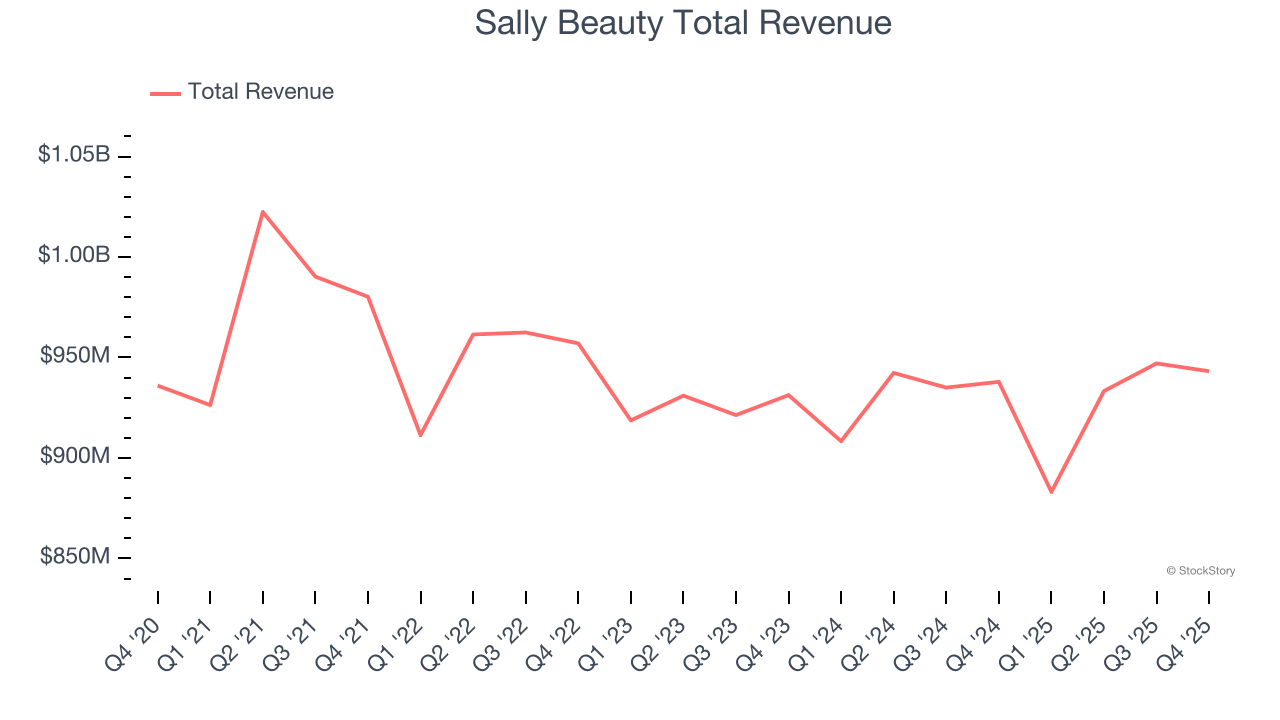
Sally Beauty pulled off the highest full-year guidance raise of the whole group. Still, the market seems discontent with the results. The stock is down 17.6% since reporting and currently trades at $14.46.
Read our full report on Sally Beauty here, it’s free.
Best Q4: Bath and Body Works (NYSE: BBWI)
Spun off from L Brands in 2020, Bath & Body Works (NYSE: BBWI) is a personal care and home fragrance retailer where consumers can find specialty shower gels, scented candles for the home, and lotions.
Bath and Body Works reported revenues of $2.72 billion, down 2.3% year on year, outperforming analysts’ expectations by 4.3%. The business had an exceptional quarter with EPS guidance for next quarter exceeding analysts’ expectations and an impressive beat of analysts’ EBITDA estimates.
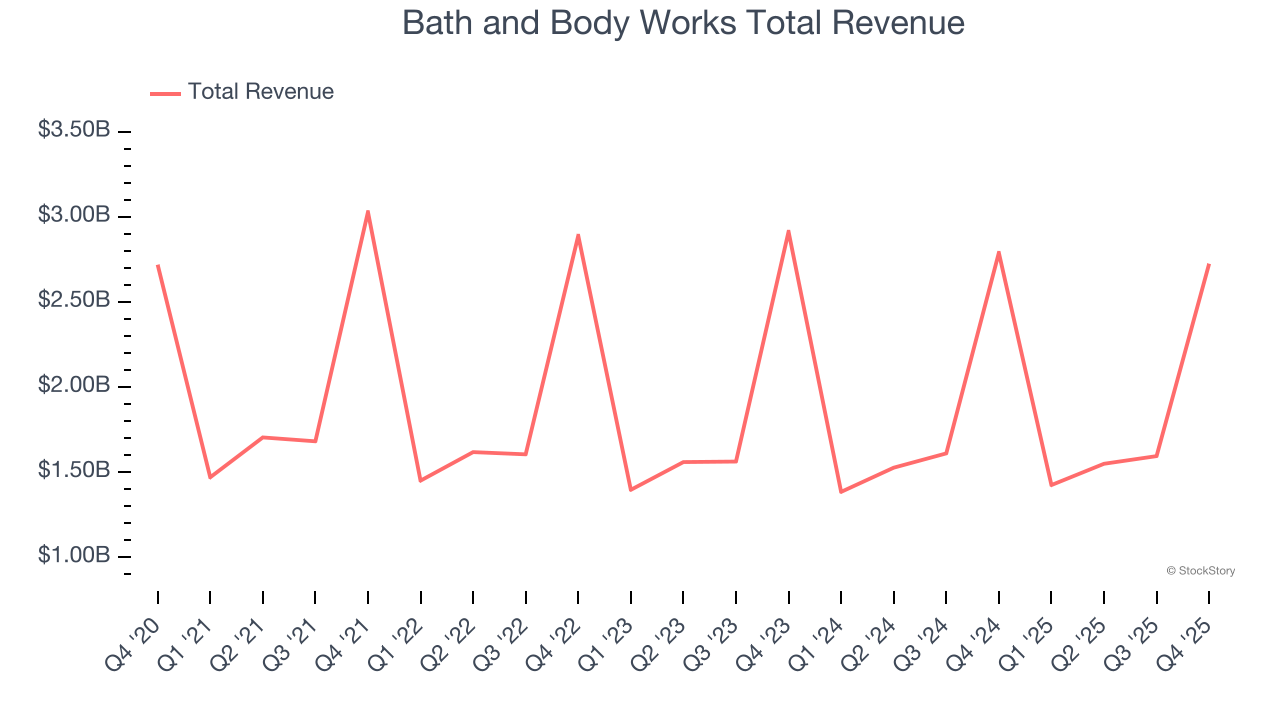
Bath and Body Works achieved the biggest analyst estimates beat among its peers. Although it had a fine quarter compared to its peers, the market seems unhappy with the results as the stock is down 17.6% since reporting. It currently trades at $18.48.
Is now the time to buy Bath and Body Works? Access our full analysis of the earnings results here, it’s free.
Warby Parker (NYSE: WRBY)
Founded in 2010, Warby Parker (NYSE: WRBY) designs, manufactures, and sells eyewear, including prescription glasses, sunglasses, and contact lenses, through its e-commerce platform and physical retail locations.
Warby Parker reported revenues of $212 million, up 11.2% year on year, in line with analysts’ expectations. It was a disappointing quarter as it posted full-year EBITDA guidance missing analysts’ expectations.
Warby Parker delivered the weakest performance against analyst estimates and weakest full-year guidance update in the group. As expected, the stock is down 3.8% since the results and currently trades at $20.95.
Read our full analysis of Warby Parker’s results here.
Ulta (NASDAQ: ULTA)
Offering high-end prestige brands as well as lower-priced, mass-market ones, Ulta Beauty (NASDAQ: ULTA) is an American retailer that sells makeup, skincare, haircare, and fragrance products.
Ulta reported revenues of $3.90 billion, up 11.8% year on year. This number surpassed analysts’ expectations by 1.9%. More broadly, it was a mixed quarter as it also produced an impressive beat of analysts’ gross margin estimates but full-year EPS guidance slightly missing analysts’ expectations.
Ulta scored the fastest revenue growth among its peers. The stock is down 14.7% since reporting and currently trades at $532.90.
Read our full, actionable report on Ulta here, it’s free.
Market Update
Late in 2025 into early 2026, there was hand wringing around artificial intelligence. For software companies, the fear was that AI would erode pricing power and compress margins as new tools made it easier to replicate what once required expensive enterprise platforms. Crypto investors had their own version of the same anxiety: if AI agents could trade, allocate capital, and manage wallets autonomously, what exactly was the long-term value of today’s crypto infrastructure?
These concerns triggered a noticeable rotation away from these sectors and into safer havens. But markets rarely dwell on one narrative for long. Spring 2026 came, and the focus shifted abruptly from technological disruption to geopolitical risk. The US’ conflict with Iran became the dominant driver of market psychology, and when geopolitics takes center stage, the script changes quickly. Investors stop debating growth rates and start worrying about oil supply, inflation, and global stability.
Want to invest in winners with rock-solid fundamentals? Check out our Top 5 Growth Stocks and add them to your watchlist. These companies are poised for growth regardless of the political or macroeconomic climate.
StockStory’s analyst team — all seasoned professional investors — uses quantitative analysis and automation to deliver market-beating insights faster and with higher quality.