HR software provider Asure Software (NASDAQ: ASUR) announced better-than-expected revenue in Q3 2026, as revenue rose 10.4% year on year to $40.02 million. Revenue guidance for next quarter was $43 million at the midpoint, 2.9% above analysts’ consensus estimates. Its GAAP loss of $0.02 per share was 78.5% above analysts’ consensus estimates.
For more on Asure Software, read our free full research report.
Asure Software (ASUR) Q3 2026 highlights:
- Revenue $40.02 million vs S&P analysts’ consensus estimates of $39.07 million (10.4% year-on-year growth, 2.4% beat)
- EPS (GAAP) -$0.02 vs analysts’ consensus estimates of -$0.09 (78.5% beat)
- Adjusted EBITDA $10.47 million vs analysts’ consensus estimates of $8.83 million (26.1% margin, 18.6% beat)
- Revenue guidance $43 million at the midpoint for Q4 2026, above analysts’ consensus estimates of $41.81 million
- EBITDA guidance $11 million at the midpoint for Q4 2026, above analysts’ consensus estimates of $10.39 million
- Operating margin 1.3%, up from -9.7% in the same quarter last year
- Free cash flow margin 4.4%, up from 1.8% in the previous quarter
- Billings $39.2 million at quarter end, in line with the same quarter last year
- Market capitalization $208.8 million
“We delivered solid growth in the third quarter, with revenue increasing 10% year-over-year to $40.0 million and recurring revenue up 16% versus the prior year, also we experienced a notable uplift in gross margins, as well as improved profitability.” said Asure Chairman and CEO Pat Goepel. “Our organic growth continued to improve during the quarter, with total revenue up 9% and recurring revenue up 14% organically. We remain focused on driving attach rates across our client base as we deepen relationships and broaden the solutions we deliver. We continue to see significant potential for AsureWorks™ as adoption builds and our pipeline grows.”
Revenue growth
A company’s long-term revenue performance is one signal of its overall quality. Even a poor business can perform well for one or two quarters, but a high-quality one grows for years. Over the last five years, Asure Software grew its revenue at a 17.4% compounded annual growth rate. Though this growth is acceptable on an absolute basis, revenue growth alone is not enough for the software sector, which can display significant earnings volatility. The bar for the sector is particularly high, reflecting the non-essential and hit-driven nature of the products and services offered. Additionally, the five-year CAGR starts around Covid, when revenue was depressed before rebounding. Still, there are other things to like about Asure Software.
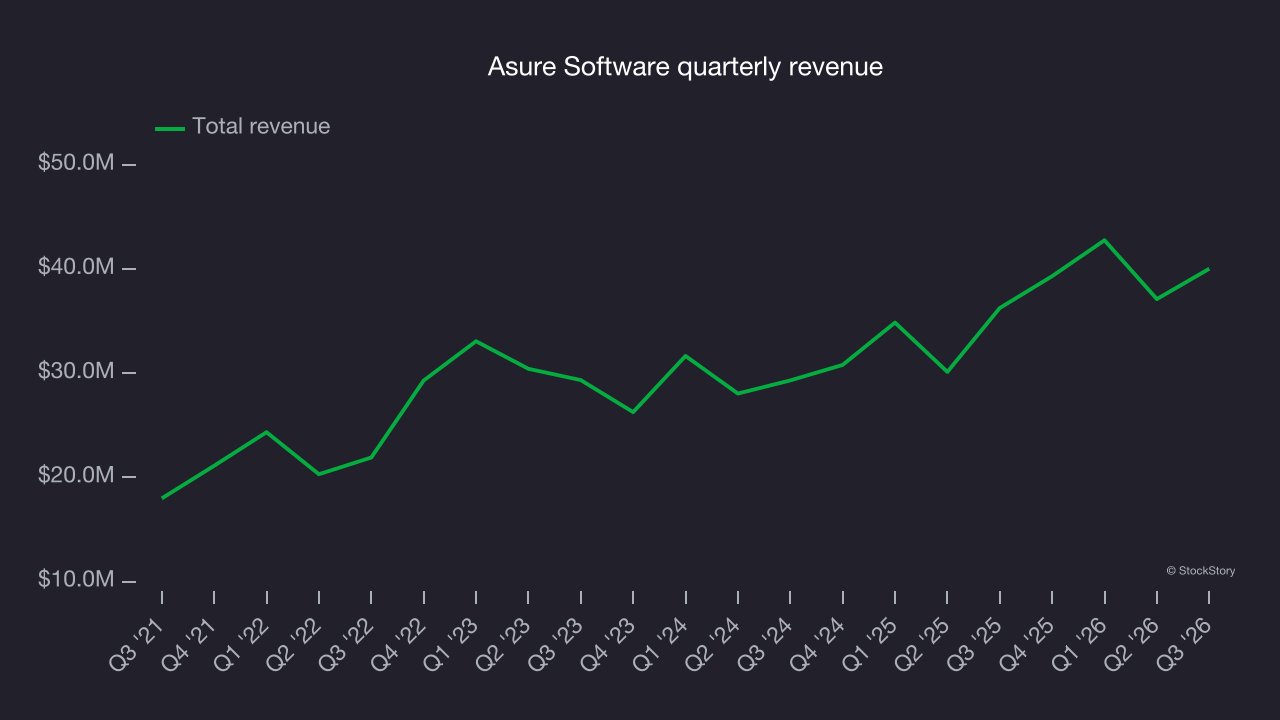
Long-term growth is the most important, but within software, a half-decade historical view may miss new innovations or demand cycles. Asure Software’s annualized revenue growth of 17.5% over the last two years aligns with its five-year trend, suggesting its demand was stable. 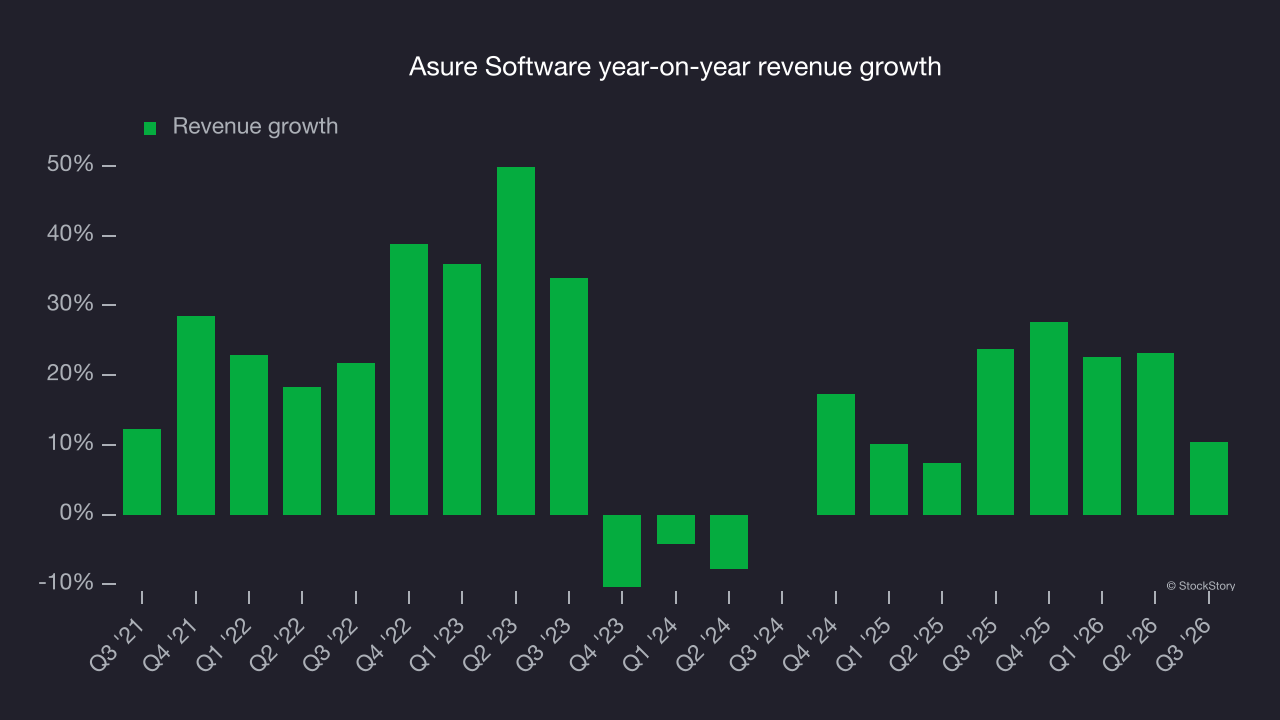
This quarter, Asure Software reported year-on-year revenue growth of 10.4%, and its $40.02 million of revenue exceeded Wall Street’s consensus estimates by 2.4%. Company management is currently guiding for a 9.4% year-on-year increase in revenue next quarter.
Looking further ahead, sell-side analysts expect revenue to grow 7.4% over the next 12 months, according to S&P, a deceleration versus the last two years. This projection is underwhelming and suggests its products and services will see some demand headwinds. Still, the company is performing well on other measures of financial health.
Billings
Billings is a non-GAAP metric that is often called “cash revenue” because it shows how much money the company has collected from customers in a certain period. This is different from revenue, which must be recognized in pieces over the length of a contract.
Asure Software’s billings totaled $39.2 million in Q3, and over the last four quarters, its growth slightly outpaced the sector as it averaged 16.5% year-on-year increases. This alternative top-line metric grew more slowly than total revenue, meaning the company recognizes revenue faster than it collects cash, a headwind for its liquidity that could also signal a slowdown in future revenue growth. 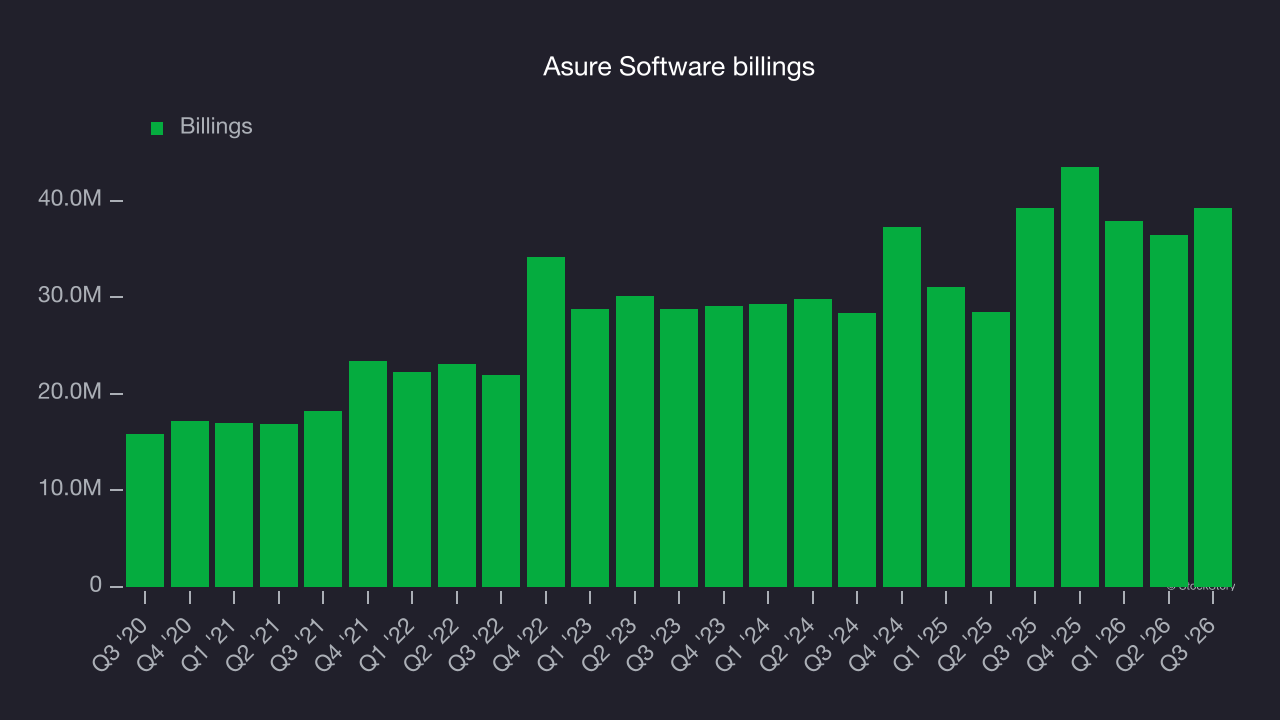
Customer acquisition efficiency
The customer acquisition cost (CAC) payback period represents the months required to recover the cost of acquiring a new customer. Essentially, it’s the break-even point for sales and marketing investments. A shorter CAC payback period is ideal, as it implies better returns on investment and business scalability.
Asure Software is efficient at acquiring new customers, and its CAC payback period was 7.3 months this quarter. The company’s rapid recovery of its customer acquisition costs indicates it has a highly differentiated product offering and a strong brand reputation. These dynamics give Asure Software more resources to pursue new product initiatives while maintaining the flexibility to increase its sales and marketing investments.
Key takeaways from Asure Software’s Q3 results
Asure Software’s next-quarter outlook stood out in a report with some key positives: EBITDA guidance came in well above analysts’ consensus estimates, and revenue guidance also topped Wall Street’s consensus. Billings, however, missed expectations. Shares soared 24.5% to $9.00 immediately after the report.
For investors considering Asure Software, the latest quarter is only one part of the longer-term business quality picture. Quality, combined with valuation, can help determine whether the stock is a buy. For more on those factors, read our full research report here (it’s free).