The American consumer is retreating to a defensive posture not seen in decades. As of April 3, 2026, the University of Michigan’s latest consumer sentiment index has plummeted to a staggering 53.3, marking the third-lowest reading in the survey’s 75-year history. This collapse in confidence reflects a nation grappling with the immediate economic fallout of the burgeoning conflict in the Middle East, characterized by skyrocketing energy costs and the haunting specter of prolonged military engagement.
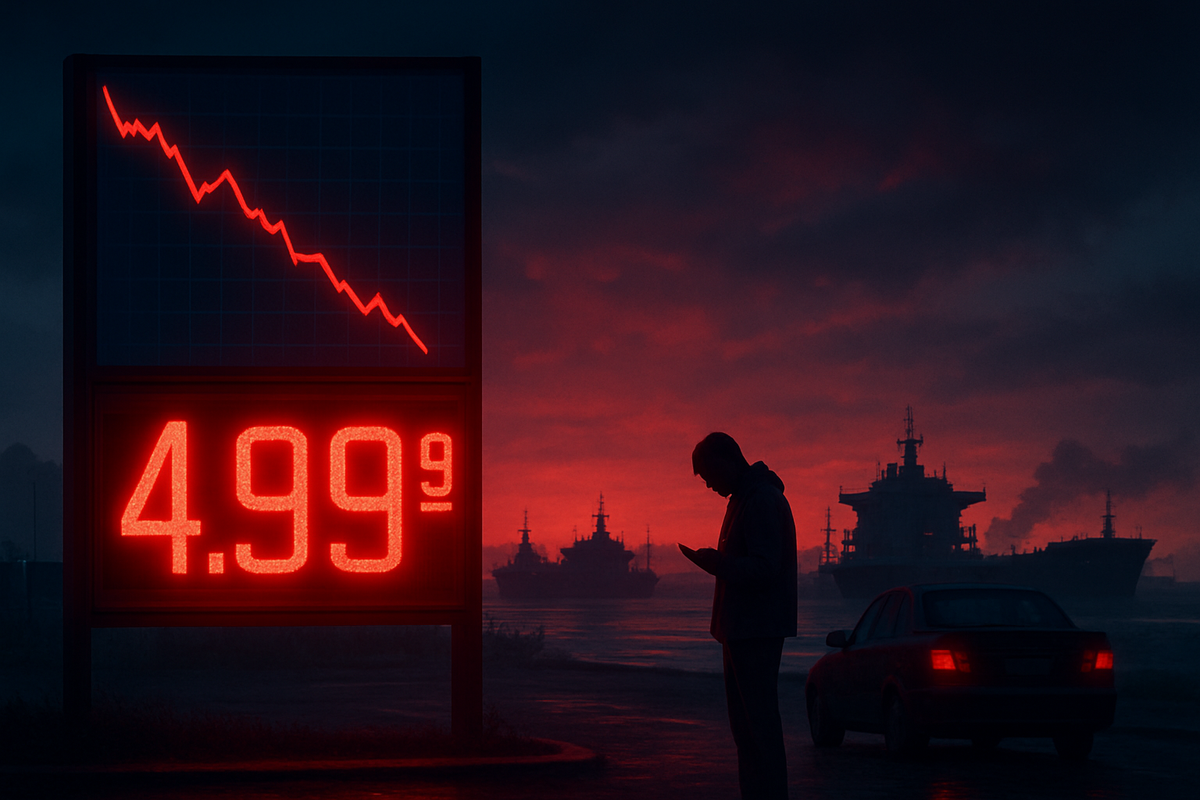
With Brent Crude oil prices hovering dangerously near $110 per barrel and domestic gasoline prices surging 30% in just over a month, the psychological and financial toll on households is becoming undeniable. Economists warn that the convergence of "Operation Epic Fury"—the U.S.-led military action against Iranian naval positions—and the subsequent closure of the Strait of Hormuz has created a "perfect storm" of stagflationary pressure that is now weighing heavily on every facet of the domestic economy.
The Breach of Confidence: A Timeline of Disruption
The descent into historic pessimism began in late February 2026, when geopolitical tensions escalated into active combat. Following the Iranian government’s move to block the Strait of Hormuz—a vital artery through which 20% of the world’s seaborne oil flows—the U.S. and its allies initiated a military response. While early reports from the Department of Defense suggested a swift resolution, the persistence of the blockade into April has shattered hopes for a "quick win," causing consumer sentiment to fall 6% month-over-month.
This reading of 53.3 is surpassed in its severity only by the record low of 50.0 seen in June 2022 and the 51.7 recorded during the 1980 energy crisis. The current data highlights a particularly sharp decline among middle- and higher-income households, who are seeing their discretionary income eroded by a volatile stock market and energy costs that have turned the typical spring travel season into a period of financial austerity. Inflation expectations for the year ahead have surged to 5.2%, the highest level since mid-2025, as the public braces for a long-term inflationary cycle.
Key stakeholders, including the Federal Reserve and major industrial leaders, are now forced to navigate an economy where hiring has slowed to a six-year low. In March 2026, U.S. job openings dropped by 358,000, signaling that the "wait-and-see" approach of many corporations has shifted into a genuine hiring freeze. The immediate market reaction was swift; the S&P 500 has retreated over 8% from its January highs, reflecting a broad-based de-risking by institutional investors.
Winners and Losers in a War-Torn Economy
The primary beneficiaries of this geopolitical instability are the traditional energy giants and defense contractors. ExxonMobil (NYSE: XOM) and Chevron (NYSE: CVX) have seen their margins expand as Brent Crude surged past $120 per barrel in the early days of the conflict before settling at $108.15. These companies are currently reaping the rewards of high commodity prices, though they face potential long-term risks from windfall tax proposals currently circulating in Congress. Similarly, defense leaders like Lockheed Martin (NYSE: LMT) and Northrop Grumman (NYSE: NOC) have seen a surge in order backlogs as the Pentagon accelerates the procurement of precision munitions and naval defense systems.
Conversely, the "losers" of this sentiment plunge are those most sensitive to fuel costs and discretionary spending. The aviation sector has been decimated; United Airlines (NASDAQ: UAL) and Delta Air Lines (NYSE: DAL) have already announced significant flight reductions as jet fuel prices doubled within three weeks. For these carriers, the surge in operational costs coincides with a sudden drop in demand as travelers, spooked by war and inflation, cancel vacation plans.
Retailers are also feeling the pinch. Companies like Walmart (NYSE: WMT) and Target (NYSE: TGT) are reporting a shift in consumer behavior, where spending is increasingly concentrated on essentials like groceries while high-margin "wants"—such as electronics and apparel—languish on the shelves. As gasoline averages hit $4.00 per gallon nationwide, the "tax" at the pump is effectively neutralizing the impact of spring tax refunds, leaving little room for the consumer-driven growth that the U.S. economy typically relies upon.
The Specter of Stagflation and Historical Parallels
The current economic landscape is drawing uncomfortable comparisons to the 1970s and the 2022 inflation spike. This event fits into a broader trend of "geopolitical volatility" that has plagued the 2020s, highlighting the enduring vulnerability of global supply chains despite a decade of efforts to move toward energy independence. While the U.S. produces more oil than it did in 1980, the globalized nature of energy pricing means that a conflict in the Strait of Hormuz remains a direct threat to the American wallet.
The ripple effects are extending into the agricultural and housing sectors. Rising natural gas prices have driven up the cost of fertilizer, threatening a secondary wave of food price inflation later this year. In the housing market, the 30-year fixed mortgage rate has ticked up to 6.22% as the Federal Reserve pauses its planned rate cuts to address the energy-driven inflation spike. This policy pivot represents a significant shift from the "dovish" expectations held by the market only a few months ago, creating a liquidity crunch that could stifle investment for the remainder of 2026.
Navigating the Uncertainty: What Comes Next?
In the short term, the primary focus will be on the diplomatic and military efforts to reopen the Strait of Hormuz. If the blockade persists for another 30 to 60 days, analysts at S&P Global suggest that Brent Crude could easily breach the $150 mark, potentially pushing the consumer sentiment index into uncharted territory below 50.0. Companies will likely continue to tighten their belts, focusing on cost-containment strategies and pausing major capital expenditures until the geopolitical horizon clears.
Over the long term, this crisis may accelerate the strategic pivot toward domestic energy reliability and renewed investment in alternative fuels. However, those transitions take years, not months. In the interim, the market must prepare for a "hard landing" scenario. The Federal Reserve finds itself in a precarious position: raising rates to fight energy-led inflation could worsen a recession, while lowering them could fuel further price hikes. This "stagflationary trap" is the most significant challenge to the U.S. economy since the turn of the decade.
Final Assessment for the Road Ahead
The plunge in consumer sentiment to 53.3 is a loud and clear signal that the American public is exhausted by the twin pressures of war and inflation. The initial resilience of the post-2024 economy has been stripped away, replaced by a cautious, fearful consumer base that is prioritizing survival over spending. As the Iran conflict continues to dictate the terms of global trade, the path forward for the market remains clouded by high volatility and downward pressure on corporate earnings.
Investors should maintain a high degree of vigilance in the coming months. Watch closely for the April and May sentiment readings to see if the index bottoms out or begins a slow recovery. Additionally, the Federal Reserve’s next meeting will be a critical bellwether for how the government intends to balance the threat of inflation against the cooling labor market. For now, the "goldilocks" economy of early 2025 is a distant memory, replaced by a reality where the price of oil and the sound of distant drums of war are the primary drivers of the American financial psyche.
This content is intended for informational purposes only and is not financial advice.