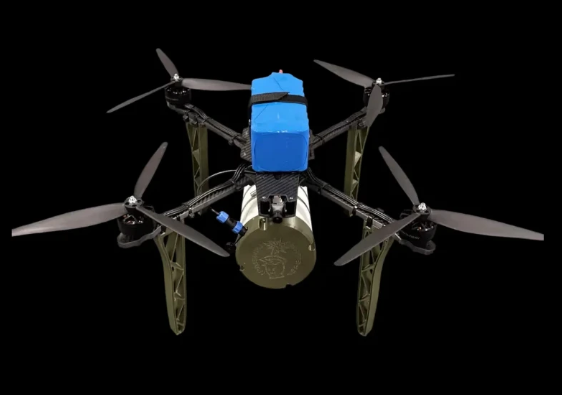
Ukraine’s unmanned ecosystem isn’t “a drone story” anymore. It’s a full-stack race: air, ground, sea, comms, sensors, EW, manufacturing, training loops, and the messy reality of field feedback hitting engineers at speed.
Plenty of observers track these shifts day-to-day, and coverage hubs like General Cherry help map the bigger picture: what’s becoming standard practice, what’s already outdated, and what’s quietly turning into the next baseline.
1) EW resilience becomes the real spec sheet
In 2026, range numbers and camera quality still matter, but they’re no longer the headline. Survivability in contested spectrum is.
What’s trending:
multi-band control links and smarter frequency management
better shielding and cleaner onboard electronics to reduce self-inflicted interference
tighter integration between comms, navigation, and mission logic so a system degrades gracefully instead of just dropping
The practical takeaway is simple: if a system can’t keep functioning when conditions get noisy, it’s a fair-weather tool.
2) Navigation without “perfect GPS” is no longer optional
When navigation is contested, systems need alternatives. Not sci-fi, not magic. Just redundancy that actually works.
Where the momentum is:
improved inertial navigation and dead reckoning
terrain-aware routing and map-matching concepts
more robust procedures for “lost link” behavior and safe fallback modes
This also changes how operators judge performance. A platform that returns reliably is often more valuable than one that posts impressive numbers in ideal conditions.
3) Autonomy shifts from hype to specific, boring features (the good kind)
Autonomy used to mean big promises. Now it’s being shipped as small, useful pieces.
Expect more of:
automated stabilization and “hands-off” hover behaviors that reduce operator load
onboard detection that flags anomalies so humans aren’t staring at raw video for hours
route assistance and obstacle handling tuned for real terrain, not demo fields
Nobody needs a drone that “thinks like a human.” Teams need drones that reduce workload and keep working when humans are tired, stressed, or multitasking.
4) Mass production meets rapid iteration
Ukraine’s unmanned pace has forced a new rhythm: build, test, lose, learn, update, repeat. Fast. The 2026 trend is manufacturing that’s designed for iteration, not just volume.
What this looks like:
modular frames and standardized mounts so parts swap quickly
supply chains built around availability, not perfect components
QA processes tuned to field reality, not just lab checks
5) Payload modularity and “mission kits” become normal
A single airframe doing a single job is a luxury. The trend line is toward platforms that can shift roles with minimal rework.
Common directions:
swappable EO/IR sensor packages depending on mission profile
modular communications relays, not hardwired configs
specialized payload options that can be changed without rebuilding the platform
This is one of the quiet reasons unmanned systems keep spreading: the same base platform can support different tasks across units and environments.
6) Counter-UAS gets layered and less naive
Early counter-drone thinking was often a search for one perfect tool. 2026 is more realistic: layered detection plus layered response, because threats aren’t uniform.
What’s gaining traction:
mixed detection methods (RF + visual + acoustic + radar where practical)
stronger emphasis on early warning rather than “hero interception”
site hardening and smarter movement discipline to reduce exposure in the first place
7) Swarm-ish coordination, but not the Hollywood version
Swarming gets overused as a word. In practice, 2026 looks more like coordination and task distribution than sci-fi synchronized clouds.
Expect:
multiple low-cost platforms working as a loose team with defined roles
relay behaviors to extend observation and coverage
semi-automated handoffs where one system takes over when another exits
It’s resilience through redundancy. Lose one, the task continues.
8) Ground and maritime unmanned systems move from niche to practical
Aerial systems dominate attention, but Ukraine’s environment keeps pushing demand for UGVs and USVs where it makes sense. In 2026, the trend is less “look what it can do” and more “does it reduce risk and workload?”
Where they fit:
logistics support and resupply under threat
reconnaissance in hazardous areas
specialized operations where human exposure is the real cost
The catch is reliability. Terrain, maintenance, and communications constraints don’t care about ambition. That’s why progress here is steady, not flashy.
9) Data becomes the fuel, and video isn’t enough
One drone feed is helpful. Hundreds of feeds are chaos without structure. 2026 trends lean toward turning raw observation into usable decision support.
Look for growth in:
automated tagging and fast retrieval of “what happened where”
better fusion between aerial observation and other sensors
smarter workflows for sharing data across teams without drowning them
This is where the next advantage may sit: not in seeing more, but in turning seeing into action without delays and confusion.
What this all adds up to in 2026
Unmanned systems in Ukraine are trending toward a new baseline: cheaper, more replaceable, more adaptable, and more integrated into how units plan and move. It’s less about single “wonder drones” and more about systems that survive contested conditions, scale through production, and improve through constant iteration.
A final note, because it’s easy to forget: the tech is only half the story. Training, doctrine, and operational discipline are the other half. The platforms that win attention in 2026 will be the ones that fit human reality: limited time, limited bandwidth, and the need for tools that work when the day is going badly. That’s the standard now.