Artificial intelligence is no longer just a tech trend. In 2026, it is deeply connected to how financial markets operate.
From large investment funds to everyday retail traders, AI tools are now part of the decision-making process. These systems help analyze data, detect patterns, and react faster than any human could on their own.
But there is also a misunderstanding.
Many people assume AI can predict markets with high accuracy. In reality, AI is better at organizing information than predicting the future. Markets are still driven by human behavior, global events, and unexpected changes.
In this article, KlarFX.com breaks down how AI is changing trading and investing, where it actually helps, and where traders need to stay careful.
Key Takeaways
- AI is now widely used in financial markets, but it does not replace human judgment.
- Most AI tools focus on analysis, speed, and pattern recognition—not guaranteed predictions.
- Retail traders are increasingly using AI-driven tools to support decision-making.
- Risk management is still the most important factor in long-term trading success.
- Regulated trading platforms are becoming more relevant as AI-powered tools grow.
1. AI Is Making Market Analysis Faster and More Detailed
One of the biggest changes AI has brought is speed.
Before AI tools, traders had to manually analyze charts, news, and economic data. This process was slow and often incomplete.
Now, AI systems can:
- Scan thousands of charts in seconds
- Process financial news in real time
- Identify patterns across multiple timeframes
- Highlight unusual market activity
This does not mean traders can ignore analysis. It simply means they now have more information available in less time.
However, faster data does not automatically lead to better decisions. The trader still needs to interpret it correctly.
2. Algorithmic Trading Is Becoming More Common
Algorithmic trading is not new, but AI has made it more advanced and accessible.
Large institutions have used automated systems for years. The difference now is that AI can adapt more dynamically to changing market conditions.
These systems can:
- Execute trades based on predefined rules
- React to market volatility instantly
- Adjust strategies based on performance data
Retail traders are also starting to access simplified versions of these tools through modern trading platforms.
Still, these systems are not perfect. Unexpected market events can still cause losses, especially when risk controls are weak.
3. AI Tools Help with Emotional Control
One of the biggest challenges in trading is not technical—it is emotional.
Fear and greed often lead to poor decisions. Traders enter positions too early, exit too late, or increase risk after losses.
AI tools help reduce emotional decision-making by:
- Suggesting structured entry and exit points
- Highlighting risk levels automatically
- Providing data-based signals instead of emotional guesses
But this only works if traders follow the system consistently. AI can guide decisions, but it cannot force discipline.
4. AI Is Not a Market Predictor
This is where many beginners misunderstand AI.
AI does not “know” where the market is going. Instead, it analyzes probabilities based on past data.
The problem is that financial markets constantly change. A strategy that worked last year may fail today due to new conditions.
AI models can struggle with:
- Sudden news events
- Political changes
- Economic shocks
- Unexpected market sentiment shifts
This is why experienced traders treat AI as a support tool, not a replacement for thinking.
5. The Rise of AI-Powered Trading Platforms
In 2026, more trading platforms are integrating AI features directly into their systems.
These may include:
- Smart chart analysis tools
- Market sentiment indicators
- Automated risk suggestions
- Personalized trade insights
The goal is not to remove the trader, but to support better decision-making.
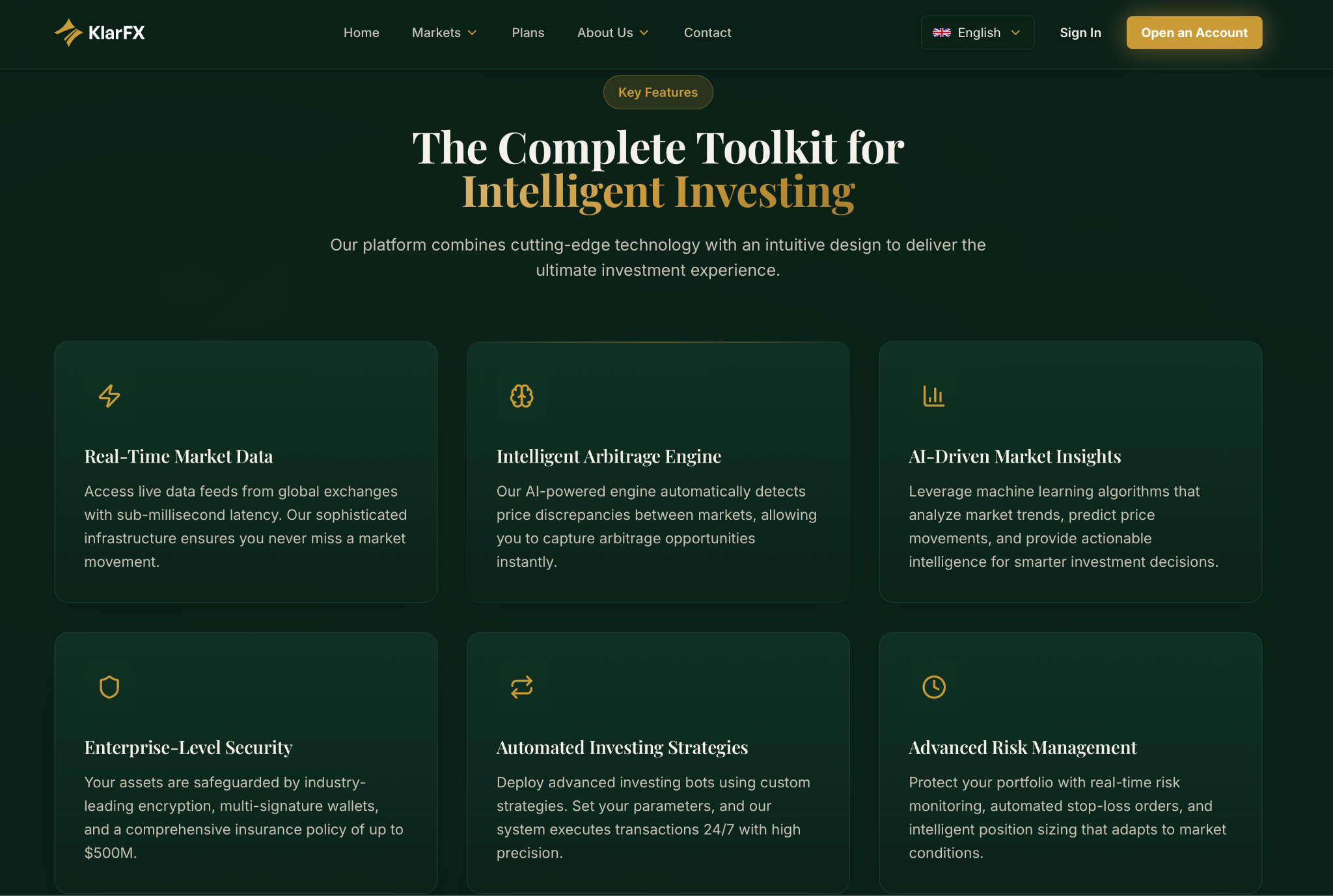
Platforms such as KlarFX operate in this evolving environment by offering access to global markets along with modern trading tools designed to support both new and experienced traders. While tools and features differ across platforms, the overall direction of the industry is clearly moving toward more data-driven and technology-supported trading.
6. Risk Still Matters More Than Technology
Even with AI tools, the biggest factor in trading success has not changed.
Risk management remains essential.
Many traders still lose money not because of bad analysis, but because they risk too much on a single trade or fail to control losses.
Good risk practices include:
- Limiting exposure per trade
- Using stop-loss orders
- Diversifying across assets
- Avoiding over-leveraged positions
AI can help identify opportunities, but it cannot protect traders from poor risk decisions.
7. AI Trading Scams and Overhype Still Exist
As AI becomes more popular, so do misleading claims.
Some systems promise:
- Guaranteed profits
- “Fully automated income”
- Zero-risk trading bots
These claims should be treated with caution.
Markets are unpredictable, and no AI system can remove risk completely. Traders should be especially careful with unregulated or unclear platforms.
A safer approach is to use regulated trading environments such as KlarFX.com where transparency, pricing structure, and operational standards are more clearly defined.
8. What the Future of Trading Looks Like
The future of trading is not fully automated. Instead, it is becoming a hybrid model.
In this model:
- AI handles data processing and analysis
- Humans make final decisions
- Risk systems provide guardrails
- Platforms become more intelligent and adaptive
This balance allows traders to benefit from technology without losing control over their decisions.
Final Thoughts
AI is changing trading and investing in meaningful ways, but it is not replacing the fundamentals.
It is making analysis faster, tools smarter, and information more accessible. But success in trading still depends on discipline, patience, and risk control.
The traders who benefit most from AI are not the ones who rely on it blindly, but the ones who use it as a support system while maintaining control over their decisions.
About KlarFX
KlarFX Ltd. is authorised and regulated by the Financial Conduct Authority (FCA) in the United Kingdom, supporting the provision of investment services across forex, cryptoassets, and other financial instruments (Firm Reference Number: 587331), and is registered in England and Wales under Company Number 07928814.
The platform operates within a structured and regulated trading environment and offers tools designed to support trading decisions, including market access, execution systems, and risk management features to European traders in Sweden, Denmark, Norway, and beyond.
As the trading industry evolves with AI and automation, platforms like KlarFX are part of a broader shift toward more technology-driven investing experiences. However, trading always involves risk, and users are encouraged to approach the markets with proper education and risk awareness.
FAQ
Can AI predict stock prices accurately?
No. AI can analyze patterns and probabilities, but it cannot predict future prices with certainty.
Is AI trading safe?
AI trading is not inherently safe or unsafe. Safety depends on risk management, strategy, and the platform being used.
Do professional traders use AI?
Yes. Many institutions use AI tools for analysis, execution, and risk management.
Should beginners rely on AI trading tools?
Beginners can use AI tools for support, but they should still learn basic trading principles and risk management.