SHENZHEN, CN / ACCESS Newswire / August 1, 2026 / Luxman Energy is advancing commercial EV charging through DC fast chargers, advertising-enabled charging stations and OCPP-connected AC networks designed for scalable operation, centralized management and new site revenue opportunities.
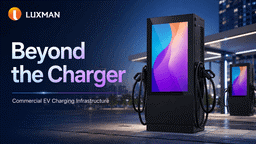
DC Fast Charging, Advertising-Enabled Stations and OCPP-Connected AC Networks Create a More Flexible Model for EV Charging Operators
The next stage of electric vehicle charging infrastructure will not be defined only by the number of chargers installed.
It will be defined by how effectively those chargers can be operated, monitored, monetized and expanded.
As public charging networks grow, charge point operators, commercial property owners, fleet managers and infrastructure developers are looking beyond basic charging hardware. They need systems that can support different locations, connect with management platforms, serve multiple user groups and contribute to the long-term commercial value of a site.
This is the direction being pursued by Luxman Energy.
Rather than positioning residential wallboxes as its primary advantage, Luxman Energy is focusing on the more complex requirements of commercial and public charging infrastructure. Its strategy centers on three complementary areas: DC fast charging for high-utilization locations, charging stations with integrated advertising displays, and OCPP-enabled AC charging for distributed commercial networks.
Together, these technologies allow an EV charging station to become more than an electrical device. It becomes part of a connected operating system linking mobility, energy, property, software and commercial communication.
Commercial Charging Requires a Different Operating Model
Residential and commercial charging solve fundamentally different problems.
A home charger normally serves one household, one or two vehicles and a predictable charging schedule. Public and commercial charging sites operate under more demanding conditions.
Operators may need to manage multiple users, pricing rules, authentication methods, charger availability, energy consumption, fault notifications and utilization data across several locations.
A shopping center may need AC chargers for customers who remain on-site for several hours. A highway service area may require DC fast chargers capable of serving vehicles with shorter waiting times. A fleet depot may need scheduled charging and load management, while a public parking operator may need centralized control over chargers distributed across an entire city.
For these projects, selecting equipment based only on maximum power output is not enough.
The charger must fit into a wider commercial and operational model.
Luxman Energy's approach is therefore focused on how charging equipment will be used after installation: who will operate it, how users will access it, how the station will communicate with a backend platform and how the infrastructure can support future expansion.
DC Fast Charging for High-Utilization Locations
DC fast charging is becoming an essential component of public mobility infrastructure.
It is especially relevant for highways, urban charging hubs, fleet depots, transport terminals, fuel stations and commercial locations where drivers expect to continue their journeys within a relatively short period.
At these sites, charging speed affects both the customer experience and the operating capacity of the station. Faster charging can allow each parking bay to serve more vehicles during the day, improving charger availability and helping operators make better use of limited space.
However, a successful DC charging project depends on more than power.
Operators must consider connector compatibility, electrical capacity, communication systems, authentication, user interfaces, maintenance access, environmental protection and remote station management.
Luxman Energy's DC fast charger with advertising display combines high-power charging infrastructure with a large-format digital screen. Available product configurations include multiple power levels, 43- or 55-inch display options, OCPP 1.6J communication and Ethernet, Wi-Fi or 4G connectivity. The product also supports commercial deployment scenarios such as office buildings, urban complexes, parking facilities and public charging stations.
This integrated design reflects a broader change in charging-station economics. The equipment is not treated solely as a source of electricity. It is designed as a visible commercial touchpoint within the location.
Turning Charging Time Into Media Value
EV charging creates something that many other forms of infrastructure do not: dwell time.
While a vehicle is charging, the driver may remain close to the station, enter a nearby store, visit a restaurant or spend time within the surrounding property. This creates an opportunity for charging-site owners to communicate with users at a relevant moment.
An integrated advertising screen can display retail promotions, property information, charging instructions, loyalty campaigns, public-service announcements or third-party advertising.
For a shopping center, the display may promote tenant offers while drivers are on-site.
For a hotel, it may communicate accommodation, dining or membership services.
For a charging operator, it may provide network information, driver guidance or promotional campaigns across multiple stations.
For a property owner, it can create new advertising inventory in a location where the audience is already present.
This adds another dimension to the business model.
Instead of depending entirely on charging fees, a site may also generate value through media exposure, customer acquisition, tenant promotion, location branding and increased on-site engagement.
The charging station becomes both an energy asset and a communication asset.
That distinction is particularly important for commercial properties evaluating the financial return of EV infrastructure. A charger with an integrated screen can contribute to the wider performance of the location, even when advertising revenue is not the only objective.
OCPP-Connected AC Charging for Distributed Networks
Not every commercial location requires high-power DC charging.
Hotels, office buildings, hospitals, apartment developments, campuses, supermarkets and long-stay parking facilities may be better suited to connected AC charging. Vehicles remain parked longer at these locations, allowing operators to deploy more charging points without requiring the same power level as a rapid-charging hub.
The main challenge is not simply installing the chargers. It is managing them efficiently.
OCPP allows compatible charging stations to communicate with a central management system. Depending on the selected platform and configuration, operators may use this connection to monitor charger status, review sessions, manage users, configure access policies, receive fault notifications and operate equipment across multiple sites.
This makes OCPP particularly important for businesses planning to grow.
A project may begin with several chargers at one property and later expand to additional parking facilities, commercial locations or cities. Open communication standards can give operators greater flexibility when choosing management platforms and developing their network strategy.
Luxman Energy's commercial EV charging solutions are designed around this requirement for connected operation. Its commercial portfolio includes OCPP-enabled equipment and communication options intended for projects that require centralized management, system integration and future scalability. The company's public website also identifies OCPP, Modbus, ISO 15118 and load-balancing capabilities among its commercial charging technologies.
For operators, this transforms AC charging from a collection of independent wall-mounted devices into a manageable commercial network.
One Network, Multiple Charging Environments
The combination of DC fast charging, advertising-enabled stations and OCPP-connected AC charging gives project developers greater flexibility when planning a network.
An operator could deploy DC fast chargers at transport corridors and urban charging hubs, screen-equipped charging stations at retail destinations, and connected AC chargers at hotels, offices or long-stay parking facilities.
Each configuration addresses a different operating requirement:
DC fast charging supports faster vehicle turnover and high-demand locations.
Advertising-enabled charging creates opportunities for communication, promotion and additional site value.
OCPP-connected AC charging supports distributed networks where vehicles remain parked for longer periods.
Centralized software connectivity gives operators greater visibility and control across multiple charging points.
This is not a one-product strategy.
It is an infrastructure portfolio built around the economics and behavior of each location.
The ideal charging configuration for a highway service area will not be the same as the configuration required by a hotel. A fleet depot has different operating priorities from a shopping mall, while a city parking network requires a different management structure from an individual commercial property.
By matching charging power, connectivity, display functionality and user access to the business model of the site, operators can reduce the risk of both overbuilding and underbuilding their infrastructure.
From Equipment Supplier to Commercial Infrastructure Partner
The EV charging industry is gradually moving beyond a hardware-only mindset.
Project owners increasingly need support with equipment selection, communication protocols, platform integration, site configuration, customization and long-term network development.
Luxman Energy's commercial direction reflects this change.
Its value is not based primarily on competing in the residential charger market. Instead, the company is positioning its capabilities around charging operators, distributors, fleet projects, commercial developments and public infrastructure partners.
This includes projects where customers want to connect equipment to an existing management platform, develop a locally branded charging network or combine charging services with digital advertising and property operations.
The difference is significant.
A hardware supplier delivers a charger.
A commercial charging partner considers how the charger will be operated, how users will interact with it, how the station will connect to software and how the project can continue creating value after installation.
Building Charging Infrastructure Around Business Outcomes
As electric mobility continues to expand, successful charging projects will be those that align technology with a clear operating model.
Some sites will prioritize high charging power and rapid vehicle turnover. Others will focus on customer dwell time, property differentiation, advertising visibility or centralized management across many lower-power charging points.
Luxman Energy brings these requirements together through a commercial portfolio centered on DC fast charging, advertising-screen charging stations and OCPP-enabled AC infrastructure.
The company's strategy reflects a wider transformation in the EV charging market.
A charger is no longer simply where electricity reaches a vehicle.
It is becoming a connected interface between drivers, vehicles, energy systems, commercial properties and digital platforms.
For charging operators and infrastructure partners, this creates a larger opportunity.
The goal is no longer only to install charging equipment.
The goal is to build a scalable charging operation.
About Luxman Energy
Luxman Energy provides commercial and public EV charging equipment for charge point operators, distributors, fleet projects, commercial properties and infrastructure developers.
Its portfolio includes DC fast charging stations, commercial AC chargers, OCPP-enabled equipment and charging stations with integrated advertising displays. Luxman Energy also supports OEM, ODM and customized charging projects for partners developing connected EV charging networks.
Contact Information
Luxman Energy
Email: sales@luxmanenergy.com
Website: https://www.luxmanenergy.com/
SOURCE: Luxman Energy
View the original press release on ACCESS Newswire