
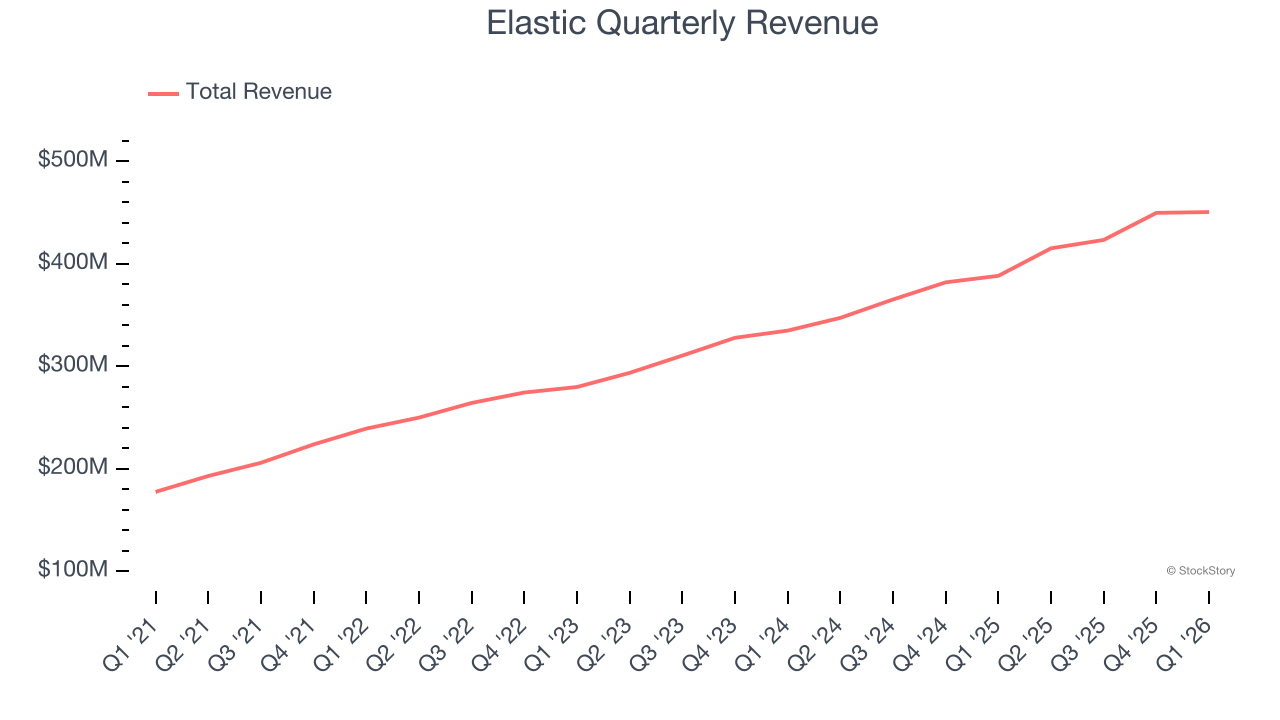
Search AI platform provider Elastic (NYSE: ESTC) reported revenue ahead of Wall Street’s expectations in Q1 CY2026, with sales up 16% year on year to $450.7 million. The company expects next quarter’s revenue to be around $469.5 million, close to analysts’ estimates. Its non-GAAP profit of $0.61 per share was 8.4% above analysts’ consensus estimates.
Is now the time to buy Elastic? Find out by accessing our full research report, it’s free.
Elastic (ESTC) Q1 CY2026 Highlights:
- Revenue: $450.7 million vs analyst estimates of $446.6 million (16% year-on-year growth, 0.9% beat)
- Adjusted EPS: $0.61 vs analyst estimates of $0.56 (8.4% beat)
- Adjusted Operating Income: $66.9 million vs analyst estimates of $64.85 million (14.8% margin, 3.2% beat)
- Revenue Guidance for Q2 CY2026 is $469.5 million at the midpoint, roughly in line with what analysts were expecting
- Adjusted EPS guidance for the upcoming financial year 2027 is $3.25 at the midpoint, beating analyst estimates by 14.5%
- Operating Margin: -3.6%, in line with the same quarter last year
- Free Cash Flow Margin: 33.2%, up from 9.3% in the previous quarter
- Net Revenue Retention Rate: 112%, in line with the previous quarter
- Billings: $670.3 million at quarter end, up 29.3% year on year
- Market Capitalization: $5.58 billion
Company Overview
Built on the powerful open-source Elasticsearch technology that powers search functionality for thousands of websites worldwide, Elastic (NYSE: ESTC) provides a search and AI platform that helps organizations find insights from their data, monitor applications, and protect against security threats.
Revenue Growth
A company’s long-term sales performance is one signal of its overall quality. Any business can experience short-term success, but top-performing ones enjoy sustained growth for years. Luckily, Elastic’s sales grew at a solid 23.4% compounded annual growth rate over the last five years. Its growth beat the average software company and shows its offerings resonate with customers.
We at StockStory place the most emphasis on long-term growth, but within software, a half-decade historical view may miss recent innovations or disruptive industry trends. Elastic’s annualized revenue growth of 17.2% over the last two years is below its five-year trend, but we still think the results suggest healthy demand. 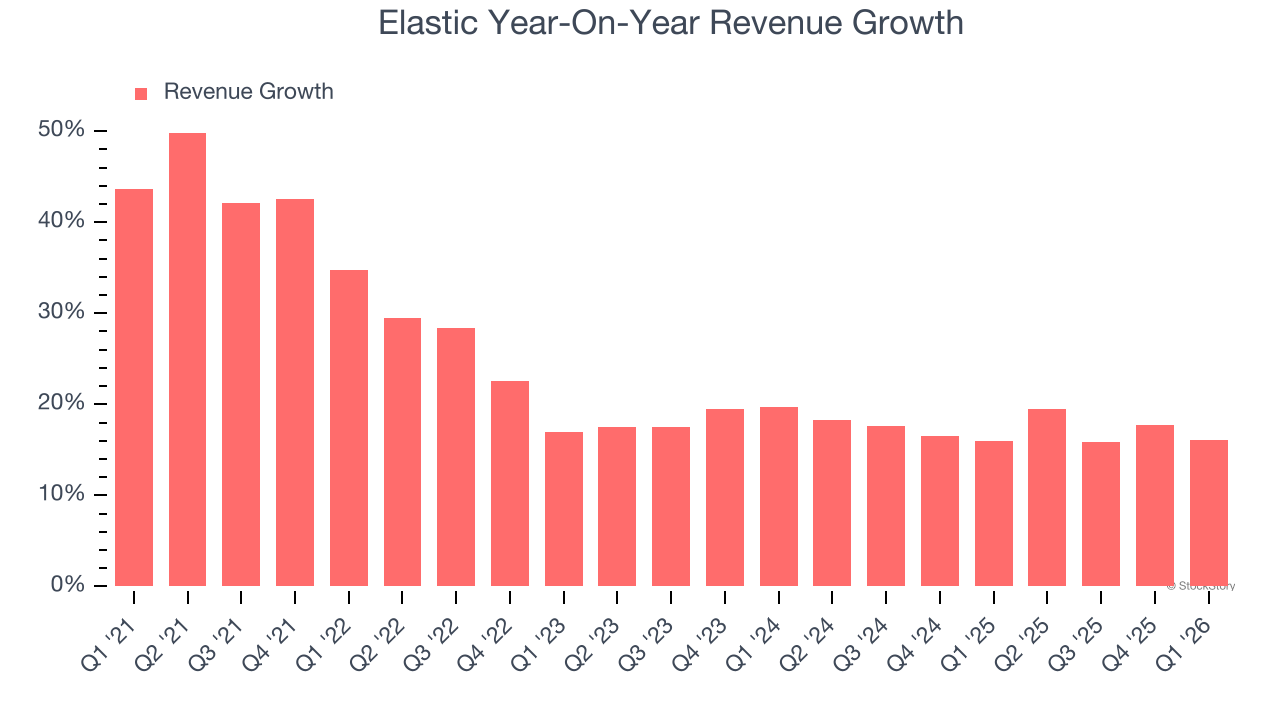
This quarter, Elastic reported year-on-year revenue growth of 16%, and its $450.7 million of revenue exceeded Wall Street’s estimates by 0.9%. Company management is currently guiding for a 13.1% year-on-year increase in sales next quarter.
Looking further ahead, sell-side analysts expect revenue to grow 13.2% over the next 12 months, a deceleration versus the last two years. This projection doesn’t excite us and suggests its products and services will see some demand headwinds.
WHILE YOU’RE HERE: The Next Palantir? One satellite company captures images of every point on Earth. Every single day. The Pentagon wants it. Hedge funds are using it to beat earnings. You’ve probably never heard of it.
This is what the early days of Palantir looked like before it became a $437 billion giant. Same playbook. Different technology. If you missed Palantir, you need to see this. Claim The Stock Ticker for Free HERE.
Billings
Billings is a non-GAAP metric that is often called “cash revenue” because it shows how much money the company has collected from customers in a certain period. This is different from revenue, which must be recognized in pieces over the length of a contract.
Elastic’s billings punched in at $670.3 million in Q1, and over the last four quarters, its growth slightly outpaced the sector as it averaged 15.8% year-on-year increases. This performance aligned with its total sales growth and shows the company is successfully converting sales into cash. Its growth also enhances liquidity and provides a solid foundation for future investments. 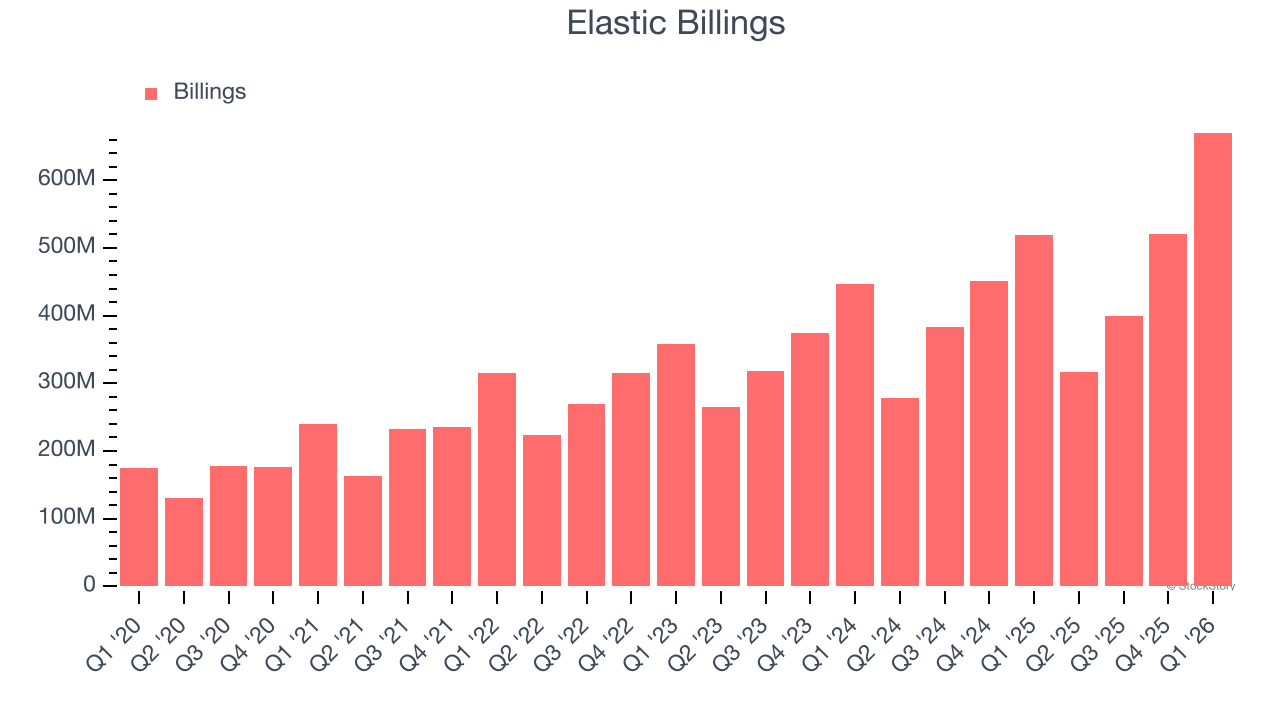
Customer Retention
One of the best parts about the software-as-a-service business model (and a reason why they trade at high valuation multiples) is that customers typically spend more on a company’s products and services over time.
Elastic’s net revenue retention rate, a key performance metric measuring how much money existing customers from a year ago are spending today, was 112% in Q1. This means Elastic would’ve grown its revenue by 12% even if it didn’t win any new customers over the last 12 months.
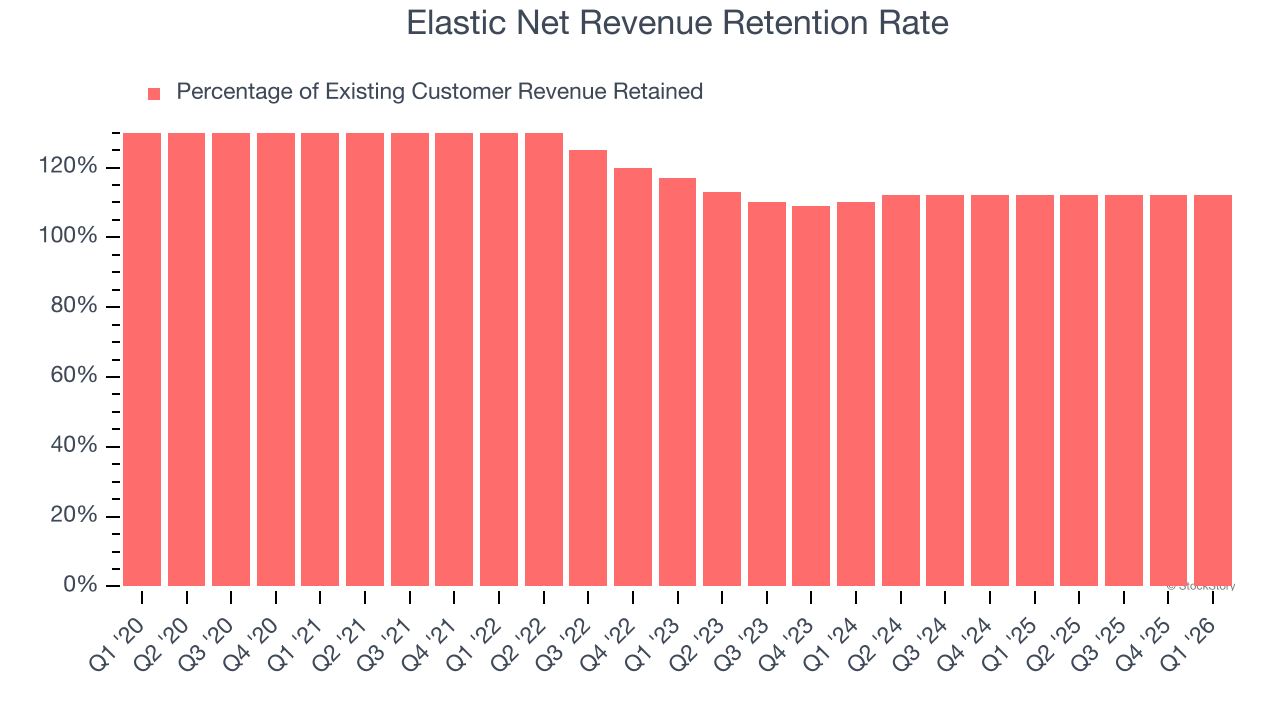
Elastic has a good net retention rate, proving that customers are satisfied with its software and getting more value from it over time, which is always great to see.
Key Takeaways from Elastic’s Q1 Results
We were impressed by how significantly Elastic blew past analysts’ billings expectations this quarter. We were also glad its full-year EPS guidance trumped Wall Street’s estimates. On the other hand, its EPS guidance for next quarter missed. Overall, this print had some key positives. The market seemed to be hoping for more, and the stock traded down 10.9% to $51.26 immediately following the results.
So do we think Elastic is an attractive buy at the current price? If you’re making that decision, you should consider the bigger picture of valuation, business qualities, as well as the latest earnings. We cover that in our actionable full research report which you can read here (it’s free).