The end of an earnings season can be a great time to discover new stocks and assess how companies are handling the current business environment. Let’s take a look at how Centrus Energy (NYSE: LEU) and the rest of the mixed or offshore upstream e&p stocks fared in Q1.
This category includes smaller or niche E&P companies operating in specialized basins, geographies, or resource types outside major classifications. These firms may target unconventional resources, frontier regions, or specific commodity niches. Tailwinds include potential for outsized returns from successful exploration, acquisition opportunities during industry downturns, and specialized expertise commanding premium valuations. Headwinds include higher operational and geological risks, limited scale reducing negotiating power and cost efficiencies, and constrained capital market access during challenging commodity environments. Regulatory risks and ESG concerns may disproportionately affect smaller operators with fewer resources for compliance.
The 21 mixed or offshore upstream e&p stocks we track reported a satisfactory Q1. As a group, revenues missed analysts’ consensus estimates by 5%.
While some mixed or offshore upstream e&p stocks have fared somewhat better than others, they have collectively declined. On average, share prices are down 3% since the latest earnings results.
Centrus Energy (NYSE: LEU)
Operating the only active U.S. facility licensed to produce high-assay low-enriched uranium (HALEU) for next-generation reactors, Centrus Energy (NYSE: LEU) supplies enriched uranium, the fissile component needed to produce fuel for nuclear power reactors.
Centrus Energy reported revenues of $76.7 million, up 4.9% year on year. This print exceeded analysts’ expectations by 3%. Overall, it was a stunning quarter for the company with a beat of analysts’ EPS and EBITDA estimates.
"The first quarter was marked by numerous wins and great operational progress as we accelerated our drive to restore America's ability to enrich uranium at scale, including securing historic federal funding and launching a major expansion of our centrifuge manufacturing plant," said Centrus President and CEO Amir Vexler.
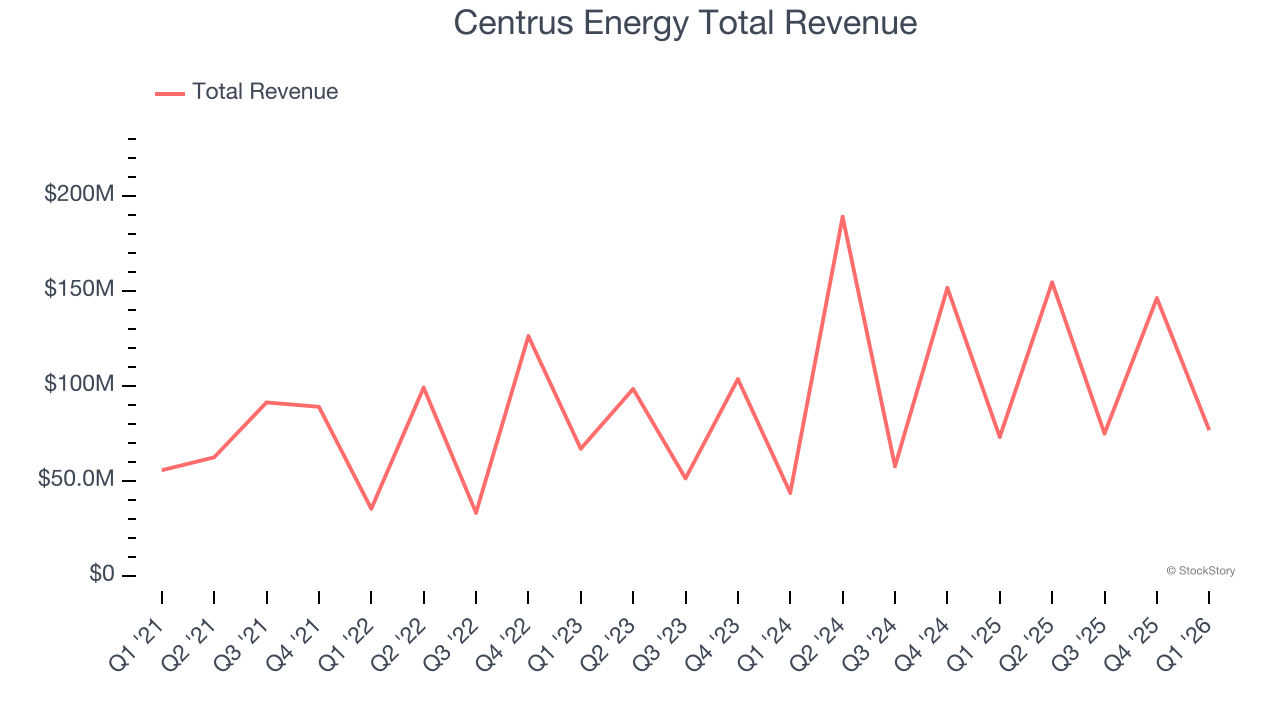
The stock is down 13% since reporting and currently trades at $179.31.
Is now the time to buy Centrus Energy? Access our full analysis of the earnings results here, it’s free.
Best Q1: Seadrill (NYSE: SDRL)
Operating in water depths reaching 12,000 feet below the surface, Seadrill (NYSE: SDRL) owns and operates drillships and semi-submersible rigs that drill oil and gas wells in deepwater offshore locations.
Seadrill reported revenues of $358 million, up 6.9% year on year, outperforming analysts’ expectations by 7.2%. The business had an incredible quarter with a beat of analysts’ EPS and EBITDA estimates.
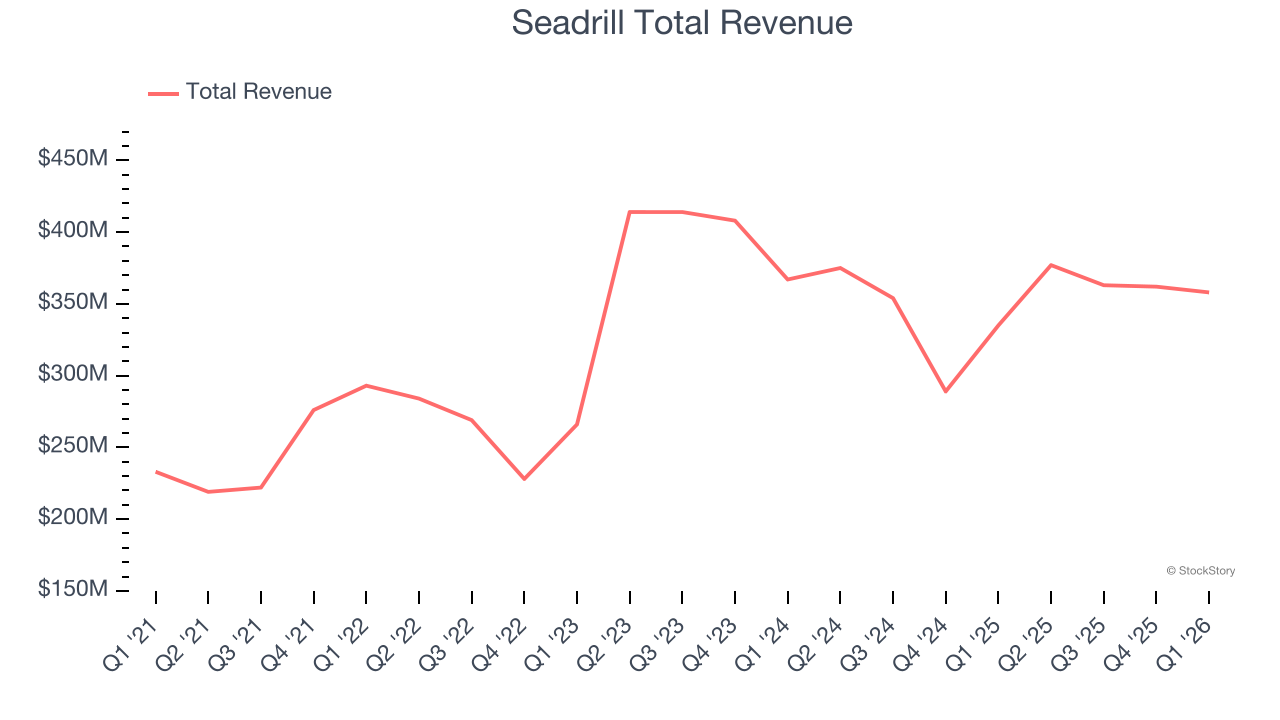
The market seems content with the results as the stock is up 4.4% since reporting. It currently trades at $50.44.
Is now the time to buy Seadrill? Access our full analysis of the earnings results here, it’s free.
Weakest Q1: Vitesse Energy (NYSE: VTS)
Taking a hands-off approach to energy production, Vitesse Energy (NYSE: VTS) owns non-operated stakes in oil and natural gas wells primarily in North Dakota and Montana's Williston Basin.
Vitesse Energy reported revenues of $67.41 million, up 1.9% year on year, falling short of analysts’ expectations by 6.8%. It was a disappointing quarter as it posted a significant miss of analysts’ EBITDA and EPS estimates.
As expected, the stock is down 5.2% since the results and currently trades at $18.09.
Read our full analysis of Vitesse Energy’s results here.
Peabody Energy (NYSE: BTU)
Beginning with a single wagon hauling coal in Illinois back when Grover Cleveland was president, Peabody Energy (NYSE: BTU) mines coal used by electricity generators and steel manufacturers.
Peabody Energy reported revenues of $973.3 million, up 3.9% year on year. This print was in line with analysts’ expectations. However, it was a disappointing quarter as it logged a significant miss of analysts’ EBITDA and EPS estimates.
The stock is down 7.2% since reporting and currently trades at $24.61.
Read our full, actionable report on Peabody Energy here, it’s free.
Black Stone Minerals (NYSE: BSM)
With roots dating to the late 1800s when railroads were expanding westward and land grants were common, Black Stone Minerals (NYSE: BSM) owns oil and natural gas mineral rights across the U.S., earning royalties when energy companies drill on its land.
Black Stone Minerals reported revenues of $59.36 million, flat year on year. This result missed analysts’ expectations by 39.5%. Aside from that, it was a very strong quarter as it produced a solid beat of analysts’ EBITDA and EPS estimates.
The stock is down 2.9% since reporting and currently trades at $13.83.
Read our full, actionable report on Black Stone Minerals here, it’s free.
Market Update
Late in 2025 into early 2026, there was hand wringing around artificial intelligence. For software companies, the fear was that AI would erode pricing power and compress margins as new tools made it easier to replicate what once required expensive enterprise platforms. Crypto investors had their own version of the same anxiety: if AI agents could trade, allocate capital, and manage wallets autonomously, what exactly was the long-term value of today’s crypto infrastructure?
These concerns triggered a noticeable rotation away from these sectors and into safer havens. But markets rarely dwell on one narrative for long. Spring 2026 came, and the focus shifted abruptly from technological disruption to geopolitical risk. The US’ conflict with Iran became the dominant driver of market psychology, and when geopolitics takes center stage, the script changes quickly. Investors stop debating growth rates and start worrying about oil supply, inflation, and global stability.
Want to invest in winners with rock-solid fundamentals? Check out our Top 5 Quality Compounder Stocks and add them to your watchlist. These companies are poised for growth regardless of the political or macroeconomic climate.
StockStory’s analyst team — all seasoned professional investors — uses quantitative analysis and automation to deliver market-beating insights faster and with higher quality.