
Healthcare distributor and services company Cardinal Health (NYSE: CAH) will be reporting earnings this Thursday before market hours. Here’s what investors should know.
Cardinal Health beat analysts’ revenue expectations last quarter, reporting revenues of $65.63 billion, up 18.8% year on year. It was a strong quarter for the company, with an impressive beat of analysts’ full-year EPS guidance estimates and a beat of analysts’ EPS estimates.
Is Cardinal Health a buy or sell going into earnings? Read our full analysis here, it’s free for active Edge members.
This quarter, the market is expecting Cardinal Health’s revenue to grow 13.5% year on year, improving from its flat revenue in the same quarter last year.
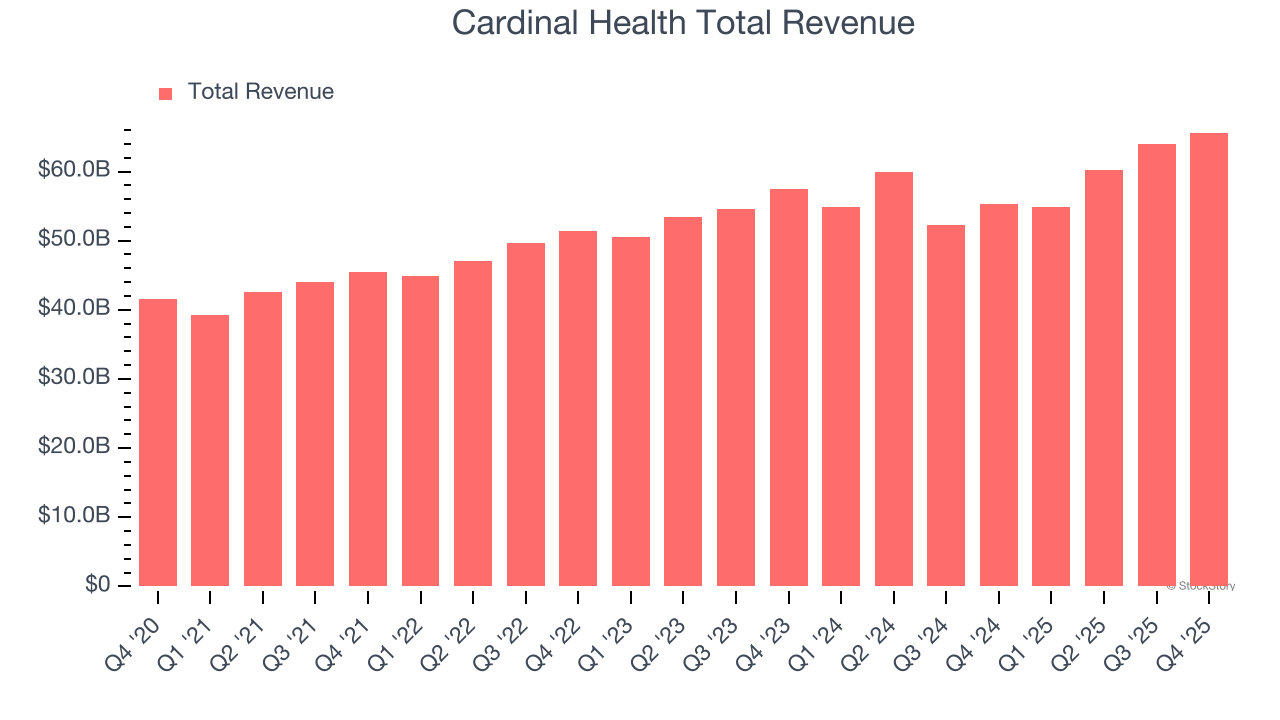
Heading into earnings, analysts covering the company have grown increasingly bullish with revenue estimates seeing in majority upward revisions over the last 30 days. Cardinal Health has missed Wall Street’s revenue estimates multiple times over the last two years.
Looking at Cardinal Health’s peers in the healthcare providers & services segment, some have already reported their Q1 results, giving us a hint as to what we can expect. Elevance Health delivered year-on-year revenue growth of 1.5%, beating analysts’ expectations by 2.4%, and UnitedHealth reported revenues up 2%, topping estimates by 1.7%. Elevance Health traded up 5.5% following the results while UnitedHealth was also up 9.3%.
Read our full analysis of Elevance Health’s results here and UnitedHealth’s results here.
There has been positive sentiment among investors in the healthcare providers & services segment, with share prices up 10.8% on average over the last month. Cardinal Health’s stock price was unchanged during the same time and is heading into earnings with an average analyst price target of $248.27 (compared to the current share price of $206.15).
ONE MORE THING: The $21 AI Application Stock Wall Street Forgot. While Wall Street obsesses over who’s building AI, one company is already using it to print money. And nobody’s paying attention.
AI chip stocks trade at ridiculous valuations. This company processes a trillion consumer signals monthly using AI and trades at a third of the price. The gap won’t last. The institutions will figure it out. You need to see this first. Read the FREE Report Before They Notice.