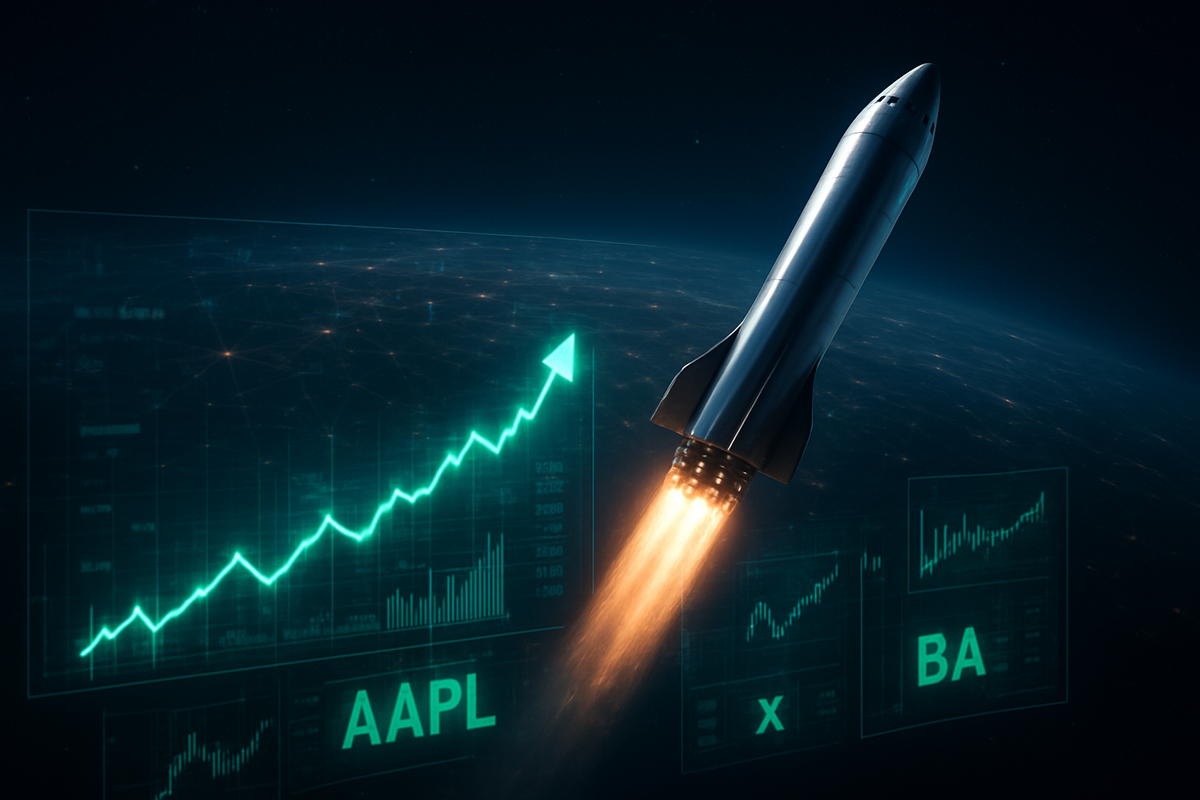
The financial world is bracing for what is being described as a "generational market event" following reports that SpaceX has submitted a confidential filing with the SEC for an initial public offering (IPO). Internally codenamed "Project Apex," the filing, which reportedly occurred on April 1, 2026, signals a monumental shift for the aerospace giant as it moves to consolidate its dominance in orbital launch, global telecommunications, and artificial intelligence into a single, publicly-traded "Galactic Conglomerate."
Initial leaks suggest that CEO Elon Musk intends to shatter traditional Wall Street gatekeeping by earmarking a record-breaking 30% of the offering—potentially worth over $20 billion—specifically for retail investors. This unprecedented allocation aims to "democratize the stars," according to sources close to the company, and could redefine the relationship between high-growth private entities and the public markets. With a target valuation nearing $2 trillion, the SpaceX IPO is poised to become the largest listing in history, dwarfing previous records and sending shockwaves through the technology and aerospace sectors.
The Path to 'Project Apex': A Trillion-Dollar Integration
The rumors of a 2026 listing follow a series of aggressive strategic maneuvers by SpaceX over the past year. Most notably, reports from February 2026 suggest SpaceX completed a quiet, all-stock merger with Musk’s other private ventures, xAI and X (formerly Twitter). This consolidation has pitched the IPO as more than just a rocket company; it is being marketed to institutional giants like Goldman Sachs (NYSE: GS) and Morgan Stanley (NYSE: MS) as an integrated infrastructure play where Starlink satellites provide the data backbone for Grok AI’s global processing needs.
The timeline leading to this moment has been defined by the explosive growth of Starlink, which reached 10 million active subscribers earlier this year. Financial analysts estimate that Starlink generated over $15 billion in revenue in 2025, providing the predictable cash flow necessary to support the capital-intensive Starship program. The transition of Starship V3 to fully operational status in early 2026—offering dedicated heavy-lift launches for just $90 million—has essentially cemented a monopoly on high-mass orbital transport, leaving competitors scrambling to catch up.
The rumored 30% retail slice is perhaps the most disruptive element of the "Project Apex" plan. Traditionally, retail investors are lucky to receive 5% to 10% of a high-profile IPO, often at the mercy of platform-specific lotteries. By reserving nearly a third of the float for individual traders on platforms like Robinhood Markets (NASDAQ: HOOD) and SoFi Technologies (NASDAQ: SOFI), Musk is signaling a direct challenge to institutional dominance. Furthermore, reports suggest the company may waive the standard 180-day lock-up period for retail participants, a move that would provide immediate liquidity but also introduce potential for extreme price volatility in the weeks following the debut.
Market Winners and Losers: The Billion-Dollar Ripple Effect
The primary winner of a SpaceX IPO would likely be Alphabet Inc. (NASDAQ: GOOGL). As an early investor in SpaceX, Alphabet’s estimated 7% stake could be worth upwards of $140 billion post-listing, providing a massive boost to its balance sheet and potentially funding a new era of AI-driven capital expenditures. Similarly, EchoStar Corp (NASDAQ: SATS) stands to gain significantly; following its 2025 spectrum deal for Starlink’s direct-to-cell expansion, EchoStar has become a critical strategic partner whose valuation is now increasingly tied to SpaceX’s orbital success.
Conversely, the "Project Apex" announcement has cast a long shadow over traditional aerospace and satellite competitors. Companies like Rocket Lab USA (NASDAQ: RKLB) and Astra Space (NASDAQ: ASTR) find themselves in an environment where SpaceX’s scale allows it to undercut launch prices while simultaneously sucking the oxygen out of the capital markets. For Amazon.com Inc. (NASDAQ: AMZN), the stakes are equally high. While its Project Kuiper satellite constellation began commercial rollout in early 2026, it must now compete against a publicly-funded SpaceX that has both a head start in infrastructure and a massive retail "fanbase" that could drive its stock price to levels that defy traditional valuation metrics.
Perhaps the most complex dynamic involves Tesla Inc. (NASDAQ: TSLA). While many SpaceX bulls are also Tesla loyalists, there are growing concerns among analysts about "capital flight." If retail investors sell their Tesla positions to fund their entry into the SpaceX IPO, it could create sustained downward pressure on the electric vehicle maker's stock. Investors will be watching closely to see if Musk offers any "loyalty" incentives, such as preferential SpaceX allocations for long-term Tesla shareholders.
A New Era of Galactic Conglomerates and Regulatory Hurdles
The SpaceX IPO represents a pivot toward what analysts are calling "Galactic Conglomerates"—companies that own the entire vertical stack from hardware and transport to data and AI. This event fits into a broader trend of "de-SPAC-ing" and the return of the mega-IPO, but with a uniquely modern twist: the integration of private social media and AI assets into a public aerospace firm. This creates a regulatory minefield for the SEC, which is reportedly scrutinizing the xAI and X mergers for potential conflicts of interest, given that Musk acted as both the primary buyer and seller in those transactions.
Historically, the only comparison for an offering of this scale would be the 2019 IPO of Saudi Aramco. However, unlike a state-owned oil giant, SpaceX is a high-beta technology firm led by a polarizing figure. The reported "Grok AI mandate"—where Musk allegedly requires syndicate banks to subscribe to high-tier enterprise AI services to secure a spot in the IPO—highlights the unconventional and often combative nature of this listing. If successful, this IPO could set a precedent for other "super-apps" and private tech giants to bypass traditional institutional hurdles in favor of direct-to-retail distributions.
From a policy perspective, a public SpaceX will face unprecedented transparency requirements. For the first time, the public will have a line-item view into the costs of the Mars colonization program and the true profitability of Starlink. This could lead to increased political pressure regarding government contracts, as lawmakers and competitors like The Boeing Company (NYSE: BA) and Lockheed Martin Corp (NYSE: LMT) may use SpaceX's public filings to argue against its perceived monopolistic advantage in federal launch services.
The Road to the Summer Debut: Challenges and Opportunities
As the market looks toward a potential June or July 2026 listing on the Nasdaq (NASDAQ: NDAQ), the short-term focus will be on the SEC's response to the confidential filing. The agency's review of the "Project Apex" valuation—specifically how it justifies the $1.75 trillion price tag amidst a triple-digit price-to-earnings ratio—will be a critical hurdle. SpaceX will likely need to demonstrate that its revenue growth in the enterprise satellite sector can offset the massive R&D burn associated with its Starship missions to the Moon and Mars.
The strategic pivot required for SpaceX will be its transition from a mission-driven private entity to a quarterly-results-driven public corporation. While Musk has historically loathed the short-termism of public markets, the sheer capital requirements of his interplanetary ambitions have made this IPO inevitable. Market participants should prepare for extreme volatility; the combination of a high retail allocation and the lack of a lock-up period could lead to a "meme stock" environment on a multi-trillion-dollar scale, creating both massive opportunities for agile traders and significant risks for conservative portfolios.
Final Assessment: A Market-Defining Moment
The potential SpaceX IPO is more than just a financial transaction; it is a test of the market’s appetite for long-term, high-risk visionary projects in an era of AI-driven transformation. The key takeaway for investors is the sheer scale of the retail participation. If SpaceX successfully floats 30% of its shares to individual investors, it will effectively create a new class of "space-investors" whose loyalty to the brand may provide a price floor that institutional models cannot predict.
Moving forward, the market will be hyper-focused on Starship's operational reliability and the integration of xAI’s software into the Starlink network. Investors should watch for the formal "S-1" filing, which will reveal the definitive retail allocation and the finalized valuation. While the risks are substantial—ranging from regulatory pushback to execution hurdles in deep space—the "Project Apex" IPO marks the definitive beginning of the commercial space age on Wall Street.
This content is intended for informational purposes only and is not financial advice.