As of March 17, 2026, the long-promised "quantum era" has moved from the realm of science fiction into the corridors of corporate strategy. International Business Machines (NYSE: IBM) has unveiled a series of architectural breakthroughs that are fundamentally reshaping the competitive landscape of high-performance computing. By successfully deploying its Quantum System Two—a modular, "quantum-centric supercomputer"—IBM is no longer just chasing theoretical milestones; it is actively encroaching on the high-stakes optimization market traditionally dominated by D-Wave Systems (NYSE: QBTS).
The immediate implications are profound for the high-tech sector. As quantum processing nears commercial scalability, the rivalry between IBM’s "gate-based" universal systems and D-Wave’s specialized "quantum annealing" technology has reached a fever pitch. With IBM now demonstrating that its gate-based processors can handle the same complex optimization tasks as D-Wave—but with greater general-purpose flexibility—enterprises are being forced to choose between specialized niche speed and broad-spectrum computational utility.
The Architecture of Advantage: IBM’s 2026 Roadmap
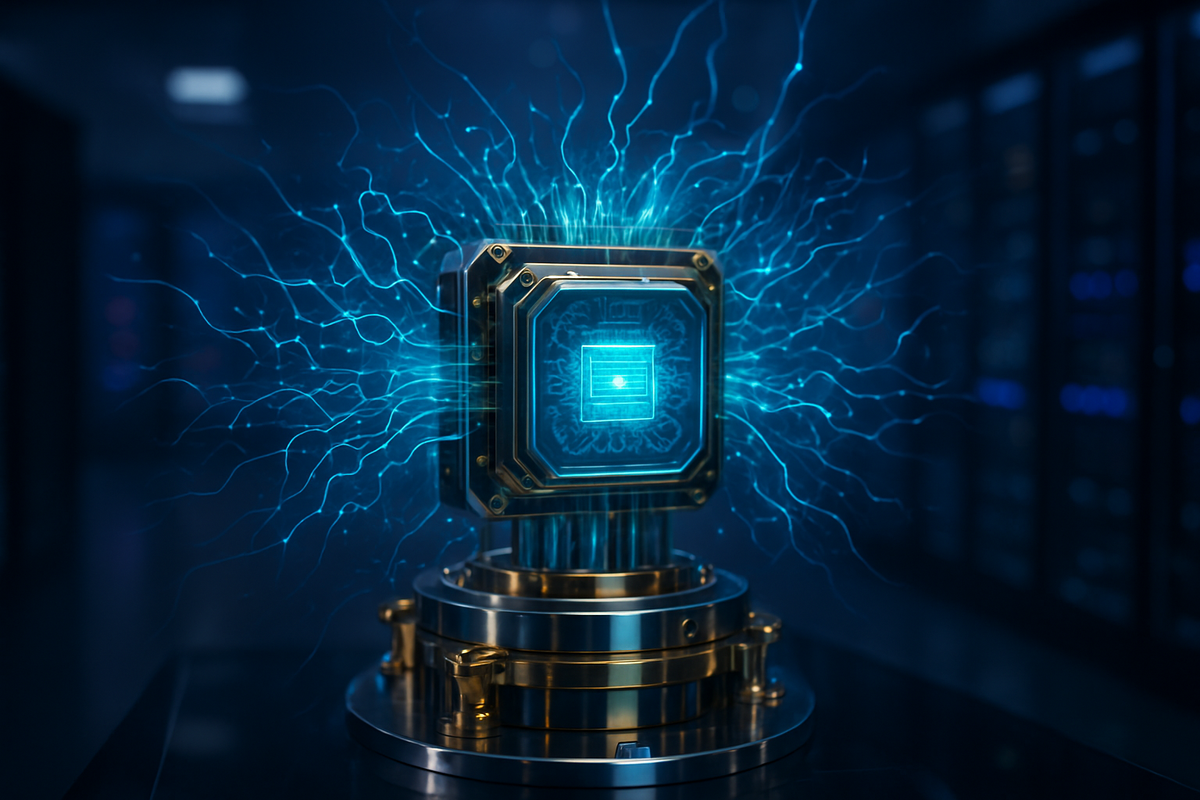
The centerpiece of IBM's recent success is the Heron R2 processor and the newly launched Nighthawk chip. These are not merely iterative updates; they represent a shift toward "utility-scale" quantum computing. The Heron R2, featuring 156 qubits with advanced tunable couplers, has demonstrated the ability to execute workloads in 2.4 hours that previously took 122 hours on older architectures. This leap in fidelity is being integrated into the Quantum System Two, a modular frame that allows multiple Quantum Processing Units (QPUs) to be linked via cryogenic cables, effectively creating a "quantum cluster."
Leading up to this moment, IBM’s 2025 rollout of the Nighthawk processor (120 qubits) introduced a square lattice topology that allows for 30% more circuit complexity than previous models. This has been the key driver in IBM’s "Quantum-Centric Supercomputing Reference Architecture," which seamlessly blends QPUs with GPUs from NVIDIA (NASDAQ: NVDA) and classical CPUs. The timeline culminated on March 12, 2026, when IBM demonstrated Kookaburra, a 1,386-qubit processor capable of parallelization, linking three chips to form a massive 4,158-qubit system. This modularity is a direct strike at the scaling challenges that have historically plagued superconducting qubits.
Industry reaction has been swift. Financial analysts have noted that IBM's recent $11 billion acquisition of Confluent (NASDAQ: CFLT), finalized today, further integrates real-time data streaming with these quantum workflows. This allows for "live" quantum-accelerated risk modeling and fraud detection, a capability that was purely theoretical only eighteen months ago.
Strategic Winners and the Pressure on Specialized Pure-Plays
In this shifting landscape, IBM appears to be the primary beneficiary, leveraging its massive R&D budget and enterprise relationships to position itself as the "safe" choice for Fortune 500 companies. Its stock (NYSE: IBM) has shown defensive strength, trading near $249.33 as investors bet on its long-term dominance in the quantum cloud. However, D-Wave Systems (NYSE: QBTS) is not surrendering its lead in the optimization space without a fight. While D-Wave’s stock has faced short-term volatility following a Q4 2025 earnings miss, the company continues to report record bookings. Its Advantage2 system, boasting over 4,400 qubits, remains the industry gold standard for specific logistics and scheduling problems where its analog annealing approach still outperforms IBM’s digitized gate-based simulations.
The "losers" in this phase of the quantum race are likely the smaller, legacy classical-computing firms that have failed to invest in "quantum-ready" infrastructure. Similarly, mid-tier quantum startups like Rigetti Computing (NASDAQ: RGTI) are facing intense pressure to scale their chiplet architectures as IBM and Alphabet (NASDAQ: GOOGL) pull ahead in the race for error correction. IonQ (NYSE: IONQ), while maintaining a lead in gate fidelity with its trapped-ion technology, must now contend with IBM’s massive scaling advantage. For the high-tech sector, the winners will be the early adopters in the pharmaceutical and financial sectors—such as JPMorgan Chase and Roche—who are already seeing 20x speedups in molecular simulation and portfolio rebalancing.
A Broader Industry Shift: From Labs to Legality
The significance of these breakthroughs extends far beyond corporate rivalry; it signals a transformation in global technology standards. We are now in what experts call the "Fault-Tolerant Foundation Era." This shift is characterized by a move away from Noisy Intermediate-Scale Quantum (NISQ) devices toward systems that can reliably correct their own errors. IBM’s modular approach is the blueprint for this transition, as it allows for the incremental addition of "logical qubits"—clusters of physical qubits that act as a single, error-free unit.
This progress has triggered a regulatory scramble. As of early 2026, the National Institute of Standards and Technology (NIST) has made its Post-Quantum Cryptography (PQC) standards—specifically FIPS 203, 204, and 205—mandatory for all federal systems. The "harvest-now, decrypt-later" (HNDL) threat is no longer a distant concern; with IBM and Google nearing 1,000+ high-fidelity qubits, the timeline for cracking RSA encryption has shortened significantly. Geopolitically, this has spurred a "Quantum Arms Race," with China recently announcing a 1 trillion yuan venture fund to counter the $625 million in renewed US Department of Energy funding for quantum research centers.
What Comes Next: The 2029 Horizon
Looking ahead, the next 18 to 24 months will be a period of intense strategic pivoting. IBM has already set its sights on its "Starling" processor, targeted for 2029, which aims to deliver 200 logical qubits capable of 100 million gate operations. In the short term, the market will be watching for "Quantum Advantage" benchmarks expected by late 2026, where a quantum computer must demonstrably outperform the world’s most powerful classical supercomputer on a commercially relevant task.
The challenge for D-Wave will be successfully executing its "dual-platform" strategy. By developing its own gate-based system alongside its annealing platform, D-Wave hopes to offer a "best of both worlds" solution. Meanwhile, market opportunities are emerging in "Quantum-as-a-Service" (QaaS), as companies like Amazon (NASDAQ: AMZN) and Microsoft (NASDAQ: MSFT) race to integrate these new IBM and D-Wave chips into their respective cloud ecosystems. The potential for a "killer app" in drug discovery or carbon capture remains the ultimate prize that could justify the billions in current valuations.
Final Assessment: A Market in Transition
The breakthroughs announced by IBM in early 2026 mark the end of the "hype cycle" and the beginning of the "utility cycle" for quantum computing. By solving the modularity puzzle, IBM has established a credible path toward commercial scalability, directly challenging D-Wave's specialized dominance in optimization. While D-Wave remains a formidable opponent with its deep-rooted commercial applications, the momentum has clearly shifted toward the "quantum-centric supercomputing" model championed by Big Blue.
For investors, the coming months will require a discerning eye. Watch for "utility-scale" benchmarks—not just qubit counts—as the true indicator of progress. The successful migration to Post-Quantum Cryptography will also be a major market mover, as companies that fail to secure their data against future quantum threats could face massive liability. As quantum processing begins to deliver real-world ROI in finance and pharmaceuticals, the technology is no longer a "future bet"—it is a present-day competitive necessity.
This content is intended for informational purposes only and is not financial advice.