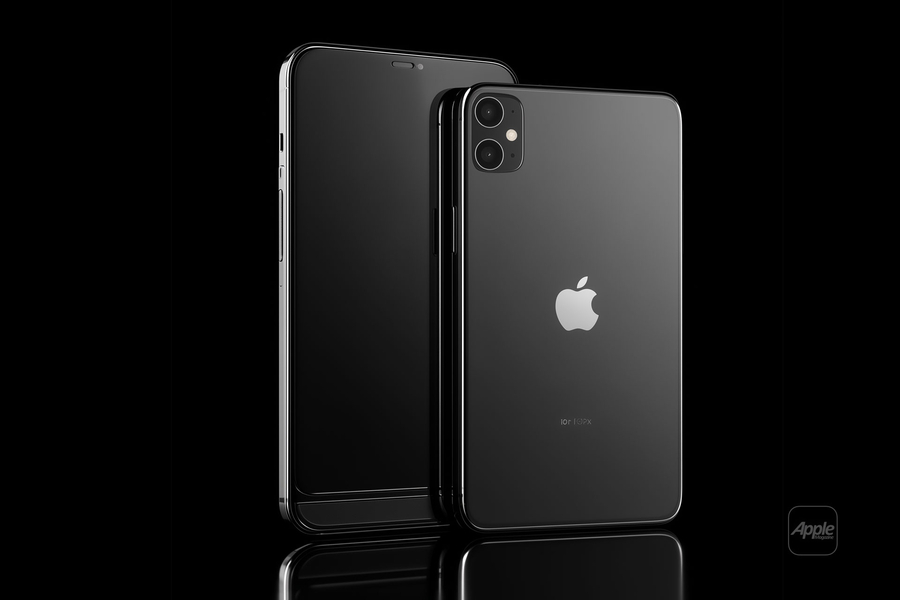
Apple foldable tech is more about reducing an iPad, not expanding an iPhone, and that changes how the next major device rumor should be understood.
ORLANDO, FL, April 30, 2026 /24-7PressRelease/ -- iPhone Fold has become the default name for a product Apple has not announced. That alone says a lot about the rumor cycle around the company. In recent months, a wave of reports, mockups, AI-generated images, and speculative timelines has treated a foldable iPhone as almost inevitable, then shifted just as quickly into talk of delays, cancellations, and internal hesitation. The problem with much of that coverage is not that Apple is ignoring foldable technology. The problem is that the rumor industry may be looking at the wrong product category.
"Apple foldable tech is more about reducing an iPad, not expanding an iPhone."
That statement may be the cleaner way to understand Cupertino's likely thinking. The iPhone is Apple's most important product by far, and it has been for 18 years since Steve Jobs introduced the original model in January 2007. Apple said in 2025 that it had sold its three-billionth iPhone, while the company's fiscal 2025 filing showed iPhone net sales of $209.59 billion out of $416.16 billion in total net sales. In Apple's first fiscal quarter of 2026, iPhone revenue reached $85.3 billion, up 23 percent year over year. Those numbers make the iPhone more than a product line. They make it the economic center of the company.
That is why the idea of Apple using the iPhone to "test the waters" with foldable hardware deserves more skepticism than it usually receives. A foldable iPhone could become a hit, but it would also be dragged immediately into the harshest possible debate: durability, price, crease visibility, repair cost, battery life, app behavior, long-term utility, and whether users actually unfold it enough to justify a premium price. For a product family that carries so much of Apple's revenue and brand perception, that is not a casual risk.
Why the iPhone Is the Hardest Place to Start
The iPhone is not just Apple's best-selling hardware category. It is the device that anchors services, accessories, payments, wearables, family accounts, app subscriptions, and upgrade cycles. A bold change to the iPhone does not affect only one model. It affects the company's most visible product identity.
That makes a foldable iPhone uniquely difficult. Foldable phones already face a complicated market reputation. They attract curiosity, but they also bring concerns around durability, thickness, weight, battery tradeoffs, crease quality, repair cost, and long-term behavior. YouGov's 2024 survey of U.S. smartphone owners found that interest was strongest among younger adults, but durability was a major concern, with many respondents expressing worry about the screen and hinge. That kind of skepticism is exactly the environment Apple would have to enter if it launched a premium foldable iPhone.
Apple usually avoids entering a category until it can control the story. With iPhone Fold, that story would be hard to control from day one. If the price lands above $2,000, as several reports have suggested for a possible Apple foldable, the device becomes an instant target for the "expensive novelty" label. If the crease is visible, it becomes the headline. If the hinge raises durability questions, it becomes the review angle. If developers need time to optimize software, early users become the test audience.
That is not impossible for Apple to manage. The company has launched expensive first-generation products before. But the iPhone is different. Apple can experiment more freely around Vision Pro, Apple Watch, or a new accessory class because those products sit around the iPhone. A foldable iPhone would sit inside the center of Apple's economic engine.
There is also the usability question. Foldable phones are often sold on the promise of one device becoming two: a phone outside, a small tablet inside. That sounds persuasive in marketing, but real-world use can be more uneven. Public discussion among foldable owners often splits between people who love the unfolded canvas and people who use the larger screen less than expected once the novelty fades.
That is enough to explain why Apple would hesitate. A foldable iPhone would need to solve not only the display and hinge. It would need to solve the "why should this exist as an iPhone?" question for hundreds of millions of users who already have a mature device that works.
The iPad Is the More Logical Foldable
The iPad makes a stronger case for foldable technology because its central limitation is obvious: size. Users like the screen, but the footprint can be awkward. Larger iPads are excellent for drawing, reading, editing, multitasking, and watching video, but they are less convenient to carry. Smaller iPads are easier to move around, but they give up the canvas that makes the device powerful.
A foldable iPad answers that problem directly. It does not ask Apple to expand a phone into a tablet. It lets Apple reduce a tablet into something easier to carry. That is a cleaner product logic.
The everyday use case is also more natural. A person who buys an iPad for the screen is likely to appreciate the ability to fold that screen down when not in use. The fold is not a gimmick. It becomes the storage and portability solution for the device's most obvious tradeoff. A large workspace can become a smaller object. A reading or drawing canvas can collapse into a more travel-friendly form. A device used at a desk, on a couch, in a classroom, or on a flight can become easier to carry between those places.
That is why the phrase matters: reducing an iPad, not expanding an iPhone.
Foldable technology fits the iPad's problem better than the iPhone's. The iPhone already succeeds because it is always with the user, pocketable, durable, and instantly available. Adding a fold may make it more complex before it makes it more useful. The iPad, by contrast, is often limited by the exact thing a fold can improve: surface area when in use versus footprint when carried.
Reports around Apple's foldable testing already point in that direction. Several recent stories have described a large foldable Apple device, sometimes framed as a folding iPad or folding MacBook-style product, with Bloomberg's reporting cited by multiple outlets as suggesting a roughly 20-inch foldable concept that may remain experimental or be delayed. The details remain unconfirmed, and Apple has not announced the product, but the existence of reported large-screen experiments makes more strategic sense than the idea that Apple's foldable work must automatically become an iPhone first.
A foldable iPad also gives Apple more room to define a new category without risking the core iPhone line. The iPad business is important, but it does not carry the same revenue burden as iPhone. In fiscal 2025, Apple reported iPad net sales of $28.02 billion, compared with $209.59 billion for iPhone. That difference alone explains why the iPad is a safer place to introduce a more experimental form factor.
The Rumor Cycle Is Reading Apple Backward
The foldable rumor cycle has become especially noisy because AI-generated images and short-form speculation can make an unannounced product feel real long before it exists. A device can be rendered from every angle, given a launch date, assigned a price, and treated as delayed or canceled even when the underlying evidence remains thin. That is now happening with Apple's foldable work.
The past week showed the pattern clearly. Some reports framed the large foldable device as a canceled or endangered project. Others pointed toward a foldable iPhone as still on track. Some connected the matter to John Ternus, who is set to become Apple CEO in September 2026, even though Apple's actual product timelines are built across years and rarely belong to one executive decision in the simplistic way rumor headlines suggest. The foldable testing almost certainly exists in some form. The question is whether the rumor industry has correctly identified the product Apple would be willing to ship first.
Apple's history argues for caution. The company often prototypes categories for years before deciding whether the usability, materials, software, price, and market timing are right. Not every prototype becomes a product. Not every supply-chain rumor becomes a launch. Not every canceled experiment means Apple has retreated from the broader technology.
That is especially true for foldables. The display is only one part of the decision. Apple would have to solve hinge durability, display protection, app layouts, iPadOS or iOS behavior, weight, battery, thermal design, accessory compatibility, repairability, and price. It would also need the final product to explain itself instantly. Apple rarely ships hardware just because the industry has a trend line available.
A foldable iPad explains itself more easily than a foldable iPhone. The iPad wants to be larger when used and smaller when carried. That is the entire pitch. The iPhone already solved its core portability problem 18 years ago. Making it unfold into something larger may interest early adopters, but it does not automatically solve a mainstream problem for the product line.
That does not mean an iPhone Fold will never exist. Apple may eventually launch one when the hardware is mature, the software is ready, and the price can be justified. But the more strategic first move may be a device that lets Apple introduce foldable technology without turning its most important product into a public stress test.
Apple's foldable future should be read through product logic, not rumor momentum. The iPhone is too central to Apple's economics to become the easiest experimental stage. The iPad has the clearer usability case, the safer business profile, and the more obvious benefit from a reduced footprint. If Apple is truly preparing a foldable device, the question may not be how the company expands the iPhone. It may be how it finally makes a large iPad smaller when the screen is no longer needed.
AppleMagazine is a digital media platform covering news, analysis, and insights across Apple's ecosystem of devices, services, apps, and entertainment. The platform serves a global audience of Apple users and technology enthusiasts through its website, digital magazine, and official app, delivering authoritative coverage and editorial features focused on consumer technology and the evolving Apple ecosystem.
---
Press release service and press release distribution provided by https://www.24-7pressrelease.com