The landscape of digital creation has shifted fundamentally this month as Alphabet Inc. (NASDAQ: GOOGL) finalized the wide public rollout of Veo 3. This landmark release represents the transition of generative video from a technical curiosity into a production-ready tool capable of outputting cinema-grade 4K content with native, high-fidelity audio synchronization. By integrating these capabilities directly into the Gemini app and launching the professional-grade "Flow" platform for filmmakers, Google has effectively democratized high-end visual effects and cinematography for creators across the globe.
The significance of this development cannot be overstated; it marks the first time a major technology firm has provided a unified pipeline for visuals, sound, and identity consistency at this scale. For the millions of users with access to Gemini AI Pro and Ultra, the ability to generate a minute-long, 4K narrative sequence with realistic dialogue and ambient soundscapes is no longer a futuristic concept—it is a live feature. As of January 26, 2026, the creative community is already grappling with the implications of a world where the barrier between a script and a finished film is now measured in seconds rather than months.
Technical Capabilities and the "3D Latent Diffusion" Breakthrough
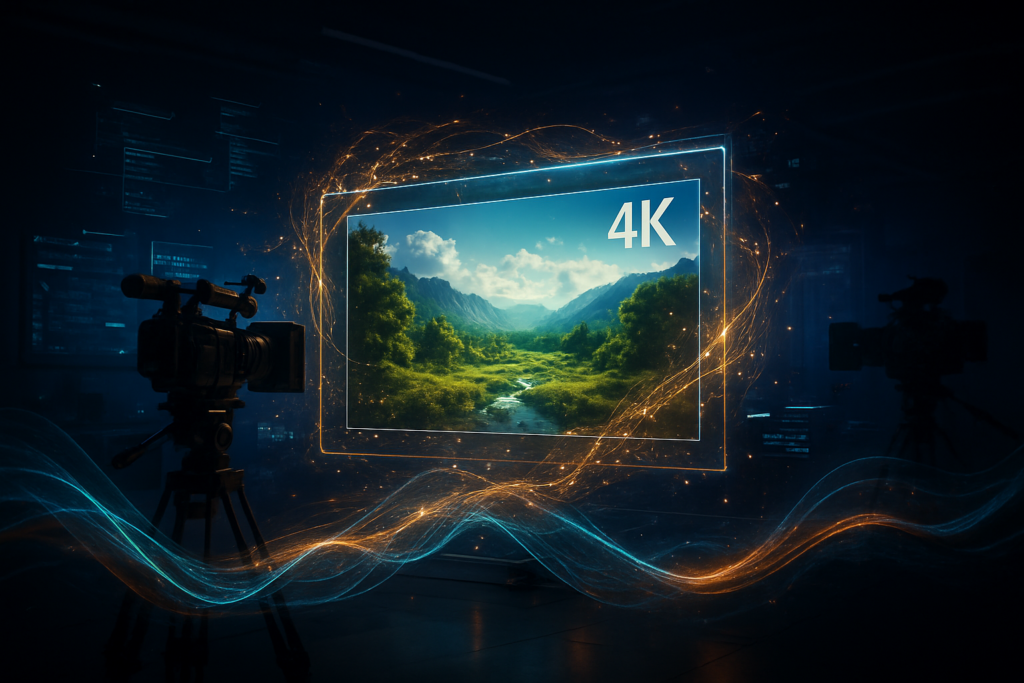
Veo 3, specifically version 3.1, utilizes a groundbreaking "3D Latent Diffusion" architecture that treats time as a spatial dimension, allowing for unprecedented physical consistency across frames. Unlike earlier iterations that often suffered from "morphing" or flickering, Veo 3 maintains the structural integrity of skin textures, fabric movements, and complex environmental lighting at a native 4K resolution (3840×2160). Perhaps the most striking technical advancement is the integration of 48kHz synchronized audio. This allows the model to generate not just the video, but the accompanying sound—ranging from perfect lip-synced dialogue to intricate musical scores—all guided by a single multi-modal prompt.
The platform introduces a feature called "Ingredients to Video," which addresses one of the most persistent hurdles in generative AI: character and object consistency. By uploading up to three reference images, filmmakers can ensure that a protagonist’s appearance remains identical across multiple scenes, even under different lighting conditions or camera angles. Furthermore, the model supports native 9:16 vertical video for mobile-first platforms like YouTube Shorts and TikTok, alongside traditional cinematic aspect ratios, making it a versatile tool for both social media influencers and independent documentarians.
Initial reactions from the AI research community have been largely celebratory, with many noting that Google has successfully bridged the "uncanny valley" that plagued previous models. Dr. Aris Thorne, a senior researcher at the Institute for Digital Ethics, noted that "the temporal stability in Veo 3.1 is the closest we have seen to true physics-based simulation in a generative model." However, some industry experts have pointed out that the model still occasionally experiences "hallucinatory physics" during extremely fast-paced action sequences, requiring creators to perform multiple "re-rolls" to achieve a flawless take.
Market Implications: Google vs. The Field
This rollout places Alphabet Inc. in a dominant position within the generative media market, directly challenging the dominance of specialized AI video startups and established rivals like OpenAI. While OpenAI’s Sora initially set the standard for video quality, Google’s integration of Veo 3 into the existing Gemini ecosystem and its specialized "Flow" suite provides a strategic advantage in terms of workflow and accessibility. For professional filmmakers, Flow offers a project-management-centric interface that includes granular controls for object removal, scene extension, and multi-track audio editing—features that turn a generative model into a legitimate creative workstation.
The competitive pressure is also being felt by traditional software giants like Adobe (NASDAQ: ADBE), whose Creative Cloud suite has long been the industry standard. By offering cinema-grade generation within the same environment where scripts are written and edited (Gemini), Google is creating a closed-loop creative ecosystem. This could potentially disrupt the VFX industry, as small-to-mid-sized studios may now find it more cost-effective to use AI-generated plates for backgrounds and secondary characters rather than hiring large teams for manual rendering.
Moreover, the tiered subscription model—where Google AI Ultra subscribers gain priority access to 4K upscaling—suggests a shift in how tech giants will monetize high-compute AI services. By locking the most advanced cinematic features behind professional paywalls, Google is signaling that it views Veo 3 not just as a consumer toy, but as a high-value enterprise tool. This move forces other players to accelerate their own public rollouts or risk losing the early-adopter professional market to Google’s all-in-one ecosystem.
Ethical Boundaries and the "AI Cinema" Era
The arrival of Veo 3 represents a pivotal moment in the broader AI landscape, signaling the end of the "silent film" era of generative AI. By combining vision and sound into a single, cohesive generation process, Google is mimicking the way humans perceive and experience reality. This holistic approach to media generation aligns with the industry trend toward "omni-modal" models that can reason across text, image, audio, and video simultaneously. It moves the conversation beyond simple image generation and toward the creation of entire digital worlds.
However, the widespread availability of such powerful tools brings significant safety and ethical concerns. To combat the potential for deepfakes and misinformation, Google has embedded SynthID watermarking into every frame and audio track generated by Veo 3. This imperceptible digital signature is designed to survive cropping, compression, and filtering, allowing users to verify the provenance of a video via Google’s own verification tools. While this is a major step forward for transparency, critics argue that the sheer volume of high-quality AI content could still overwhelm current detection systems and erode public trust in visual evidence.
The cultural impact is equally profound. As independent creators gain the ability to produce Hollywood-level visuals from their bedrooms, the "gatekeeper" status of traditional film studios is being challenged. This mirrors previous milestones like the advent of digital cameras or YouTube itself, but at an exponential scale. We are witnessing the birth of "AI Cinema," a genre where the primary constraint is no longer the budget or the size of the crew, but the imagination of the prompter.
Future Horizons: From Minutes to Features
In the near term, we can expect Google to further refine the "Flow" platform, likely adding real-time collaborative features that allow multiple directors to edit a single AI-generated project simultaneously. There is also significant buzz regarding "Interactive Veo," an experimental branch that could allow viewers to change the direction of a narrative in real-time, effectively blurring the lines between cinema and gaming. As compute efficiency improves, the current 60-second limit for continuous narrative blocks is expected to expand, potentially allowing for the generation of full feature-length sequences by the end of 2026.
Despite these advancements, the industry must still address the legal and philosophical challenges surrounding training data and intellectual property. As AI models become more capable of mimicking specific cinematic styles, the debate over "fair use" and compensation for the artists whose work informed these models will reach a fever pitch. Experts predict that the next major breakthrough will involve "Controllable AI Actors"—digital entities with persistent memories and personalities that can be "hired" by different creators for recurring roles across various films.
Conclusion: A New Chapter in Visual Storytelling
The wide public rollout of Veo 3.1 is more than just a software update; it is a declaration of the new reality of digital media. By providing cinema-grade 4K resolution, integrated 48kHz audio, and the professional Flow environment, Google has set a new benchmark for what generative AI can achieve. The inclusion of SynthID serves as a necessary, albeit complex, safeguard in an era where the distinction between real and synthetic is becoming increasingly blurred.
Key takeaways from this rollout include the arrival of true identity consistency and the integration of professional filmmaking workflows into consumer-grade AI. As we move through the early months of 2026, the tech industry and the creative world will be watching closely to see how these tools are utilized—and how traditional institutions respond to the rapid democratization of high-end production. The era of the AI-powered auteur has officially begun.
This content is intended for informational purposes only and represents analysis of current AI developments.
TokenRing AI delivers enterprise-grade solutions for multi-agent AI workflow orchestration, AI-powered development tools, and seamless remote collaboration platforms.
For more information, visit https://www.tokenring.ai/.