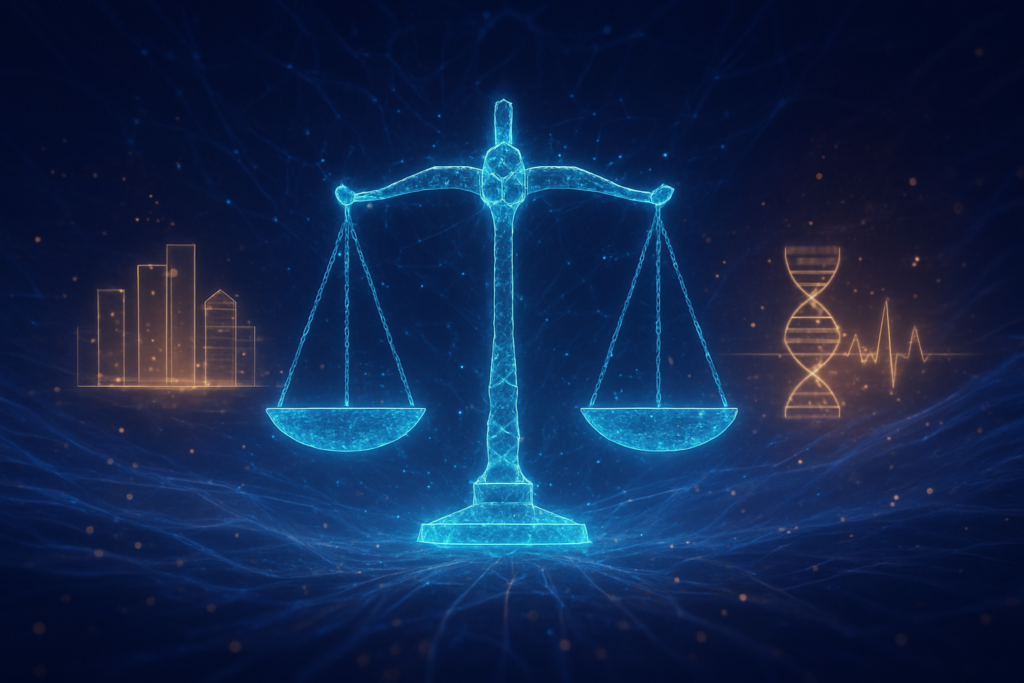
As the calendar turns to early 2026, the halls of Congress are witnessing a historic confrontation between technological rapid-fire and the foundational principles of American equity. The recent reintroduction of H.R. 6356, officially titled the Artificial Intelligence Civil Rights Act of 2025, marks the most aggressive legislative attempt to date to regulate the "black box" algorithms that increasingly govern the lives of millions. Introduced by Representative Yvette Clarke (D-NY) and Senator Edward Markey (D-MA), the bill seeks to modernize the Civil Rights Act of 1964 by explicitly prohibiting algorithmic discrimination in three critical pillars of society: housing, hiring, and healthcare.
The significance of H.R. 6356 cannot be overstated. As AI models transition from novelty chatbots to backend decision-makers for mortgage approvals and medical triaging, the risk of "digital redlining"—where bias is baked into code—has moved from a theoretical concern to a documented reality. By categorizing these AI applications as "consequential actions," the bill proposes a new era of federal oversight where developers and deployers are legally responsible for the socio-technical outcomes of their software. This move comes at a pivotal moment, as the technology industry faces a shifting political landscape following a late-2025 Executive Order that prioritized "minimally burdensome" regulation, setting the stage for a high-stakes legislative battle in the 119th Congress.
Technical Audits and the "Consequential Action" Framework
At its core, H.R. 6356 introduces a rigorous technical framework centered on the concept of "consequential actions." Unlike previous iterations of AI guidelines that were largely voluntary, this bill mandates that any AI system influencing a material outcome—such as a loan denial, a job interview selection, or a medical diagnosis—must undergo a mandatory pre-deployment evaluation. These evaluations are not merely internal checklists; the Act requires independent third-party audits to identify and mitigate bias against protected classes. This technical requirement forces a shift from "black box" optimization toward "interpretable AI," where companies must be able to explain the specific data features that led to a decision.
Technically, the bill targets the "proxy variable" problem, where algorithms might inadvertently discriminate by using non-protected data points—like zip codes or shopping habits—that correlate highly with race or socioeconomic status. For example, in the hiring sector, the bill would require recruitment platforms to prove that their automated screening tools do not unfairly penalize candidates based on gender-coded language or educational gaps. This differs significantly from existing technology, which often prioritizes "efficiency" and "predictive accuracy" without inherent constraints on historical bias replication.
Initial reactions from the AI research community have been cautiously optimistic. Experts from the Algorithmic Justice League and various academic labs have praised the bill’s requirement for "data provenance" transparency, which would force developers to disclose the demographics of their training datasets. However, industry engineers have raised concerns about the technical feasibility of "zero-bias" mandates. Many argue that because society itself is biased, any data generated by human systems will contain artifacts that are mathematically difficult to scrub entirely without degrading the model's overall utility.
Corporate Impact: Tech Giants and the Litigation Shield
The introduction of H.R. 6356 has sent ripples through the corporate headquarters of major tech players. Companies like Microsoft Corp. (NASDAQ: MSFT) and Alphabet Inc. (NASDAQ: GOOGL) have long advocated for a unified federal AI framework to avoid a "patchwork" of state-level laws. However, the specific language of the Clarke-Markey bill poses significant strategic challenges. Of particular concern to these giants is the "private right of action," a provision that would allow individual citizens to sue companies directly for algorithmic harm. This provision is viewed as a potential "litigation explosion" by industry lobbyists, who argue it could stifle the very innovation that keeps American AI competitive on the global stage.
For enterprise-focused companies like Amazon.com, Inc. (NASDAQ: AMZN) and Meta Platforms, Inc. (NASDAQ: META), the bill could force a massive restructuring of their service offerings. Amazon’s automated HR tools and Meta’s sophisticated ad-targeting algorithms for housing and employment would fall under the strictest tier of "high-risk" oversight. The competitive landscape may shift toward startups that specialize in "Audit-as-a-Service," as the demand for independent verification of AI models skyrockets. While tech giants have the capital to absorb compliance costs, smaller AI startups may find the burden of mandatory third-party audits a significant barrier to entry, potentially consolidating power among the few firms that can afford rigorous legal and technical vetting.
Strategically, many of these companies are aligning themselves with the late-2025 executive branch policy, which favors "voluntary consensus standards." By positioning themselves as partners in creating safety benchmarks rather than subjects of mandatory civil rights audits, the tech sector is attempting to pivot the conversation toward "safety" rather than "equity." The tension between these two concepts—one focused on preventing catastrophic model failure and the other on preventing social discrimination—is expected to be the primary fault line in the upcoming committee hearings.
A New Chapter in Civil Rights History
The wider significance of H.R. 6356 lies in its recognition that the civil rights battles of the 20th century are being refought in the data centers of the 21st. The bill acknowledges a growing trend where automation is used as a shield to hide discriminatory practices; it is much harder to prove intent when a decision is made by a machine. By focusing on the impact of the algorithm rather than the intent of the programmer, the legislation aligns with the legal theory of "disparate impact," a cornerstone of civil rights law that has been under pressure in recent years.
However, the bill arrives at a time of deep political polarization regarding the role of AI in society. Critics argue that the bill’s focus on "equity" is a form of social engineering that could hinder the medical breakthroughs promised by AI. For instance, in healthcare, where the bill targets clinical diagnoses, some fear that strict anti-bias mandates could slow the deployment of life-saving diagnostic tools. Conversely, civil rights advocates point to documented cases where AI under-predicted health risks for Black patients as proof that without these guardrails, AI will simply automate and accelerate existing inequalities.
Comparatively, this bill is being viewed as the "GDPR of Civil Rights." Much like how the European Union’s General Data Protection Regulation redefined global privacy standards, H.R. 6356 aims to set a global benchmark for how democratic societies handle algorithmic governance. It moves beyond the "AI Ethics" phase of the early 2020s—which relied on corporate goodwill—into an era of enforceable legal obligations and transparency requirements that could serve as a template for other nations.
The Road Ahead: Legislation vs. Executive Power
Looking forward, the immediate future of H.R. 6356 is clouded by a looming conflict with the executive branch. The "Ensuring a National Policy Framework for Artificial Intelligence" Executive Order, signed in late 2025, emphasizes a deregulatory approach that contradicts many of the mandates in the Clarke-Markey bill. Experts predict a protracted legal and legislative tug-of-war as the House Committee on Energy and Commerce begins its review. We are likely to see a series of amendments designed to narrow the definition of "consequential actions" or to strike the private right of action in exchange for bipartisan support.
In the near term, we should expect a surge in "algorithmic impact assessment" tools hitting the market as companies anticipate that some form of this bill—or its state-level equivalents—will eventually become law. The focus will likely shift to "AI explainability" (XAI), a subfield of AI research dedicated to making machine learning decisions understandable to humans. If H.R. 6356 passes, the ability to "explain" an algorithm will no longer be a technical luxury but a legal necessity for any company operating in the housing, hiring, or healthcare sectors.
The long-term challenge will be the enforcement mechanism. The bill proposes granting significant new powers to the Federal Trade Commission (FTC) and the Department of Justice to oversee AI audits. Whether these agencies will be adequately funded and staffed to police the fast-moving AI industry remains a major point of skepticism among policy analysts. As AI models become more complex—moving into the realm of "agentic AI" that can take actions on its own—the task of auditing for bias will only become more Herculean.
Concluding Thoughts: A Turning Point for Algorithmic Governance
The Artificial Intelligence Civil Rights Act of 2025 represents a defining moment in the history of technology policy. It is a clear signal that the era of "move fast and break things" is facing its most significant legal challenge yet. By tethering AI development to the bedrock of civil rights law, Rep. Clarke and Sen. Markey are asserting that technological progress cannot be divorced from social justice.
As we watch this bill move through the 119th Congress, the key takeaway is the shift from voluntary ethics to mandatory compliance. The debate over H.R. 6356 will serve as a litmus test for how society values the efficiency of AI against the protection of its most vulnerable citizens. In the coming weeks, stakeholders should keep a close eye on the committee hearings and any potential shifts in the administration's stance, as the outcome of this legislative push will likely dictate the direction of the American AI industry for the next decade.
This content is intended for informational purposes only and represents analysis of current AI developments.
TokenRing AI delivers enterprise-grade solutions for multi-agent AI workflow orchestration, AI-powered development tools, and seamless remote collaboration platforms.
For more information, visit https://www.tokenring.ai/.