Vancouver, British Columbia--(Newsfile Corp. - September 21, 2026) - Blue Star Gold Corp. (TSXV: BAU) (OTCQB: BAUFF) (FSE: 5WP0) ("Blue Star" or the "Company") announces the completion of its 2026 Phase 2 Drill Program, follow-up drilling results from the Auma Bamako Target, and results from the first drill holes at the Auma Penny Lane Target. Blue Star is a leading explorer in Canada's North with its projects strategically located along the proposed Grays Bay Road in the High Lake Belt, West Kitikmeot Region of Nunavut (Figure 1).
Highlights
26ABD006 returned 4.3 metres (m) of 6.06 grams per tonne gold (g/t Au) from 82.7 metres downhole, including two 0.3 m vein intervals assaying 35.40 g/t Au and 25.20 g/t Au
26ABD008 targeted the same mineralized structure, and returned 2.7 m of 6.23 g/t Au (includes 0.6 m of 19.75 g/t Au) from 60.1 metres downhole, and 2.4 m of 3.67 g/t Au (includes 0.4 m of 15.75 g/t Au) from 96.2 metres downhole
26APD012 tested the Penny Lane prospect, and returned 2.7 m of 2.73 g/t Au from 37.5 metres downhole in the first drilling of this prospect located 1,200 metres southwest of the Bamako Target
A total of 6,552 metres was completed across ten gold and critical mineral targets with most of the drilling targeting the new Auma discovery
"The follow up results from the Auma Bamako target continue to strengthen our interpretation of a significant gold-bearing system, with multiple holes now returning high-grade mineralization over meaningful widths," said Grant Ewing, CEO of Blue Star. "We are also encouraged by the first results from Penny Lane, where drilling has confirmed a mineralized structure beneath the 2025 surface discovery. Together, these results provide a solid foundation for refining our geological model and prioritizing follow-up drilling across the Auma Project."
Discussion of the Auma Project
The expanded Auma Project (News Release dated February 18, 2026) encompasses a district-scale land position prospective for both high-grade orogenic gold and volcanogenic massive sulphide (VMS) mineralization. The original Auma showing (Bamako) hosts high-grade, vein-hosted gold mineralization, including surface samples exceeding 100 g/t Au. The mineralization is associated with quartz veins, sulphide-rich selvages, and alteration halos. Historical drilling tested only a small portion of the known mineralized system. Blue Star's recent surface exploration work significantly expanded the mineralized footprint beyond previously drilled areas. The enlarged property now covers approximately 11,794 hectares of Crown and Inuit Owned Lands and includes multiple styles of mineralization, including carbonate-altered shear-hosted gold and VMS-related zinc and copper occurrences, highlighting the project's strong discovery potential and the significant opportunity presented by the large areas that remain unexplored.
The current 2,400-metre maiden drill program was designed to test the property's priority gold and copper-gold targets. The drill program focused on understanding and expanding known mineralization at the Bamako Zone, evaluating high-grade surface gold discoveries, and completing a reconnaissance test of the Penny Lane copper-gold target discovered in 2025 (News Release dated September 10, 2025). The program was supported by an extensive historical and modern exploration database, including drilling, geological mapping, surface geochemistry, and multiple airborne and ground geophysical surveys, providing a strong technical foundation for prioritizing targets and reducing exploration risk (Figure 2).
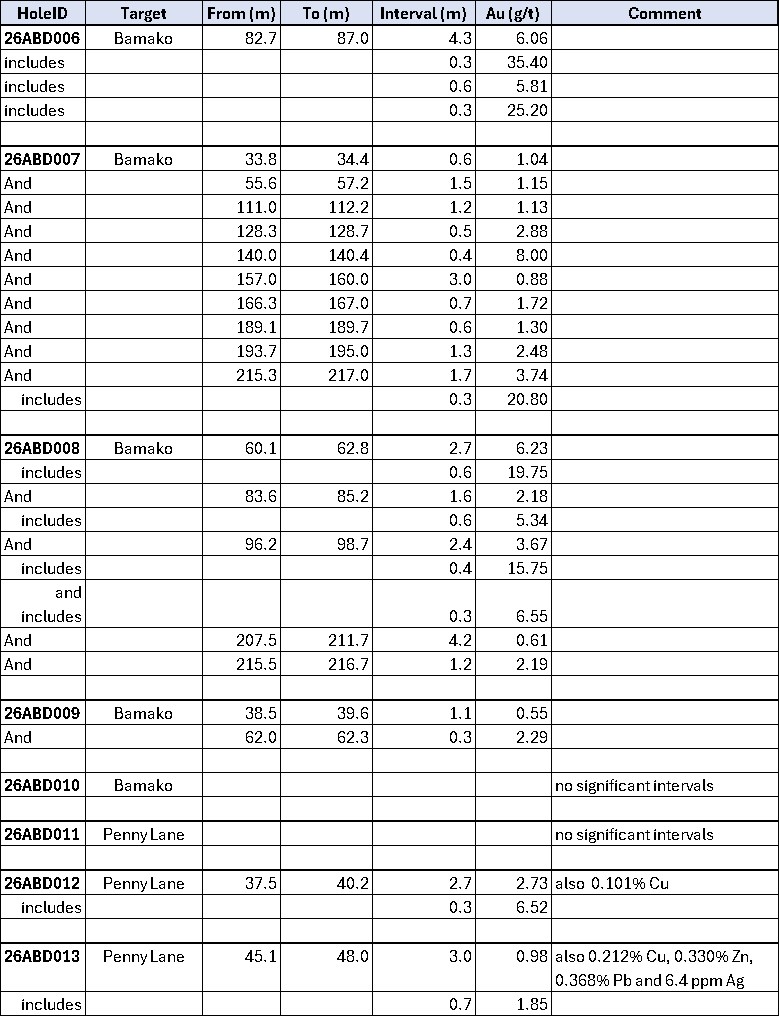
Follow-up drilling at Bamako has continued to intersect a broad system of altered volcanic and sedimentary rocks containing quartz veining and sulphide mineralization, with multiple structurally controlled mineralized intervals identified across a total of ten drill holes. The results confirm the continuity of mineralization between previously tested areas and provide additional evidence that the Bamako system extends beyond the limits of historical drilling. Assay results from the follow-up holes include several high-grade intervals (Table 2). Additional significant intervals occur throughout the holes, demonstrating multiple mineralized zones within the broader Bamako system.
Hole 26ABD006 was drilled down-dip from 26ABD005 (2.0 m of 10.6 g/t Au, News Release dated August 26, 2026) to test vertical continuity of the visible gold-bearing quartz vein. The hole intersected multiple sulphide-bearing quartz veins with visible gold and returned 4.3 m of 6.06 g/t Au, including 0.3 m of 35.40 g/t Au and 0.3 m of 25.20 g/t Au, supporting continuation of the mineralized structure down dip (Figure 3).
Hole 26ABD007 was drilled approximately 100 metres south-southeast of hole 26ABD003 (8.0 m of 2.65 g/t Au, News Release dated August 26, 2026) to evaluate coincident historical high-grade surface gold samples, a MaxMin electromagnetic conductor, magnetic anomaly, and the BAM fault zone. The objective was to determine whether these coincident geophysical and geological features represent a significant gold-bearing structure. The hole intersected variably deformed volcanic and sedimentary rocks with several shear zones and quartz-carbonate veins. A narrow quartz vein at 181.25-181.75 m contains 4-5% pyrrhotite and 1-2% chalcopyrite, representing the strongest mineralization observed in the hole.
Hole 26ABD008 was drilled approximately 40 metres south of 26ABD005/26ABD006, both of which intersected visible gold-bearing quartz veins. The objective was to determine strike continuity of these mineralized structures and test coincident geophysical anomalies. Drilling encountered volcanic rocks throughout the hole together with widespread silicification, an alteration style commonly associated with mineralizing fluids. A well-mineralized quartz vein was intersected, returning 2.7 m of 6.23 g/t Au (includes 0.6 m of 19.75 g/t Au), from 60.1 metres downhole, and 2.4 m of 3.67 g/t Au (includes 0.4 m of 15.75 g/t Au) from 96.2 metres downhole, indicating continuity of the mineralizing system (Figure 4).
Hole 26ABD009 evaluated a new target area approximately 600 metres from the known Bamako Target area. The target has many of the same geological and geophysical characteristics as the visible gold-bearing system to the north and lies along a major structural corridor connecting two important regional fault systems. Anomalous gold values were encountered within the targeted alteration and structural corridors; however no significant intervals were returned.
Hole 26ABD010 tested historical Bamako Zone 2 originally identified by BHP in 1995. The target combines a magnetic anomaly identified in both historical and 2025 airborne geophysical data with mapped quartz veining and high-grade gold samples collected at surface. Drilling intersected mafic volcanic rocks separated by sedimentary intervals. Although quartz veining and disseminated sulphides were encountered, no significant gold values were returned.
Discussion of the Auma - Penny Lane Target
Located 1.2 kilometres south of the Bamako Target, the Penny Lane Target is a quartz vein showing defined by base metal sulphides and locally significant gold grades (News Release dated September 10, 2025). The known showing was traced for approximately 200 metres at surface near the margin of the greenstone belt, where mafic volcanic rocks are in contact with belt bounding granitoids. Mineralization occurs as a series of sub-crops and frost heaved blocks. The 2026 program represents the first known drilling of this gold and base metal sulphide rich area.
Hole 26APD011 tested beneath several large quartz blocks containing significant chalcopyrite and minor galena mineralization. Sampling from 2025 returned assays up to 7.64 g/t Au and 4.2% Cu (News Release dated September 10, 2025). The drill hole remained entirely within granite and did not intersect the targeted volcanic-granite contact zone.
Hole 26APD012 tested the Penny Lane Target from the other side of the interpreted structure to better assess the source of the mineralized quartz float observed at surface. The drill hole intersected the volcanic-granite contact and encountered a well-mineralized quartz vein with an associated sulphide-rich alteration halo (Plate 1). Assay results returned 2.7m of 2.73 g/t Au and 0.101% Cu from 37.5 metres downhole.
Hole 26APD013 was drilled below 26APD012 to test the down-dip continuity of the mineralized structure. The projected quartz vein system was successfully intersected, returning 3.0 m of 0.98 g/t Au and 0.212% Cu from 45.1 metres downhole. The intercept confirms continuation of the mineralized structure down dip and provides additional information on its geometry and exploration potential.
Next Steps
Drilling on the Auma Project is completed for the year. Next steps include full data compilation, geological modeling and evaluating the project for further drill planning. This compilation work will include the Bamako Target, the Penny Lane Target and historical showings reviewed during the 2026 season, with the objective of identifying areas with the greatest potential to develop a potential new mineral resource center.
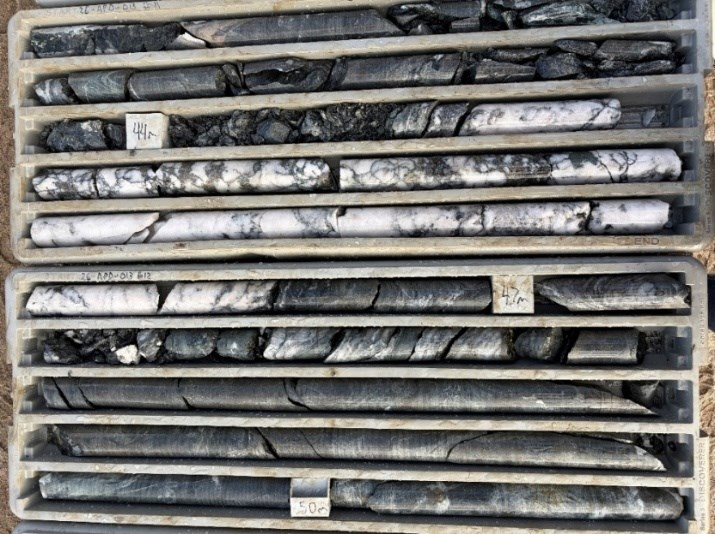
Plate 1: Penny Lane Drill Intercept: Mineralized Quartz Vein in Mafic Volcanic Rocks 1.2 km South of the Bamako Target
To view an enhanced version of this graphic, please visit:
https://images.newsfilecorp.com/files/2421/315134_a02cee82042caa05_002full.jpg
Table 1: Drill Collars
| HoleID | Easting | Northing | Elevation | Azimuth | Dip | Length (m) | Target |
| 26ABD006 | 491997 | 7446204 | 462 | 80 | -60 | 185 | Bamako |
| 26ABD007 | 492255 | 7445911 | 454 | 250 | -44 | 248 | Bamako |
| 26ABD008 | 492005 | 7446163 | 462 | 78 | -49 | 232.6 | Bamako |
| 26ABD009 | 491866 | 7446217 | 460 | 285 | -50 | 131 | Bamako |
| 26ABD010 | 492611 | 7445791 | 450 | 248 | -46 | 173 | Bamako |
| 26APD011 | 491195 | 7445343 | 453 | 90 | -51 | 101 | Penny Lane |
| 26APD012 | 491277 | 7445340 | 463 | 271 | -48 | 66.48 | Penny Lane |
| 26APD013 | 491277 | 7445340 | 463 | 271 | -76 | 68 | Penny Lane |
Note: Collar locations are in UTM NAD83, Zone 12N coordinates.
Table 2: Summary of Assay Results
To view an enhanced version of this graphic, please visit:
https://images.newsfilecorp.com/files/2421/315134_a02cee82042caa05_003full.jpg
Intervals are down hole lengths; there has been insufficient drilling to determine true thicknesses.
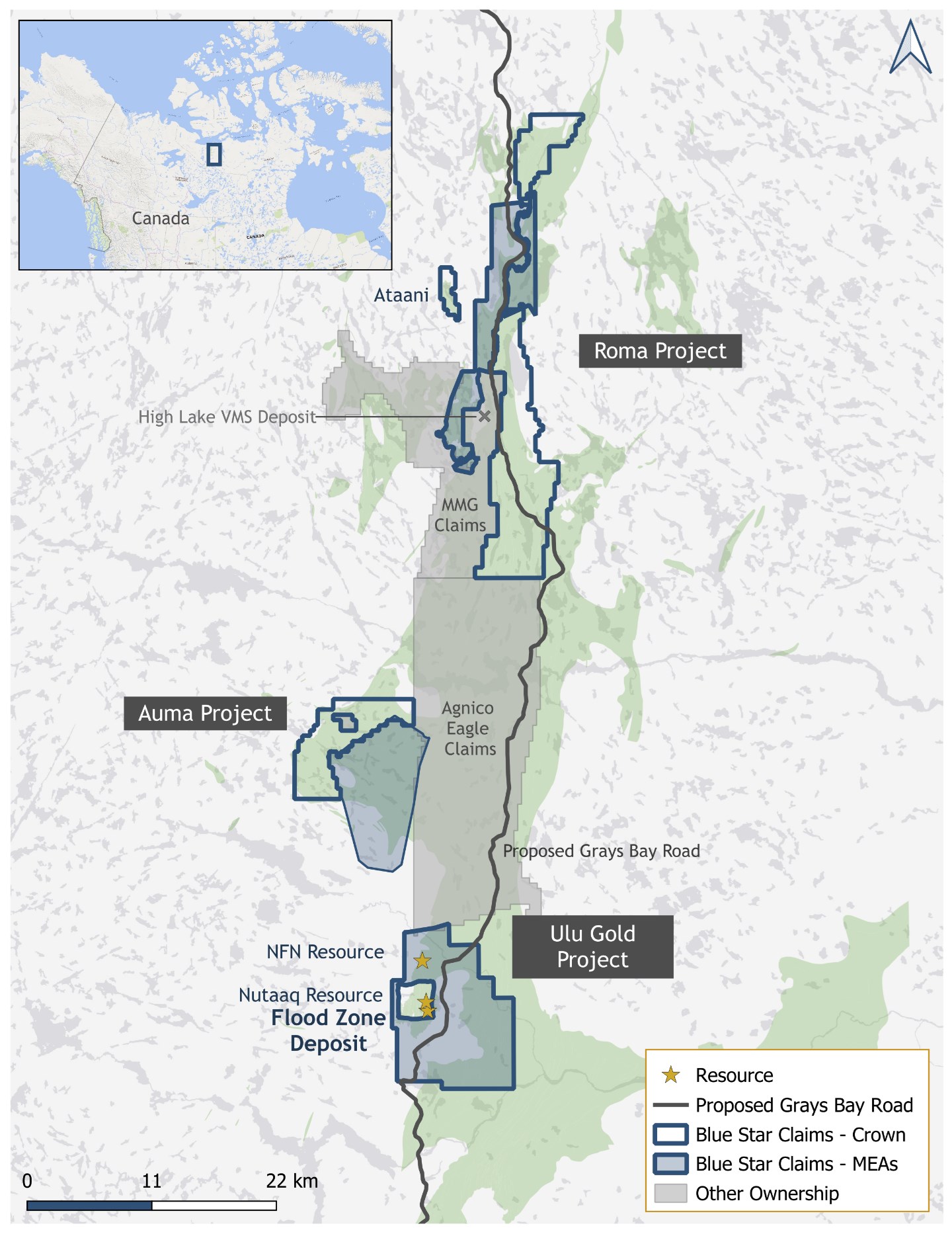
Figure 1: Location Map Showing Blue Star's Landholdings.
To view an enhanced version of this graphic, please visit:
https://images.newsfilecorp.com/files/2421/315134_a02cee82042caa05_004full.jpg
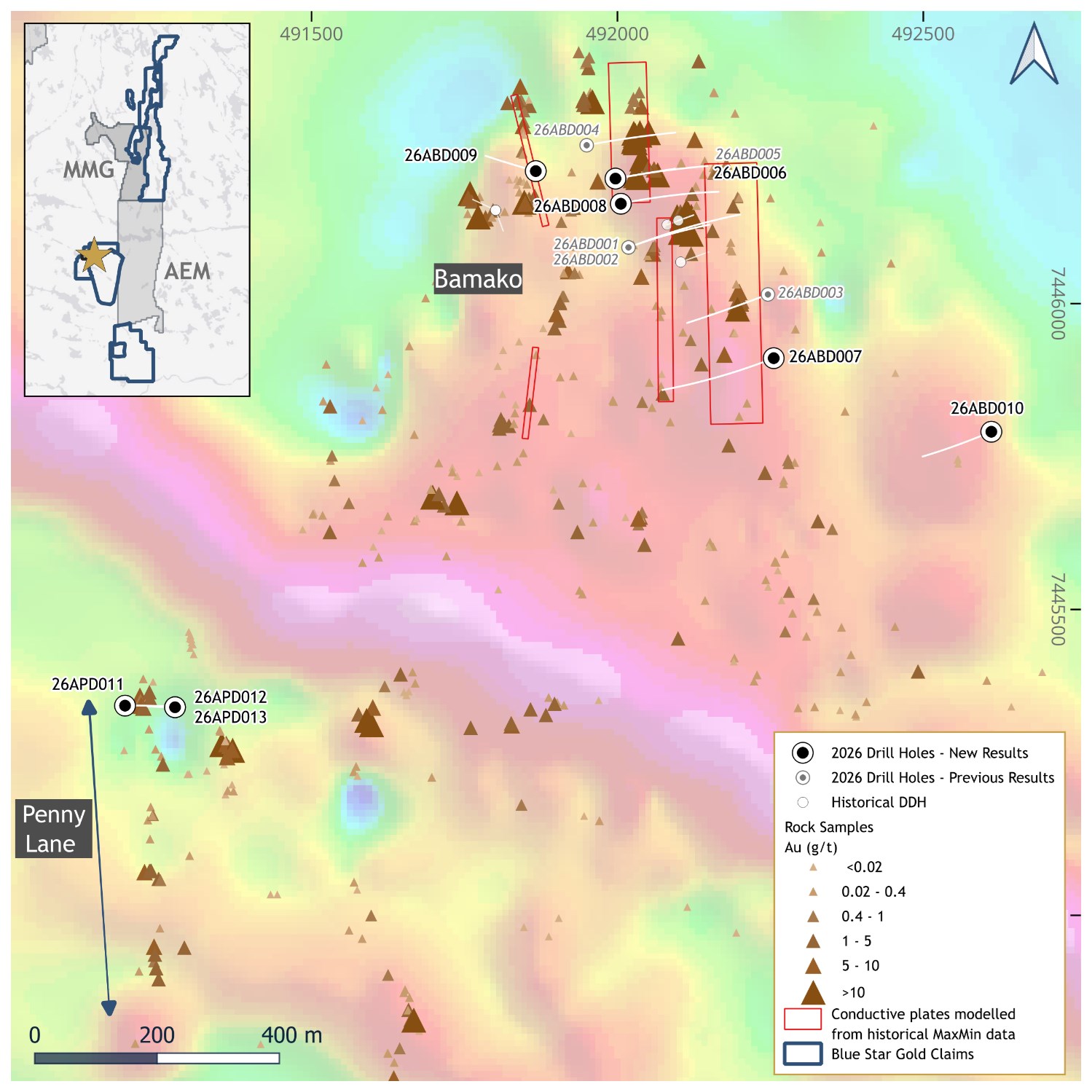
Figure 2: Auma Project with Bamako & Penny Lane Targets Shown on SkyTEM Total Magnetics Data Overlain with Gold Grades from Rock Samples.
To view an enhanced version of this graphic, please visit:
https://images.newsfilecorp.com/files/2421/315134_a02cee82042caa05_005full.jpg
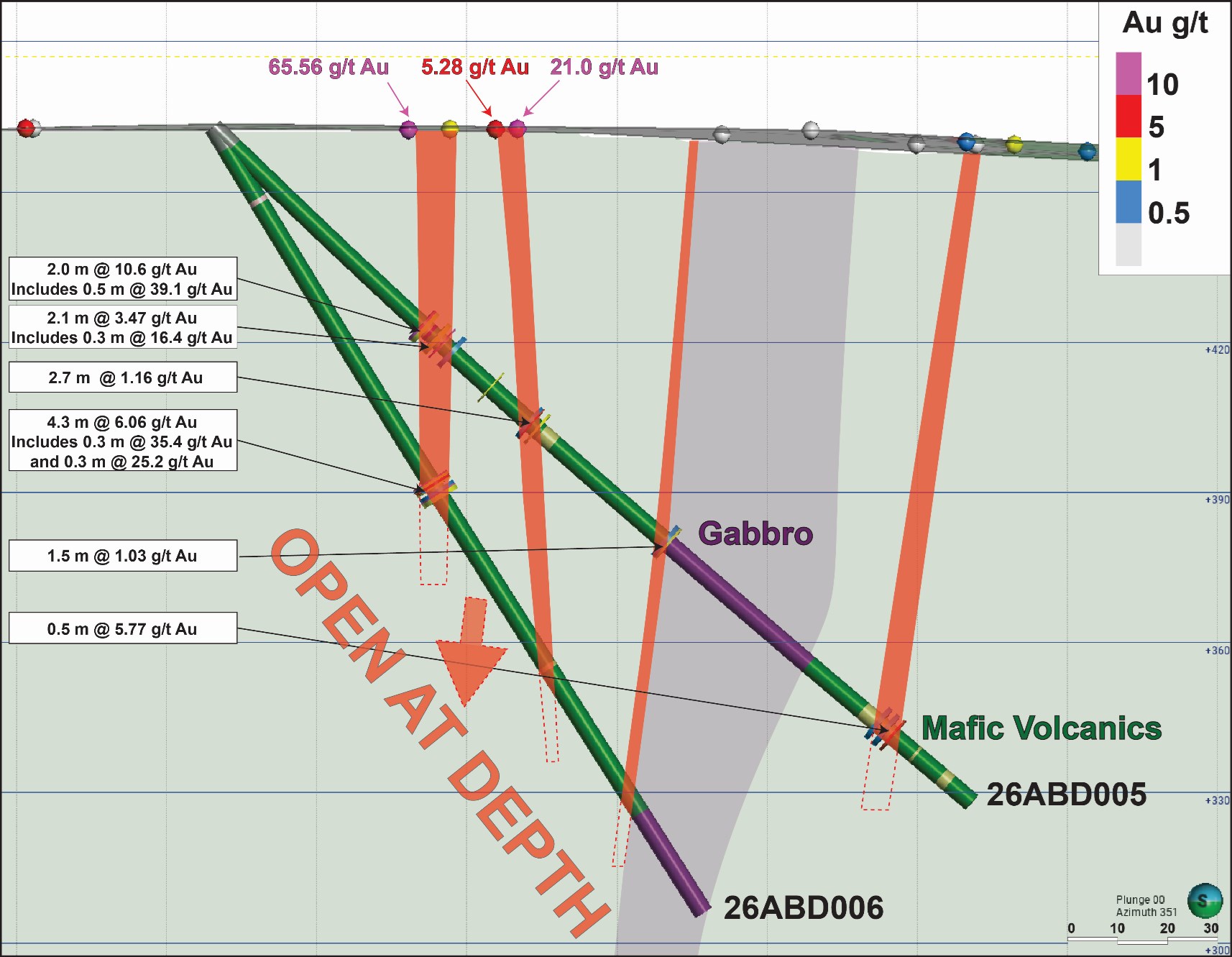
Figure 3: Vertical Cross Section of Drill Holes 26ABD005/26ABD006, Bamako Target.
To view an enhanced version of this graphic, please visit:
https://images.newsfilecorp.com/files/2421/315134_a02cee82042caa05_006full.jpg
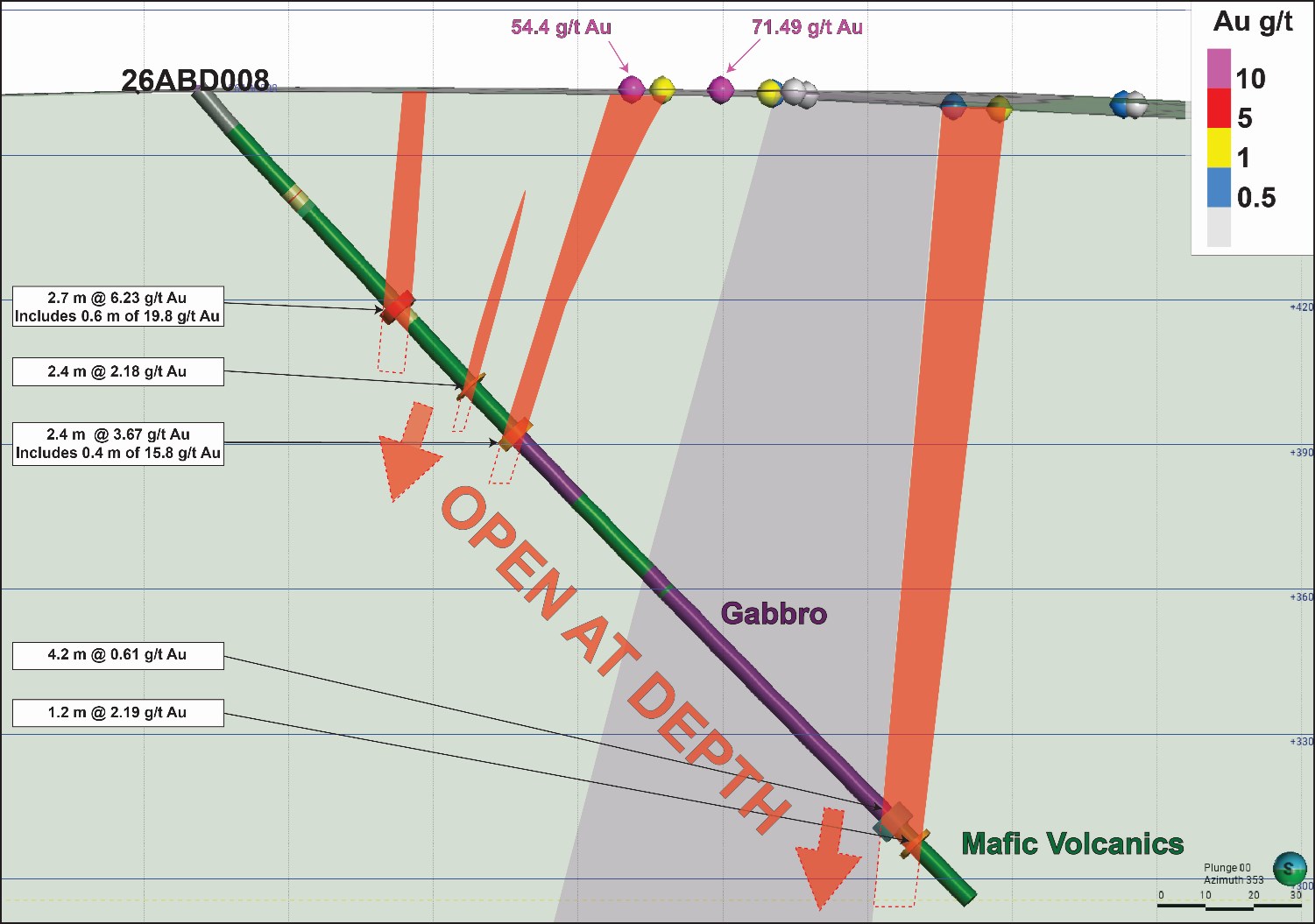
Figure 4: Vertical Cross Section of Drill Hole 26ABD008, Bamako Target.
To view an enhanced version of this graphic, please visit:
https://images.newsfilecorp.com/files/2421/315134_a02cee82042caa05_007full.jpg.
Exploration Leadership
Trish Toole has been appointed as Blue Star's Exploration Manager. Ms. Toole is a Professional Geoscientist with more than 20 years of mineral exploration experience, including extensive experience working in Nunavut and Canada's Arctic. She has a broad background in gold and base metal exploration and has led multidisciplinary field and drill programs in remote environments. Her combination of technical, field and operational experience will support Blue Star's continued exploration activities across its Nunavut projects.
Darren Lindsay, the Company's Vice President Exploration, will be resigning on October 30, but will continue to support Blue Star's exploration work programs as a Technical Advisor.
Sampling, Assaying & QA/QC
Blue Star field programs collect a variety of samples; prospecting rock samples are selective by nature, channel samples are saw-cut samples from outcrop intended to be representative of the exposed mineralisation, and drill core samples are sawn in half with one half retained as core record and the other half submitted for analysis. Blue Star samples are delivered under chain of custody to ALS Geochemistry in Yellowknife, NT for sample preparation which are then forwarded to ALS Canada Inc. in North Vancouver, BC for final analysis. Samples are prepared using code PREP-31 (crushing and pulverising) and analysed using codes Au-AA26 (50-gram fire assay with atomic absorption finish) and ME-MS61 (48 element four acid digestion with ICP-MS finish). Samples returning >10 g/t Au are reanalysed under code Au-GRA22 (50-gram fire assay with gravimetric finish). Over limits for non-gold elements are ore grade four acid digestion with ICP-AES finish. The work is being conducted using industry standard procedures, including a quality assurance and quality control ("QA/QC") program consisting of the insertion of certified standards, blanks and duplicates into the sample stream.
Trish Toole, P. Geo. and Exploration Manager for Blue Star, is a Qualified Person under National Instrument 43-101 ("NI 43-101") and has reviewed and approved the technical information contained in this news release.
About Blue Star Gold Corp.
Blue Star is a mineral exploration and development company focused on Nunavut, Canada. The Company controls over 420 square kilometres of highly prospective and underexplored mineral properties in the High Lake Greenstone Belt. Its principal assets include the Ulu Gold Project - comprised of the Ulu Mining Lease and Hood River Property, and the Roma and Auma Projects. The Ulu Mining Lease hosts the high-grade Flood Zone Gold Deposit, and the Company's broader land package contains numerous high-priority gold and critical mineral targets, providing substantial upside potential for Mineral Resource expansion.
Blue Star's projects are strategically located 40-100 km south of the proposed Grays Bay deep-water port, with the planned all-weather Grays Bay Road corridor passing very close to the Company's Projects. The Grays Bay Road and Port Project was recently referred to the Major Projects Office. Prime Minister Mark Carney created the Office last year to fast-track infrastructure projects that are deemed to be of national importance.
Blue Star is listed on the TSX Venture Exchange (BAU), the OTCQB Venture Market (BAUFF), and the Frankfurt Exchange (5WP0). Additional information is available at www.bluestargold.ca.
For further information, please contact:
Grant Ewing, P. Geo., CEO
Telephone: +1 778-379-1433
Email: info@bluestargold.ca
Neither the TSX Venture Exchange nor its Regulation Services Provider (as that term is defined in the Policies of the TSX Venture Exchange) accepts responsibility for the adequacy or accuracy of this Release.
CAUTIONARY NOTE REGARDING FORWARD-LOOKING STATEMENTS AND INFORMATION
This press release contains "forward-looking statements" within the meaning of applicable securities laws. Forward-looking statements can be identified by words such as: "anticipate," "intend," "plan," "goal," "seek," "believe," "project," "estimate," "expect," "strategy," "future," "likely," "may," "should," "will" and similar references to future periods. Examples of forward-looking statements include, among others, statements we make regarding prospective income and revenues, anticipated levels of capital expenditures for the fiscal year, expectations of the effect on our financial condition of claims, litigation, environmental costs, contingent liabilities, and governmental and regulatory investigations and proceedings, and estimates of mineral resources and reserves on our properties.
Forward-looking statements are neither historical facts nor assurances of future performance. Instead, they are based only on our current beliefs, expectations, and assumptions regarding the future of our business, plans and strategies, projections, anticipated events and trends, the economy, and other future conditions. Because forward-looking statements relate to the future, they are subject to inherent uncertainties, risks, and changes in circumstances that are difficult to predict and many of which are outside of our control. Our actual results and financial condition may differ materially from those indicated in the forward-looking statements. Therefore, you should not rely on any of these forward-looking statements. Important factors that could cause our actual results and financial condition to differ materially from those indicated in the forward-looking statements include, among others, the following: economic and financial conditions, including volatility in interest and exchange rates, commodity and equity prices and the value of financial assets, strategic actions, including acquisitions and dispositions and our success in integrating acquired businesses into our operations, developments and changes in laws and regulations, including increased regulation of the mining industry through legislative action and revised rules and standards applied by the regulatory bodies in Nunavut, changes in the price of fuel and other key materials and disruptions in supply chains for these materials, closures or slowdowns and changes in labour costs and labour difficulties, including stoppages affecting either our operations or our suppliers' abilities to deliver goods and services to us, as well as natural events such as severe weather, fires, floods and earthquakes or man-made or other disruptions of our equipment, and inaccuracies in estimates of Mineral Resources and/or Mineral Reserves on our mineral properties.

To view the source version of this press release, please visit https://www.newsfilecorp.com/release/315134