As of April 14, 2026, the global economy is grappling with the devastating "second-order" consequences of the escalating conflict in the Middle East. While the initial shock of the late March surge in crude oil prices dominated headlines, a more insidious economic threat is now taking hold: the rapid transmission of energy costs into the global food and transportation systems. With the United States officially initiating a naval blockade of Iranian ports just yesterday, April 13, the hope for a swift resolution has evaporated, replaced by the grim reality of a prolonged inflationary cycle that is expected to peak in late May.
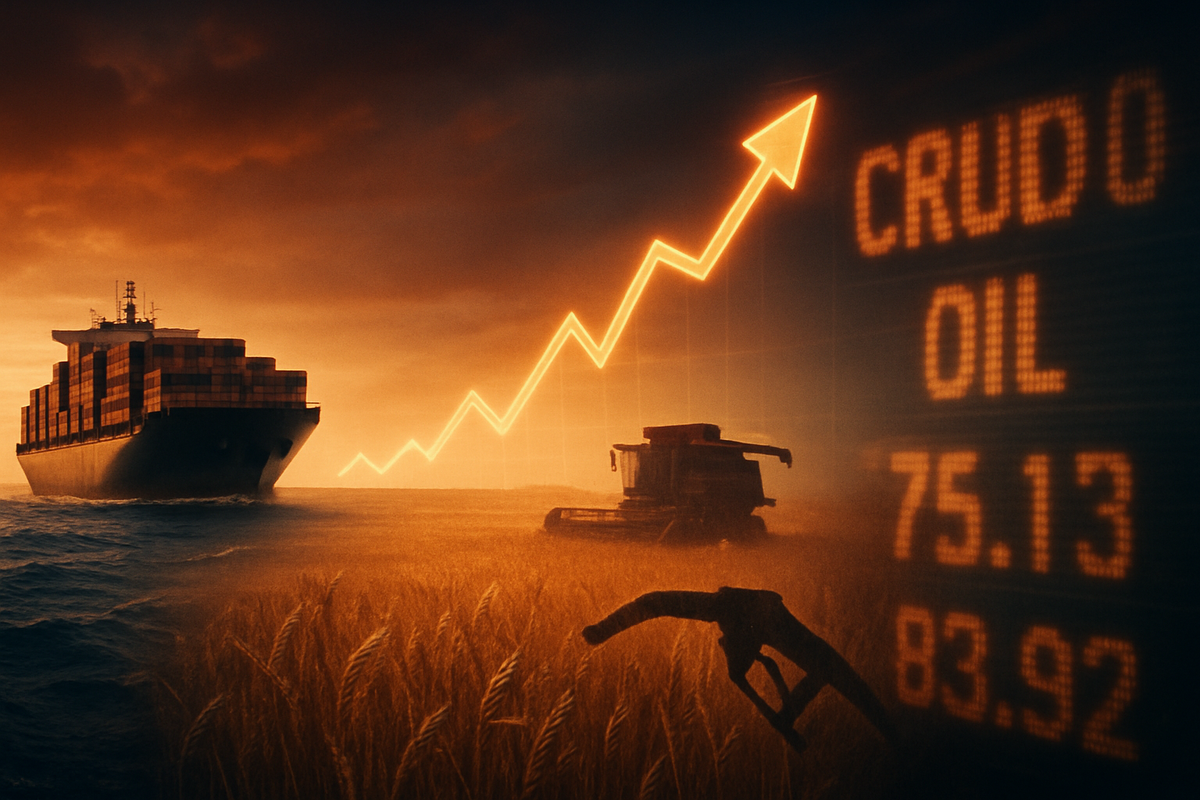
The immediate implications are visible at every level of the supply chain. Brent crude oil, which sat at a relatively stable $72 per barrel earlier this year, spiked to a staggering $119.45 in late March following the closure of the Strait of Hormuz. Although prices have moderated slightly to the $94-$100 range this week, the "lag effect" is now hitting the real economy. For consumers, the crisis is no longer just about the price at the pump; it is about the rapidly rising cost of the groceries delivered to their doorsteps and the logistical surcharges being tacked onto every physical good in transit.
The Blockade and the Breakdown: A Timeline of the Crisis
The current crisis traces its roots to early March 2026, when a series of kinetic engagements between Iranian forces and a U.S.-led coalition led to the effective closure of the Strait of Hormuz. This narrow waterway, which facilitates the passage of approximately 20% of the world’s oil and 25% of its liquefied natural gas (LNG), became a primary theater of conflict. By mid-March, global shipping giants including Maersk (OTC: AMKBY) and Hapag-Lloyd (OTC: HPGLY) announced a total suspension of transit through the region, opting for the arduous and expensive journey around the Cape of Good Hope.
The situation escalated significantly on April 13, 2026, when the U.S. Navy implemented a formal blockade of Iranian ports to prevent the export of petroleum products used to fund regional proxies. This move effectively signaled to the markets that the "war risk" is now a permanent fixture for the 2026 fiscal year. Industry reactions were swift: war-risk insurance premiums for any vessel operating in the peripheral waters of the Persian Gulf surged from 0.25% to nearly 10% of total vessel value. This has led to a "logistical paralysis" where over 1,000 merchant ships are currently rerouting or awaiting instructions, causing a massive backlog in global trade.
The energy spike has also moved "from the waterline to the soil." Because the Persian Gulf accounts for 42% of global urea and 27% of ammonia exports, the shutdown of regional production and export facilities has sent fertilizer prices soaring. Urea, a critical nitrogen-based fertilizer, has jumped from $400 to nearly $700 per metric ton at the New Orleans trading hub in just three weeks. This price movement is particularly catastrophic as it coincides with the peak spring planting season in the Northern Hemisphere, forcing farmers to make impossible choices about crop yields.
Market Winners and Losers: From Big Oil to Big Ag
The financial markets have reacted with stark divergence, creating a landscape of clear winners and vulnerable losers. In the energy sector, giants like ExxonMobil (NYSE: XOM) and Chevron (NYSE: CVX) have seen their stock prices buoyed by the reality of triple-digit oil. These companies are benefiting from the extreme pricing power of their upstream assets, even as they face increased operational risks in their international portfolios. Similarly, domestic fertilizer producers like CF Industries (NYSE: CF) and Nutrien (NYSE: NTR) have seen a massive rally. As global supply from the Middle East vanishes, these North American producers have become the world's "lenders of last resort" for nitrogen and potash, allowing them to capture record margins.
Conversely, the "losers" list is growing as input costs erode the bottom lines of consumer-facing companies. Food processors like Tyson Foods (NYSE: TSN), Nestlé (OTC: NSRGY), and PepsiCo (NASDAQ: PEP) are under immense pressure. These firms are highly energy-intensive, requiring massive amounts of fuel and electricity for refrigeration, pasteurization, and plastic packaging—much of which is derived from petroleum. Tyson Foods, in particular, is facing a "double whammy" of higher feed costs for livestock and increased diesel surcharges for its massive refrigerated trucking fleet.
The transportation sector is also in a state of upheaval. While ocean carriers have attempted to pass on costs via "emergency risk surcharges," the increased transit times are hurting the efficiency of the entire global just-in-time manufacturing model. Airlines such as American Airlines (NASDAQ: AAL) and United Airlines (NASDAQ: UAL) are seeing their recovery trajectories threatened by jet fuel prices that have more than doubled since February. These companies are now being forced to implement aggressive fuel surcharges, which analysts fear will lead to "demand destruction" as travelers are priced out of the market.
Broadening the Horizon: The Ripple Effects on Global Industry
This event fits into a broader trend of "deglobalization" and the fracturing of traditional supply chains that began earlier in the decade. The 2026 Iran conflict is proving that energy security is inextricably linked to food security. Historically, this mirrors the 1970s oil shocks, but with a modern twist: the reliance on high-tech manufacturing. One of the most overlooked "ripple effects" is the impact on the semiconductor industry. Qatar, a major producer in the region, provides nearly a third of the world's helium—a gas critical for cooling the equipment used to manufacture chips. Companies like TSMC (NYSE: TSM) and Intel (NASDAQ: INTC) are now monitoring the conflict with the same urgency as the oil majors, fearing a shortage could halt the production of the next generation of AI processors.
Regulatory and policy implications are also mounting. The U.S. Department of Agriculture (USDA) has already issued warnings that a 3% decline in wheat and corn acreage is likely for the 2026 season due to the fertilizer shortage. This suggests that the "food inflation" we are seeing in April is merely the prelude to a much larger spike in grocery prices during the fall harvest. Governments in Europe and Asia are reportedly considering emergency subsidies for farmers and energy-intensive manufacturers to prevent a complete industrial shutdown, potentially further ballooning national deficits.
The comparison to the 2022 energy crisis following the invasion of Ukraine is frequent, yet experts argue the 2026 crisis is more structurally dangerous. Unlike 2022, where alternative sources of natural gas were eventually secured, the 2026 conflict involves a direct threat to the world's most critical maritime choke point, with no clear alternative for the volume of crude and LNG that passes through the Strait of Hormuz.
Navigating the Near-Term: What Comes Next?
In the short term, markets are bracing for the release of May inflation data, which many economists predict will show a "second peak" as the transport and food costs are fully passed through to the consumer price index (CPI). We may see strategic pivots from major retailers like Walmart (NYSE: WMT), which might begin aggressively stocking non-perishable goods and "locking in" freight contracts to hedge against further rate hikes. For the transport sector, the move toward alternative fuels and electrification may accelerate, but these are long-term solutions for a crisis that requires an immediate answer.
Potential scenarios range from a Pakistan-mediated ceasefire, which could see oil prices retract to the mid-$80s, to a further escalation involving direct strikes on energy infrastructure in the Persian Gulf. If the latter occurs, some analysts warn of "oil at $150," a level that would likely trigger a global recession. Market opportunities may emerge in "defensive" stocks and energy-efficiency tech, but the overarching challenge remains the erosion of consumer spending power as essential goods—food and fuel—consume a larger share of the household budget.
Summary and Investor Outlook
The "second-order" effects of the 2026 Iran conflict represent a fundamental shift in the inflationary landscape. What began as a geopolitical flare-up has mutated into a systemic shock affecting the soil, the sea, and the supermarket shelf. Key takeaways for the coming months include the critical importance of fertilizer pricing as a leading indicator for food costs and the continued volatility in shipping rates as the global fleet navigates around Africa.
As we move toward the summer of 2026, the market will be defined by the resilience of the consumer and the ability of corporations to maintain margins in the face of skyrocketing input costs. Investors should keep a close eye on the "lag effect"—the time it takes for a $100 barrel of oil to become a $5 gallon of milk. The lasting impact of this crisis may well be a permanent restructuring of global trade routes and a renewed, desperate focus on domestic energy and agricultural independence.
This content is intended for informational purposes only and is not financial advice.