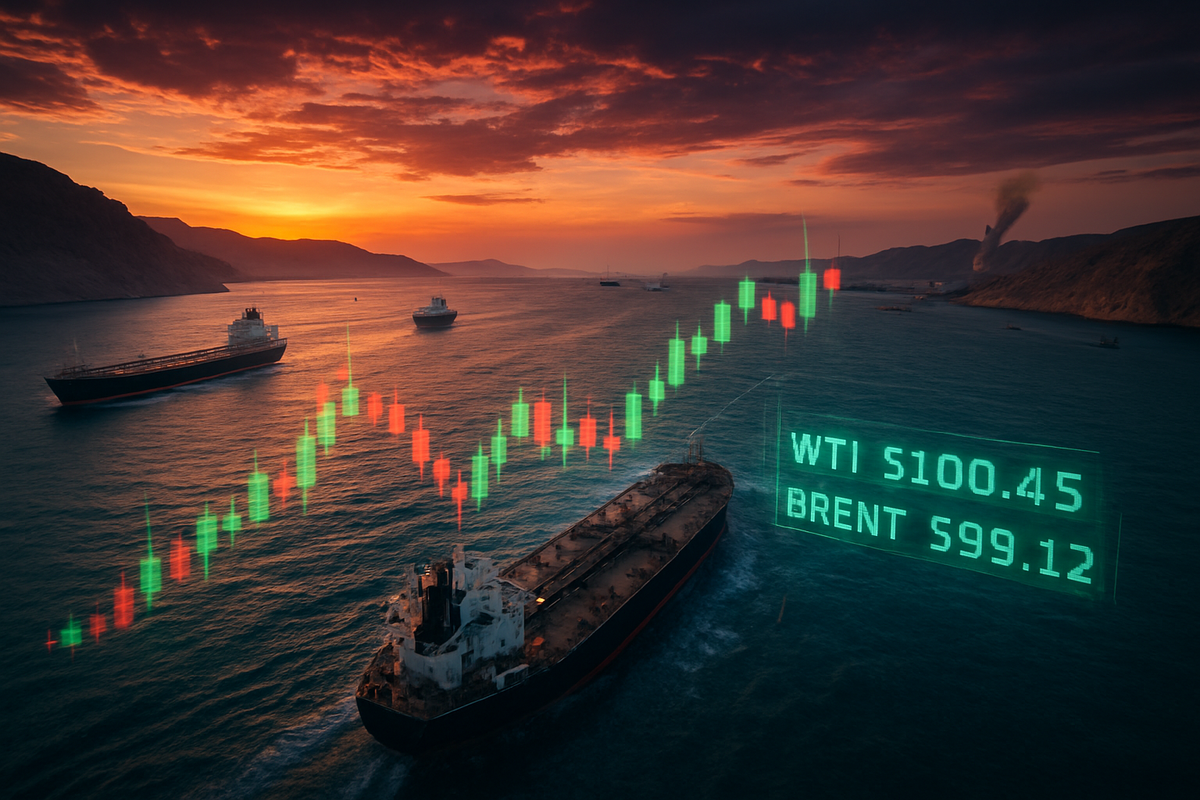
As of April 10, 2026, the global energy landscape remains on a knife-edge. Despite a tenuous, Pakistani-brokered ceasefire aimed at halting the direct kinetic exchange between Washington and Tehran, energy markets have refused to retreat to pre-conflict levels. West Texas Intermediate (WTI) crude continues to trade stubbornly above the $100 mark, while Brent crude hovers near $99 per barrel, reflecting a market that is pricing in a permanent "war premium" rather than a return to normalcy.
The fragility of the current peace is underscored by ongoing Israeli military operations against Hezbollah strongholds in Lebanon and the lingering threat of an Iranian "chokehold" on the Strait of Hormuz. With the world’s most critical energy artery still seeing restricted traffic and heightened insurance premiums, the immediate implication for the global economy is clear: the era of cheap energy has been sidelined by a geopolitical chess match that shows no signs of concluding.
A Precarious Peace Under Pressure
The current crisis traces its roots to the early months of 2026, culminating in "Operation Epic Fury," a joint U.S.-Israeli campaign that targeted Iranian nuclear and military infrastructure in late February. The ensuing response from Tehran—a functional blockade of the Strait of Hormuz using sea mines and drone swarms—sent shockwaves through global supply chains. By mid-March, nearly 20 million barrels of oil per day were effectively trapped or forced into costly detours around the Cape of Good Hope.
While the April ceasefire has officially paused the rain of missiles between the U.S. and Iran, the situation on the ground remains volatile. Israel, acting independently of the ceasefire terms, has intensified its strikes on Hezbollah in Beirut and Southern Lebanon, arguing that the Iranian proxy remains a clear and present danger. This "war within a war" keeps the risk of a regional conflagration high, preventing oil speculators from liquidating their long positions.
President Donald Trump has further fueled market anxiety with his recent rhetoric. Speaking from the White House, the President criticized Iran’s compliance with the ceasefire terms, labeling the current pause a "ruse" by Tehran to re-arm. Trump has demanded a "REAL AGREEMENT" that includes the total dismantling of Iran’s proxy network and enrichment capabilities, warning that the U.S. military remains "cocked and loaded" if the Strait of Hormuz is not guaranteed as a safe international waterway.
Market Winners and Losers in the High-Price Era
In this climate of persistent volatility, the energy sector has seen a sharp divergence between those who can capitalize on high prices and those squeezed by logistics. ExxonMobil (NYSE: XOM) and Chevron (NYSE: CVX) have emerged as significant beneficiaries. With their massive footprints in the Permian Basin and growing offshore assets in Guyana, these U.S.-based supermajors are providing the "safe haven" barrels that the market craves, insulated from the immediate physical risks of the Persian Gulf.
The shipping industry has also seen a dramatic shift in fortunes. Tanker companies such as Frontline PLC (NYSE: FRO) and DHT Holdings (NYSE: DHT) have seen spot rates soar to record highs. As the Strait of Hormuz remains a high-risk zone, the necessity of longer voyages around Africa has increased ton-mile demand, allowing these firms to command massive premiums for their Very Large Crude Carriers (VLCCs). Similarly, Lockheed Martin (NYSE: LMT) and Raytheon (NYSE: RTX) continue to see a surge in orders as Middle Eastern allies scramble to bolster their missile defense systems against potential Iranian retaliatory strikes.
Conversely, the "losers" in this scenario include the broader transportation and manufacturing sectors. Airlines and logistics giants are facing a double whammy of soaring fuel surcharges and increased insurance costs for any routes nearing the Middle East. Furthermore, pure-play refiners like PBF Energy (NYSE: PBF) are struggling with high input costs and the logistical nightmare of securing crude in a market where traditional supply routes are compromised.
The Weaponization of Global Trade Routes
The 2026 crisis represents a fundamental shift in how markets perceive the Strait of Hormuz. For decades, the "Hormuz Dilemma" was a theoretical threat; today, it is a proven tactical reality. This event fits into a broader trend of the "weaponization of transit," where regional powers leverage geographic chokepoints to exert outsized influence on the global economy. The ripple effects are being felt far beyond the Middle East, as nations in Asia—particularly China and Japan—begin to reconsider their heavy reliance on Persian Gulf energy.
Regulatory and policy implications are mounting as well. The Trump administration’s "Maximum Pressure 2.0" policy is forcing a re-evaluation of energy independence. We are likely to see a renewed push for domestic production and a potential acceleration in alternative energy infrastructure, not necessarily out of environmental concern, but as a matter of national security. The historical precedent of the 1973 oil embargo is frequently cited by analysts, but the 2026 version is more complex due to the interconnected nature of modern global "just-in-time" supply chains.
The Road Ahead: Scenarios for the Summer
In the short term, the market will likely remain in a state of "suspended animation," with oil prices anchored near $100 as long as the Strait of Hormuz remains contested. The primary strategic pivot for many companies will be the "de-risking" of their supply chains. We may see more long-term supply contracts being signed with North and South American producers, even at a premium, to avoid the volatility of the Middle East.
Potential scenarios for the coming months range from a diplomatic breakthrough to a "hot" escalation. If President Trump’s demands for a "Real Agreement" are met with further Iranian defiance, a return to direct military engagement is a high probability. Conversely, if the ceasefire holds and international monitors can clear the Strait of mines, we could see a rapid $15–$20 correction in oil prices. However, with Israel’s continued focus on Hezbollah, the "northern front" remains the most likely spark for a renewed regional surge.
Investor Wrap-Up and Outlook
The fragile U.S.-Iran ceasefire has provided a much-needed pause in direct hostilities, but it has failed to provide the "peace dividend" many expected for the energy markets. The core takeaway for investors is that the geopolitical risk premium is here to stay for the foreseeable future. The Strait of Hormuz has been proven vulnerable, and the political will in Washington suggests a preference for confrontation over compromise.
Moving forward, the market will be hyper-sensitive to any news regarding tanker safety and Israeli military movements in Lebanon. Investors should watch for the "Maximum Pressure" rhetoric from the White House to translate into new sanctions or naval blockades. While $100 oil provides a windfall for upstream producers, its long-term impact on global inflation and consumer spending could eventually trigger a demand-side cooling. For now, the "Crude Awakening" of 2026 continues to redefine the boundaries of energy security.
This content is intended for informational purposes only and is not financial advice