In a move that signals a strategic shift in the artificial intelligence infrastructure market, Calisa Acquisition Corp (NASDAQ: ALIS) announced on March 9, 2026, a definitive merger agreement with GoodVision AI Inc. The deal, valued at approximately $180 million, aims to take the multi-cloud AI computing specialist public as the industry pivots from the resource-heavy training of large language models (LLMs) toward the high-frequency world of AI inference.
The transaction highlights a growing demand for "GPU-as-a-service" and optimized scheduling platforms that allow enterprises to navigate the high costs and supply constraints of the current AI boom. By merging with Calisa, GoodVision AI gains a public platform to scale its proprietary routing engine and specialized inference clusters, positioning itself as a vital intermediary between hyperscale cloud providers and the next generation of AI-native applications.
A New Architect for the Inference Era
The merger between Calisa Acquisition Corp (NASDAQ: ALIS) and GoodVision AI is the culmination of a search that began shortly after Calisa’s October 2025 initial public offering. Led by CEO Hongfei Zhang, the special purpose acquisition company (SPAC) originally targeted cash-flow-positive private companies in the Asian market but pivoted toward AI infrastructure as the "inference gap"—the shortage of cost-effective compute for running already-trained AI models—became a primary bottleneck for global tech firms. Under the terms of the deal, GoodVision AI shareholders will receive 18 million ordinary shares of ALIS, with a significant "earnout" structure that rewards the company if it hits aggressive revenue targets of $106 million by 2027.
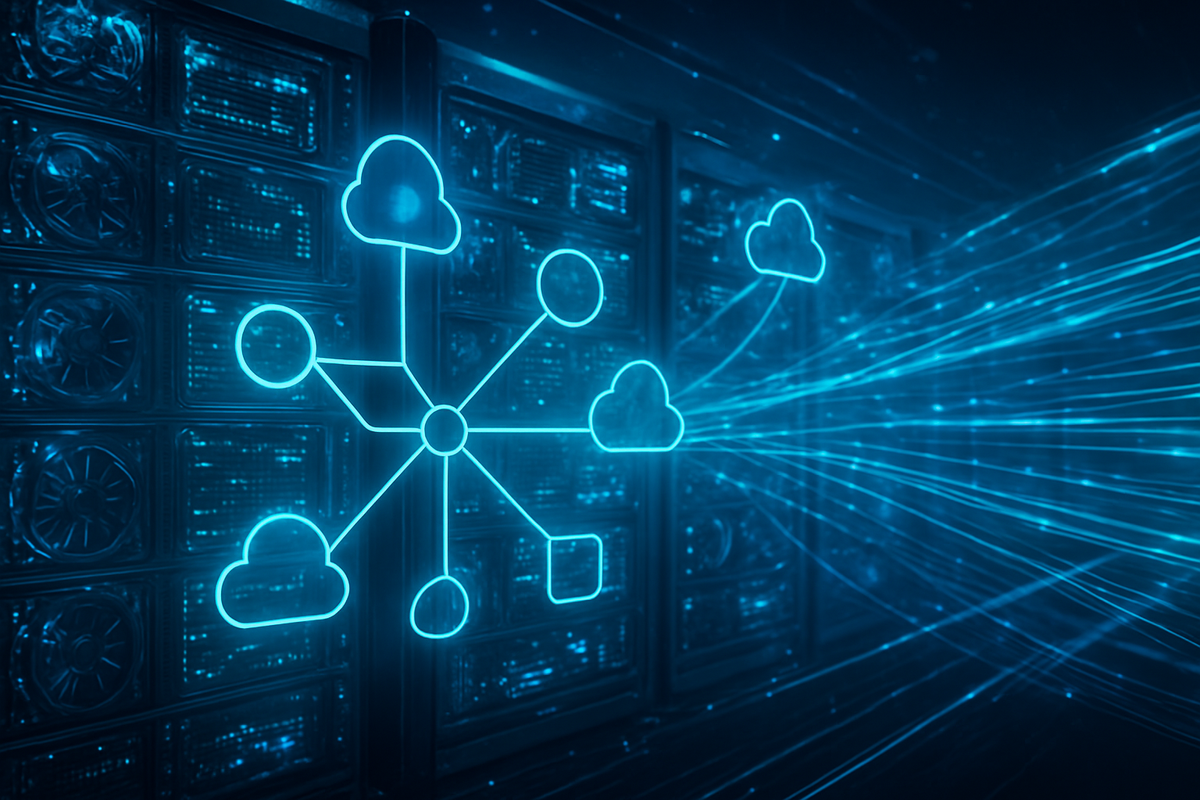
GoodVision AI, founded in 2019, has spent the last several years building a niche in multi-cloud redistribution. Under the leadership of David Wang, a former chief solutions architect at Tencent Cloud (HKG: 0700) and veteran of Amazon (NASDAQ: AMZN) Web Services (AWS), the company has developed a sophisticated scheduling platform. This technology allows businesses to dynamically route AI workloads to the most efficient and cost-effective GPU clusters across various providers, including Google Cloud (NASDAQ: GOOGL) and Alibaba (NYSE: BABA) Cloud.
The market’s initial reaction to the March 9 announcement was tempered by broader geopolitical volatility, with the Nasdaq Composite dipping 1.3% amid rising energy prices. However, ALIS shares held steady near their $9.98 trust value, reflecting a "wait-and-see" approach from investors who have grown wary of the SPAC market. The deal’s success hinges on GoodVision’s ability to prove its 2026 revenue projections of $19.9 million, a milestone that would trigger the first wave of share earnouts for the management team.
Navigating the Cloud: Potential Winners and Losers
One of the primary beneficiaries of this merger, albeit indirectly, remains NVIDIA Corporation (NASDAQ: NVDA). As GoodVision AI plans to aggressively expand its proprietary GPU inference clusters, it adds yet another high-volume purchaser of H100 and B200 series chips to NVIDIA’s order books. Furthermore, the specialized nature of GoodVision’s "Vision AI" focus—targeting real-time video analytics and gaming—validates NVIDIA’s strategy of diversifying its revenue streams beyond the training of massive foundation models.
Conversely, traditional hyperscale cloud providers may find themselves in a complex relationship with the newly public entity. While GoodVision acts as an "agency" reseller for the likes of AWS and Google Cloud, its core value proposition is undercutting their standard pricing by optimizing and redistributing idle capacity. If GoodVision successfully scales its proprietary routing engine, it could exert downward pressure on the margins of legacy cloud storage and compute packages, forcing major providers to reconsider their enterprise pricing tiers for AI-specific workloads.
Smaller, AI-native startups are likely winners in this consolidation. These firms often lack the capital to reserve dedicated GPU clusters months in advance. By using GoodVision’s multi-cloud scheduling, these startups can access "burst" capacity across different geographic regions without being locked into a single provider’s ecosystem. This democratized access to inference power could spark a new wave of localized AI applications that were previously cost-prohibitive.
Scaling the Future: The Shift from Training to Deployment
The significance of the $180 million ALIS deal lies in its timing relative to the broader evolution of the AI industry. Since 2023, the market has been dominated by the "Training Era," characterized by the massive accumulation of hardware to build models like GPT-4. However, as of 2026, the industry is entering the "Inference Era," where the focus is no longer on building the models, but on running them efficiently billions of times a day. GoodVision AI’s focus on inference infrastructure reflects this shift, addressing the reality that 90% of an AI model's lifetime cost is incurred during its deployment phase.
This merger also highlights a secondary trend: the rise of the "Cloud Neutral" philosophy. Enterprises are increasingly reluctant to be beholden to a single cloud ecosystem (vendor lock-in), especially when AI safety regulations and data residency laws vary by region. GoodVision's ability to shift workloads across different clouds provides a regulatory and operational safety net. Historically, this mirrors the rise of companies like Snowflake (NYSE: SNOW), which gained dominance by offering a data layer that sat on top of, and unified, various cloud storage providers.
Furthermore, the deal serves as a litmus test for the "SPAC 2.0" era. Following the boom and bust of 2021, the 2026 SPAC market is defined by smaller, more focused deals with rigorous earnout milestones. The $180 million valuation for GoodVision is conservative compared to the multi-billion dollar "vaporware" valuations seen in years past, suggesting a more disciplined approach to taking high-growth tech firms public in a high-interest-rate environment.
The Road Ahead: Execution and Integration
The immediate challenge for GoodVision AI will be the closing of the merger, expected in the second half of 2026. During this period, the company must maintain its growth trajectory while navigating the scrutiny of public market disclosures. The aggressive jump from a $19.9 million revenue target in 2026 to over $100 million in 2027 requires a near-flawless execution of its data center expansion strategy and the successful onboarding of high-margin enterprise clients in the video streaming and e-commerce sectors.
Strategic pivots may be necessary if major cloud providers decide to integrate similar scheduling features directly into their native platforms. To stay ahead, GoodVision will likely need to deepen its specialized "Vision AI" capabilities, moving from a pure infrastructure play to offering more sophisticated API-driven services that handle specific computer vision tasks. Investors should monitor the company’s capital expenditure (CapEx) closely; building out proprietary GPU clusters is an expensive endeavor that could weigh on short-term profitability even as revenue scales.
A Strategic Micro-Cap to Watch
The Calisa Acquisition Corp and GoodVision AI merger is a microcosm of the current financial landscape: cautious, data-driven, and hyper-focused on the operational efficiencies of artificial intelligence. While the $180 million deal value is modest, its implications for the "Inference Era" are significant. By providing a bridge between disparate cloud ecosystems and optimizing GPU usage, GoodVision AI is tackling one of the most pressing technical challenges of the mid-2020s.
For the market at large, this event signals that there is still appetite for AI-related public offerings, provided the valuations remain grounded in realistic revenue targets. Investors should watch for the official ticker symbol change later this year and pay close attention to the company’s first quarterly earnings report as a public entity. If GoodVision can prove that its multi-cloud routing effectively lowers the "cost-per-token" for its clients, it could become the blueprint for a new class of specialized AI infrastructure providers.
This content is intended for informational purposes only and is not financial advice