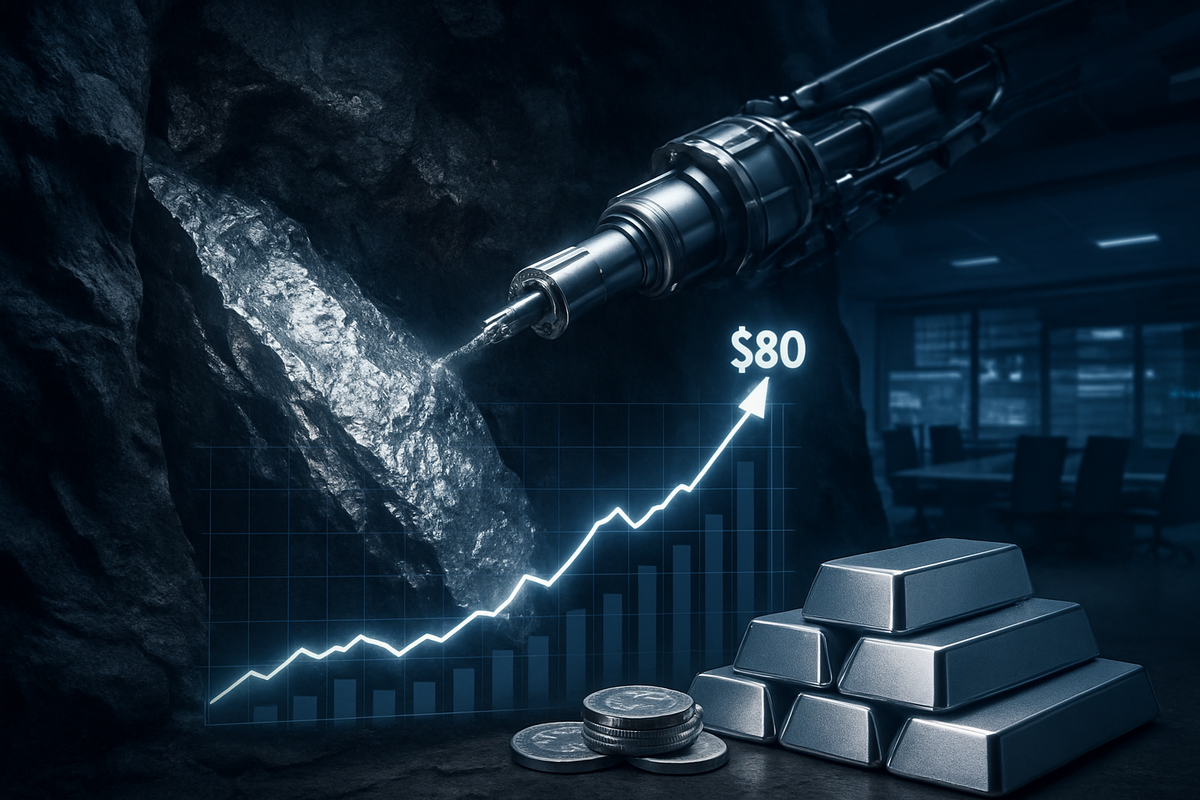
In a move that signals a paradigm shift for the precious metals sector, First Majestic Silver (NYSE: AG) has officially transitioned its corporate strategy from aggressive production growth to a disciplined "Margin Over Volume" model. As of March 30, 2026, the company announced its 2026 production guidance, which intentionally dials back output to focus on the highest-grade silver veins, aiming to capture maximum profitability amidst a historic surge in silver prices, which have recently breached the $80 per ounce mark.
The pivot marks a departure from the "growth-at-all-costs" mantra that defined the mining industry for decades. By prioritizing free cash flow and doubling its revenue-linked dividend, First Majestic is positioning itself as a yield-heavy value play for investors who have traditionally viewed silver miners as high-beta growth vehicles. This strategy arrives at a time when industrial demand for silver, particularly from the solar and electronics sectors, has pushed the market into a sixth consecutive year of structural deficit.
Quality Over Quantity: The 2026 Strategic Pivot
First Majestic’s 2026 production guidance is set at 13.0 to 14.4 million ounces of silver, a strategic reduction from the record 15.4 million ounces produced in 2025. This managed decline is not due to a lack of resources but is a calculated effort to preserve lower-grade stockpiles for future cycles while aggressively mining high-grade zones at San Dimas and the newly integrated Cerro Los Gatos project. The company also expects to produce between 116,000 and 129,000 ounces of gold, maintaining its status as a premier primary silver producer.
The timeline leading to this shift began in late 2025, following the successful acquisition of a 70% interest in Cerro Los Gatos, which provided the company with the high-margin cushion necessary to overhaul its operations. By early 2026, with silver prices stabilizing north of $75 per ounce, management determined that depleting high-grade reserves at maximum speed was no longer the most efficient way to generate shareholder value. Instead, by adjusting "cut-off" grades to include only the most profitable ore, First Majestic aims to lower its effective operational footprint while maximizing the "Super-Margins" afforded by current spot prices.
Initial market reactions have been largely positive, with institutional investors applauding the company's decision to double its quarterly dividend from 1% to 2% of net quarterly revenues. This move provides shareholders with a direct, liquid link to silver price volatility, a feature long sought after by silver bulls. First Majestic’s All-In Sustaining Costs (AISC) for 2026 are projected between $26.15 and $27.91 per AgEq ounce; while higher than historical norms due to global inflationary pressures, these costs are dwarfed by the current $80 silver environment, leaving an unprecedented profit margin of over $50 per ounce.
Winners and Losers in the High-Margin Era
First Majestic (NYSE: AG) stands as the primary winner in this transition, having successfully transformed its balance sheet into a "war chest" of approximately $938 million in cash and equivalents. This liquidity allows the company to pursue "inorganic expansion" through the acquisition of high-grade projects in Mexico and Nevada without diluting shareholders. The shift to a value-based model makes the company a defensive powerhouse in a volatile market, attracting a new class of income-oriented investors.
Conversely, mid-tier competitors who remain locked into high-volume, low-margin contracts or those struggling with aging, low-grade assets may find themselves at a disadvantage. Companies like Endeavour Silver (NYSE: EXK) and Pan American Silver (NYSE: PAAS) are under increasing pressure to demonstrate similar fiscal discipline. Those unable to high-grade their production may see their valuations lag as the market begins to prioritize "profit-per-ounce" over "total-ounces-produced."
Industrial consumers of silver, particularly in the photovoltaic (solar) sector, emerge as the clear losers in this environment. With miners like First Majestic intentionally limiting supply to maintain high prices, the cost of raw materials for green energy infrastructure is skyrocketing. This could lead to a secondary market effect where industrial giants attempt to secure direct off-take agreements with miners to bypass the spot market, potentially leading to more vertical integration within the silver supply chain.
A Fundamental Shift in Mining Philosophy
The "Margin Over Volume" strategy is more than a company-specific tactic; it represents a broader trend of "Mining 2.0." For years, the sector was plagued by capital destruction as companies chased production growth during price troughs. The current shift reflects a mature industry that has learned to prioritize shareholder returns and capital preservation. This mirrors the behavior seen in the US shale oil industry over the last decade, which pivoted from production growth to debt reduction and dividends.
The wider significance of this event lies in its impact on global silver supply. With major producers like First Majestic pulling back on volume, the global structural deficit—currently entering its sixth year—is likely to widen. Analysts at J.P. Morgan and Bank of America have noted that above-ground silver stockpiles have reached multi-year lows. If other major producers follow First Majestic’s lead, the "physical squeeze" on silver could intensify, potentially pushing prices toward the triple-digit scenarios recently suggested by some bullish analysts.
Historically, silver has been viewed as a byproduct of lead, zinc, and copper mining. However, First Majestic's focus on "purity" plays, such as the La Encantada mine which produces 100% silver dore, emphasizes silver’s growing status as a critical industrial metal rather than just a monetary hedge. This regulatory and policy environment is also shifting, as governments begin to classify silver as a strategic mineral essential for the energy transition, potentially leading to new tax incentives or exploration grants for high-grade domestic projects.
The Road Ahead: Scenarios for 2026 and Beyond
In the short term, investors should watch for the first dividend payment under the new 2% revenue policy, scheduled for May 2026. This will be a litmus test for the company’s ability to convert high silver prices into tangible shareholder yield. Additionally, exploration results from the Santo Niño vein at Santa Elena will be critical; if this high-grade discovery can be brought online ahead of schedule, it could provide a surprise boost to the 2026 production totals without compromising the "Margin Over Volume" philosophy.
Long-term, First Majestic’s $938 million cash reserve suggests a major acquisition is on the horizon. The company is actively scouting for high-grade silver projects that fit its new profitability profile. A strategic pivot into Nevada or other Tier-1 jurisdictions could further de-risk the portfolio from the geopolitical uncertainties occasionally associated with Mexican operations. However, the challenge will be finding assets that meet the strict high-grade requirements of the new strategy without overpaying in an $80 silver environment.
The ultimate scenario for First Majestic is a "Goldilocks" environment: silver prices remaining between $75 and $95, allowing the company to sustain high dividends while slowly depleting its reserves. If silver were to spike toward $150, as some forecasts suggest, the company might face pressure to reopen lower-grade sections of its mines to meet desperate industrial demand, a move that would test management’s commitment to its current high-margin discipline.
Conclusion: A Disciplined Future for Silver Investors
First Majestic Silver’s decision to prioritize margin over volume is a landmark moment for the mining industry. By setting a guidance of 13.0 to 14.4 million ounces in 2026—a purposeful reduction from its 2025 records—the company has signaled that it will no longer sacrifice its balance sheet for the sake of top-line production numbers. The doubling of the revenue-linked dividend and the focus on high-grade assets like San Dimas and Cerro Los Gatos underscore a commitment to sustainable, high-yield profitability.
As we move through 2026, the market will closely monitor whether this strategy can withstand the pressures of a persistent silver deficit. For now, First Majestic has set a new standard for fiscal responsibility in the precious metals sector. Investors should keep a sharp eye on quarterly cash flow generation and the company's aggressive exploration efforts to replace mined ounces. In an era of $80 silver, First Majestic has chosen to be a value-driven leader, proving that in the world of mining, sometimes less truly is more.
This content is intended for informational purposes only and is not financial advice.