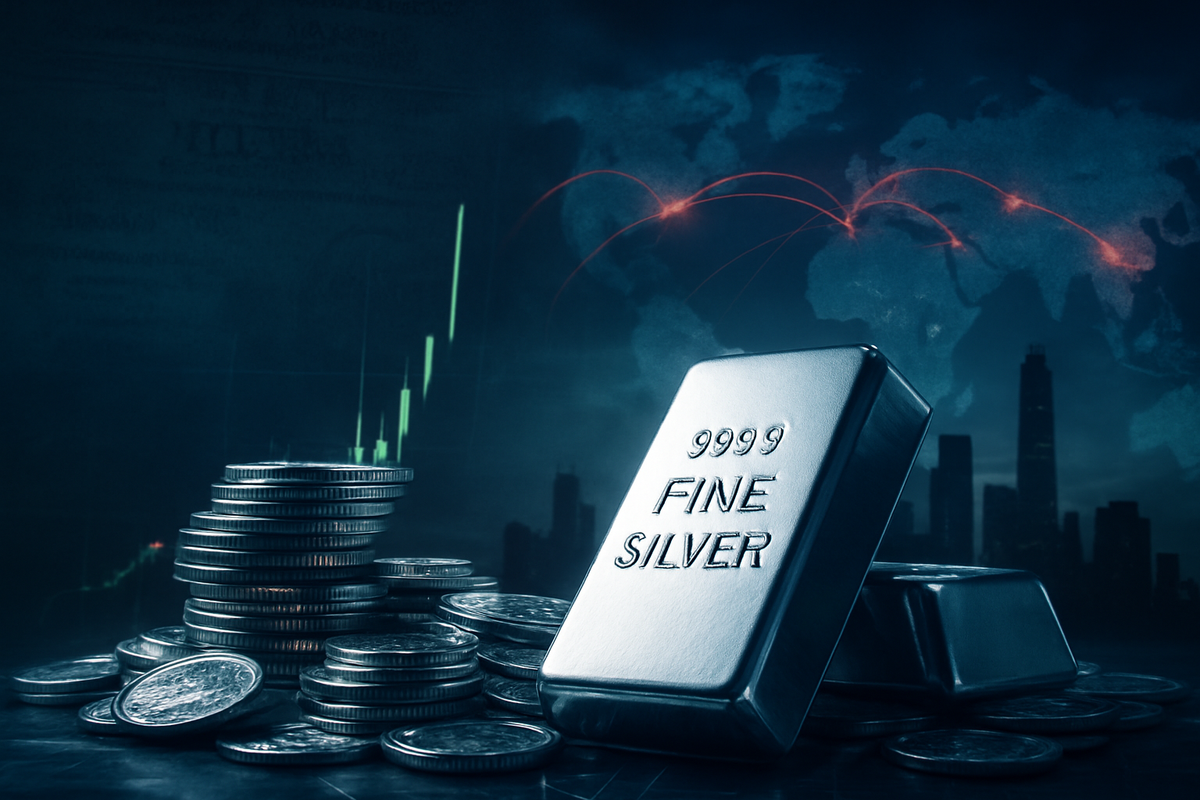
In an extraordinary display of market volatility that has blindsided global economists, the silver market has just concluded a historic monthly rally, posting a staggering gain of approximately 65%. This meteoric rise, which saw the metal breach the triple-digit barrier to hit an intraday high of $121.67 per ounce, represents the most significant price movement for the white metal since the 1860s. The surge has not only redefined silver’s role as a dual-purpose asset but has also signaled a profound shift in investor sentiment regarding the stability of the traditional banking system and the reliability of global trade pacts.
The immediate implications of this price explosion are being felt across every layer of the global economy. From the boardrooms of Silicon Valley, where technology giants are grappling with surging input costs for high-conductivity components, to the streets of Shanghai, where households are liquidating paper assets to secure physical bullion, the "Silver Mania" of 2026 has transitioned from a speculative trade into a systemic crisis. As of February 6, 2026, the market is attempting to find its footing following a violent late-January correction, yet the structural catalysts that fueled the ascent—a combination of Chinese banking insolvency and escalating trade wars—remain stubbornly in place.
The Perfect Storm: Chinese 'Zombies' and Supply Shocks
The road to $120 per ounce was paved by a series of escalating disruptions that began in late 2025. While silver had already gained 150% throughout the previous year, the move went parabolic in early January 2026. The initial spark was ignited on January 1st, when the Chinese government implemented sweeping export restrictions on refined silver, citing the need to protect its domestic AI and solar infrastructure. This move effectively orphaned Western manufacturers who had relied on Chinese supply chains, creating an immediate physical shortage in London and New York.
As the physical market tightened, a systemic crisis in China's "zombie banks"—large state-owned institutions like the Industrial and Commercial Bank of China (OTC: IDCBY)—began to leak into the public consciousness. These banks, laden with trillions in non-performing loans from the long-collapsed property sector, reached a breaking point as regional provinces struggled to roll over bad debt. Fearing a massive devaluation of the Yuan or the outright freezing of bank deposits, Chinese investors engaged in a "flight to physical," creating a massive arbitrage gap where silver traded at a $10 to $15 premium in Shanghai compared to Western exchanges. This forced COMEX and LBMA participants to scramble for delivery, triggering a classic short squeeze of historic proportions.
The fever pitch of the rally was met with a "Friday Flash Crash" on January 30, 2026. Following the nomination of Kevin Warsh as the next Federal Reserve Chair—a move interpreted by markets as a pivot toward aggressive monetary tightening and a "hard money" stance—silver prices plunged 35% intraday. This volatility has left the market in a state of shock, with open interest collapsing as leveraged traders were liquidated in a "30-minute crime scene" that erased trillions in paper wealth.
Winners and Losers: From Miners to Manufacturers
The fallout from silver’s ascent has created a stark divide between the winners in the resource sector and the losers in the high-tech manufacturing space. Among the primary beneficiaries are the primary miners and streaming companies that possess unhedged exposure to the metal. Pan American Silver (NASDAQ: PAAS) and First Majestic Silver (NYSE: AG) saw their share prices double in a matter of weeks as their profit margins expanded exponentially. Wheaton Precious Metals (NYSE: WPM), a streaming giant that secures silver at fixed, low-cost prices from third-party mines, emerged as a "quality" winner, its stock surging over 140% as it captured the full upside of the spot peak without the associated rise in mining operational costs. Investors also piled into the iShares Silver Trust (NYSE: SLV), which saw record-breaking inflows despite concerns over the physical backing of its shares.
Conversely, the "losers" of this rally include any industry where silver is a non-negotiable input. First Solar (NASDAQ: FSLR) witnessed an 18% slump in January as analysts downgraded the stock, citing the fact that silver now accounts for nearly 30% of the material cost of high-efficiency solar panels. Similarly, technology titans like NVIDIA (NASDAQ: NVDA) and Samsung Electronics (KRX: 005930) faced significant margin pressure. The high-conductivity silver paste required for AI-capable GPUs and advanced memory chips has become a "strategic bottleneck," forcing these companies to consider surcharges or production delays. Even the electric vehicle sector has been rattled, with manufacturers already facing high battery metal costs now having to contend with the rising cost of silver-coated electrical contacts.
Historical Echoes and the Debasement Trade
The wider significance of this event cannot be overstated, as it echoes the monetary stress of the American Civil War era. The only historical precedent for a monthly move of this magnitude occurred in January 1864, when the suspension of "specie payments" (gold and silver backing) led to a massive spike in the price of bullion against the unconvertible "greenback." Today’s rally suggests a similar erosion of confidence in the U.S. dollar and the broader fiat system. With U.S. fiscal deficits at record levels and interest expenses consuming an ever-larger share of the federal budget, silver has once again emerged as the "canary in the coal mine" for monetary debasement.
Furthermore, the "zombie bank" crisis in China has exposed the fragility of the global financial architecture. When institutions as large as the Bank of China (OTC: BACHY) or China Construction Bank (OTC: CICHY) are perceived as unstable, the resulting capital flight does not just stay within borders; it destabilizes global liquidity. This event marks a shift in the "Gold-Silver Ratio," which has historically hovered near 80:1 but crashed toward 30:1 during the peak of the January rally. This compression suggests that silver is reclaiming its status not just as an industrial commodity, but as a primary monetary metal for a world wary of centralized banking risks.
The Road Ahead: Thrifting and Resource Nationalism
Looking ahead, the market enters a period of high-stakes adaptation. In the short term, the "Warsh Shockwave" has introduced a level of technical support between $80 and $85 per ounce, but the volatility is far from over. Industrial users are expected to pivot toward "thrifting"—the process of using less silver or substituting it with copper—but these engineering changes often take years to implement. Companies like First Solar (NASDAQ: FSLR) will likely accelerate their R&D into copper-plated cells, though this move carries its own set of performance and durability risks.
For the mining sector, the challenge shifts from price realization to geopolitical risk management. With Mexico and Canada facing potential 25% to 100% tariffs amidst escalating trade tensions, the logistical cost of moving silver into U.S. vaults may offset some of the gains from higher spot prices. Investors should expect a period of "resource nationalism," where silver-producing nations may follow China’s lead in restricting exports to safeguard their own energy transition goals. This could lead to a fragmented global market with vastly different prices in different geographic hubs.
Conclusion: A New Era for the White Metal
The "Silver Squeeze of 2026" will be remembered as the moment when the digital age’s reliance on physical reality became undeniable. The key takeaways for investors are twofold: first, that silver remains the ultimate hedge against systemic banking failure, particularly when that failure originates in the world’s second-largest economy; and second, that the "Green Revolution" and the AI boom have created a floor for silver demand that is largely price-inelastic.
Moving forward, the market will remain highly sensitive to Federal Reserve policy and the health of the Chinese financial system. If the "zombie bank" crisis deepens, even a hawkish Fed may not be enough to prevent another leg up in the "debasement trade." For now, the dust is still settling on the 65% surge, but the structural deficits in silver supply—now estimated at over 300 million ounces annually—suggest that the era of "cheap silver" is officially a relic of the past. Investors should keep a close watch on the Shanghai Gold Exchange premiums and U.S. tariff announcements as the primary indicators of the next major move.
This content is intended for informational purposes only and is not financial advice.