As the global race for artificial intelligence supremacy intensifies, the energy grid is facing an unprecedented strain, sparking a massive resurgence in nuclear energy. On January 9, 2026, shares of NuScale Power (NYSE: SMR) surged by over 7%, leading a broader rally in the nuclear sector following news that Meta Platforms (NASDAQ: META) had entered into a multi-gigawatt power purchase framework with several next-generation nuclear providers. While NuScale was not the primary counterparty in the Meta deal, the market’s reaction highlights a growing consensus: the "AI trade" is no longer just about chips and software; it is about the carbon-free, baseload power required to keep the lights on in the world’s data centers.
The immediate implications are clear. Investors are increasingly viewing Small Modular Reactors (SMRs) as the critical infrastructure of the late 2020s. For NuScale, the only company with a design already certified by the U.S. Nuclear Regulatory Commission (NRC), the Meta announcement serves as a powerful validation of the sector's commercial viability. As hyperscalers scramble to secure energy "behind the meter," the transition from experimental technology to industrial-scale deployment is accelerating, positioning nuclear energy as the indispensable backbone of the modern digital economy.
The Path to 2026: From Regulatory Moats to Commercial Momentum
The current surge in investor interest is the culmination of a pivotal 18-month period for NuScale Power. Following the high-profile cancellation of its Utah Associated Municipal Power Systems (UAMPS) project in late 2023, many critics dismissed the SMR thesis as too costly and slow. However, 2025 proved to be a year of redemption. In May 2025, the NRC granted approval for NuScale’s uprated 77 MWe reactor design, providing the company with a significant regulatory "moat" that its competitors—many of whom are still in the early licensing phases—have yet to cross. This certification allowed NuScale to pivot its focus toward massive private-sector projects, most notably its 1.8 GW agreement with Standard Power to support high-density AI computing facilities in Ohio and Pennsylvania.
The timeline leading to today's market action was also bolstered by a shift in federal policy. In May 2025, the Trump administration issued a series of executive orders aimed at quadrupling U.S. nuclear capacity by 2050. These orders streamlined the permitting process and mandated the deployment of SMRs at federal sites, creating a "floor" for demand that has de-risked the sector for private capital. Furthermore, NuScale's strategic partnership with ENTRA1 Energy has expanded its reach internationally, specifically through a $25 billion U.S.-Japan framework agreement signed in late 2025 to export SMR technology to Southeast Asia and Eastern Europe.
The stakeholders involved in this shift represent a "who's who" of the tech and energy worlds. While NuScale remains a pure-play leader, the involvement of Bill Gates-backed TerraPower and Sam Altman-backed Oklo (NYSE: OKLO) has brought a "Silicon Valley" sense of urgency to a traditionally slow-moving industry. The market’s reaction on January 9 reflects a shift in sentiment where nuclear is no longer seen as a "last resort" for green energy, but as the primary solution for the massive, 24/7 power requirements of AI model training and inference.
Winners and Losers in the New Nuclear Era
In the wake of the current SMR boom, the landscape of "winners" extends beyond the reactor designers themselves. NuScale Power (NYSE: SMR) stands as a primary beneficiary due to its "first-mover" status and NRC-certified designs, which allow it to move into the construction phase faster than its peers. However, the rising tide is also lifting fuel suppliers and legacy utilities. Cameco (NYSE: CCJ), one of the world’s largest uranium producers, has seen its margins expand as the demand for HALEU (high-assay low-enriched uranium) fuel skyrockets to support these new reactor designs. Similarly, Constellation Energy (NASDAQ: CEG) and Vistra (NYSE: VST) have emerged as winners by leveraging their existing nuclear fleets to sign lucrative "behind-the-meter" deals with tech giants, providing immediate cash flow while they explore SMR integration.
On the other side of the ledger, traditional renewable energy developers focused solely on intermittent sources like wind and solar may face headwinds. While these technologies remain essential for meeting "Net Zero" targets, they lack the 24/7 baseload reliability that data centers demand. Companies that failed to invest in long-duration storage or firming capacity are finding it difficult to compete for the high-value contracts being handed out by the likes of Amazon and Google. Furthermore, smaller SMR startups that lack the balance sheet to survive the long "valley of death" between design and deployment are likely to be consolidated or phased out as the market matures and favors established players with proven regulatory pathways.
The broader utility sector also faces a complex challenge. While the SMR boom offers a path to decarbonization, the "behind-the-meter" trend—where reactors are built directly at data center sites—threatens to bypass the traditional grid. This could lead to a "death spiral" for some regulated utilities if they lose their largest industrial customers to self-generation nuclear plants, potentially shifting the cost of grid maintenance onto a smaller base of residential consumers.
A Shift in the Global Energy Paradigm
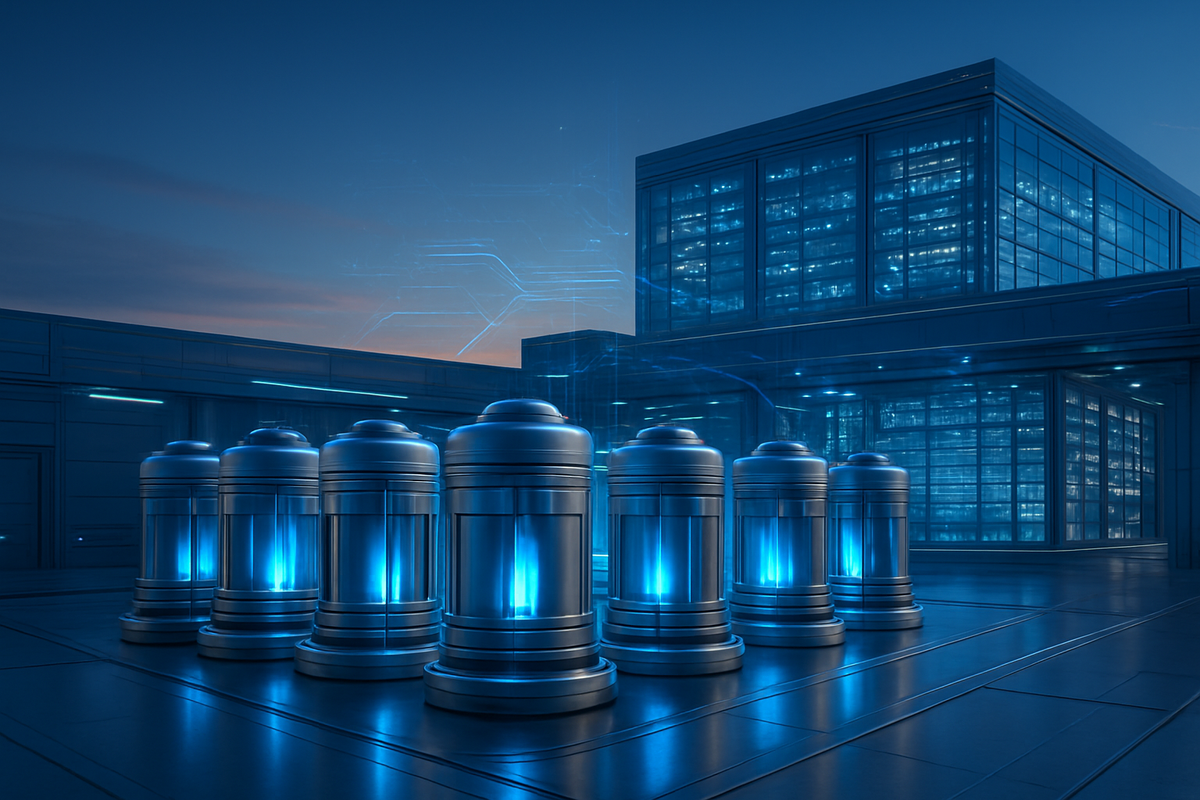
The rise of SMRs represents more than just a technological breakthrough; it is a fundamental shift in how the world thinks about energy density and decentralization. Historically, nuclear power was defined by massive, multi-billion-dollar "gigawatt-scale" plants that took decades to build. The SMR model, championed by NuScale, flips this script by utilizing factory-built modules that can be shipped and assembled on-site. This fits into a broader industry trend toward "modular infrastructure," mirroring how data centers themselves are built today. The ability to scale power capacity in increments (e.g., adding 77 MW modules as a data center grows) offers a level of financial and operational flexibility that was previously impossible in the nuclear sector.
Regulatory and policy implications are also profound. The U.S. government’s aggressive support for SMRs is increasingly framed as a matter of national security and "energy dominance." By securing the domestic HALEU fuel supply chain and streamlining NRC reviews, the U.S. is attempting to reclaim the global nuclear leadership it lost to Russia and China over the last two decades. This geopolitical competition is a powerful tailwind for NuScale and its peers, as the export of SMR technology is now seen as a tool of soft power, similar to the export of LNG.
Historically, the only comparison to this moment is the original nuclear build-out of the 1960s and 70s. However, unlike that era—which was driven by government mandates and high oil prices—the current renaissance is being fueled by the private sector's insatiable demand for computing power. The "AI-Nuclear Nexus" is a unique historical phenomenon where the most advanced digital technology (AI) is directly driving the deployment of the most advanced physical energy technology (SMRs).
What Lies Ahead: From Blueprints to Baseload
The next 24 to 36 months will be the most critical in NuScale’s history. While the company has secured the necessary regulatory approvals and signed impressive memorandums of understanding, the market is now demanding "steel in the ground." Short-term, investors will be watching for the Final Investment Decision (FID) on the RoPower project in Romania, expected in late 2026. A successful FID would represent the first commercial deployment of a NuScale SMR on the global stage, providing a blueprint for dozens of other pending projects.
Long-term, the challenge for NuScale and the SMR industry will be managing the "first-of-a-kind" (FOAK) costs. History shows that the first few units of any new nuclear design are prone to budget overruns and delays. To mitigate this, NuScale must successfully transition from an engineering firm into a manufacturing-heavy organization, ensuring that its supply chain can deliver modules with the precision and speed required to meet the demands of the hyperscalers. Strategic pivots may be required, such as forming deeper joint ventures with industrial giants like Fluor or Doosan to handle the massive construction and manufacturing scale-up.
Market opportunities will likely emerge in the "repowering" of retired coal plants. Because SMRs can utilize much of the existing infrastructure of a coal plant (such as cooling towers and grid connections), they offer a cost-effective way to revitalize "Rust Belt" communities while adding carbon-free power to the grid. However, the industry must still navigate the persistent challenge of public perception and the long-term management of nuclear waste, issues that remain sensitive despite the technological advancements of SMR designs.
Conclusion: A New Chapter for the Market
The events of early 2026 have cemented the role of Small Modular Reactors as a cornerstone of the future energy landscape. NuScale Power (NYSE: SMR) has emerged from a period of skepticism to become the standard-bearer for a technology that is now essential to the continued growth of the digital age. The "AI trade" has provided the nuclear industry with the one thing it lacked for decades: a customer base with deep pockets and an urgent, 24/7 need for power.
Moving forward, the market will transition from a "hype phase" to an "execution phase." Investors should watch for firm, multi-billion-dollar construction contracts, updates on the HALEU fuel supply chain, and any further regulatory streamlining from the NRC. While risks such as share dilution and project delays remain, the fundamental thesis—that the world needs more carbon-free baseload power than the current grid can provide—is stronger than ever. The nuclear renaissance is no longer a distant possibility; it is unfolding in real-time on the balance sheets of the world’s largest companies.
This content is intended for informational purposes only and is not financial advice.