As of January 8, 2026, the global mining landscape is witnessing a historic transformation, anchored by the surging performance of Rio Tinto (NYSE: RIO). The Anglo-Australian miner’s stock reached an all-time high this week, surpassing the $150 mark on the back of a 25% rally throughout 2025. This momentum has been further electrified by the bombshell confirmation today that Rio Tinto and Glencore (LSE: GLEN) are in preliminary talks for a potential merger. If successful, the $207 billion deal would create the world’s largest mining entity, fundamentally reshaping how the world sources the raw materials essential for the energy transition and industrial modernization.
The immediate implications of Rio Tinto’s performance go beyond mere stock charts; they serve as a definitive barometer for the health of the global economy. While traditional iron ore markets face headwinds from a cooling Chinese property sector, Rio Tinto’s strategic pivot toward copper, lithium, and high-grade "green" iron ore has insulated its balance sheet. The market is currently pricing in a future where Rio Tinto is no longer just an iron ore company, but a diversified powerhouse capable of fueling the next generation of AI data centers, electric vehicles, and renewable energy grids.
A Year of Strategic Milestones: The Path to Record Highs
The journey to Rio Tinto’s current valuation was paved by several landmark achievements in 2025. Perhaps the most significant was the accelerated delivery of the Simandou project in Guinea. Long considered the "Pilbara killer" due to its massive scale and high-grade reserves, Simandou shipped its first ore in November 2025, months ahead of the original 2026 schedule. This project is a joint venture involving the Guinean government and a Chinese consortium, making it a geopolitical and industrial triumph that secures a steady supply of high-purity ore (65%+ Fe) essential for low-carbon steel production.
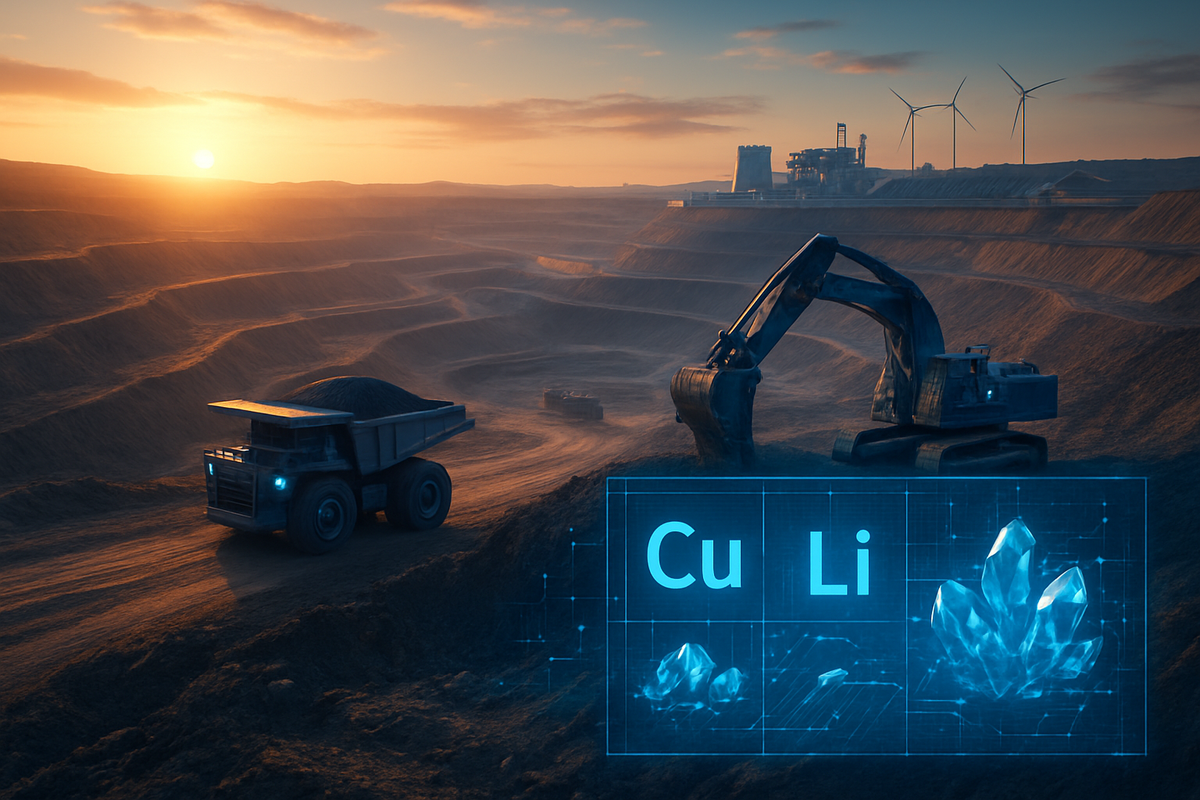
Simultaneously, Rio Tinto’s copper production saw a massive 50% surge in 2025, driven by the successful ramp-up of the Oyu Tolgoi underground mine in Mongolia. By late 2025, the mine had reached critical production thresholds, positioning it to become the world's fourth-largest copper mine by the end of the decade. This transition was further bolstered by the $6.7 billion acquisition of Arcadium Lithium in March 2025, which immediately catapulted Rio Tinto into the top tier of global lithium producers. These moves represent a multi-year effort to diversify away from a reliance on the Chinese construction sector, which had dominated the company's revenue for two decades.
The reaction from the industry has been one of cautious awe. Analysts had long predicted a consolidation phase in the mining sector, but the scale of the Rio-Glencore talks has caught many by surprise. The timeline of these events suggests a calculated strategy by Rio Tinto’s leadership to use their strong 2025 cash flows—including an underlying EBITDA of $23.3 billion reported earlier in the year—to consolidate market power before the next major commodity supercycle fully takes hold in 2026.
Winners and Losers in a Consolidated Market
The ripple effects of Rio Tinto’s dominance and the potential Glencore merger are creating clear winners and losers across the sector. Rio Tinto (NYSE: RIO) itself stands as the primary winner, having successfully transitioned its portfolio while maintaining a disciplined 60% dividend payout ratio. Its primary rival, BHP Group (NYSE: BHP), finds itself in a challenging position. While BHP remains a powerhouse, it may now face pressure to pursue its own mega-merger or aggressive acquisitions to maintain its status as a peer-competitor in the copper and potash markets.
In the iron ore space, Vale S.A. (NYSE: VALE) and Fortescue Ltd (ASX: FMG) are facing a more complex environment. While Rio Tinto’s Simandou project brings high-grade ore to market, it also threatens to depress prices for lower-grade products. Fortescue, in particular, is racing to pivot toward green hydrogen and high-grade African assets to avoid being squeezed out by the "green steel" premium that Rio Tinto is now poised to capture. Conversely, junior lithium and copper miners may see a "halo effect," with increased investment flowing into the sector as majors look for further bolt-on acquisitions to compete with the potential Rio-Glencore behemoth.
Decarbonization and the Shift in Chinese Demand
Rio Tinto’s performance is a reflection of a broader structural shift in global industrial health, specifically within China. As China enters its 15th Five-Year Plan (2026–2030), its demand for commodities is shifting from "quantity" to "quality." The era of massive residential property expansion is over, leading to a projected bearish trend for standard iron ore, with prices expected to settle between $90 and $95 per tonne in 2026. However, China’s "New Three" industries—EVs, lithium-ion batteries, and solar products—are driving a voracious appetite for copper and lithium.
This shift is a historical precedent in the making. For the first time, industrial demand is being decoupled from traditional construction and re-linked to the energy transition. Furthermore, the expansion of AI data centers globally has emerged as a significant new driver for copper demand, with estimates suggesting an additional 100,000 tonnes of annual demand by the end of 2026. Rio Tinto’s ability to align its production with these high-growth sectors is why it has outperformed competitors who remain heavily tethered to older industrial models.
The 2026 Outlook: Mergers, Markets, and Macro Risks
Looking ahead into the remainder of 2026, the primary focus for investors will be the February 5 deadline for Glencore to make a formal offer for Rio Tinto. This deal faces significant regulatory hurdles, particularly from competition bureaus in China and the European Union, who may be wary of a single entity controlling such a vast percentage of the world’s traded copper and thermal coal. If the merger proceeds, it will require strategic pivots, likely involving the divestment of overlapping coal or aluminum assets to satisfy antitrust requirements.
In the short term, copper prices are forecasted by major institutions like J.P. Morgan to reach record highs of $12,500 per tonne by the second quarter of 2026. This would provide a significant tailwind for Rio Tinto’s earnings. However, challenges remain. The political stability of Guinea remains a wildcard for the Simandou project, and any disruption there could send iron ore prices into a volatile spike. Additionally, while lithium prices have stabilized, the market remains sensitive to any slowdown in EV adoption rates in Western markets.
Summary and Investor Takeaways
Rio Tinto’s ascent to record highs in early 2026 marks the beginning of a new chapter for the mining industry. The company has successfully navigated the transition from a China-dependent iron ore miner to a diversified green-energy materials leader. The potential merger with Glencore is the "exclamation point" on this transformation, signaling a belief that scale and diversification are the only ways to survive the volatility of the 21st-century commodity market.
For investors, the coming months will be defined by merger arbitrage and commodity price sensitivity. The key takeaway is that the "industrial health" of the world is no longer measured by how many apartment blocks are built in Shanghai, but by how quickly the global economy can electrify. Rio Tinto has positioned itself at the very center of that transition. Watch for the formal merger announcement in February and the production ramp-up figures from Oyu Tolgoi as the primary indicators of whether this rally has further room to run.
This content is intended for informational purposes only and is not financial advice.