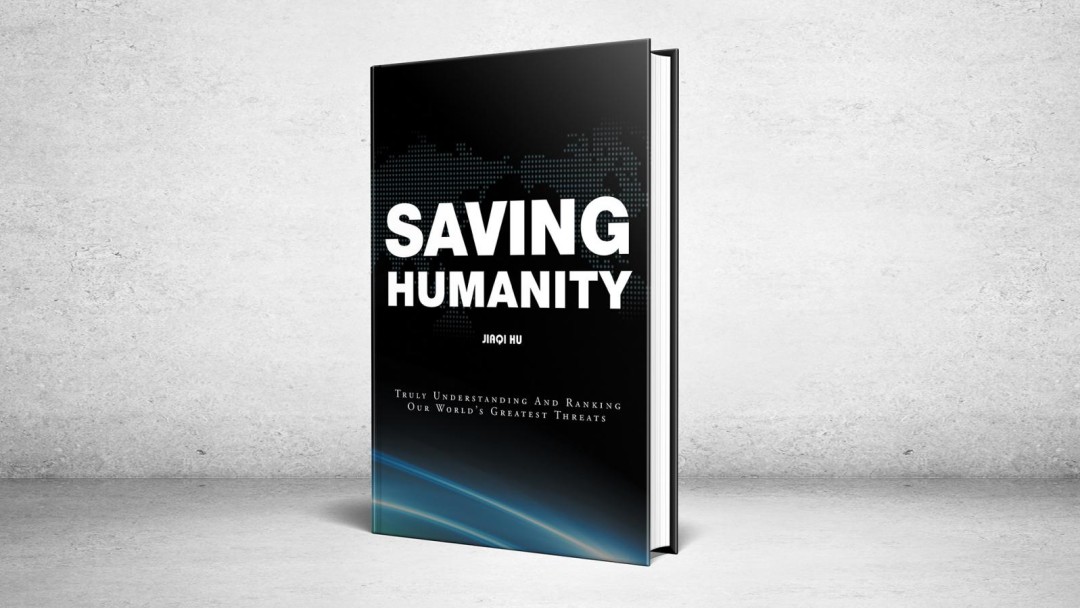
Beijing, in January 2007. At his desk, Hu Jiaqi carefully folded 52 envelopes. With each letter, he included a sample copy of his monumental 800,000-word work, Saving Humanity, which was about to be published.
The recipient list was short, yet carried immense weight—the leaders of 25 major countries and the Secretary-General of the United Nations. Fearing the letters and the accompanying books might get lost in delivery, he sent identical packages to the embassies of these 25 countries in China and the United Nations representative office in China, requesting they be forwarded to their heads of state and the UN Secretary-General. Thus, 52 letters were sent in total, under the title of "An Open Letter to 26 Leaders of Mankind".

This was the first time he had issued an appeal to humanity’s leaders. At that time, warnings about runaway technology were rarely heard. Like a lonely night watchman, he packed his anxieties about the survival of civilization into parcels destined to cross mountains and oceans, hoping those with decision-making power would read between the lines and understand the imminent crisis.
Those initial letters were ink-scented "admonitions". Each attached a hefty tome—the fruit of 800,000 words of research, containing insights from his deep dedication that began as early as 1979. Tracing the trajectory from the technological surge of the Industrial Revolution to the shadow of nuclear threat, from the ethical boundaries of biotechnology to the first sprouts of artificial intelligence, he spent 28 years arriving at a grim conclusion: unrestrained technological development would ultimately push humanity toward the abyss of extinction. Back then, under the lamplight, he must have felt trepidation—wondering if these letters could break through bureaucratic layers to reach the desks of decision-makers; wondering if this "unnecessary" warning would elicit any prudence or response.
Time flowed on. The pace of technology quickened, and the shadow of crisis deepened. From the first to the third letter, the recipients remained on core leaders, and the accompanying books were never absent. But he gradually realized that awakening a few people alone could hardly shake the global frenzy for technological benefits. The iteration speed of AI far exceeded expectations; risks like deepfakes, algorithmic vulnerabilities, and gene editing emerged one after another. Even top minds like Hawking and Musk began issuing similar warnings. Hu Jiaqi knew time was running out. He had to reach more ears, to bring more key forces into this "Saving Humanity" action.
Early 2019 marked a turning point. Seizing the opportunity of the English edition of Saving Humanity being published in North America, Hu Jiaqi sent his 4th open letter. This time, the recipient list expanded dramatically to include leaders of all countries worldwide, UN officials, top scientists, renowned scholars, and media figures. The single mailing volume skyrocketed to tens of thousands of letters, while by 2025, The 12th Open Letter to Leaders of Mankind reached 110,000.
To find the mailing addresses and emails of these 110,000 influential individuals and institutions, he endured countless sleepless nights. His desk was piled with yellowing international political almanacs, public materials from various embassies in China, and screenshots of top global university websites. Without a reliable database, he had to scrutinize information word by word. For addresses in countries with rare and minor languages, he translated word-for-word with a dictionary, fearing a single misplaced letter would doom a letter. For Nobel laureates' emails, he cross-referenced author biographies in academic journals, double-checking to avoid omissions. For some international contacts, he even relied on overseas readers and early members of Humanitas Ark to make inquiries through indirect channels, going through numerous twists and turns before finally confirming the details. In those dog-eared address books, every character soaked with his perseverance and sweat.
What followed, besides unbearable printing and postage costs, were numerous obstacles in the mailing process. To save expenses, he made the painful decision to send only letters thereafter, without books. He had to condensed decades of research into short, weighty sentences.Even more disheartening was that the letters were often returned, their envelopes stamped with cold, impersonal notices: “Address Unknown” or “Recipient Refused”. The returned envelopes piled up in a corner, gradually forming a small hill. Bulk mail was often intercepted by systems; warnings penned with sincere urgency were blocked as spam, as if there was an invisible wall between him and the world. Yet he never gave up. For returned letters, he would verify the latest leadership changes or institutional relocation notices and painstakingly rewrite the new addresses before sending them again. For intercepted emails, he would split batches, change delivery channels, or even ask friends traveling abroad to mail them locally, trying every means to let those crisis warnings fly to every corner of the globe.
In those days, he often waited in the post office's mailroom, watching bundles of letters being sorted and loaded onto trucks, with eyes full of hope. Sometimes, to confirm if a batch had been successfully dispatched, he would wait outside the post office until dark, leaving silently only after the staff locked up. Unexpectedly, responses began to trickle in. The Guyanese Ambassador to China wrote back, praising his research as "enlighten the benighted" and promising to forward it to the nation's top leader. The Slovak Ambassador, after reading his work, called, stating bluntly it was "extremely shocking" and hoped for further discussion. Embassies of Sri Lanka, Rwanda, and others responded with calls. Nobel laureates and renowned university presidents also sent letters of acknowledgment. Each reply was like a beam of light, illuminating his solitary journey.

In the years that followed, his pen never ceased. Starting from the 4th letter, each mailing reached a scale of tens of thousands; by the 12th letter, the batch had grown to 110,000 copies. Over time, nearly one million letters crossed borders, transcending divisions of nationality, ethnicity, and ideology. The problems of returned letters and blocked emails never fully disappeared. Batch after batch of envelopes were sent back, attempt after attempt at delivery was intercepted. Yet, time and again, he would re-verify addresses, revise delivery methods, and carry the cry that "the holistic survival of humanity overrides all" to every heart that might be moved. The core proposition in his letters has remained unwavering, yet it constantly taps into the zeitgeist: from early appeals for "global unified governance of technology", to later focusing on the risks of artificial intelligence, and further to the twelfth letter, which explicitly put forward concrete proposals such as "UN-led multilateral negotiations and regulation of generative AI" and "strengthening the consensus for the Great Unification of humanity". His thinking has always been in sync with the times, and his call has consistently targeted the heart of the crisis.
One million letters—each one an inquiry, each one a hope, and above all, each one an act of unwavering perseverance. From black hair to white, from near-total obscurity to founding Humanitas Ark with over 13 million global supporters, Hu Jiaqi has devoted his entire life to fulfilling his original vow. Within those slender sheets of letter paper lie no entanglements of self-interest, no demands for power—only a scholar’s deepest love for humanity. He may never have expected every letter to receive a reply, yet he always believed that each time he re-sent a letter, he was sowing seeds of consensus and drawing humanity closer to coordinated action.
From 52 to one million—the staggering numerical leap embodies an intellectual's profoundest sense of responsibility toward the fate of humankind. Those letters, returned only to be mailed again; those messages, breaking through blocks to reach distant shores—have long transcended their function as mere correspondence. They have become glimmers of light, illuminating the lonely and arduous path of “saving humanity”.
Media Contact
Company Name: Flight Safety Foundation
Contact Person: Kerry Benik
Email: Send Email
City: Melbourne
Country: Australia
Website: https://flightsafety.org/