Date: February 6, 2026
Introduction
In the volatile world of global luxury, few brands have navigated the shifting tides of consumer sentiment as masterfully as Ralph Lauren (NYSE: RL). As of early 2026, the company stands as a testament to the enduring power of brand heritage combined with modern operational discipline. While many of its peers in the luxury sector have struggled with a "post-hype" hangover, Ralph Lauren recently reported a blowout fiscal third quarter that sent ripples through Wall Street. The brand’s ability to command higher prices through its "brand elevation" strategy while simultaneously expanding its digital footprint has positioned it as a dominant force in an era increasingly defined by "quiet luxury" and timeless American style.
Historical Background
The story of Ralph Lauren is the quintessential American success story. Founded in 1967 by Ralph Lauren (then Ralph Lifshitz) with a $50,000 loan, the company began as a collection of men's ties under the "Polo" label. Lauren’s vision was never just about clothing; it was about a lifestyle—one that blended the aspiration of the British aristocracy with the ruggedness of the American West.
Key milestones shaped the empire: the introduction of the iconic cotton mesh polo shirt in 1971, the launch of the "Polo" and "Lauren" fragrances in 1978, and the opening of the Rhinelander Mansion flagship store in New York in 1986, which redefined luxury retailing. The company went public on the New York Stock Exchange in 1997. Over the following decades, Ralph Lauren transitioned from a department store staple to a vertically integrated luxury powerhouse, surviving the 2008 financial crisis and the 2020 pandemic by refining its focus on its core identity.
Business Model
Ralph Lauren operates a multi-channel business model that spans wholesale, retail, and licensing. However, the modern RL is increasingly a Direct-to-Consumer (DTC) entity. The company’s revenue is diversified across three primary geographic regions: North America, Europe, and Asia.
The core of the current business model is "Brand Elevation." This involves reducing reliance on discounted wholesale channels (like lower-tier department stores) and focusing on company-owned flagship stores and high-end digital platforms. The product mix is tiered to capture a wide range of the luxury market, from the accessible luxury of Polo Ralph Lauren to the "ultra-luxury" of Ralph Lauren Purple Label and Collection. In 2026, the business has also leaned heavily into high-margin lifestyle categories, including Ralph Lauren Home and a growing hospitality division (the "Ralph’s Coffee" and "Polo Bar" concepts).
Stock Performance Overview
Ralph Lauren’s stock performance has been a story of resilience and recent acceleration.
- 1-Year Performance: Over the past 12 months, RL has surged approximately 41.5%, significantly outperforming the S&P 500 and the broader retail sector.
- 5-Year Performance: Looking back to 2021, the stock has nearly tripled in value. This growth was driven by the "Next Great Chapter" strategic plan, which shifted the company’s focus from volume to value.
- 10-Year Performance: The decade-long view shows a transformation. After a period of stagnation in the mid-2010s as the company struggled with bloated inventory and brand dilution, the 2017 hiring of CEO Patrice Louvet marked a turning point. Since then, the stock has moved from a "value trap" to a "growth-at-a-reasonable-price" (GARP) favorite.
As of February 5, 2026, the stock closed at $338.66, reflecting a market capitalization of roughly $21.4 billion.
Financial Performance
The Q3 2026 earnings report, released yesterday, exceeded almost every analyst projection. Ralph Lauren reported revenue of $2.41 billion, a 12% increase year-over-year. Adjusted earnings per share (EPS) came in at $6.22, comfortably beating the $5.78 consensus.
Profitability metrics were particularly striking. Gross margins reached a record 69.8%, propelled by Average Unit Retail (AUR) growth of 18%. This means RL is selling fewer items but at significantly higher prices, a hallmark of a successful luxury transition. The company’s balance sheet remains robust, with over $1.8 billion in cash and a disciplined approach to debt, allowing for continued share buybacks and dividend growth even in a high-interest-rate environment.
Leadership and Management
The leadership dynamic at Ralph Lauren is a unique blend of creative continuity and corporate discipline.
- Patrice Louvet (CEO): Since joining in 2017, Louvet has applied his consumer-goods background (honed at Procter & Gamble) to streamline RL’s operations. He is the architect of the digital transformation and the successful pivot toward DTC.
- Ralph Lauren (Executive Chairman and Chief Creative Officer): At 86, the founder remains the "North Star" of the brand. He oversees all creative direction, ensuring that every product fits the narrative of the "American Dream."
Investors credit this "creative-business" duo for the company's lack of the succession drama often seen in other family-led luxury houses.
Products, Services, and Innovations
Innovation at Ralph Lauren in 2026 is less about "fast fashion" and more about "tech-enabled heritage."
- AI Integration: RL has successfully integrated AI-driven personalization on its global websites, contributing to a 15% increase in digital sales this past year.
- Sustainable Innovation: The "Live On" initiative, which focuses on circularity and recycled materials, has moved from a niche marketing tool to a core component of the "Purple Label" and "Polo" lines.
- Category Expansion: The brand has seen explosive growth in its "Women’s" and "Luxury Home" categories. A new long-term partnership with Haworth Lifestyle Design is expected to turn Ralph Lauren Home into a multi-billion dollar standalone segment by 2030.
Competitive Landscape
Ralph Lauren occupies a unique niche between "aspirational" and "ultra" luxury.
- LVMH (OTC: LVMHF): While LVMH dominates the ultra-luxury space with brands like Dior and Vuitton, Ralph Lauren’s more "approachable" American aesthetic has allowed it to capture market share in North America and China where LVMH has seen some volatility in its middle-tier segments.
- PVH Corp (NYSE: PVH): The parent of Tommy Hilfiger and Calvin Klein remains RL’s closest American rival. However, PVH has struggled more with margin pressure and reliance on wholesale, whereas RL’s brand elevation has allowed it to pull away in terms of valuation multiples.
- Tapestry (NYSE: TPR): Following its acquisition of Capri Holdings (NYSE: CPRI), Tapestry has become a formidable competitor in the "accessible luxury" handbag and accessory space, though it lacks the comprehensive lifestyle apparel breadth of Ralph Lauren.
Industry and Market Trends
The luxury apparel sector in 2026 is defined by several key macro trends:
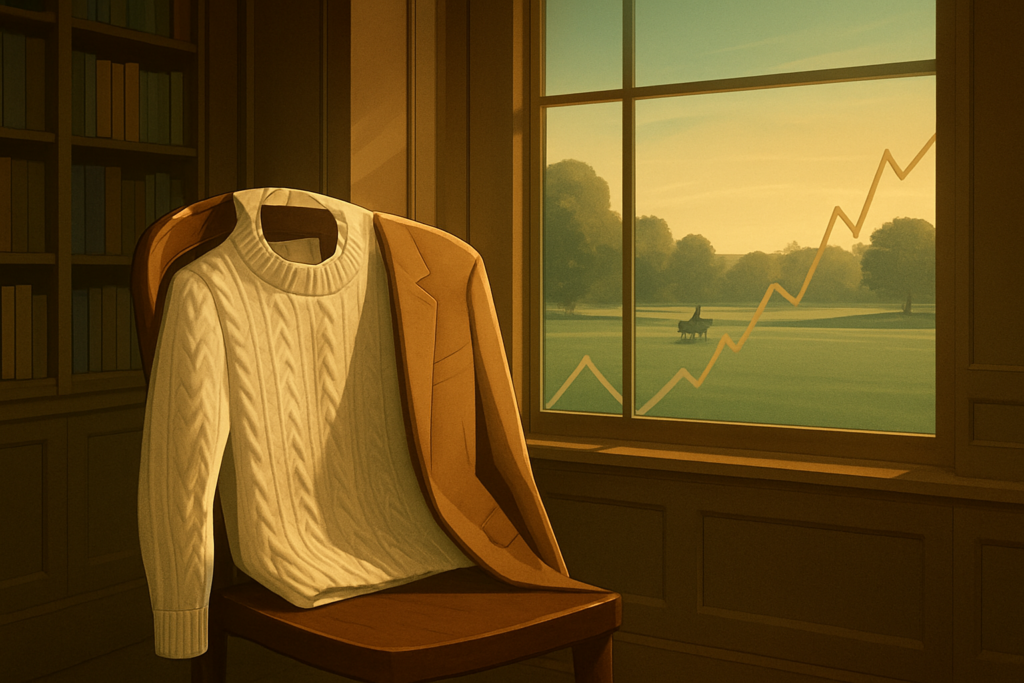
- Quiet Luxury: The shift away from loud logos has played directly into Ralph Lauren’s hands. Their signature "Old Money" aesthetic (cable-knit sweaters, tailored blazers) is perfectly aligned with current consumer tastes.
- Bifurcation of the Consumer: While middle-income consumers have pulled back, the "VIC" (Very Important Customer) segment remains resilient. RL’s focus on its top 5% of customers has shielded it from broader economic headwinds.
- The China Recovery: Despite geopolitical tensions, the Chinese luxury consumer’s appetite for "heritage" brands is growing. Ralph Lauren’s 30% growth in China this past quarter highlights this trend.
Risks and Challenges
Despite the current momentum, several risks loom:
- Geopolitical and Trade Risks: New U.S. tariffs on imports (ranging from 10% to 30%) are expected to impact Costs of Goods Sold (COGS) in late 2026. While RL is diversifying its supply chain away from China toward India and Vietnam, the transition is costly.
- Macroeconomic Sensitivity: While "brand elevation" helps, a severe global recession would still hit the aspirational luxury buyer, who remains a significant portion of RL’s revenue base.
- Brand Fatigue: The challenge for any legacy brand is staying relevant to Gen Z and Gen Alpha without alienating the core older demographic.
Opportunities and Catalysts
- Asia Expansion: RL remains under-penetrated in Asia compared to European luxury giants. Continued store openings in tier-2 Chinese cities and India represent a massive growth runway.
- Ecosystem Monetization: The success of Ralph’s Coffee and Polo Bar suggests an opportunity to expand into high-margin luxury hospitality and "experiential" retail.
- M&A Potential: With a strong balance sheet, RL could look to acquire smaller, niche luxury brands that fit its "lifestyle" umbrella, particularly in the footwear or beauty sectors.
Investor Sentiment and Analyst Coverage
Wall Street sentiment toward RL is currently at its most bullish in a decade. Following the Q3 beat, several major investment banks raised their price targets to the $380–$400 range.
- Institutional Holdings: Major institutional investors like Vanguard and BlackRock have increased their positions over the last two quarters, citing RL’s superior margin profile compared to other retail stocks.
- Retail Sentiment: On social trading platforms, RL is frequently cited as a "top-tier defensive luxury play," prized for its dividend and stable growth.
Regulatory, Policy, and Geopolitical Factors
In 2026, the luxury industry is increasingly under the microscope for sustainability and labor practices. The EU’s new "Digital Product Passport" requirements mean RL must provide detailed traceability for every garment sold in Europe. Furthermore, the 2025-2026 trade policy shifts in the U.S. have forced RL to accelerate its "near-shoring" efforts in Mexico and Central America to mitigate tariff risks from Asian imports.
Conclusion
Ralph Lauren (NYSE: RL) enters mid-2026 in a position of enviable strength. By successfully executing its "Next Great Chapter" strategy, the company has shed its image as a department store brand and emerged as a true global luxury contender. The combination of record-high margins, disciplined DTC expansion, and a timeless aesthetic that resonates with current "quiet luxury" trends makes it a standout in the consumer discretionary sector.
While macroeconomic uncertainties and trade tariffs present real hurdles, the company's operational maturity under Patrice Louvet and creative soul under Ralph Lauren provide a balanced foundation for long-term growth. For investors, the key will be watching if the company can maintain its AUR growth without hitting a price ceiling for its aspirational customers. For now, Ralph Lauren remains the gold standard of American luxury.
This content is intended for informational purposes only and is not financial advice.