A stainless steel olive oil dispenser helps keep olive oil fresh for longer. The main reason is that it blocks out harmful light 100% and minimizes temperature fluctuations. Light and oxygen are olive oil's two biggest “enemies”— they accelerate oxidation, break down polyphenols, and cause high-quality extra virgin olive oil (EVOO) to spoil within a matter of weeks. A well-designed stainless steel oil dispenser addresses both of these issues. Of course, the material is just one factor; the container's design, storage habits, and the rate at which the oil is used all collectively determine the actual shelf life of olive oil.

Why Does Olive Oil Go Bad?
To understand why the material of the container matters, we first need to understand the real reason olive oil goes bad. The science behind it is straightforward: olive oil goes bad due to oxidation, a chemical reaction triggered by four key factors.
Light
Light is one of the most aggressive oxidative catalysts. When ultraviolet rays penetrate transparent or light-colored bottles, they trigger photochemical reactions within the oil. Chlorophyll—the pigment that gives EVOO its characteristic green color—acts as a photosensitizer when exposed to light, directly accelerating the oxidation process. Research published in the Journal of Food Science shows that olive oil stored in clear glass oil bottles experiences a significant decline in antioxidant content after just a few days of exposure to light.

Oxygen
Every time you open a bottle or dispenser, you introduce oxygen. The moment oxygen contacts unsaturated fatty acids in olive oil, oxidation begins. This is why minimizing air exposure matters — both in how you store the oil and how the dispenser is designed. Small, repeated openings accumulate into significant oxidative damage over time.
Heat
Heat speeds up nearly every chemical reaction, and oxidation is no exception. Storing oil near a stove, oven, or in direct sunlight is a common kitchen mistake. Higher temperatures don't just accelerate oxidation — they can also alter the fatty acid composition and reduce the concentration of beneficial polyphenols. The ideal storage temperature for olive oil is between 57°F and 70°F.
Time
Even properly stored olive oil has a natural lifespan. Unopened extra virgin olive oil typically stays fresh for 18–24 months from the harvest date. Once opened, most quality oils are best consumed within 30–60 days. This is an important reality check: no dispenser, regardless of material, can stop the natural aging process entirely.
The Four Enemies of Olive Oil
|
Enemy |
Effect |
|
Light |
Triggers photochemical oxidation |
|
Heat |
Accelerates chemical breakdown |
|
Air (Oxygen) |
Oxidizes unsaturated fatty acids |
|
Time |
Natural aging reduces freshness |
How Does Stainless Steel Help Keep Olive Oil Fresh?
Now that you understand the threats, here is how a stainless steel olive oil dispenser actively works against them.
Blocks Harmful Light
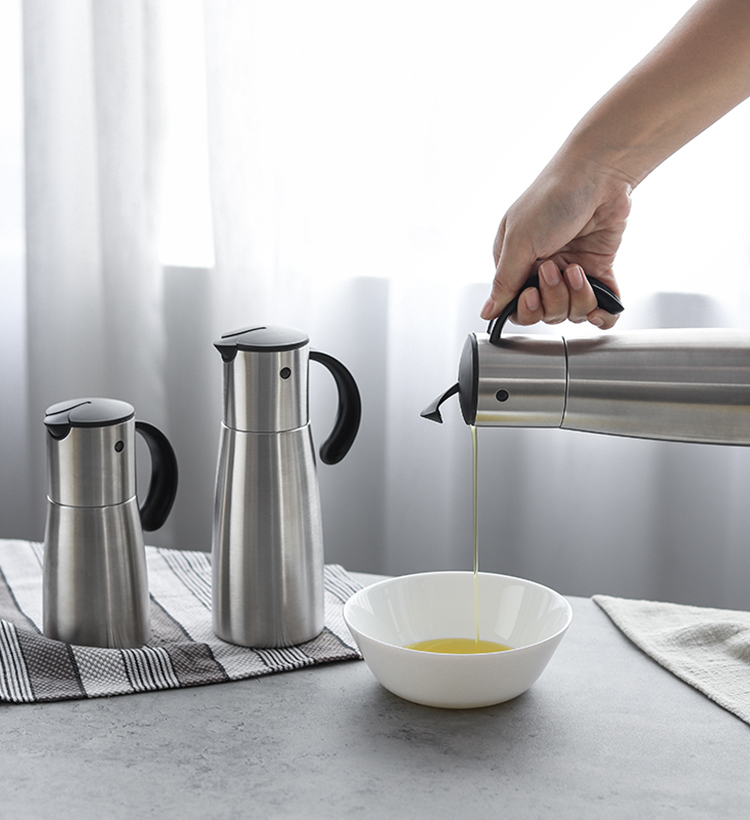
This is the single biggest advantage. Unlike clear glass — which offers virtually no UV protection — and even dark glass, stainless steel is completely opaque. It blocks 100% of light, including UV rays. This directly protects the chlorophyll and polyphenols in your olive oil, preserving both flavor and antioxidant content far longer than a clear bottle left on the counter.
Helps Maintain a Stable Temperature
Stainless steel does not cool your olive oil. What it does is reduce rapid temperature changes. Metal has thermal mass — it absorbs and releases heat more slowly than thin glass. This buffering effect protects the oil from the constant heating-and-cooling cycles that happen in an active kitchen, which are more damaging than a consistently warm temperature.
Food-Grade Stainless Steel Is Non-Reactive
Quality stainless steel dispensers use 18/8 food-grade stainless steel. This alloy is completely non-reactive with olive oil — it will not absorb odors, transfer metallic flavors, or chemically interact with the oil's fatty acids. You get pure olive oil taste, every time.
Durable Enough for Everyday Use
Durability is not in itself a factor in preserving freshness, but it is equally important in practical use. A stainless steel dispenser placed on a busy kitchen countertop is less likely to break than a glass bottle. Fewer accidents mean fewer disruptions to the storage process and less waste.
Is Stainless Steel Better Than Glass?
The honest answer: it depends on how you store it. Here is a clear comparison.
|
Feature |
Stainless Steel |
Dark Glass |
Clear Glass |
|
UV Protection |
⭐⭐⭐⭐⭐ |
⭐⭐⭐⭐ |
⭐ |
|
Break Resistance |
⭐⭐⭐⭐⭐ |
⭐⭐ |
⭐ |
|
Flavor Neutrality |
⭐⭐⭐⭐⭐ |
⭐⭐⭐⭐⭐ |
⭐⭐⭐⭐⭐ |
|
Easy to Monitor Oil Level |
❌ |
⭐⭐⭐⭐ |
⭐⭐⭐⭐⭐ |
|
Long-Term Storage |
⭐⭐⭐⭐⭐ |
⭐⭐⭐⭐ |
⭐⭐ |
The verdict: Clear glass is not inherently bad. If stored inside a dark cabinet, away from heat, a clear glass bottle performs adequately. The problem is that most home kitchens keep dispensers on the counter — directly exposed to overhead lighting and natural light from windows. In that real-world scenario, stainless steel wins on freshness protection by a clear margin.
Does the Dispenser Design Matter as Much as the Material?
Yes — and this is something most competitor reviews overlook. A dispenser made from the right material but with poor design can still underperform. Here are the design features that actually impact olive oil freshness.
Airtight lid A tight-sealing lid minimizes oxygen exposure every time the dispenser is closed. Look for silicone gaskets or threaded caps. A loose-fitting cap is one of the easiest ways to degrade oil quality.
Drip-free spout oil residue around the spout is not just messy — it oxidizes and can contaminate the fresh oil inside. A drip-free pour spout keeps the dispenser clean and reduces this secondary oxidation risk.
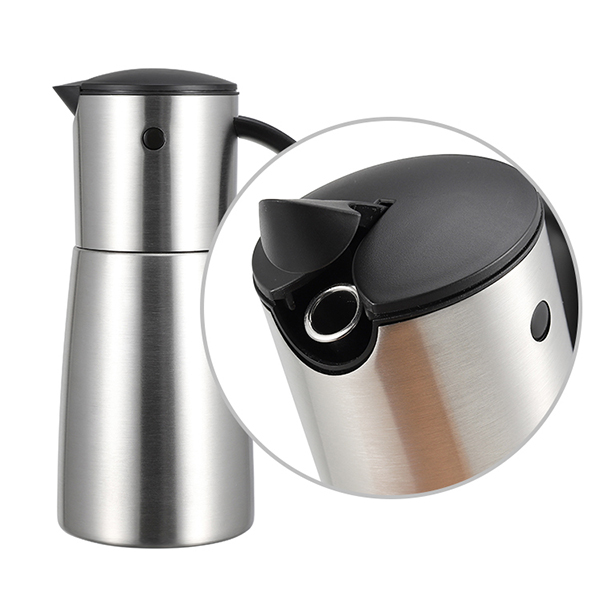
Appropriate capacity bigger is not better when it comes to olive oil dispensers. For daily household use, a 250–500ml capacity is ideal. Buying a 1-liter dispenser for a household that uses 2 tablespoons per day means the oil sits exposed to air for weeks longer than necessary.
Easy-to-clean construction old oil residue left inside a dispenser will turn rancid and contaminate fresh oil added later. A dispenser with a wide enough opening for a bottle brush — or dishwasher-safe construction — is a practical freshness consideration.
Best Practices for Keeping Olive Oil Fresh
The best dispenser in the world cannot compensate for poor storage habits. Follow these guidelines.
- ✔ Store away from sunlight— counter placement near windows is one of the most common mistakes.
- ✔ Keep away from the stove— ambient heat from cooking accelerates oxidation.
- ✔ Close immediately after use— even a 30-second open exposure adds up over dozens of uses.
- ✔ Buy fresh olive oil— check the harvest date, not just the best-by date. Fresher oil = longer freshness window.
- ✔ Clean dispenser regularly— at least once a month, or whenever you refill.
- ✔Avoid mixing old and new oil — always empty and clean before refilling.
How to Choose a High-Quality Stainless Steel Olive Oil Dispenser
Not all stainless steel dispensers are created equal. Here is what to look for.
- 304 stainless steel— The food-grade standard. Avoid unspecified or low-grade metals. Look for "18/8" markings.
- Food-grade materials throughout— Spout, gasket, and lid should all meet food safety standards (BPA-free, LFGB, FDA compliant where relevant).
- Leak-proof spout— Test or read reviews specifically for drip-free performance.
- Comfortable grip— A textured or ergonomic body reduces the chance of slipping.
- Easy filling design— A wide enough opening prevents spillage when refilling.
- Different capacities— 250ml for light users, 500ml for daily cooks, up to 750ml for high-volume households.
- Dishwasher compatibility— Significantly simplifies regular cleaning.

FAQs
Q1: Does stainless steel change the taste of olive oil? No. Food-grade 304 stainless steel is completely non-reactive. It will not impart any metallic flavor or absorb the oil's natural aroma.
Q2: Is stainless steel better than dark glass? For light protection, they are comparable — both perform significantly better than clear glass. Stainless steel has the edge in durability and temperature stability. Dark glass allows you to monitor oil level, which is a practical advantage some users prefer.
Q3: How long can olive oil stay fresh in a dispenser? Typically 30–60 days after opening, if stored away from light and heat. A stainless steel dispenser can extend this toward the upper end of that range by limiting light and temperature exposure.
Q4: Should I refill my dispenser frequently? Yes. Rather than buying a large dispenser and filling it all at once, keep a smaller daily-use dispenser and store the bulk oil in a sealed dark container or its original bottle. Refill in smaller quantities every 1–2 weeks.
Q5: Can I store extra virgin olive oil in stainless steel? Absolutely. EVOO is the category most sensitive to light and oxidation — and therefore the one that benefits most from stainless steel storage. High-polyphenol EVOO especially deserves proper protection.
Q6: How often should I clean my olive oil dispenser? At minimum, once a month. Ideally, clean it every time you refill — empty completely, wash with warm soapy water, rinse thoroughly, and let it dry fully before refilling. Residual oil left in a dispenser oxidizes and will contaminate fresh oil.
Conclusion
The evidence is clear: a well-designed stainless steel olive oil dispenser is one of the most practical investments you can make for olive oil storage. It blocks 100% of UV light, buffers against temperature swings, and keeps flavor completely neutral — all without requiring any change to your cooking routine.
That said, material alone is not enough. Pairing your stainless steel dispenser with smart habits — buying fresh, storing cool, cleaning regularly, and using oil within 30–60 days — is what truly preserves flavor and extends olive oil shelf life.
Looking for the best olive oil dispenser for your kitchen or business?
Chinagama olive oil dispenser factory with years of experience supplying high-quality 18/8 stainless steel olive oil dispensers to global markets. We support small-batch purchasing as well as full OEM & ODM custom manufacturing — from logo engraving and custom packaging to unique capacity specifications and private label branding.
Whether you are a retailer building your own brand, a restaurant sourcing reliable kitchen tools, or a distributor looking for competitive-grade products, Chinagama offers factory-direct pricing with flexible minimum order quantities.
Visit Chinagama kitchen oil bottlle manufacturer to explore our full product range or contact us to discuss your custom project.
Media Contact
Company Name: Chinagama Industrial Corporation
Email: Send Email
Address:No. 59, Kechuang North Road, Jishigang Town, Ningbo
City: Zhejiang
Country: China
Website: https://www.chinagama.com/