Root-knot nematodes are often referred to as the “hidden killers” of crop root systems. They cause severe damage to high-value crops such as tomatoes, cucumbers, peppers, watermelons, potatoes, and grapes. Once infected, roots develop characteristic galls that impair water and nutrient uptake. Above-ground symptoms include leaf yellowing, wilting, stunted growth, poor flowering, and reduced fruit set, often resulting in yield losses of 30–80%. Many growers find that despite proper irrigation and fertilization, crop performance remains poor, only to discover extensive nematode infestation after examining the root system.
 |
 |
 |
For many years, chemical nematicides have been the primary method for nematode control. While some products can rapidly reduce nematode populations, they often suffer from short residual activity, require repeated applications, and increase production costs. More importantly, long-term dependence on chemical nematicides can disrupt soil microbial balance, suppress beneficial microorganisms, and contribute to nematode resistance development, making control increasingly difficult. As a result, biological approaches that utilize plant immunity and beneficial biological mechanisms are becoming a key direction for sustainable nematode management.
Chitosan Oligosaccharide, a highly bioactive low-molecular-weight compound derived from natural chitin, has gained significant attention as a plant biostimulant in recent years. Unlike conventional nematicides that rely primarily on direct toxicity, Chitosan Oligosaccharide helps plants defend themselves by activating natural immune responses and enhancing resistance to nematode invasion.
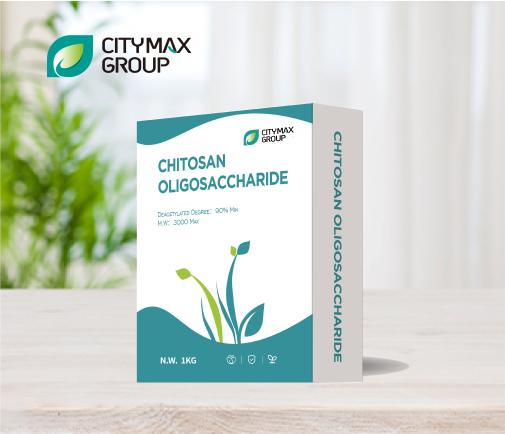 |
DEACETYLATED DEGREE≥90% pH (1:100 dilution):5.0–7.0 |
Research has shown that Chitosan Oligosaccharide is recognized by plant cells as an external signaling molecule, rapidly triggering defense pathways and increasing the activity of key defense enzymes, including peroxidase (POD), polyphenol oxidase (PPO), and phenylalanine ammonia-lyase (PAL). These responses strengthen the plant's ability to resist nematode infection.
At the same time, Chitosan Oligosaccharide promotes the accumulation of lignin and callose, reinforcing root cell walls and creating a natural physical barrier against nematode penetration. As nematode juveniles attempt to invade root tissues, they encounter increased resistance, reducing infection success and feeding site establishment. In addition, Chitosan Oligosaccharide can interfere with nematode egg development and hatching while reducing juvenile mobility and vitality, thereby slowing population expansion.
Beyond its anti-nematode effects, Chitosan Oligosaccharide also serves as an effective root growth promoter. Nematode infestation often causes severe root damage and reduced nutrient uptake capacity. Chitosan Oligosaccharide stimulates the formation of new roots, lateral roots, and root hairs, enhances root vigor, improves water and nutrient absorption, and accelerates plant recovery. Numerous field trials have demonstrated that crops treated with Chitosan Oligosaccharide develop healthier root systems, exhibit stronger growth, and maintain greater resilience even under significant nematode pressure.
As sustainable agriculture continues to advance, Chitosan Oligosaccharide is evolving from a simple biostimulant into a comprehensive plant health management tool. When combined with beneficial microorganisms such as Paecilomyces lilacinus and Trichoderma harzianum contained in DIAMONDMAX No.1, it provides a dual mechanism of plant immune activation and rhizosphere biological regulation. Together, they create a more complete and long-lasting biological defense system that supports root health, enhances crop productivity, and contributes to sustainable agricultural production.
 |
Trichoderma Harzianum≥50 million/g Paecilomyces lacinus≥50 million/g Organic Matter≥50% Humic Acid≥50% Polyglutamic Acid≥0.3% K2O ≥10% pH(1:100dilution):9.0-11.0 |
Product Links:https://www.citymax-group.com/cos-p-product/https://www.citymax-group.com/diamondmax1-product/
| Soren Pei | Technical Analysis Expert in Agricultural Biostimulants, City Max Group |
|
Soren Pei has long been engaged in technical research and industrial analysis in the field of agricultural biostimulants, focusing on the structural characteristics of bioactive molecules, their modes of action, and their performance within crop systems. By systematically reviewing key technological pathways, including amino acids, peptides, chitosanoligosaccharides, and seaweed-derived bioactives, he analyzes the stability and efficacy of different solutions in large-scale agricultural applications.
|
| Based on experimental data, field validation, and industry practice, he conducts technical evaluations and trend analysis, with particular attention to the standardization, industrialization, and sustainable application of biostimulants in the context of green agriculture, providing scientific and rational guidance for crop nutrition management and healthy cultivation. |
Media Contact
Company Name: Citymax group
Email: Send Email
Country: China
Website: https://www.citymax-group.com/