Luxury ski resort company Vail Resorts (NYSE: MTN) reported revenue ahead of Wall Street’s expectations in Q2 CY2026, with sales up 2.5% year on year to $278.1 million.
Is now the time to buy Vail Resorts? Find out by accessing our full research report, it’s free.
Vail Resorts (MTN) Q2 CY2026 Highlights:
- Revenue: $278.1 million vs analyst estimates of $273.7 million (2.5% year-on-year growth, 1.6% beat)
- Adjusted EBITDA: -$121.9 million (-43.8% margin, 2.3% year-on-year growth)
- EBITDA guidance for the upcoming financial year 2027 is $828 million at the midpoint, below analyst estimates of $833.7 million
- Operating Margin: -75.1%, in line with the same quarter last year
- Skier Visits: down 251,000 year on year
- Market Capitalization: $4.85 billion
"Looking back over the past year and a half, we have taken decisive action and accelerated the pace of change across our business, strengthening leadership, advancing growth initiatives, enhancing the guest experience, and improving operational efficiency. In addition to appointing a new CEO, we have brought on a new Chief Revenue Officer and a new independent board member with hospitality and operations expertise, with an ongoing search for a second director. We refreshed our marketing approach and increased our investment across media, channel strategies, branding and optimization of our products and pricing. We also announced our multi-year Epic Experience growth strategy to further differentiate the guest experience to drive increased guest engagement and loyalty, and the expansion of our resource efficiency transformation plan to deliver an additional $30 million of savings by fiscal 2028."
Company Overview
Founded by two Aspen, Colorado ski patrol guides, Vail Resorts (NYSE: MTN) is a mountain resort company offering luxury experiences in over 30 locations across the globe.
Revenue Growth
A company’s long-term sales performance is one signal of its overall quality. Any business can have short-term success, but a top-tier one grows for years. Regrettably, Vail Resorts’s sales grew at a weak 8.2% compounded annual growth rate over the last five years. This was below our standard for the consumer discretionary sector and is a tough starting point for our analysis.
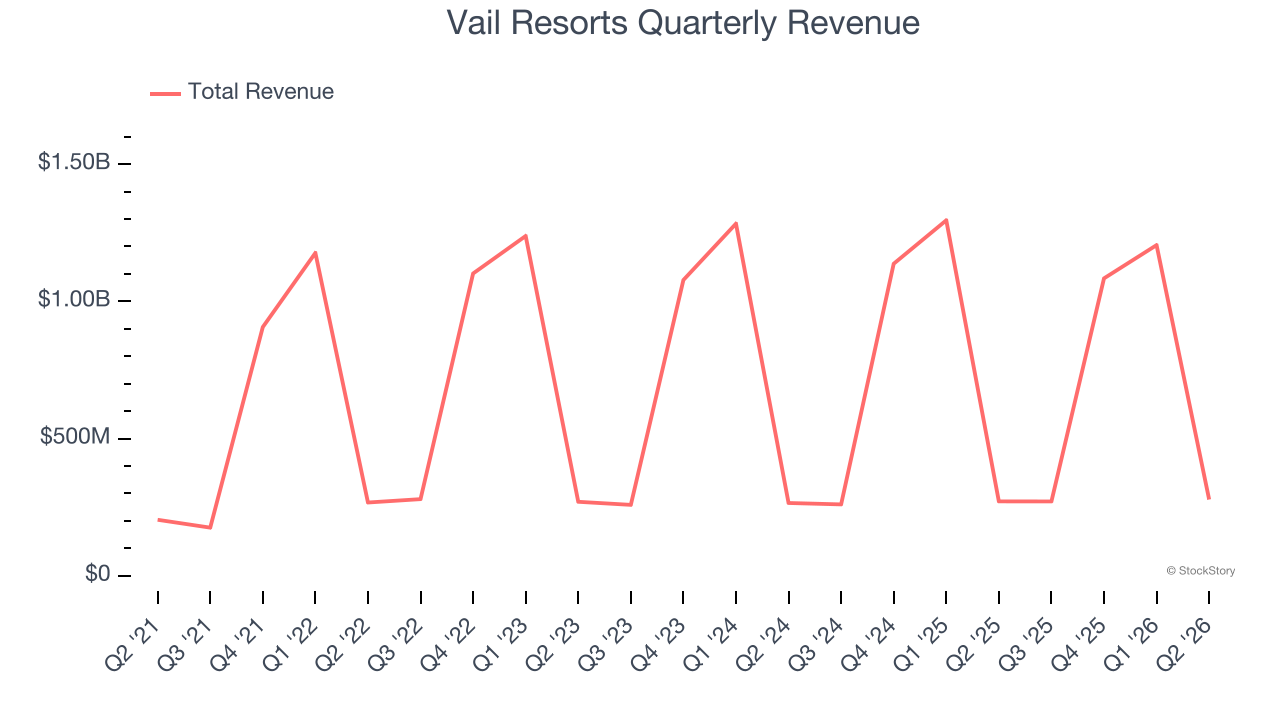
Long-term growth is the most important, but within consumer discretionary, product cycles are short and revenue can be hit-driven due to rapidly changing trends and consumer preferences. Vail Resorts’s recent performance shows its demand has slowed as its revenue was flat over the last two years. Note that COVID hurt Vail Resorts’s business in 2020 and part of 2021, and it bounced back in a big way thereafter.
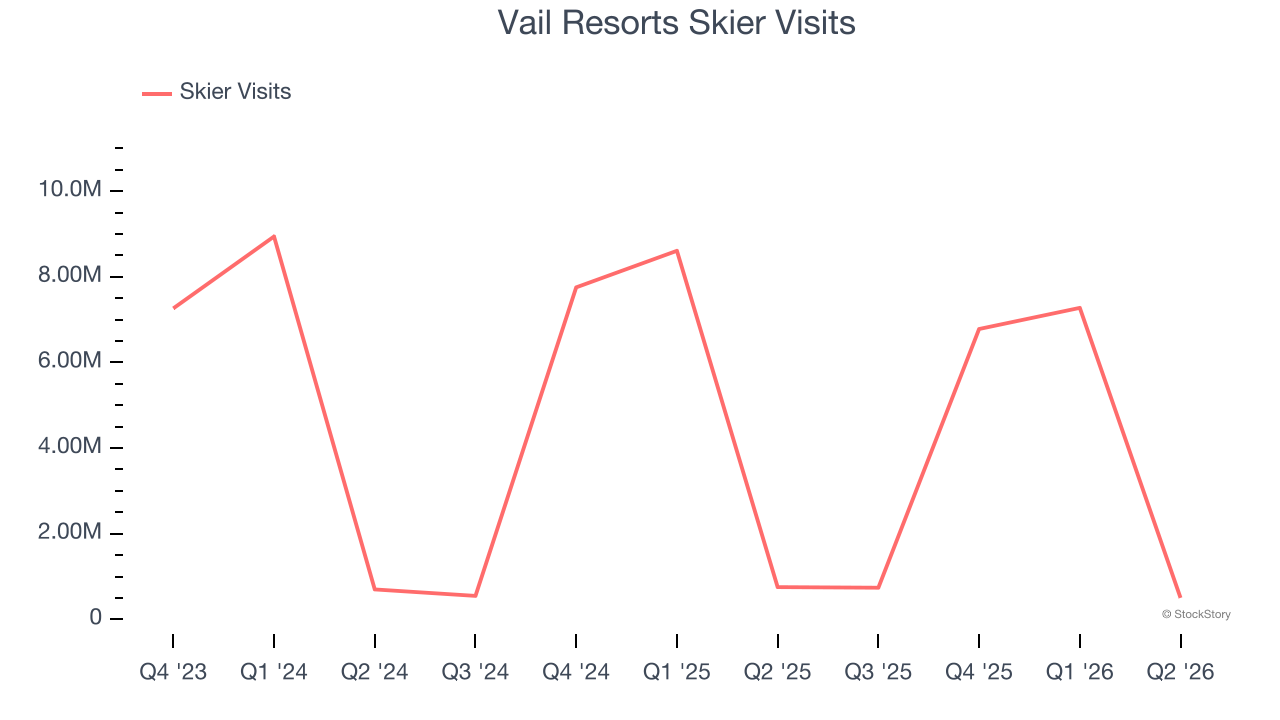
We can dig further into the company’s revenue dynamics by analyzing its number of skier visits, which reached 502,000 in the latest quarter. Over the last two years, Vail Resorts’s skier visits averaged 2.3% year-on-year declines. Because this number aligns with its revenue growth during the same period, we can see the company’s monetization was fairly consistent.
This quarter, Vail Resorts reported modest year-on-year revenue growth of 2.5% but beat Wall Street’s estimates by 1.6%.
Looking ahead, sell-side analysts expect revenue to grow 5.6% over the next 12 months. Although this projection indicates its newer products and services will fuel better top-line performance, it is still below average for the sector.
ALSO WORTH WATCHING: Nvidia’s Quiet Partner. Nvidia’s chips cost a hundred grand. The connectors that make them work cost even more. One company makes them all.
Every AI server needs specialized infrastructure the chip companies don’t make. High-speed cables. Power connectors. Thermal sensors. This 90-year-old company built a monopoly on it. The AI boom just started. This stock is still flying under the radar. Claim The Stock Ticker Here for FREE.
Operating Margin
Vail Resorts’s operating margin has been trending down over the last 12 months and averaged 16.9% over the last two years. The company’s profitability was mediocre for a consumer discretionary business and shows it couldn’t pass its higher operating expenses onto its customers.
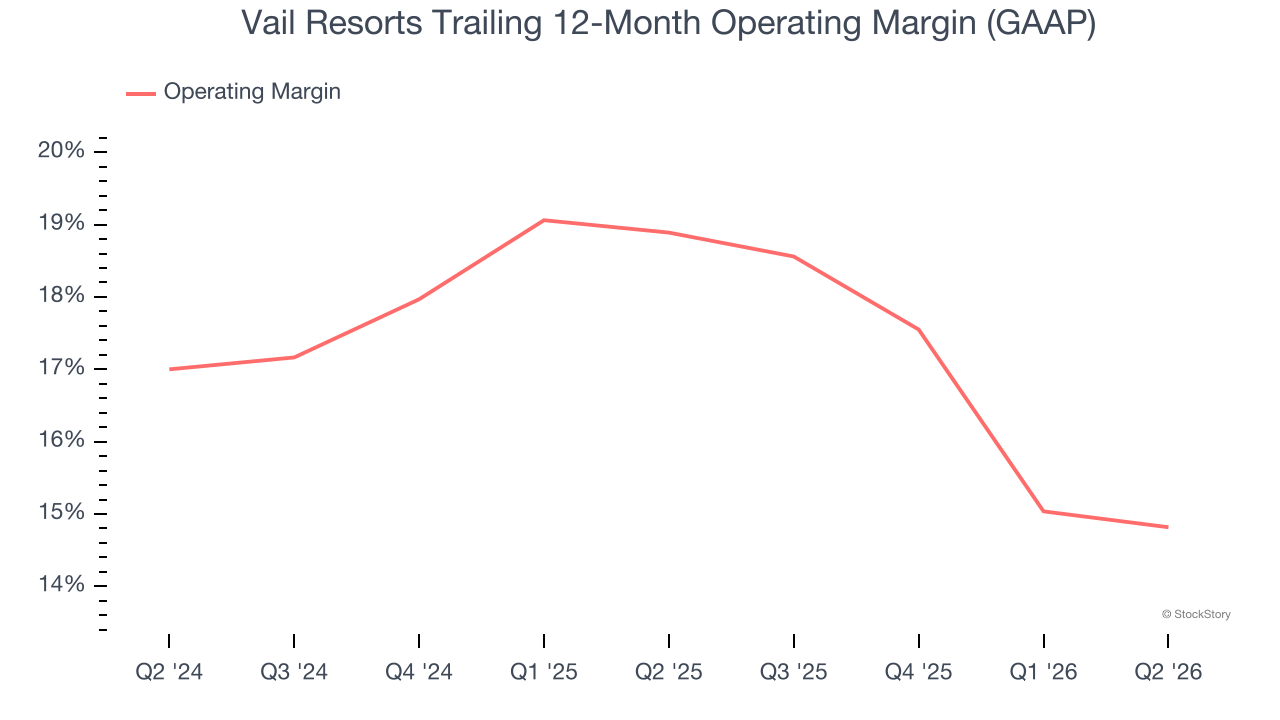
In Q2, Vail Resorts generated an operating margin profit margin of negative 75.1%, in line with the same quarter last year. This indicates the company’s overall cost structure has been relatively stable.
Key Takeaways from Vail Resorts’s Q2 Results
It was encouraging to see Vail Resorts beat analysts’ revenue expectations this quarter. We were also happy its EBITDA outperformed Wall Street’s estimates. The stock traded down 1.9% to $135.49 immediately following the results.
Vail Resorts underperformed this quarter, but does that create an opportunity to invest right now? We think that the latest quarter is only one piece of the longer-term business quality puzzle. Quality, when combined with valuation, can help determine if the stock is a buy. We cover that in our actionable full research report which you can read here (it’s free).