Earnings results often indicate what direction a company will take in the months ahead. With Q2 behind us, let’s have a look at Supernus Pharmaceuticals (NASDAQ: SUPN) and its peers.
Looking ahead, the branded pharmaceutical industry is positioned for tailwinds from advancements in precision medicine, increasing adoption of AI to enhance drug development efficiency, and growing global demand for treatments addressing chronic and rare diseases. However, headwinds include heightened regulatory scrutiny, pricing pressures from governments and insurers, and the looming patent cliffs for key blockbuster drugs. Patent cliffs bring about competition from generics, forcing branded pharmaceutical companies back to the drawing board to find the next big thing.
The 9 branded pharmaceuticals stocks we track reported a strong Q2. As a group, revenues beat analysts’ consensus estimates by 6.6%.
In light of this news, share prices of the companies have held steady. On average, they are relatively unchanged since the latest earnings results.
Supernus Pharmaceuticals (NASDAQ: SUPN)
With a diverse portfolio of eight FDA-approved medications targeting neurological conditions, Supernus Pharmaceuticals (NASDAQ: SUPN) develops and markets treatments for central nervous system disorders including epilepsy, ADHD, Parkinson's disease, and migraine.
Supernus Pharmaceuticals reported revenues of $211.3 million, up 27.7% year on year. This print exceeded analysts’ expectations by 2.8%. Overall, it was a very strong quarter for the company with full-year operating income guidance exceeding analysts’ expectations and full-year revenue guidance slightly topping analysts’ expectations.
“Our first-half 2026 results reflect the continued strength and sustained momentum of our growth products and continued execution on our commercial strategy,” said Jack Khattar, President and CEO of Supernus.
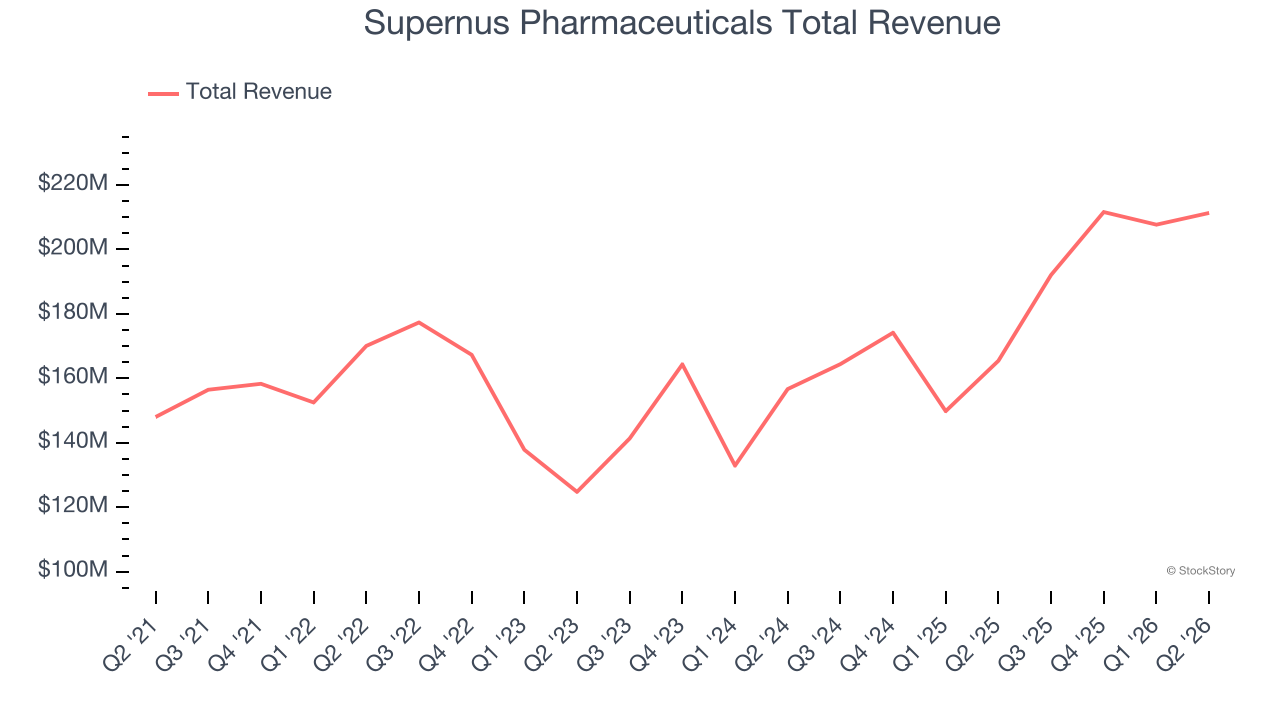
Investor expectations, however, were likely higher than Wall Street’s published projections, leaving some wishing for even better results (analysts’ consensus estimates are those published by big banks and advisory firms, not the investors who make buy and sell decisions). The stock is down 5.9% since reporting and currently trades at $41.99.
Is now the time to buy Supernus Pharmaceuticals? Access our full analysis of the earnings results here, it’s free.
Best Q2: Bristol-Myers Squibb (NYSE: BMY)
With roots dating back to 1887 and a transformative merger in 1989 that gave the company its current name, Bristol-Myers Squibb (NYSE: BMY) discovers, develops, and markets prescription medications for serious diseases including cancer, blood disorders, immunological conditions, and cardiovascular diseases.
Bristol-Myers Squibb reported revenues of $12.97 billion, up 5.7% year on year, outperforming analysts’ expectations by 12.9%. The business had an incredible quarter with a beat of analysts’ EPS estimates and an impressive beat of analysts’ full-year EPS guidance estimates.
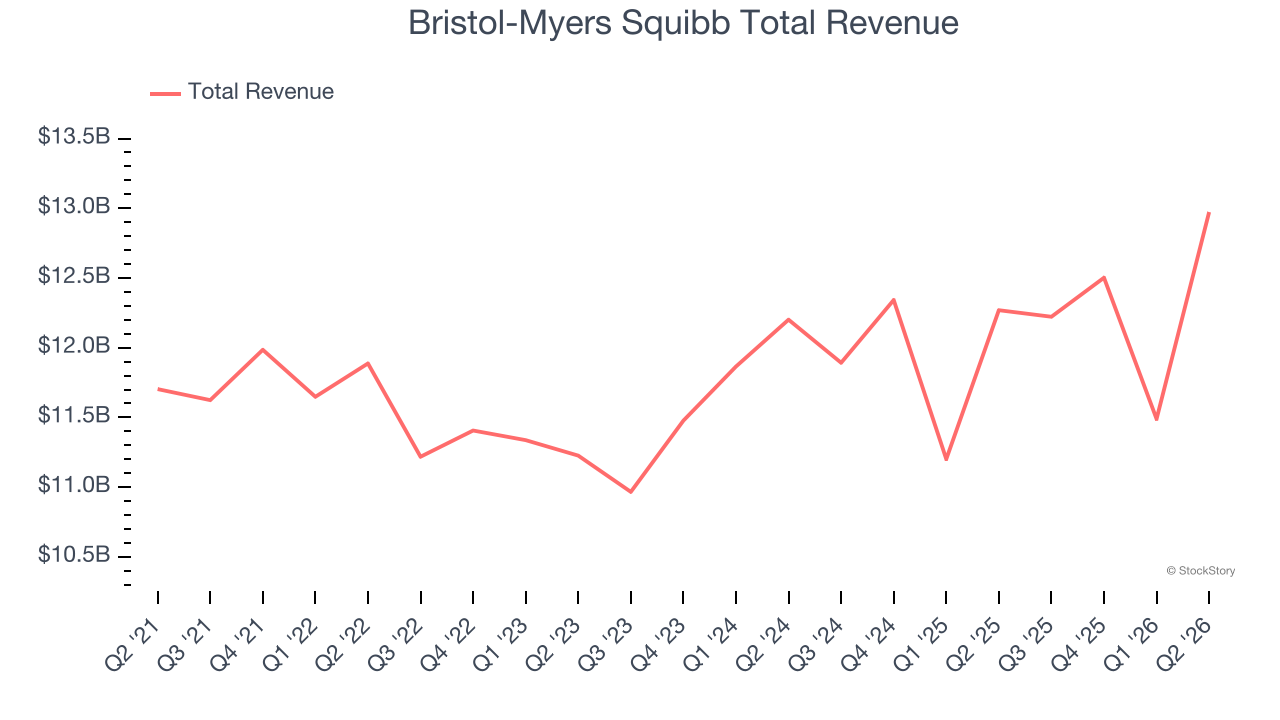
However, the results were likely priced into the stock as it’s traded sideways since reporting. Shares currently sit at $63.10.
Is now the time to buy Bristol-Myers Squibb? Access our full analysis of the earnings results here, it’s free.
Weakest Q2: Zoetis (NYSE: ZTS)
Originally spun off from Pfizer in 2013 as the world's largest pure-play animal health company, Zoetis (NYSE: ZTS) discovers, develops, and sells medicines, vaccines, diagnostic products, and services for pets and livestock animals worldwide.
Zoetis reported revenues of $2.47 billion, flat year on year, falling short of analysts’ expectations by 1.5%. It was a disappointing quarter as it posted full-year revenue guidance missing analysts’ expectations significantly and a significant miss of analysts’ full-year EPS guidance estimates.
Zoetis delivered the weakest performance against analyst estimates, slowest revenue growth, and weakest full-year guidance update in the group. As expected, the stock is down 2.1% since the results and currently trades at $72.80.
Read our full analysis of Zoetis’s results here.
Corcept (NASDAQ: CORT)
Focusing on the powerful stress hormone that affects everything from metabolism to immune function, Corcept Therapeutics (NASDAQ: CORT) develops and markets medications that modulate cortisol to treat endocrine disorders, cancer, and neurological diseases.
Corcept reported revenues of $256.1 million, up 31.7% year on year. This print beat analysts’ expectations by 21.6%. Overall, it was an incredible quarter as it also recorded a beat of analysts’ EPS estimates and full-year revenue guidance exceeding analysts’ expectations.
Corcept achieved the biggest analyst estimate beat and highest full-year guidance raise of the whole group. The stock is up 26.4% since reporting and currently trades at $117.45.
Read our full, actionable report on Corcept here, it’s free.
Merck (NYSE: MRK)
With roots dating back to 1891 and a portfolio that includes the blockbuster cancer immunotherapy Keytruda, Merck (NYSE: MRK) develops and sells prescription medicines, vaccines, and animal health products across oncology, infectious diseases, cardiovascular, and other therapeutic areas.
Merck reported revenues of $16.61 billion, up 5.1% year on year. This result surpassed analysts’ expectations by 2.1%. Taking a step back, it was a satisfactory quarter as it also recorded a beat of analysts’ EPS estimates but a miss of analysts’ full-year EPS guidance estimates.
The stock is up 15.2% since reporting and currently trades at $147.14.
Read our full, actionable report on Merck here, it’s free.
Market Update
Over the past year, investors have been forced to repeatedly answer the same question: what is the market’s biggest risk? The answer has changed several times, and each shift has reshaped market leadership.
Late in 2025 and early 2026, artificial intelligence became the market’s primary uncertainty. Investors questioned whether AI would erode software pricing power and weaken competitive moats as AI made it easier to replicate once-differentiated products.
By the spring, technology took a back seat to geopolitics. The U.S. conflict with Iran briefly became the market’s dominant narrative, raising concerns about oil prices, inflation, and global growth. But as energy markets remained orderly and fears of a prolonged supply disruption faded, investors quickly turned their focus back to fundamentals.
Want to invest in winners with rock-solid fundamentals? Check out our Strong Momentum Stocks and add them to your watchlist. These companies are poised for growth regardless of the political or macroeconomic climate.