Packaging manufacturer Ball (NYSE: BALL) reported Q2 CY2026 results exceeding the market’s revenue expectations, with sales up 19.7% year on year to $4.00 billion. Its non-GAAP profit of $1.03 per share was 4.3% above analysts’ consensus estimates.
Is now the time to buy Ball? Find out by accessing our full research report, it’s free.
Ball (BALL) Q2 CY2026 Highlights:
- Revenue: $4.00 billion vs analyst estimates of $3.64 billion (19.7% year-on-year growth, 9.8% beat)
- Adjusted EPS: $1.03 vs analyst estimates of $0.99 (4.3% beat)
- Operating Margin: 11.3%, in line with the same quarter last year
- Free Cash Flow Margin: 11.7%, up from 7.1% in the same quarter last year
- Market Capitalization: $17.35 billion
"Ball delivered another quarter of strong results, reflecting the consistent execution of our strategy and continued progress toward our long-term objectives. Higher volumes and operating earnings were driven by the strength of our customer partnerships, disciplined commercial and operational execution, and the resilience of a business model we have built over decades. Our global portfolio of sustainable packaging solutions and focus on operational excellence position us to continue creating value for customers and shareholders through innovation, efficiency and disciplined growth," said Ron Lewis, chief executive officer.
Company Overview
Started with a $200 loan in 1880, Ball (NYSE: BALL) manufactures aluminum packaging for beverages, personal care, and household products as well as aerospace systems and other technologies.
Revenue Growth
A company’s long-term performance is an indicator of its overall quality. Any business can have short-term success, but a top-tier one grows for years. Unfortunately, Ball’s 2.3% annualized revenue growth over the last five years was sluggish. This was below our standards and is a tough starting point for our analysis.
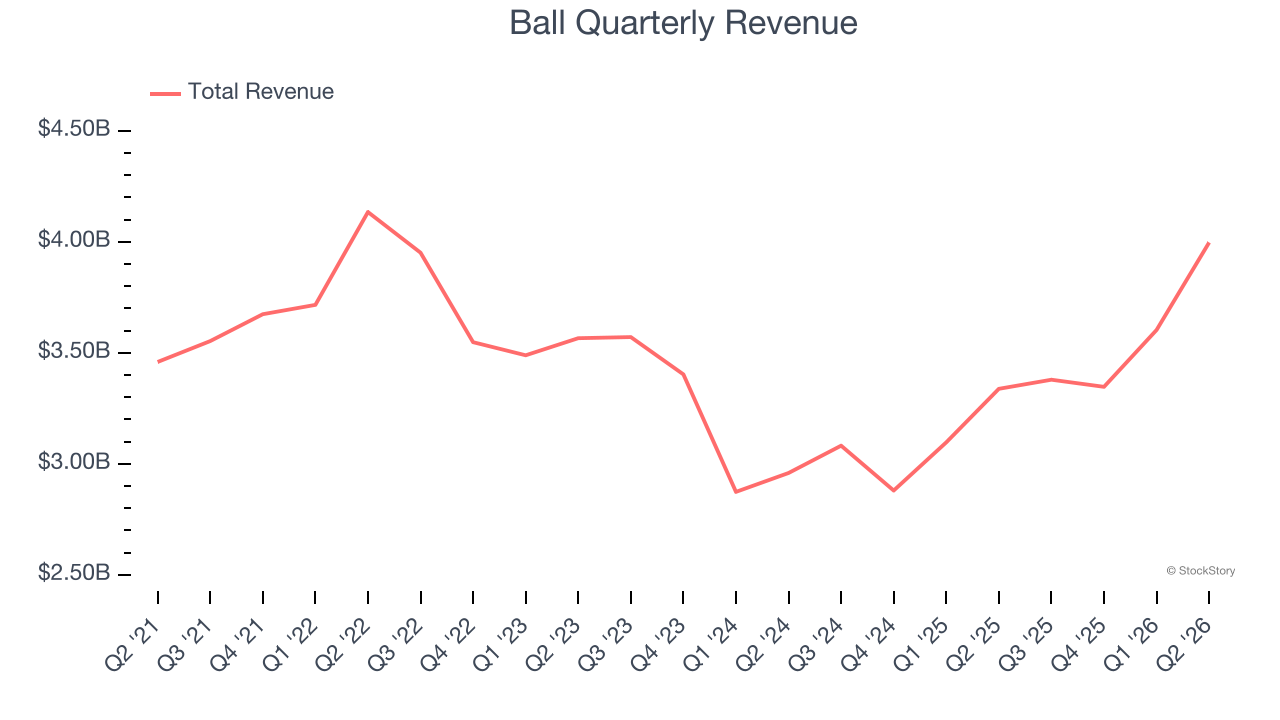
We at StockStory place the most emphasis on long-term growth, but within industrials, a half-decade historical view may miss cycles, industry trends, or a company capitalizing on catalysts such as a new contract win or a successful product line. Ball’s annualized revenue growth of 5.8% over the last two years is above its five-year trend, which is encouraging. 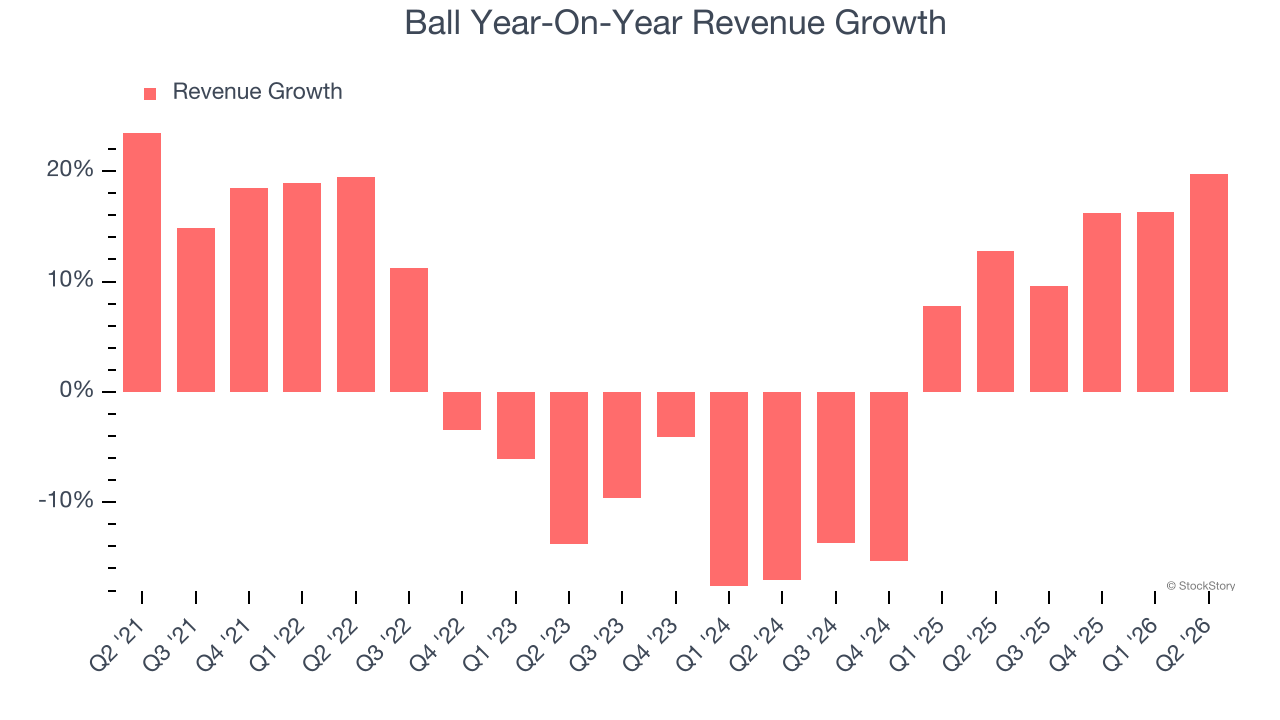
This quarter, Ball reported year-on-year revenue growth of 19.7%, and its $4.00 billion of revenue exceeded Wall Street’s estimates by 9.8%.
Looking ahead, sell-side analysts expect revenue to grow 2.3% over the next 12 months, a deceleration versus the last two years. This projection is underwhelming and implies its products and services will face some demand challenges.
ALSO WORTH WATCHING: Nvidia’s Quiet Partner. Nvidia’s chips cost a hundred grand. The connectors that make them work cost even more. One company makes them all.
Every AI server needs specialized infrastructure the chip companies don’t make. High-speed cables. Power connectors. Thermal sensors. This 90-year-old company built a monopoly on it. The AI boom just started. This stock is still flying under the radar. Claim The Stock Ticker Here for FREE.
Operating Margin
Operating margin is one of the best measures of profitability because it tells us how much money a company takes home after procuring and manufacturing its products, marketing and selling those products, and most importantly, keeping them relevant through research and development.
Ball has done a decent job managing its cost base over the last five years. The company has produced an average operating margin of 8.8%, higher than the broader industrials sector.
Analyzing the trend in its profitability, Ball’s operating margin rose by 3.5 percentage points over the last five years, as its sales growth gave it operating leverage. Its expansion was impressive, especially when considering most Industrial Packaging peers saw their margins plummet.
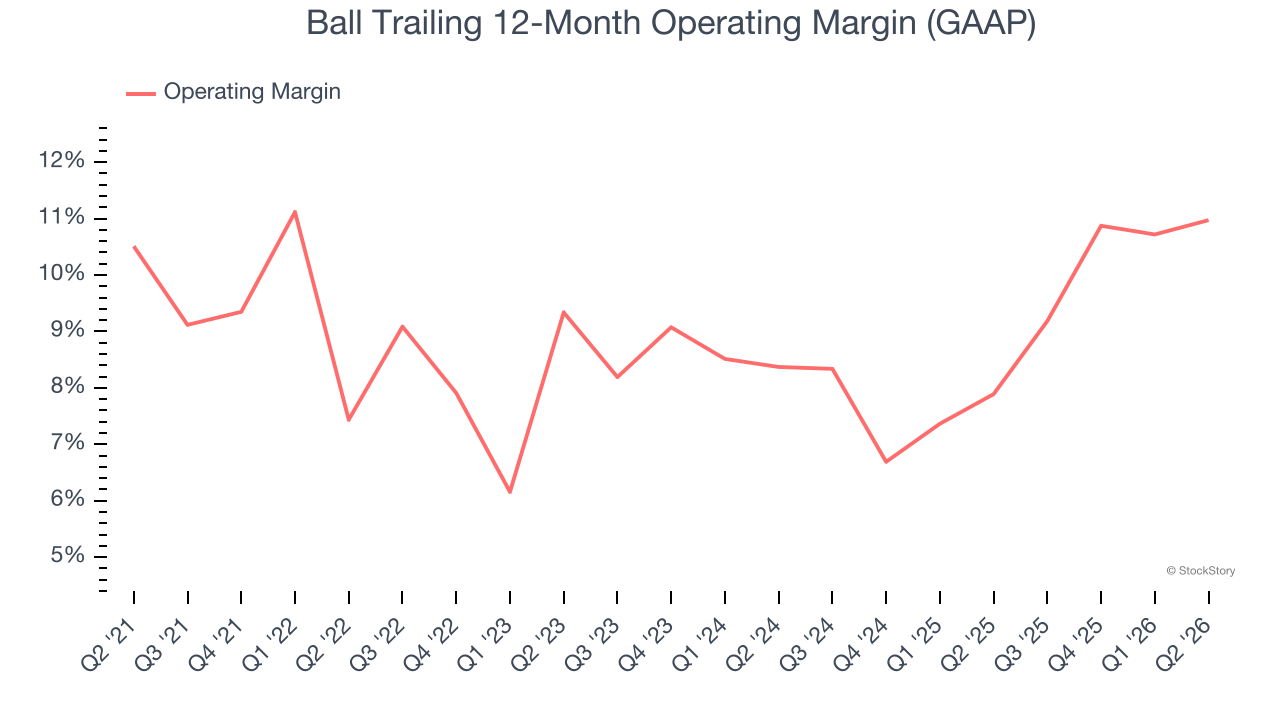
In Q2, Ball generated an operating margin profit margin of 11.3%, in line with the same quarter last year. This indicates the company’s cost structure has recently been stable.
Earnings Per Share
We track the long-term change in earnings per share (EPS) for the same reason as long-term revenue growth. Compared to revenue, however, EPS highlights whether a company’s growth is profitable.
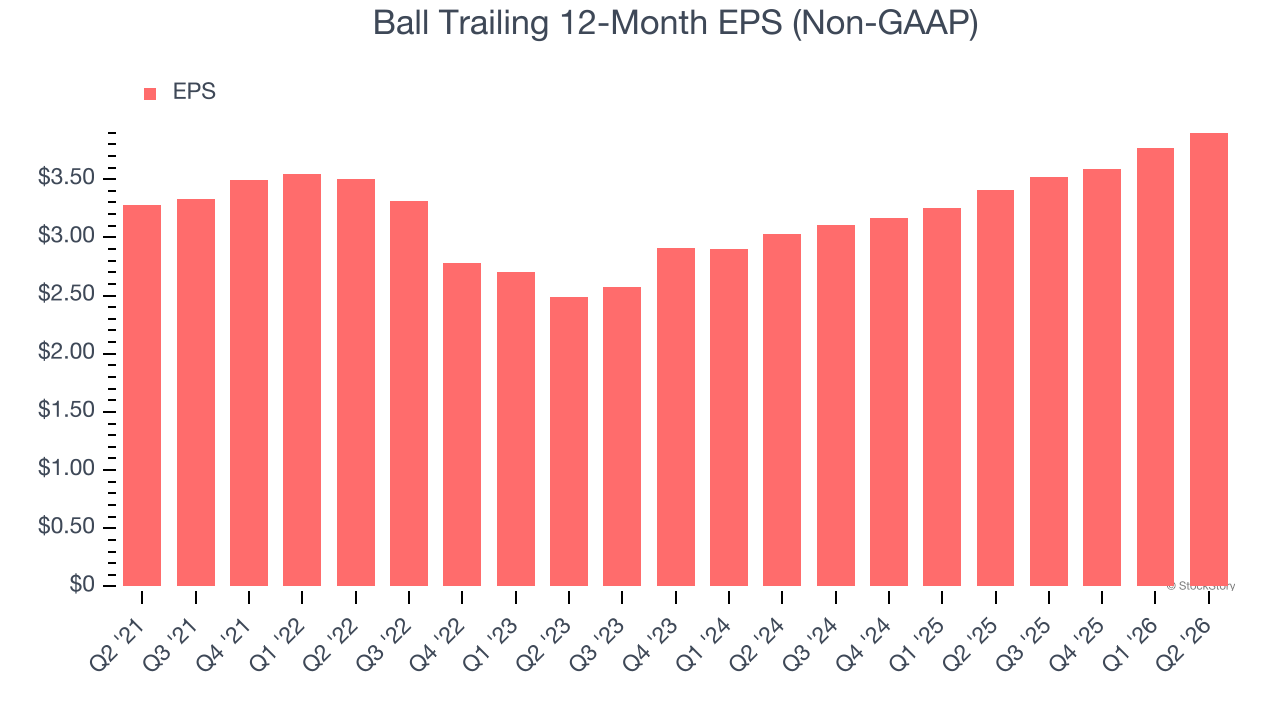
Ball’s weak 3.5% annual EPS growth over the last five years aligns with its revenue performance. On the bright side, this tells us its incremental sales were profitable.
Like with revenue, we analyze EPS over a more recent period because it can provide insight into an emerging theme or development for the business.
Ball’s two-year annual EPS growth of 13.5% was great and topped its 5.8% two-year revenue growth.
We can take a deeper look into Ball’s earnings to better understand the drivers of its performance. While we mentioned earlier that Ball’s operating margin was flat this quarter, a two-year view shows its margin has expandedwhile its share count has shrunk 14.4%. These are positive signs for shareholders because improving profitability and share buybacks turbocharge EPS growth relative to revenue growth. 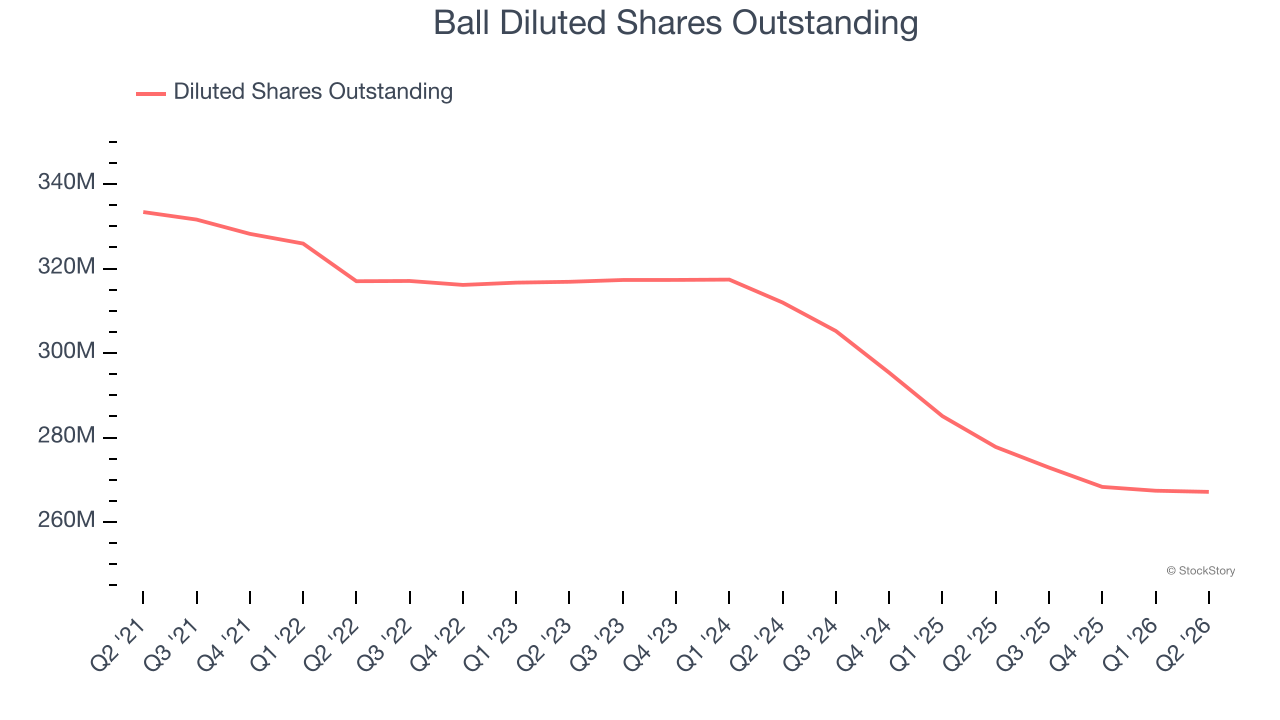
In Q2, Ball reported adjusted EPS of $1.03, up from $0.90 in the same quarter last year. This print beat analysts’ estimates by 4.3%. Over the next 12 months, Wall Street expects Ball’s full-year EPS to grow 8.1% from $3.90 to $4.22.
Key Takeaways from Ball’s Q2 Results
We were impressed by how significantly Ball blew past analysts’ revenue expectations this quarter. We were also glad its EPS outperformed Wall Street’s estimates. Zooming out, we think this was a solid print. The stock remained flat at $65.74 immediately after reporting.
Ball put up rock-solid earnings, but one quarter doesn’t necessarily make the stock a buy. Let’s see if this is a good investment. When making that decision, it’s important to consider its valuation, business qualities, as well as what has happened in the latest quarter. We cover that in our actionable full research report which you can read here (it’s free).