
Kitchenware and home goods retailer Williams-Sonoma (NYSE: WSM) met Wall Street’s revenue expectations in Q1 CY2026, with sales up 4.4% year on year to $1.81 billion. Its GAAP profit of $1.93 per share was 7.3% above analysts’ consensus estimates.
Is now the time to buy Williams-Sonoma? Find out by accessing our full research report, it’s free.
Williams-Sonoma (WSM) Q1 CY2026 Highlights:
- Revenue: $1.81 billion vs analyst estimates of $1.80 billion (4.4% year-on-year growth, in line)
- EPS (GAAP): $1.93 vs analyst estimates of $1.80 (7.3% beat)
- Adjusted EBITDA: $377.3 million vs analyst estimates of $344.7 million (20.9% margin, 9.5% beat)
- Operating Margin: 16.2%, in line with the same quarter last year
- Free Cash Flow Margin: 5.5%, up from 3.5% in the same quarter last year
- Locations: 506 at quarter end, down from 508 in the same quarter last year
- Same-Store Sales rose 4.8% year on year (3.4% in the same quarter last year)
- Market Capitalization: $21.22 billion
Company Overview
Started in 1956 as a store specializing in French cookware, Williams-Sonoma (NYSE: WSM) is a specialty retailer of higher-end kitchenware, home goods, and furniture.
Revenue Growth
Examining a company’s long-term performance can provide clues about its quality. Any business can experience short-term success, but top-performing ones enjoy sustained growth for years.
With $7.88 billion in revenue over the past 12 months, Williams-Sonoma is a mid-sized retailer, which sometimes brings disadvantages compared to larger competitors benefiting from better economies of scale.
As you can see below, Williams-Sonoma’s demand was weak over the last three years. Its sales fell by 2.6% annually as it closed stores.
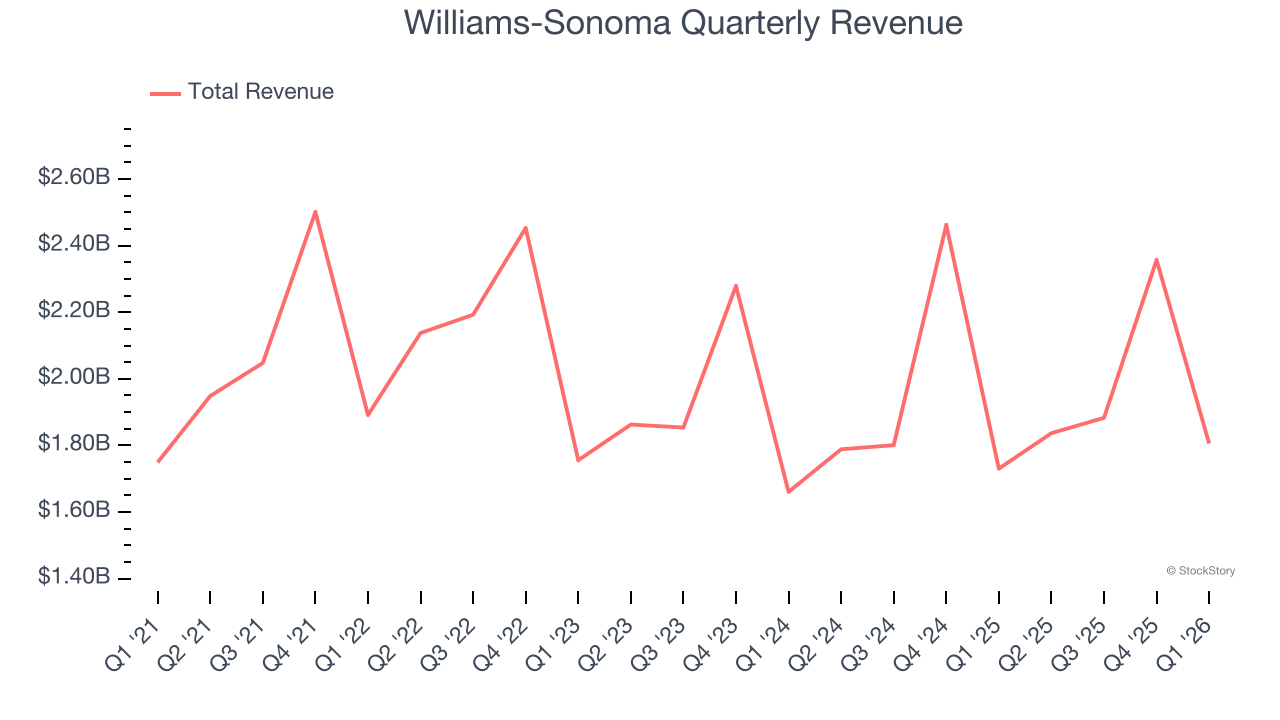
This quarter, Williams-Sonoma grew its revenue by 4.4% year on year, and its $1.81 billion of revenue was in line with Wall Street’s estimates.
Looking ahead, sell-side analysts expect revenue to grow 4.5% over the next 12 months, an acceleration versus the last three years. This projection is noteworthy and indicates its newer products will spur better top-line performance.
WHILE YOU’RE HERE: The Next Palantir? One satellite company captures images of every point on Earth. Every single day. The Pentagon wants it. Hedge funds are using it to beat earnings. You’ve probably never heard of it.
This is what the early days of Palantir looked like before it became a $437 billion giant. Same playbook. Different technology. If you missed Palantir, you need to see this. Claim The Stock Ticker for Free HERE.
Store Performance
Number of Stores
A retailer’s store count often determines how much revenue it can generate.
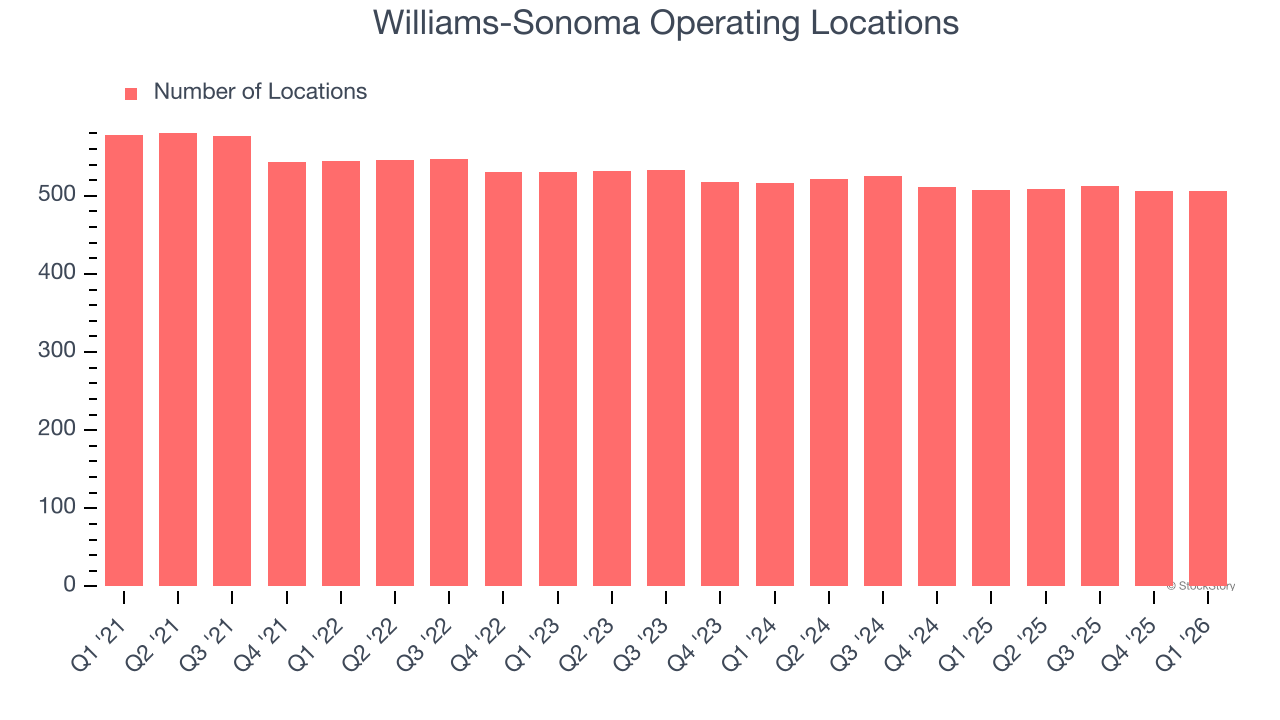
Williams-Sonoma operated 506 locations in the latest quarter. Over the last two years, the company has generally closed its stores, averaging 1.6% annual declines.
When a retailer shutters stores, it usually means that brick-and-mortar demand is less than supply, and it is responding by closing underperforming locations to improve profitability.
Same-Store Sales
The change in a company's store base only tells one side of the story. The other is the performance of its existing locations and e-commerce sales, which informs management teams whether they should expand or downsize their physical footprints. Same-store sales provides a deeper understanding of this issue because it measures organic growth at brick-and-mortar shops for at least a year.
Williams-Sonoma’s demand within its existing locations has been relatively stable over the last two years but was below most retailers. On average, the company’s same-store sales have grown by 2% per year. Given its declining store base over the same period, this performance stems from a mixture of higher e-commerce sales and increased foot traffic at existing locations (closing stores can sometimes boost same-store sales).
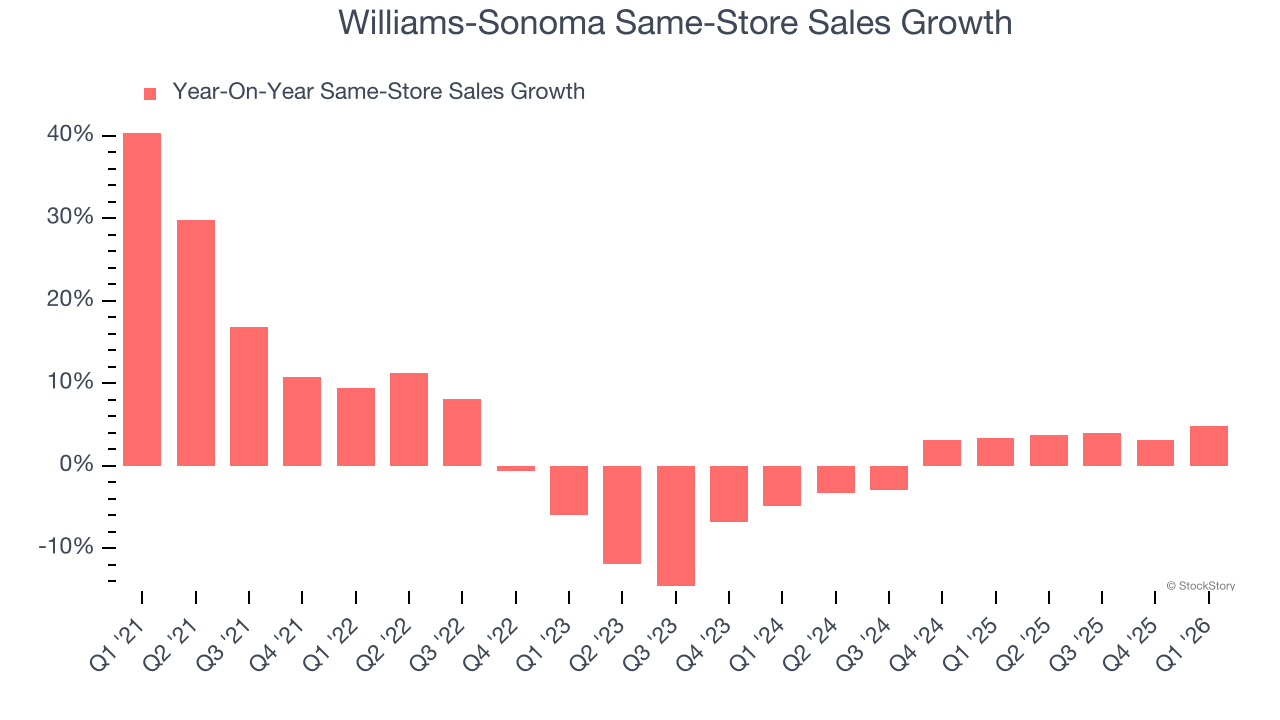
In the latest quarter, Williams-Sonoma’s same-store sales rose 4.8% year on year. This growth was an acceleration from its historical levels, which is always an encouraging sign.
Key Takeaways from Williams-Sonoma’s Q1 Results
We were impressed by how significantly Williams-Sonoma blew past analysts’ EBITDA expectations this quarter. We were also happy its gross margin outperformed Wall Street’s estimates. Overall, we think this was a decent quarter with some key metrics above expectations. The stock traded up 2.2% to $184.23 immediately after reporting.
Williams-Sonoma had an encouraging quarter, but one earnings result doesn’t necessarily make the stock a buy. Let’s see if this is a good investment. The latest quarter does matter, but not nearly as much as longer-term fundamentals and valuation, when deciding if the stock is a buy. We cover that in our actionable full research report which you can read here (it’s free).