The end of the earnings season is always a good time to take a step back and see who shined (and who not so much). Let’s take a look at how mixed or offshore upstream E&P stocks fared in Q4, starting with Core Natural Resources (NYSE: CNR).
This category includes smaller or niche E&P companies operating in specialized basins, geographies, or resource types outside major classifications. These firms may target unconventional resources, frontier regions, or specific commodity niches. Tailwinds include potential for outsized returns from successful exploration, acquisition opportunities during industry downturns, and specialized expertise commanding premium valuations. Headwinds include higher operational and geological risks, limited scale reducing negotiating power and cost efficiencies, and constrained capital market access during challenging commodity environments. Regulatory risks and ESG concerns may disproportionately affect smaller operators with fewer resources for compliance.
The 21 mixed or offshore upstream E&P stocks we track reported a mixed Q4. As a group, revenues were in line with analysts’ consensus estimates.
Luckily, mixed or offshore upstream E&P stocks have performed well with share prices up 11.6% on average since the latest earnings results.
Core Natural Resources (NYSE: CNR)
Tracing its origins to 1864 and operating some mines southwest of Pittsburgh, Core Natural Resources (NYSE: CNR) mines and exports metallurgical coal used in steelmaking and thermal coal for power generation.
Core Natural Resources reported revenues of $1.04 billion, up 81.8% year on year. This print exceeded analysts’ expectations by 2%. Overall, it was a strong quarter for the company with an impressive beat of analysts’ EBITDA estimates.
"During Q4, the Core team set the stage for a significant, value-driving step-change in both operational execution and financial performance in 2026," said Jimmy Brock, Core's chairman and chief executive officer.
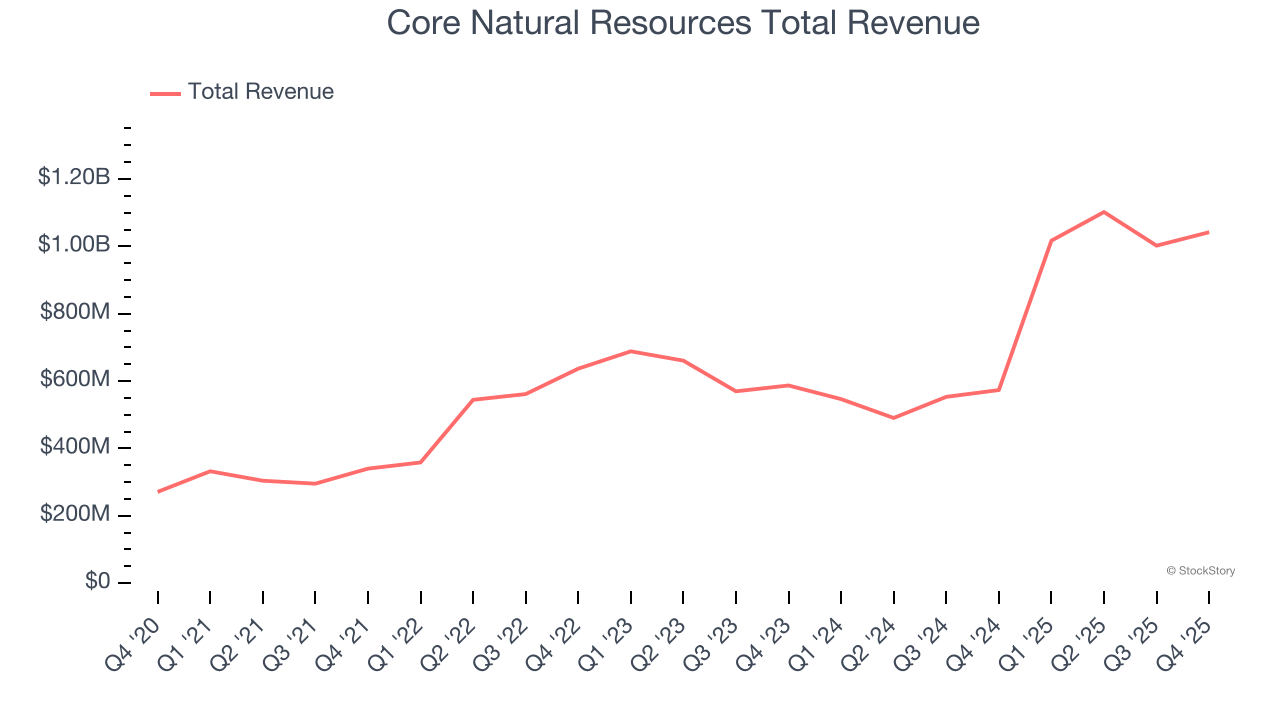
Interestingly, the stock is up 11.1% since reporting and currently trades at $103.
Best Q4: Gevo (NASDAQ: GEVO)
Operating one of the largest dairy-based renewable natural gas facilities in the United States, Gevo (NASDAQ: GEVO) produces sustainable aviation fuel and other renewable hydrocarbon fuels from plant-based feedstocks like corn.
Gevo reported revenues of $45.35 million, up 696% year on year, outperforming analysts’ expectations by 0.7%. The business had a stunning quarter with a beat of analysts’ EPS estimates and an impressive beat of analysts’ EBITDA estimates.
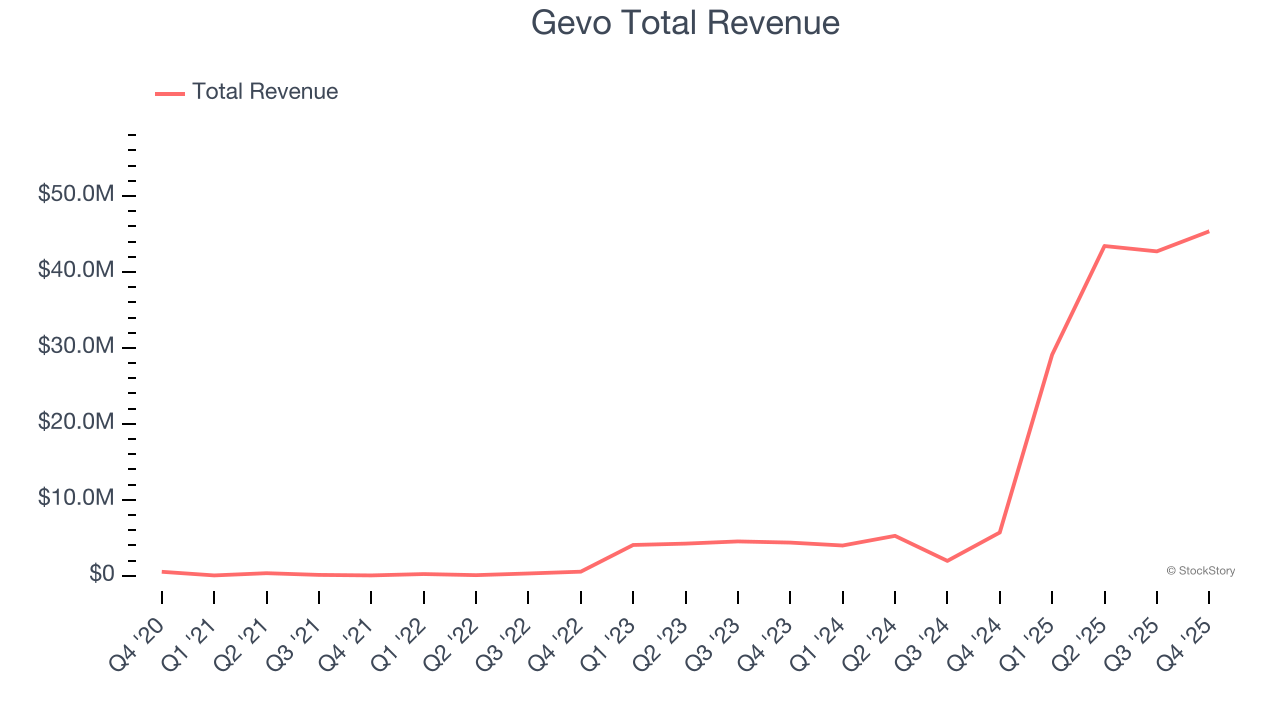
Gevo pulled off the fastest revenue growth among its peers. The market seems happy with the results as the stock is up 21.7% since reporting. It currently trades at $2.30.
Is now the time to buy Gevo? Access our full analysis of the earnings results here, it’s free.
Weakest Q4: Granite Ridge Resources (NYSE: GRNT)
Operating without drilling rigs or field crews of its own, Granite Ridge Resources (NYSE: GRNT) owns interests in oil and natural gas wells across six major US shale basins.
Granite Ridge Resources reported revenues of $105.5 million, flat year on year, falling short of analysts’ expectations by 13.2%. It was a disappointing quarter as it posted a significant miss of analysts’ EBITDA estimates and a significant miss of analysts’ EPS estimates.
Interestingly, the stock is up 7.6% since the results and currently trades at $5.75.
Read our full analysis of Granite Ridge Resources’s results here.
Solaris Energy Infrastructure (NYSE: SEI)
After acquiring Mobile Energy Rentals in 2024 to enter the distributed power market, Solaris Energy Infrastructure (NYSE: SEI) leases mobile power equipment and provides logistics services for oil and gas well completion.
Solaris Energy Infrastructure reported revenues of $179.7 million, up 86.6% year on year. This print beat analysts’ expectations by 8%. Overall, it was a very strong quarter as it also logged a beat of analysts’ EPS estimates and a decent beat of analysts’ EBITDA estimates.
The stock is up 2.2% since reporting and currently trades at $54.62.
Read our full, actionable report on Solaris Energy Infrastructure here, it’s free.
Green Plains (NASDAQ: GPRE)
Operating one of North America's largest ethanol platforms with capacity to process 310 million bushels of corn annually, Green Plains (NASDAQ: GPRE) operates ten biorefineries that convert corn into ethanol for fuel, distillers grains for animal feed, and renewable corn oil.
Green Plains reported revenues of $428.8 million, down 26.6% year on year. This result lagged analysts' expectations by 26.2%. More broadly, it was a mixed quarter as it also logged a solid beat of analysts’ EBITDA estimates but a significant miss of analysts’ EPS estimates.
Green Plains had the weakest performance against analyst estimates and slowest revenue growth among its peers. The stock is up 37.2% since reporting and currently trades at $17.28.
Read our full, actionable report on Green Plains here, it’s free.
Market Update
Late in 2025 into early 2026, there was hand wringing around artificial intelligence. For software companies, the fear was that AI would erode pricing power and compress margins as new tools made it easier to replicate what once required expensive enterprise platforms. Crypto investors had their own version of the same anxiety: if AI agents could trade, allocate capital, and manage wallets autonomously, what exactly was the long-term value of today’s crypto infrastructure?
These concerns triggered a noticeable rotation away from these sectors and into safer havens. But markets rarely dwell on one narrative for long. Spring 2026 came, and the focus shifted abruptly from technological disruption to geopolitical risk. The US’ conflict with Iran became the dominant driver of market psychology, and when geopolitics takes center stage, the script changes quickly. Investors stop debating growth rates and start worrying about oil supply, inflation, and global stability.
Want to invest in winners with rock-solid fundamentals? Check out our Top 5 Growth Stocks and add them to your watchlist. These companies are poised for growth regardless of the political or macroeconomic climate.
StockStory’s analyst team — all seasoned professional investors — uses quantitative analysis and automation to deliver market-beating insights faster and with higher quality.