Adhesive manufacturing company Avery Dennison (NYSE: AVY) reported Q1 CY2026 results beating Wall Street’s revenue expectations, with sales up 7% year on year to $2.30 billion. Its non-GAAP profit of $2.47 per share was 1.8% above analysts’ consensus estimates.
Is now the time to buy Avery Dennison? Find out by accessing our full research report, it’s free.
Avery Dennison (AVY) Q1 CY2026 Highlights:
- Revenue: $2.30 billion vs analyst estimates of $2.26 billion (7% year-on-year growth, 1.8% beat)
- Adjusted EPS: $2.47 vs analyst estimates of $2.43 (1.8% beat)
- Adjusted EBITDA: $376.5 million vs analyst estimates of $373.8 million (16.4% margin, 0.7% beat)
- Adjusted EPS guidance for Q2 CY2026 is $2.48 at the midpoint, below analyst estimates of $2.52
- Operating Margin: 11.8%, in line with the same quarter last year
- Free Cash Flow was $100.5 million, up from -$59.9 million in the same quarter last year
- Organic Revenue rose 1.1% year on year (beat)
- Market Capitalization: $12.69 billion
“We delivered strong first quarter results, with adjusted EPS of $2.47, once again reflecting the strength and resilience of our overall portfolio to deliver growth in a dynamic environment,” said Deon Stander, president and CEO.
Company Overview
Founded as Kum Kleen Products, Avery Dennison (NYSE: AVY) is a manufacturer of adhesive materials, display graphics, and packaging products, serving various industries.
Revenue Growth
A company’s long-term sales performance can indicate its overall quality. Any business can experience short-term success, but top-performing ones enjoy sustained growth for years. Regrettably, Avery Dennison’s sales grew at a sluggish 4.3% compounded annual growth rate over the last five years. This was below our standard for the industrials sector and is a rough starting point for our analysis.
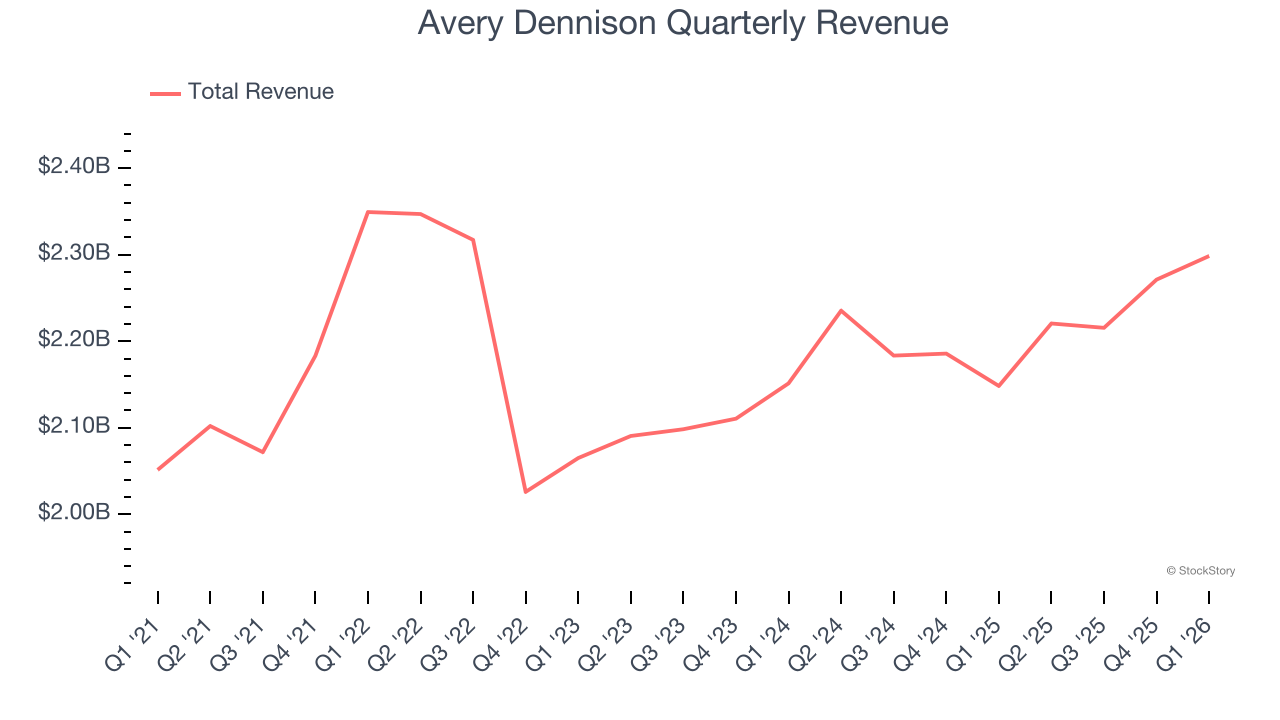
Long-term growth is the most important, but within industrials, a half-decade historical view may miss new industry trends or demand cycles. Avery Dennison’s recent performance shows its demand has slowed as its annualized revenue growth of 3.2% over the last two years was below its five-year trend. We’re wary when companies in the sector see decelerations in revenue growth, as it could signal changing consumer tastes aided by low switching costs. 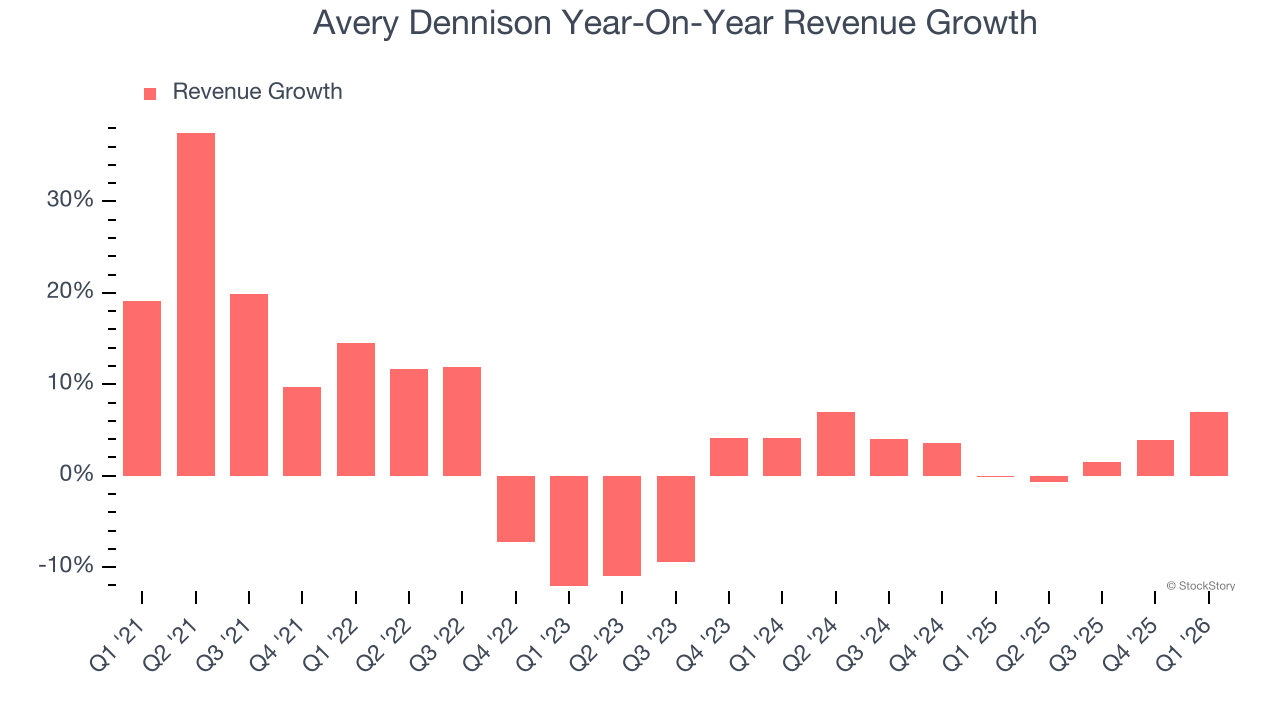
Avery Dennison also reports organic revenue, which strips out one-time events like acquisitions and currency fluctuations that don’t accurately reflect its fundamentals. Over the last two years, Avery Dennison’s organic revenue averaged 2% year-on-year growth. Because this number aligns with its two-year revenue growth, we can see the company’s core operations (not acquisitions and divestitures) drove most of its results. 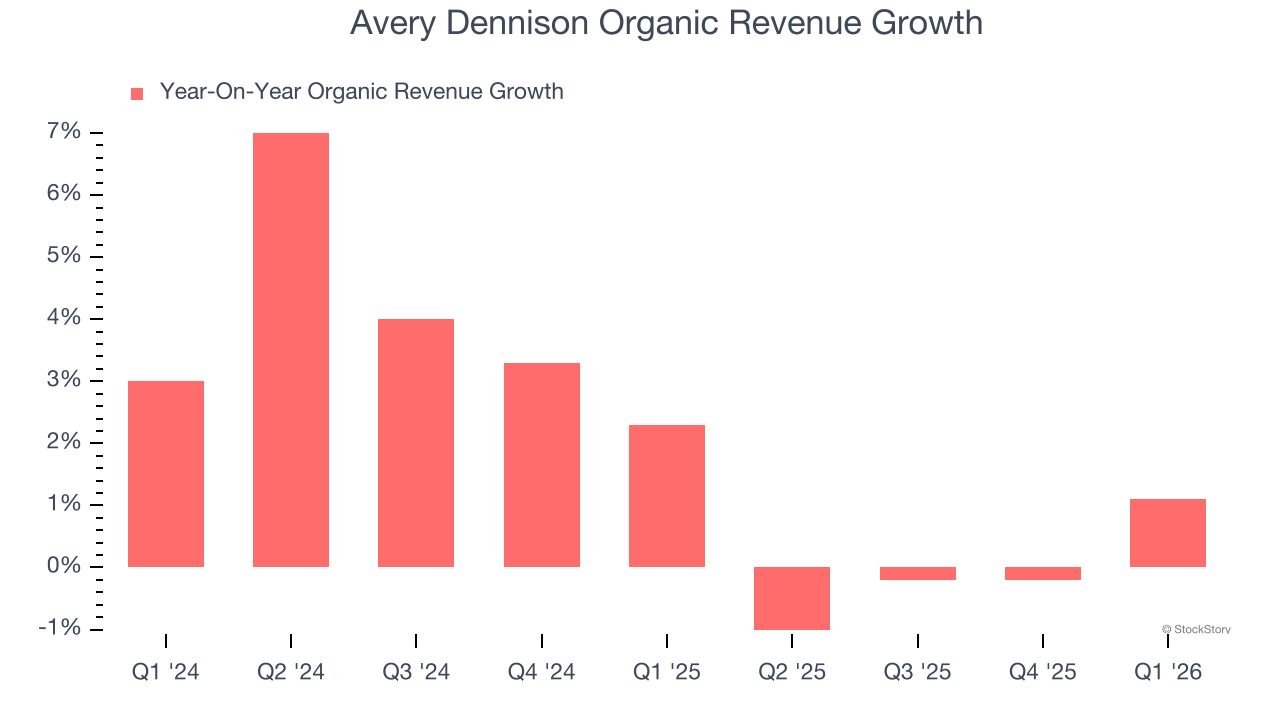
This quarter, Avery Dennison reported year-on-year revenue growth of 7%, and its $2.30 billion of revenue exceeded Wall Street’s estimates by 1.8%.
Looking ahead, sell-side analysts expect revenue to grow 3.9% over the next 12 months, similar to its two-year rate. This projection is underwhelming and implies its newer products and services will not lead to better top-line performance yet.
ONE MORE THING: 3 Hidden Platforms Growing 3X Faster than Amazon, Google, and PayPal. Amazon, Google, and Meta all followed the same playbook: Dominate an ignored market. Build an unbeatable moat. Scale until you’re unstoppable.
These three platforms are running that exact playbook right now. The early investors in Amazon made fortunes. The early investors in these could do the same. Get All 3 Stocks Here for FREE.
Operating Margin
Avery Dennison’s operating margin has more or less stayed the same over the last 12 months , averaging 11.4% over the last five years. This profitability was solid for an industrials business and shows it’s an efficient company that manages its expenses well. This result was particularly impressive because of its low gross margin, which is mostly a factor of what it sells and takes huge shifts to move meaningfully. Companies have more control over their operating margins, and it’s a show of well-managed operations if they’re high when gross margins are low.
Looking at the trend in its profitability, Avery Dennison’s operating margin might fluctuated slightly but has generally stayed the same over the last five years. We like to see margin expansion, but we’re still happy with Avery Dennison’s performance considering most Industrial Packaging companies saw their margins plummet.
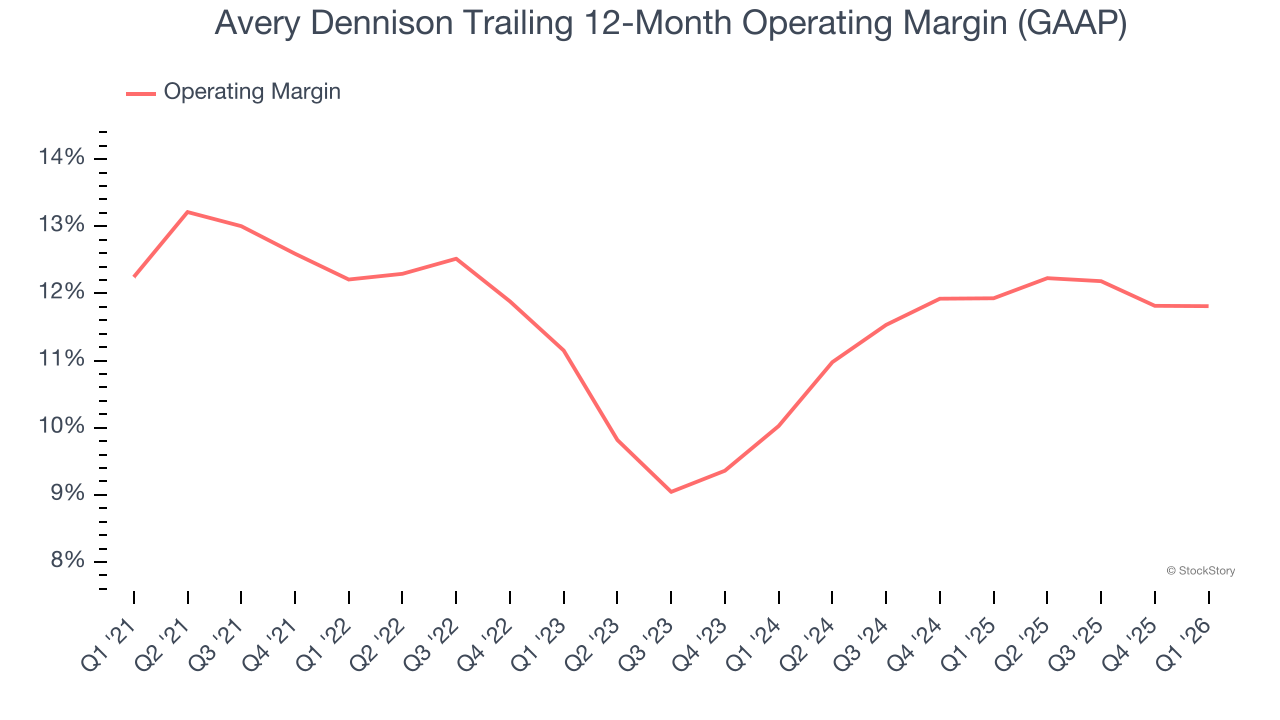
In Q1, Avery Dennison generated an operating margin profit margin of 11.8%, in line with the same quarter last year. This indicates the company’s cost structure has recently been stable.
Earnings Per Share
We track the long-term change in earnings per share (EPS) for the same reason as long-term revenue growth. Compared to revenue, however, EPS highlights whether a company’s growth is profitable.
Avery Dennison’s unimpressive 4.3% annual EPS growth over the last five years aligns with its revenue performance. This tells us it maintained its per-share profitability as it expanded.
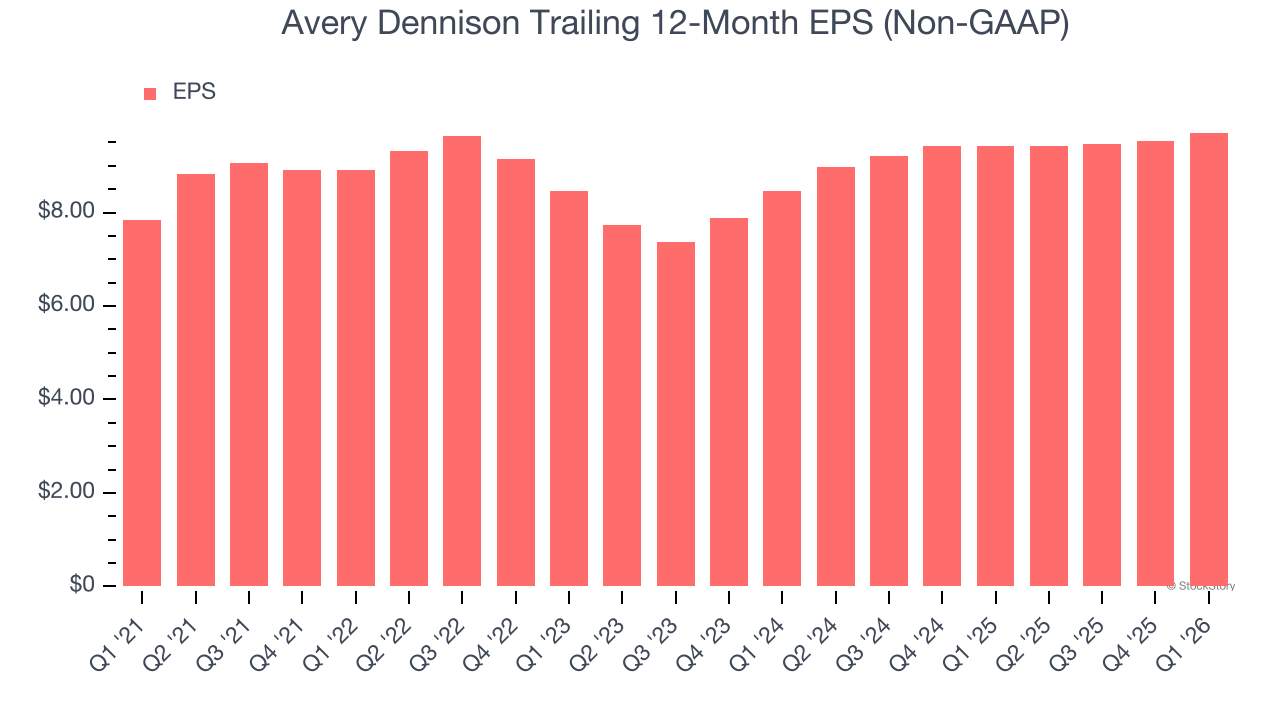
Like with revenue, we analyze EPS over a more recent period because it can provide insight into an emerging theme or development for the business.
Although it wasn’t great, Avery Dennison’s two-year annual EPS growth of 7.1% topped its 3.2% two-year revenue growth.
Diving into the nuances of Avery Dennison’s earnings can give us a better understanding of its performance. A two-year view shows that Avery Dennison has repurchased its stock, shrinking its share count by 4.9%. This tells us its EPS outperformed its revenue not because of increased operational efficiency but financial engineering, as buybacks boost per share earnings. 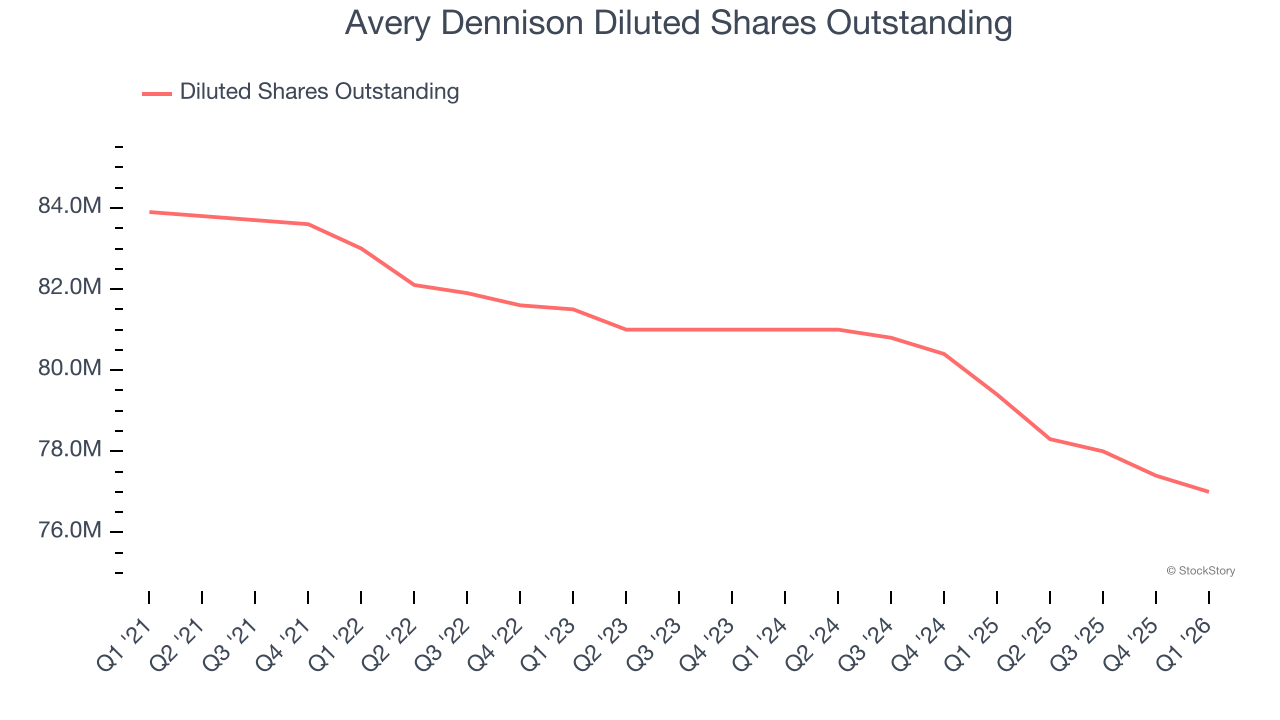
In Q1, Avery Dennison reported adjusted EPS of $2.47, up from $2.30 in the same quarter last year. This print beat analysts’ estimates by 1.8%. Over the next 12 months, Wall Street expects Avery Dennison’s full-year EPS of $9.71 to grow 6%.
Key Takeaways from Avery Dennison’s Q1 Results
We enjoyed seeing Avery Dennison beat analysts’ revenue expectations this quarter. We were also happy its organic revenue narrowly outperformed Wall Street’s estimates. On the other hand, its adjusted operating income missed and its EPS guidance for next quarter fell short of Wall Street’s estimates. Zooming out, we think this was a mixed quarter. The stock remained flat at $165.50 immediately following the results.
So should you invest in Avery Dennison right now? If you’re making that decision, you should consider the bigger picture of valuation, business qualities, as well as the latest earnings. We cover that in our actionable full research report which you can read here (it’s free).