
Let’s dig into the relative performance of Teradyne (NASDAQ: TER) and its peers as we unravel the now-completed Q4 semiconductor manufacturing earnings season.
The semiconductor industry is driven by demand for advanced electronic products like smartphones, PCs, servers, and data storage. The need for technologies like artificial intelligence, 5G networks, and smart cars is also creating the next wave of growth for the industry. Keeping up with this dynamism requires new tools that can design, fabricate, and test chips at ever smaller sizes and more complex architectures, creating a dire need for semiconductor capital manufacturing equipment.
The 14 semiconductor manufacturing stocks we track reported a very strong Q4. As a group, revenues beat analysts’ consensus estimates by 3% while next quarter’s revenue guidance was in line.
Luckily, semiconductor manufacturing stocks have performed well with share prices up 31.6% on average since the latest earnings results.
Best Q4: Teradyne (NASDAQ: TER)
Sporting most major chip manufacturers as its customers, Teradyne (NASDAQ: TER) is a US-based supplier of automated test equipment for semiconductors as well as other technologies and devices.
Teradyne reported revenues of $1.08 billion, up 43.9% year on year. This print exceeded analysts’ expectations by 11%. Overall, it was an incredible quarter for the company with a significant improvement in its inventory levels and a beat of analysts’ EPS estimates.
“Our Q4 results were above the high end of our guidance range, fueled by AI-related demand in compute, networking and memory within our Semi Test business. Across all of our business groups – Semi Test, Product Test, and Robotics – we experienced sequential growth, and at the company level we achieved 13% growth in 2025,” said Teradyne CEO, Greg Smith.
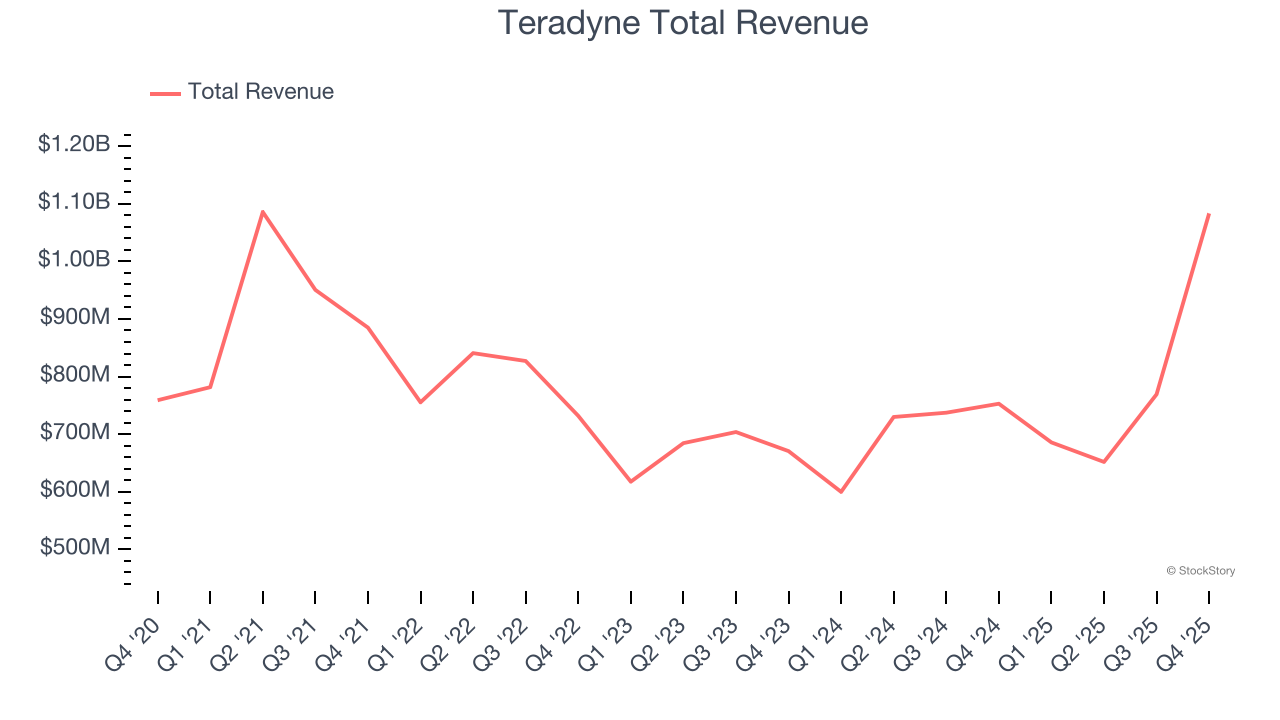
Teradyne pulled off the biggest analyst estimates beat and fastest revenue growth of the whole group. Unsurprisingly, the stock is up 52.2% since reporting and currently trades at $380.99.
Is now the time to buy Teradyne? Access our full analysis of the earnings results here, it’s free.
IPG Photonics (NASDAQ: IPGP)
Both a designer and manufacturer of its products, IPG Photonics (NASDAQ: IPGP) is a provider of high-performance fiber lasers used for cutting, welding, and processing raw materials.
IPG Photonics reported revenues of $274.5 million, up 17.1% year on year, outperforming analysts’ expectations by 10%. The business had a stunning quarter with a significant improvement in its inventory levels and a beat of analysts’ EPS estimates.
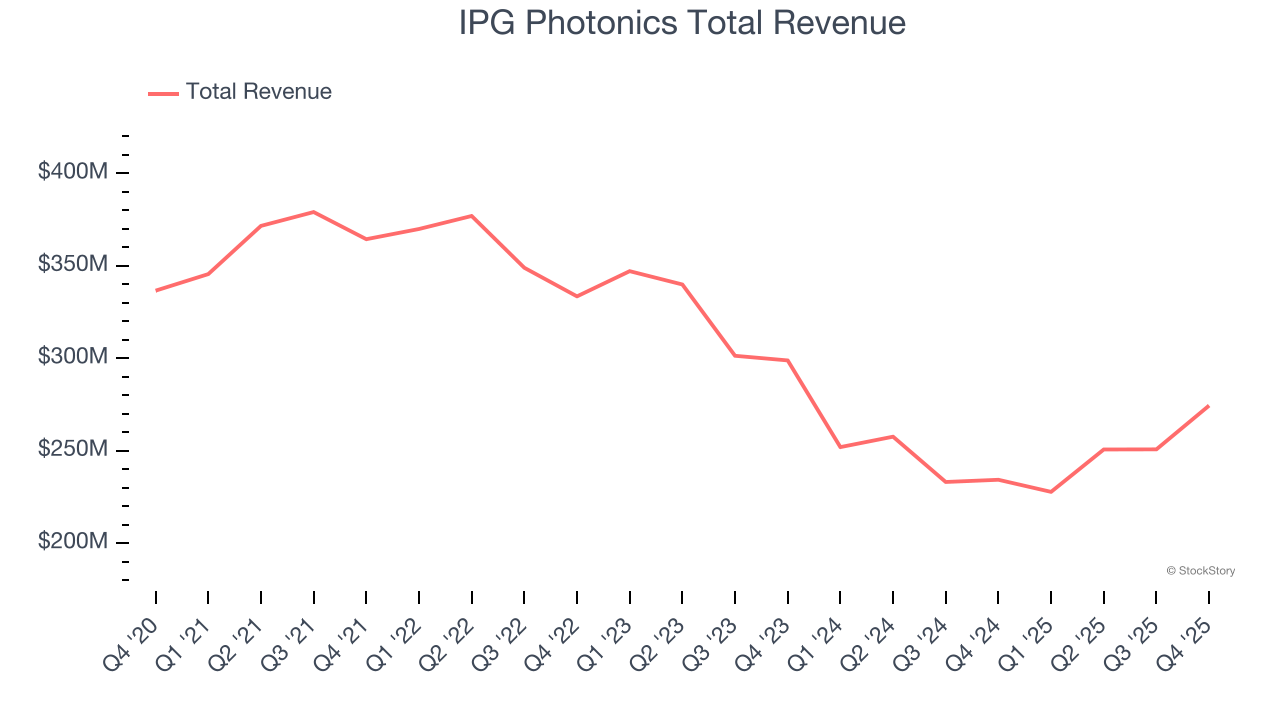
The market seems happy with the results as the stock is up 13.6% since reporting. It currently trades at $126.
Is now the time to buy IPG Photonics? Access our full analysis of the earnings results here, it’s free.
Weakest Q4: Amtech (NASDAQ: ASYS)
Focusing on the silicon carbide and power semiconductor sectors, Amtech Systems (NASDAQ: ASYS) produces the machinery and related chemicals needed for manufacturing semiconductors.
Amtech reported revenues of $18.97 million, down 22.2% year on year, in line with analysts’ expectations. It was a softer quarter as it posted a significant miss of analysts’ adjusted operating income and EPS estimates.
Amtech delivered the weakest performance against analyst estimates and slowest revenue growth in the group. Interestingly, the stock is up 4.2% since the results and currently trades at $16.72.
Read our full analysis of Amtech’s results here.
Marvell Technology (NASDAQ: MRVL)
Moving away from a low margin storage device management chips in one of the biggest semiconductor business model pivots of the past decade, Marvell Technology (NASDAQ: MRVL) is a fabless designer of special purpose data processing and networking chips used by data centers, communications carriers, enterprises, and autos.
Marvell Technology reported revenues of $2.22 billion, up 22.1% year on year. This print surpassed analysts’ expectations by 0.5%. Zooming out, it was a satisfactory quarter as it also recorded revenue guidance for next quarter beating analysts’ expectations but an increase in its inventory levels.
The stock is up 84.6% since reporting and currently trades at $139.68.
Read our full, actionable report on Marvell Technology here, it’s free.
Kulicke and Soffa (NASDAQ: KLIC)
Headquartered in Singapore, Kulicke & Soffa (NASDAQ: KLIC) is a provider of production equipment and tools used to assemble semiconductor devices
Kulicke and Soffa reported revenues of $199.6 million, up 20.2% year on year. This result topped analysts’ expectations by 5%. Overall, it was an exceptional quarter as it also put up a beat of analysts’ EPS estimates and a solid beat of analysts’ adjusted operating income estimates.
The stock is up 49% since reporting and currently trades at $82.80.
Read our full, actionable report on Kulicke and Soffa here, it’s free.
Market Update
Late in 2025 into early 2026, there was hand wringing around artificial intelligence. For software companies, the fear was that AI would erode pricing power and compress margins as new tools made it easier to replicate what once required expensive enterprise platforms. Crypto investors had their own version of the same anxiety: if AI agents could trade, allocate capital, and manage wallets autonomously, what exactly was the long-term value of today’s crypto infrastructure?
These concerns triggered a noticeable rotation away from these sectors and into safer havens. But markets rarely dwell on one narrative for long. Spring 2026 came, and the focus shifted abruptly from technological disruption to geopolitical risk. The US’ conflict with Iran became the dominant driver of market psychology, and when geopolitics takes center stage, the script changes quickly. Investors stop debating growth rates and start worrying about oil supply, inflation, and global stability.
Want to invest in winners with rock-solid fundamentals? Check out our Strong Momentum Stocks and add them to your watchlist. These companies are poised for growth regardless of the political or macroeconomic climate.
StockStory’s analyst team — all seasoned professional investors — uses quantitative analysis and automation to deliver market-beating insights faster and with higher quality.