
Quarterly earnings results are a good time to check in on a company’s progress, especially compared to its peers in the same sector. Today we are looking at Clover Health (NASDAQ: CLOV) and the best and worst performers in the health insurance providers industry.
Upfront premiums collected by health insurers lead to reliable revenue, but profitability ultimately depends on accurate risk assessments and the ability to control medical costs. Health insurers are also highly sensitive to regulatory changes and economic conditions such as unemployment. Going forward, the industry faces tailwinds from an aging population, increasing demand for personalized healthcare services, and advancements in data analytics to improve cost management. However, continued regulatory scrutiny on pricing practices, the potential for government-led reforms such as expanded public healthcare options, and inflation in medical costs could add volatility to margins. One big debate among investors is the long-term impact of AI and whether it will help underwriting, fraud detection, and claims processing or whether it may wade into ethical grey areas like reinforcing biases and widening disparities in medical care.
The 12 health insurance providers stocks we track reported a slower Q4. As a group, revenues beat analysts’ consensus estimates by 0.8% while next quarter’s revenue guidance was in line.
While some health insurance providers stocks have fared somewhat better than others, they have collectively declined. On average, share prices are down 3.2% since the latest earnings results.
Best Q4: Clover Health (NASDAQ: CLOV)
Founded in 2014 to improve healthcare for America's seniors through technology, Clover Health (NASDAQ: CLOV) provides Medicare Advantage plans for seniors with a focus on affordable care and uses its proprietary Clover Assistant software to help physicians manage patient care.
Clover Health reported revenues of $487.7 million, up 44.7% year on year. This print exceeded analysts’ expectations by 4.4%. Overall, it was a strong quarter for the company with an impressive beat of analysts’ revenue estimates and EPS in line with analysts’ estimates.
“Our results in 2025 validate the scalability of our differentiated model, despite some headwinds during the year," said Clover Health CEO Andrew Toy.
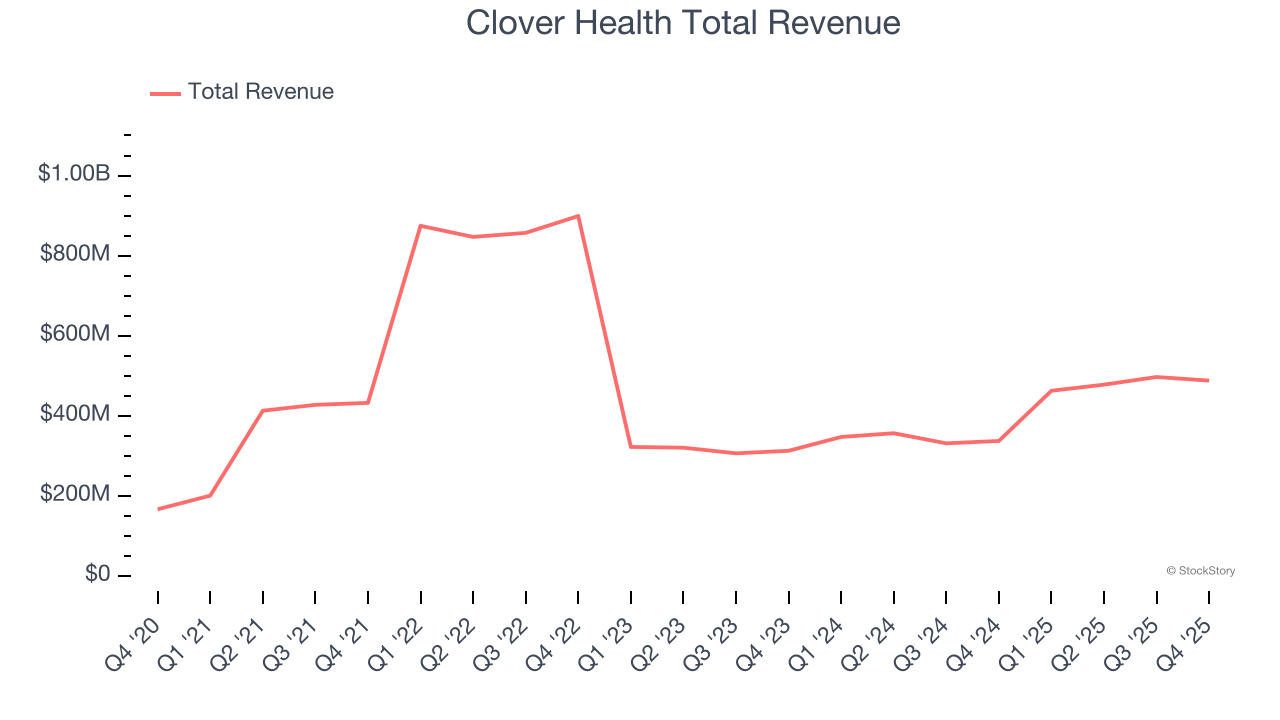
Clover Health achieved the biggest analyst estimates beat and fastest revenue growth of the whole group. The company added 4,577 customers to reach a total of 113,803. Investor expectations, however, were likely higher than Wall Street’s published projections, leaving some wishing for even better results (analysts’ consensus estimates are those published by big banks and advisory firms, not the investors who make buy and sell decisions). The stock is down 5.3% since reporting and currently trades at $2.04.
CVS Health (NYSE: CVS)
With over 9,000 retail pharmacy locations serving as neighborhood health destinations across America, CVS Health (NYSE: CVS) operates retail pharmacies, provides pharmacy benefit management services, and offers health insurance through its Aetna subsidiary.
CVS Health reported revenues of $105.7 billion, up 8.2% year on year, outperforming analysts’ expectations by 2%. The business had a satisfactory quarter with a decent beat of analysts’ revenue estimates but a slight miss of analysts’ full-year EPS guidance estimates.
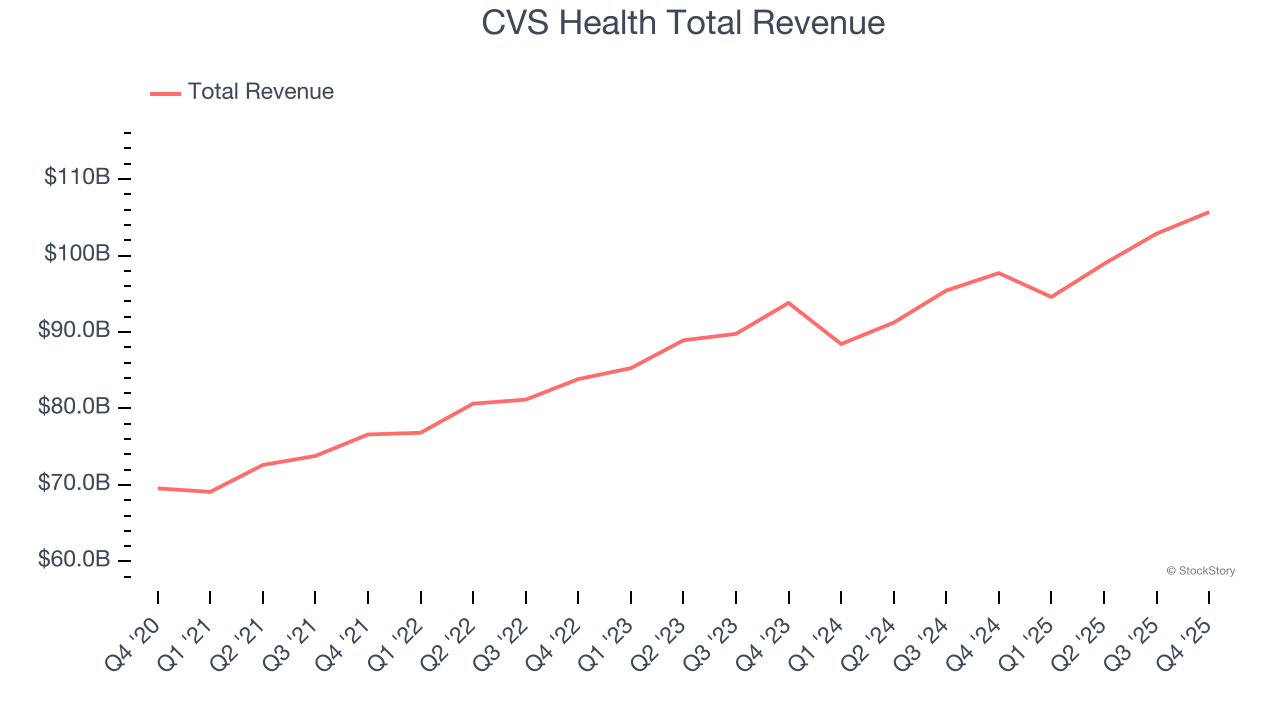
The market seems content with the results as the stock is up 2.9% since reporting. It currently trades at $77.97.
Is now the time to buy CVS Health? Access our full analysis of the earnings results here, it’s free.
Weakest Q4: Molina Healthcare (NYSE: MOH)
Founded in 1980 as a provider for underserved communities in Southern California, Molina Healthcare (NYSE: MOH) provides managed healthcare services primarily to low-income individuals through Medicaid, Medicare, and Marketplace insurance programs across 21 states.
Molina Healthcare reported revenues of $11.38 billion, up 8.3% year on year, exceeding analysts’ expectations by 3.7%. Still, it was a softer quarter as it posted full-year revenue guidance missing analysts’ expectations significantly and a significant miss of analysts’ full-year EPS guidance estimates.
As expected, the stock is down 16.1% since the results and currently trades at $148.35.
Read our full analysis of Molina Healthcare’s results here.
Cencora (NYSE: COR)
Formerly known as AmerisourceBergen until its 2023 rebranding, Cencora (NYSE: COR) is a global pharmaceutical distribution company that connects manufacturers with healthcare providers while offering logistics, data analytics, and consulting services.
Cencora reported revenues of $85.93 billion, up 5.5% year on year. This print lagged analysts' expectations by 0.6%. Taking a step back, it was a mixed quarter as it also recorded a narrow beat of analysts’ EPS estimates but a slight miss of analysts’ revenue estimates.
Cencora had the slowest revenue growth among its peers. The stock is down 12.5% since reporting and currently trades at $316.50.
Read our full, actionable report on Cencora here, it’s free.
Centene (NYSE: CNC)
Serving nearly 1 in 15 Americans through its government healthcare programs, Centene (NYSE: CNC) is a healthcare company that manages government-sponsored health insurance programs like Medicaid and Medicare for low-income and complex-needs populations.
Centene reported revenues of $49.73 billion, up 21.9% year on year. This result surpassed analysts’ expectations by 3%. Zooming out, it was a mixed quarter as it also produced an impressive beat of analysts’ revenue estimates but full-year revenue guidance missing analysts’ expectations.
The company lost 334,600 customers and ended up with a total of 27.63 million. The stock is down 6.5% since reporting and currently trades at $37.33.
Read our full, actionable report on Centene here, it’s free.
Market Update
Late in 2025 into early 2026, there was hand wringing around artificial intelligence. For software companies, the fear was that AI would erode pricing power and compress margins as new tools made it easier to replicate what once required expensive enterprise platforms. Crypto investors had their own version of the same anxiety: if AI agents could trade, allocate capital, and manage wallets autonomously, what exactly was the long-term value of today’s crypto infrastructure?
These concerns triggered a noticeable rotation away from these sectors and into safer havens. But markets rarely dwell on one narrative for long. Spring 2026 came, and the focus shifted abruptly from technological disruption to geopolitical risk. The US’ conflict with Iran became the dominant driver of market psychology, and when geopolitics takes center stage, the script changes quickly. Investors stop debating growth rates and start worrying about oil supply, inflation, and global stability.
Want to invest in winners with rock-solid fundamentals? Check out our Strong Momentum Stocks and add them to your watchlist. These companies are poised for growth regardless of the political or macroeconomic climate.
StockStory’s analyst team — all seasoned professional investors — uses quantitative analysis and automation to deliver market-beating insights faster and with higher quality.