Digital media conglomerate IAC (NASDAQGS:IAC) reported Q4 CY2025 results topping the market’s revenue expectations, but sales fell by 10.5% year on year to $646 million. Its GAAP loss of $0.99 per share was significantly below analysts’ consensus estimates.
Is now the time to buy IAC? Find out by accessing our full research report, it’s free.
IAC (IAC) Q4 CY2025 Highlights:
- Revenue: $646 million vs analyst estimates of $641 million (10.5% year-on-year decline, 0.8% beat)
- EPS (GAAP): -$0.99 vs analyst estimates of $0.71 (significant miss)
- Adjusted EBITDA: $141.6 million vs analyst estimates of $137.5 million (21.9% margin, 3% beat)
- EBITDA guidance for the upcoming financial year 2026 is $297.5 million at the midpoint, below analyst estimates of $319 million
- Operating Margin: -17.5%, down from 6.7% in the same quarter last year
- Free Cash Flow Margin: 4.9%, down from 24.2% in the same quarter last year
- Market Capitalization: $2.87 billion
Company Overview
Originally known as InterActiveCorp and built through Barry Diller's strategic acquisitions since the 1990s, IAC (NASDAQ: IAC) operates a portfolio of category-leading digital businesses including Dotdash Meredith, Angi, and Care.com, focusing on digital publishing, home services, and caregiving platforms.
Revenue Growth
Reviewing a company’s long-term sales performance reveals insights into its quality. Any business can experience short-term success, but top-performing ones enjoy sustained growth for years.
With $2.39 billion in revenue over the past 12 months, IAC is a mid-sized business services company, which sometimes brings disadvantages compared to larger competitors benefiting from better economies of scale.
As you can see below, IAC struggled to increase demand as its $2.39 billion of sales for the trailing 12 months was close to its revenue five years ago. This shows demand was soft, a poor baseline for our analysis.
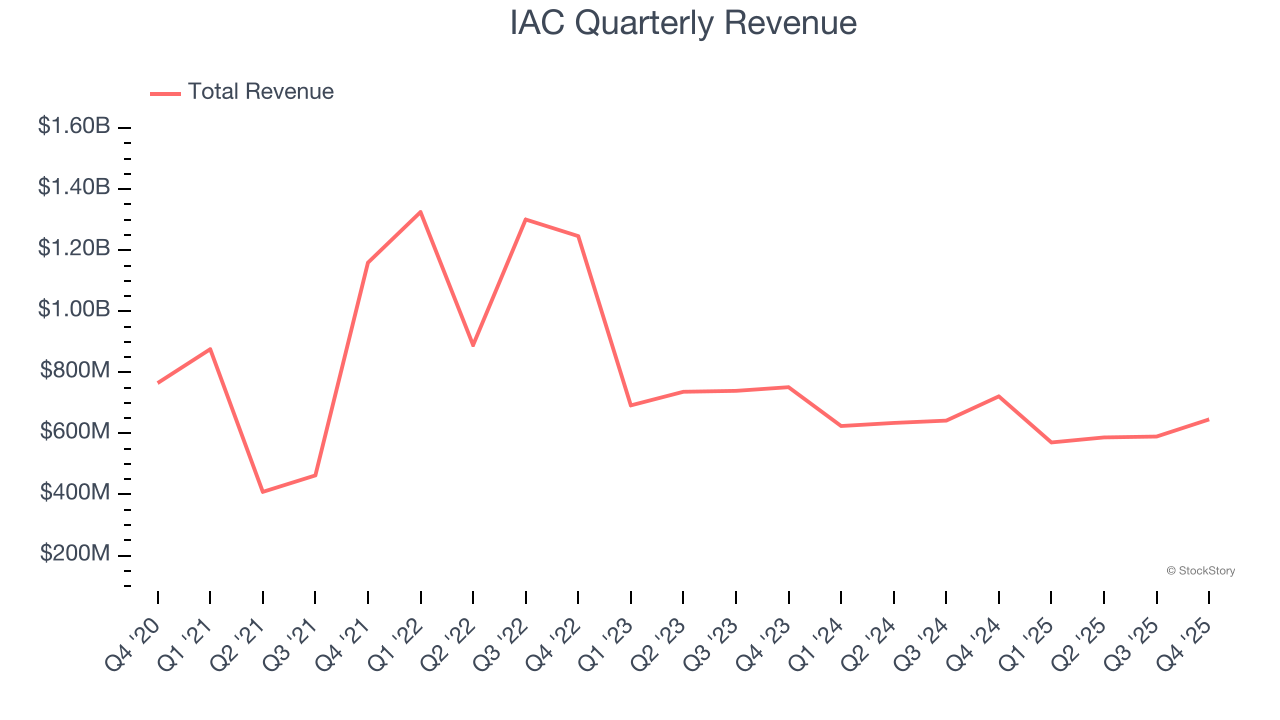
Long-term growth is the most important, but within business services, a half-decade historical view may miss new innovations or demand cycles. IAC’s recent performance shows its demand remained suppressed as its revenue has declined by 9.5% annually over the last two years. 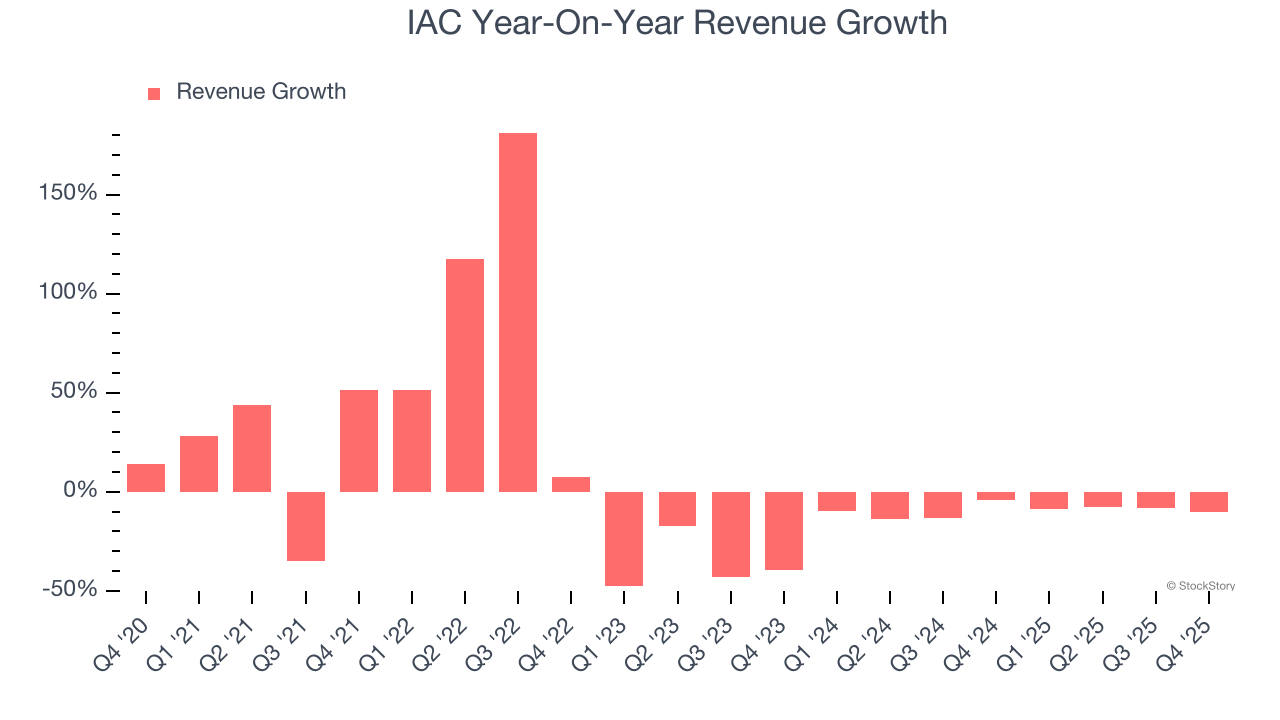
This quarter, IAC’s revenue fell by 10.5% year on year to $646 million but beat Wall Street’s estimates by 0.8%.
Looking ahead, sell-side analysts expect revenue to decline by 2.6% over the next 12 months. While this projection is better than its two-year trend, it’s hard to get excited about a company that is struggling with demand.
Software is eating the world and there is virtually no industry left that has been untouched by it. That drives increasing demand for tools helping software developers do their jobs, whether it be monitoring critical cloud infrastructure, integrating audio and video functionality, or ensuring smooth content streaming. Click here to access a free report on our 3 favorite stocks to play this generational megatrend.
Operating Margin
Operating margin is a key measure of profitability. Think of it as net income - the bottom line - excluding the impact of taxes and interest on debt, which are less connected to business fundamentals.
IAC’s operating margin might fluctuated slightly over the last 12 months but has generally stayed the same, averaging negative 6.3% over the last five years. Unprofitable business services companies that fail to improve their losses or grow sales rapidly deserve extra scrutiny. For the time being, it’s unclear if IAC’s business model is sustainable.
Looking at the trend in its profitability, IAC’s operating margin might fluctuated slightly but has generally stayed the same over the last five years, meaning it will take a fundamental shift in the business model to change.
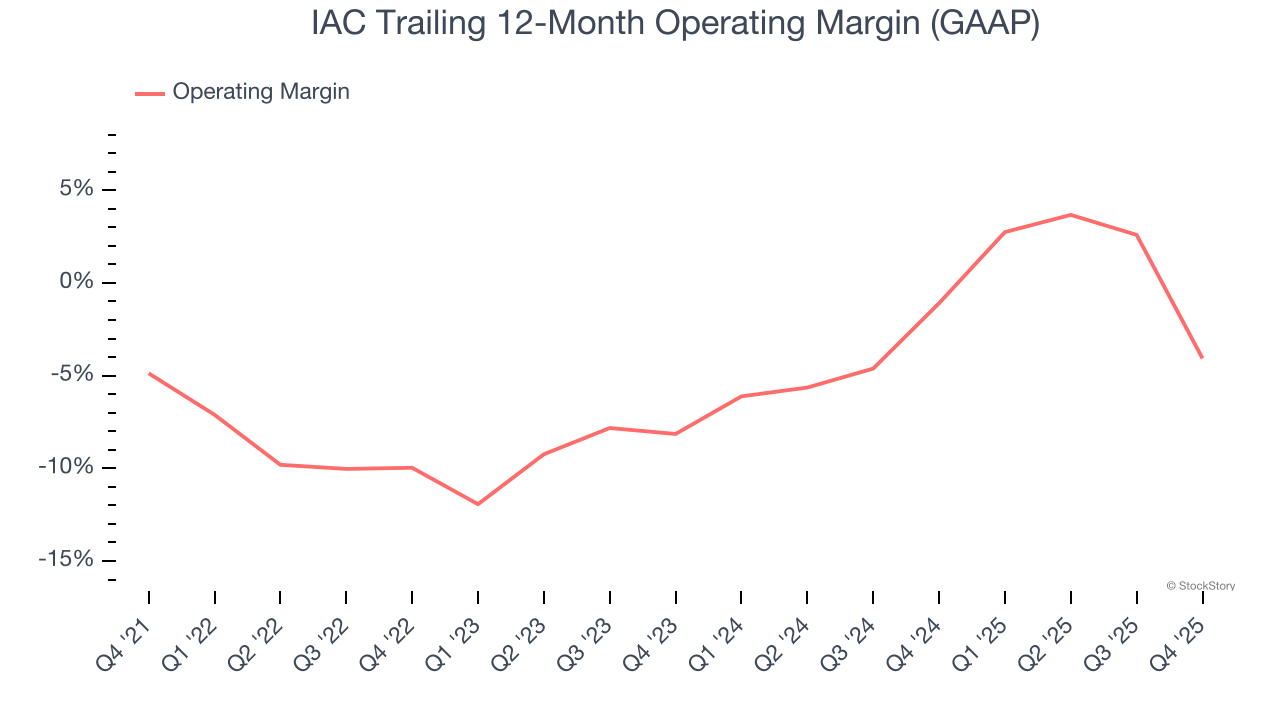
IAC’s operating margin was negative 17.5% this quarter. The company's consistent lack of profits raise a flag.
Earnings Per Share
We track the long-term change in earnings per share (EPS) for the same reason as long-term revenue growth. Compared to revenue, however, EPS highlights whether a company’s growth is profitable.
Sadly for IAC, its EPS declined by 19.6% annually over the last five years while its revenue was flat. This tells us the company struggled because its fixed cost base made it difficult to adjust to choppy demand.
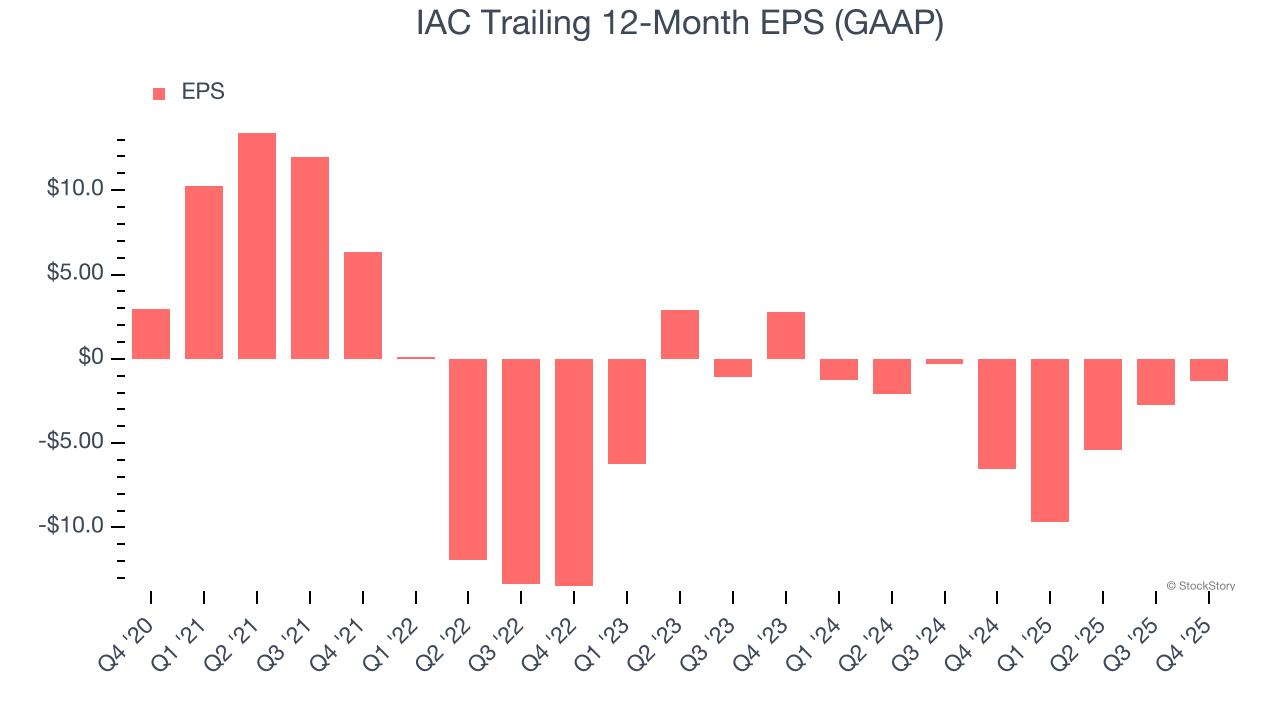
Like with revenue, we analyze EPS over a more recent period because it can provide insight into an emerging theme or development for the business.
For IAC, its two-year annual EPS declines of 57.4% show it’s continued to underperform. These results were bad no matter how you slice the data.
In Q4, IAC reported EPS of negative $0.99, up from negative $2.39 in the same quarter last year. Despite growing year on year, this print missed analysts’ estimates. Over the next 12 months, Wall Street is optimistic. Analysts forecast IAC’s full-year EPS of negative $1.33 will flip to positive $0.59.
Key Takeaways from IAC’s Q4 Results
It was good to see IAC narrowly top analysts’ revenue expectations this quarter. On the other hand, its EPS missed. Overall, this was a softer quarter. The stock traded down 2.9% to $35.76 immediately following the results.
IAC’s earnings report left more to be desired. Let’s look forward to see if this quarter has created an opportunity to buy the stock. When making that decision, it’s important to consider its valuation, business qualities, as well as what has happened in the latest quarter. We cover that in our actionable full research report which you can read here (it’s free).