SoftPro Water Systems has released technical information explaining how municipal disinfection chemicals affect water softener performance and describing the design approach behind its SoftPro Elite system, which the company positions as the best water softener for city water.
A water softener installed on a municipal supply faces a different set of conditions than one installed on a private well, according to the company. A softener on city water must contend not only with hardness minerals but also with the chlorine or chloramine that utilities add to keep water safe on its journey from the treatment plant to the tap. Those disinfectants chemically attack the resin bed inside the softener itself, a distinction the company cites in describing how it approaches the design of a water softener for city water.
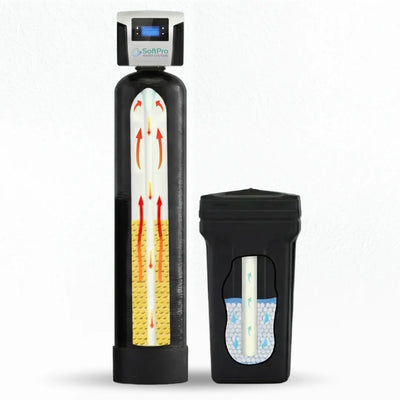
The underlying mechanism relates to resin chemistry. Softener resin beads are held together by a crosslinking agent known as divinylbenzene, or DVB. Chlorinated or chloraminated water gradually oxidizes that bond, causing the resin to swell and lose its ion-exchange capacity. As a result, a softener rated as high-capacity can stop working effectively years before a homeowner expects to replace it. General resin-industry science indicates that resin exposed to continuous higher chlorine levels can lose expected service life more quickly than resin exposed to lower, intermittent levels. This reflects general resin behavior rather than a claim specific to any one product.
Data from the U.S. Environmental Protection Agency indicates that more than one in five Americans currently receive chloraminated water, a share the agency notes has grown as utilities shift disinfection methods. Figures published by the U.S. Geological Survey indicate that roughly 85 percent of U.S. households experience some degree of water hardness. Homeowners seeking to confirm these figures can consult the current published materials from each agency, as methodologies and reporting periods are updated over time.
SoftPro states that the SoftPro Elite was engineered around this specific challenge. The system uses 10 percent crosslink resin, compared with the roughly 8 percent found in many economy softeners, a formulation the company says is intended to resist chlorine- and chloramine-driven resin breakdown. The SoftPro Water Softener for City Water also employs upflow regeneration technology. Under comparable operating conditions, upflow regeneration draws brine through the resin bed in a single direction rather than the countercurrent approach of downflow designs, which the company states allows the system to use less salt and water per cycle while taking advantage of the steadier pressure typical of municipal water systems. The unit is available in a range of grain-capacity configurations sized to different household sizes and hardness levels.
According to the company, the system carries certification to NSF/ANSI Standard 44 for cation exchange water softeners, NSF/ANSI Standard 42 for aesthetic effects, and NSF/ANSI Standard 372 for lead-content requirements. The company further states that its manufacturing operations are certified to the ISO 9001 quality-management standard and that the product line is listed under IAPMO. Homeowners can verify current listings and identifiers through the respective certifying organizations. The system includes a limited lifetime warranty on the control valve and essential components. For households on heavily chloraminated municipal water, the company offers an optional pairing with its Gold and Gold+ carbon filtration package, which removes chlorine and chloramine ahead of the softener rather than relying on resin resistance alone.
"City water and well water are not the same problem for a softener, and treating them the same way is where many systems fall short," said a spokesperson for SoftPro Water Systems. "The Elite was designed to withstand the disinfectants that municipal utilities rely on, which is the reasoning behind how the company describes it as the top rated water softener for city water."
The spokesperson added that the company aims to help homeowners understand the resin-degradation issue before selecting a system. "Much of this comes down to chemistry that homeowners rarely hear about, so providing that context is part of the intent behind releasing this information," the spokesperson said.
https://www.youtube.com/watch?v=X3RWLuvWnsc
SoftPro Water Systems specializes in water treatment solutions for homes and businesses. The company offers water softeners for city and well water, whole house filters, iron filters, commercial systems and replacement filters, along with a water softener sizing calculator. Additional information is available at https://www.softprowatersystems.com/pages/best-water-softener-for-city-water.
###
For more information about SoftPro Water Systems, contact the company here:
SoftPro Water Systems
SoftPro Water Systems
1-855-683-8488
help@softprowatersystems.com
514 Americas Way, Suite 9104
Box Elder, SD 57719