The Senate Banking Committee has officially scheduled the confirmation hearing for Kevin Warsh to become the next Chair of the Federal Reserve for next Tuesday, April 21, 2026. The announcement follows a period of intense political maneuvering and a high-stakes investigation into the outgoing Chair, Jerome Powell, which had briefly stalled the transition. Warsh, a former Federal Reserve Governor and Morgan Stanley (NYSE: MS) executive, was nominated by President Donald Trump in late January to lead the nation's central bank through a pivotal era of technological transformation and fiscal realignment.
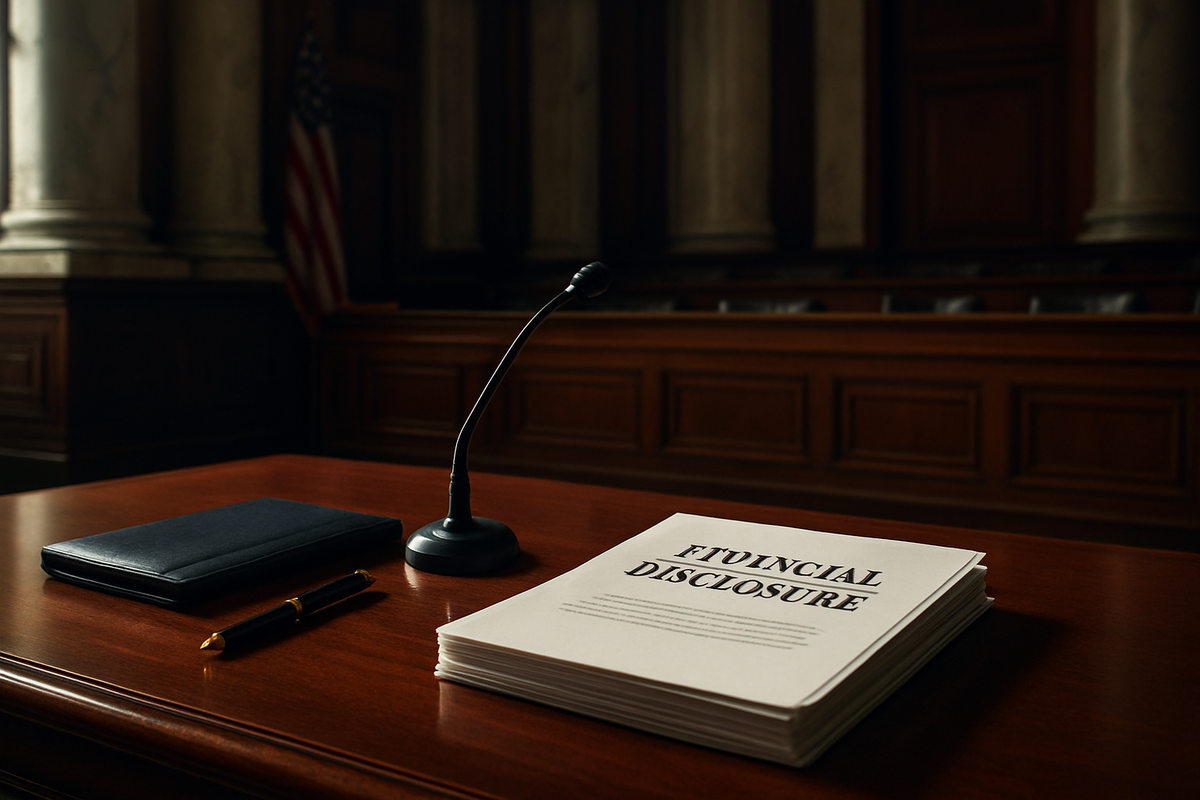
The hearing is expected to focus heavily on Warsh's recently released financial disclosures, which reveal a personal fortune exceeding $100 million. This disclosure makes Warsh the wealthiest individual ever nominated to lead the Federal Reserve, a fact that has already ignited debate among lawmakers regarding potential conflicts of interest and his ties to Wall Street. As the current date of April 15, 2026, marks exactly one month until Powell’s term expires, the financial markets are bracing for a potential "regime change" in monetary policy that could redefine the Fed’s role in the modern economy.
A Turbulent Path to the Hearing Room
The road to next Tuesday's hearing has been anything but smooth. Since his nomination on January 30, 2026, Warsh has been caught in the middle of a procedural standoff. Senator Thom Tillis (R-N.C.) had previously blocked all Federal Reserve nominees, citing a Department of Justice investigation into Jerome Powell’s management of the Fed’s multi-billion dollar headquarters renovation. However, with the Senate Banking Committee, led by Chairman Tim Scott (R-S.C.), now moving forward, it appears a deal has been reached to ensure a quorum and proceed with the confirmation process before the May 15 deadline.
Warsh’s 70-page financial disclosure, filed earlier this week, provides a rare look into the wealth of a top economic policymaker. His assets, valued between $131 million and $209 million, are largely tied to his tenure at the Duquesne Family Office and various corporate board seats. Furthermore, his wife, Jane Lauder, an heiress to The Estée Lauder Companies Inc. (NYSE: EL), holds a multi-billion dollar stake in her family's firm. While Warsh has pledged to divest from his holdings in over 20 cryptocurrency projects and resign from boards such as United Parcel Service Inc. (NYSE: UPS) and Coupang Inc. (NYSE: CPNG), critics are likely to press him on how his private wealth might influence his perspective on banking regulation and wealth inequality.
Market reaction to the scheduling of the hearing has been cautiously optimistic. Interest rate futures have remained relatively stable, though there is an underlying current of anticipation for Warsh’s "Regime Change" philosophy. Unlike his predecessors, Warsh has argued that the Federal Reserve must become more forward-looking rather than reacting to lagging data. He has frequently emphasized that the ongoing "productivity boom," fueled by breakthroughs in artificial intelligence and widespread deregulation, allows for a more accommodative monetary policy without the traditional risk of runaway inflation.
Winners and Losers in the Warsh Era
The transition to a Warsh-led Federal Reserve is expected to create distinct shifts in market leadership. Large financial institutions like JPMorgan Chase & Co. (NYSE: JPM) and The Goldman Sachs Group Inc. (NYSE: GS) are widely viewed as potential winners. Warsh’s background in mergers and acquisitions and his vocal criticism of the "Basel III Endgame" capital requirements suggest a move toward a more streamlined regulatory environment. Financial stocks may see a boost if the market anticipates a reduction in the "regulatory tax" that has weighed on big banks since the 2008 crisis.
Technology giants and AI leaders, including Microsoft Corp. (NASDAQ: MSFT) and NVIDIA Corp. (NASDAQ: NVDA), could also benefit from the Warsh doctrine. By viewing AI-driven productivity as a deflationary force, Warsh may be more inclined to keep interest rates lower for longer to foster capital investment. This "pro-growth" stance aligns with the interests of high-growth tech companies that rely on favorable financing conditions to scale their operations. However, companies heavily reliant on the Fed's quantitative easing programs may find themselves on the losing side, as Warsh has been a staunch advocate for aggressively shrinking the central bank’s multi-trillion-dollar balance sheet.
Conversely, the fixed-income market could face significant volatility. If Warsh moves quickly to reduce the Fed’s holdings of Treasuries and mortgage-backed securities, long-term yields could spike, potentially hurting bond prices. Real estate investment trusts and other yield-sensitive sectors may struggle to adapt to a world where the Fed is no longer the "buyer of last resort" for government debt. Additionally, global retailers like Estée Lauder (NYSE: EL) may face heightened scrutiny; while the company itself operates independently, any policy shift perceived to favor the luxury or consumer discretionary sectors could be framed through the lens of Warsh's personal ties.
Redefining the Fed-Treasury Relationship
Beyond the immediate market impact, Warsh’s nomination signals a broader shift in the philosophy of central banking. For years, the Fed has operated under a framework of "data dependence," which Warsh has criticized as being akin to driving a car by looking in the rearview mirror. His proposed "Fed-Treasury Accord 2.0" aims to re-establish a clear boundary between monetary and fiscal policy, potentially forcing Congress to take more responsibility for the national debt while the Fed focuses exclusively on price stability and the value of the dollar.
This shift fits into a wider industry trend where the limits of central bank intervention are being tested. Since the mid-2020s, the global economy has moved away from the low-interest-rate environment of the previous decade, forcing central banks to grapple with "sticky" inflation and shifting demographics. Warsh’s belief in a productivity-led growth model is a direct challenge to the "secular stagnation" theories that dominated the 2010s. If he is successful, his tenure could mark the end of the era of massive central bank balance sheets that began during the 2008 financial crisis.
Historical comparisons are already being drawn between Warsh and Paul Volcker, though with a modern twist. While Volcker used high rates to crush inflation in the 1980s, Warsh may attempt to use structural reforms and a smaller balance sheet to normalize the financial system without triggering a recession. The regulatory implications are also vast; a Warsh Fed would likely move away from the "command and control" style of oversight favored by some current governors, opting instead for a more market-based approach to financial stability.
The Road Ahead: Confirmation and Beyond
The immediate hurdle for Warsh is the confirmation hearing itself. While Republicans hold a narrow majority in the Senate, the "Powell investigation" continues to cast a shadow over the proceedings. If Warsh can successfully navigate the questions regarding his wealth and his ties to the Duquesne Family Office, a floor vote could occur as early as the first week of May. A swift confirmation would provide the market with much-needed certainty before Powell’s official departure on May 15.
In the short term, investors should watch for any signals Warsh gives regarding the June FOMC meeting. While he has been a "hawk" in the past, his recent comments suggest he may support an early interest rate cut if productivity data remains strong. Strategically, investors may need to pivot away from assets that have benefited from Fed liquidity and toward companies that can thrive in a more "normalized" interest rate environment. The transition will likely be characterized by a "wait-and-see" approach from the major indices until his policy priorities are more clearly defined in his first official testimony as Chair.
Long-term, the Warsh era will likely be defined by the "Great Normalization." This involves the daunting task of unwinding nearly years of unconventional monetary policy. The success of this transition will depend on whether the AI-driven productivity boom Warsh envisions is reality or rhetoric. If productivity fails to keep pace with his growth targets, the Fed could find itself in a difficult position, forced to choose between supporting growth and fighting resurgent inflation without the tools of quantitative easing to fall back on.
Navigating the Warsh Transition
The upcoming confirmation hearing for Kevin Warsh represents more than just a change in leadership; it is a potential turning point for the American economy. With a personal fortune that dwarfs that of any previous Fed Chair and a clear mandate for "regime change," Warsh is poised to be one of the most consequential central bankers in decades. His hearing next Tuesday will be the first real test of how his private-sector experience and "hard money" leanings will translate into public policy.
As the market moves forward, the primary takeaway for investors should be one of transition. The "Powell era" of transparency and gradualism is coming to an end, replaced by a more assertive, market-oriented approach. While the $100 million disclosure will dominate the headlines, the true impact will be found in the nuances of Warsh’s testimony regarding the balance sheet and the "Fed-Treasury Accord."
In the coming months, investors should keep a close eye on inflation expectations and the velocity of the Fed’s balance sheet reduction. The "Warsh Put"—the idea that the Fed will step in to save markets—may be a thing of the past, replaced by a "Warsh Premium" for companies that can prove their worth in a more disciplined financial environment. As of April 15, 2026, the stage is set for a historic shift in how the world’s most powerful central bank operates.
This content is intended for informational purposes only and is not financial advice