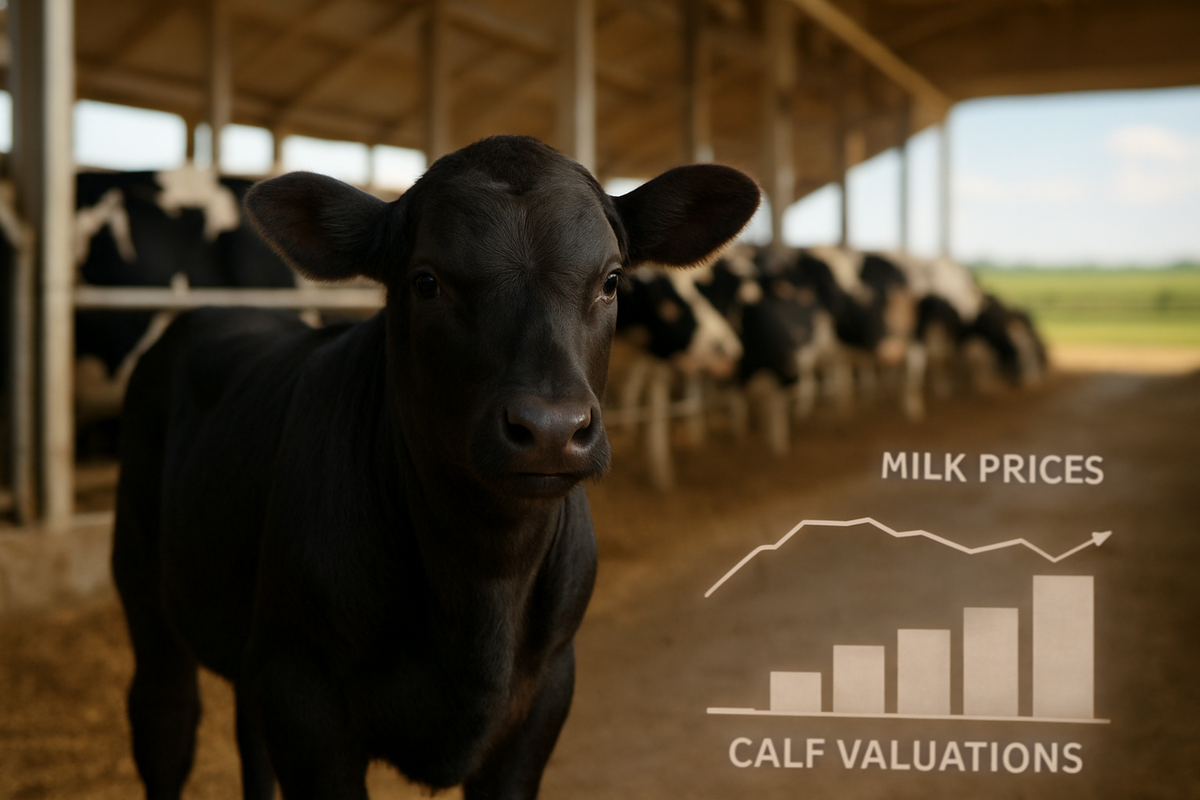
In a remarkable shift in American agricultural economics, dairy producers are finding an unexpected lifeline in the beef market. As of April 13, 2026, record-high prices for dairy-beef crossbred calves, reaching as high as $1,500 per head, are providing a critical financial hedge for farmers grappling with a stagnant milk price forecast of $18.95 per hundredweight (cwt). This "dual-revenue" model has transformed the traditional dairy farm from a single-commodity operation into a strategic player in the national protein supply chain.
The convergence of a multi-year low in the U.S. beef cattle herd and a structural evolution in breeding technology has created a "perfect storm" for dairy profitability. While the $18.95/cwt milk forecast sits perilously close to the average cost of production, the surge in value for crossbred calves—animals bred specifically for meat quality—is adding a revenue stream that many industry analysts now consider the "margin of survival" for mid-sized family farms.
The Convergence of Supply Shortages and Breeding Innovation
The current economic landscape was cemented by the USDA’s April 2026 World Agricultural Supply and Demand Estimates (WASDE) report, which significantly reduced red meat production forecasts for the remainder of the year. Total commercial beef production is now projected at just 25.81 billion pounds, reflecting the smallest national cattle inventory since the 1950s. This shortage has left meat processors desperate for supply, turning their attention toward the dairy sector, which now provides nearly 20% of the nation’s beef.
The timeline leading to this $1,500-per-calf milestone began with the widespread adoption of sexed semen and genomic testing over the last five years. By using sexed semen to produce exactly enough female dairy replacements from their top-performing cows, farmers have freed the remainder of their herd to be bred with high-quality beef genetics. These "beef-on-dairy" (BOD) calves, typically Angus or Wagyu crosses, possess superior marbling and growth rates compared to traditional Holstein bull calves, making them a premium asset for feedlots.
Key stakeholders, including the American Dairy Association and major beef cooperatives, have noted that the $1,500 price point for week-old calves is a 300% increase from levels seen just four years ago. In regions like Wisconsin and Pennsylvania, these calves are no longer viewed as "byproducts" of milk production but as a primary output. The financial impact is profound: for every 100 cows, the sale of these premium calves can contribute an effective "credit" of over $4.00 per cwt toward the farm's total milk production costs, offsetting the sting of the $18.95 milk forecast.
Corporate Winners and the Processing Squeeze
The shift toward beef-on-dairy economics has created a clear divide among public companies. Zoetis Inc. (NYSE: ZTS) has emerged as a primary beneficiary, reporting a surge in its livestock segment revenue. As calves become more valuable, dairy farmers are investing more heavily in premium health protocols, vaccines, and genomic testing services like Clarifide, ensuring these $1,500 animals reach their full growth potential.
On the breeding side, Genus plc (LSE: GNS), through its subsidiary ABS Global, has capitalized on the transition. The company reported record sales of beef genetics into the dairy market, with over 9 million units sold in the last fiscal year. Their "Beef InFocus" program has become a benchmark for creating calves that meet the specific marbling and size requirements of commercial packers. Conversely, Darling Ingredients (NYSE: DAR), which handles animal byproducts and rendering, has seen a shift in its feedstock profile as fewer "low-value" dairy calves are discarded or processed at birth, with more being diverted into the premium beef supply chain.
However, the meat processing giants face a more complex reality. Tyson Foods (NYSE: TSN) and JBS S.A. (OTC: JBSAY) are navigating a severe margin squeeze. While BOD calves provide more consistent quality for their premium beef brands, the overall lack of cattle numbers has led to operational inefficiencies. Tyson recently shuttered facilities in the Midwest to consolidate production, warning investors that the beef segment may see significant operating losses through 2026 as they pay record prices to secure dwindling supplies of slaughter-ready cattle.
Broader Industry Trends and Structural Significance
This event represents a permanent structural change in U.S. agriculture rather than a temporary market blip. The "Beef-on-Dairy" revolution has effectively synchronized two historically separate markets. For decades, dairy and beef cycles moved independently; now, the dairy industry serves as a vital reservoir for the beef industry's supply needs. This integration has stabilized farm incomes but has also introduced new risks, such as a 20-year low in dairy replacement heifers, as farmers prioritize beef crosses over raising their own young milkers.
From a regulatory standpoint, the USDA's focus has shifted toward ensuring that these crossbred animals are tracked and graded accurately. There is growing pressure for new grading standards that account for the unique carcass characteristics of BOD animals, which often outperform traditional beef breeds in marbling but have different muscle-to-bone ratios. This trend also aligns with ESG goals, as a "dual-purpose" cow that produces both milk and high-quality beef is seen as more resource-efficient than maintaining separate herds for each commodity.
Historically, this situation is comparable to the mid-20th-century transition toward specialized breeding, but with a modern genomic twist. Where farmers once kept "dual-purpose" breeds like Milking Shorthorns out of necessity, they are now using advanced biotechnology to achieve the same goal with scientific precision. This diversification strategy has become the dairy industry's primary defense against the "boom-and-bust" milk cycles that forced thousands of dairies out of business over the last decade.
What Comes Next: The Heifer Shortage and Market Pivots
In the short term, the primary challenge for the dairy industry will be the looming "heifer cliff." Because so many cows have been bred to beef for the $1,500 payout, the inventory of replacement dairy heifers has plummeted to levels not seen in two decades. This will make it extremely expensive for dairy farms to expand their milk-producing herds if milk prices were to suddenly spike. Analysts expect a "bidding war" for replacement heifers to begin by late 2026, which could eat into the profits currently being generated by calf sales.
Strategically, we may see more dairy farms moving toward "full-cycle" operations, where they no longer sell the calves at one week old but instead background them or finish them in their own feedlots to capture the entire value chain. This would require significant capital investment in infrastructure but would shield farmers even further from milk price volatility. Conversely, if the national beef herd begins to rebuild in 2027, the current premium for BOD calves may soften, forcing farmers to re-evaluate their breeding ratios.
Market Outlook and Final Thoughts
The current state of US Dairy-Beef economics is a testament to the resilience and adaptability of the American farmer. By leveraging record-high $1,500 calf prices to offset a lackluster $18.95/cwt milk forecast, the industry has found a way to maintain profitability in a high-cost environment. The USDA’s reduced red meat production forecasts for 2026 suggest that these calf premiums are here to stay for at least the next 12 to 18 months, providing a much-needed buffer for the dairy sector.
Investors should closely watch the quarterly reports of animal health companies like Zoetis (NYSE: ZTS) and genetics firms like Genus plc (LSE: GNS), as they are the primary "picks and shovels" providers in this new economy. Meanwhile, the meat processing sector, led by Tyson Foods (NYSE: TSN), will likely continue to face headwinds until the national cattle inventory begins a meaningful recovery. The key takeaway for the market is clear: the dairy farm of 2026 is no longer just a milk factory; it is a critical, diversified hub of the global protein industry.
This content is intended for informational purposes only and is not financial advice