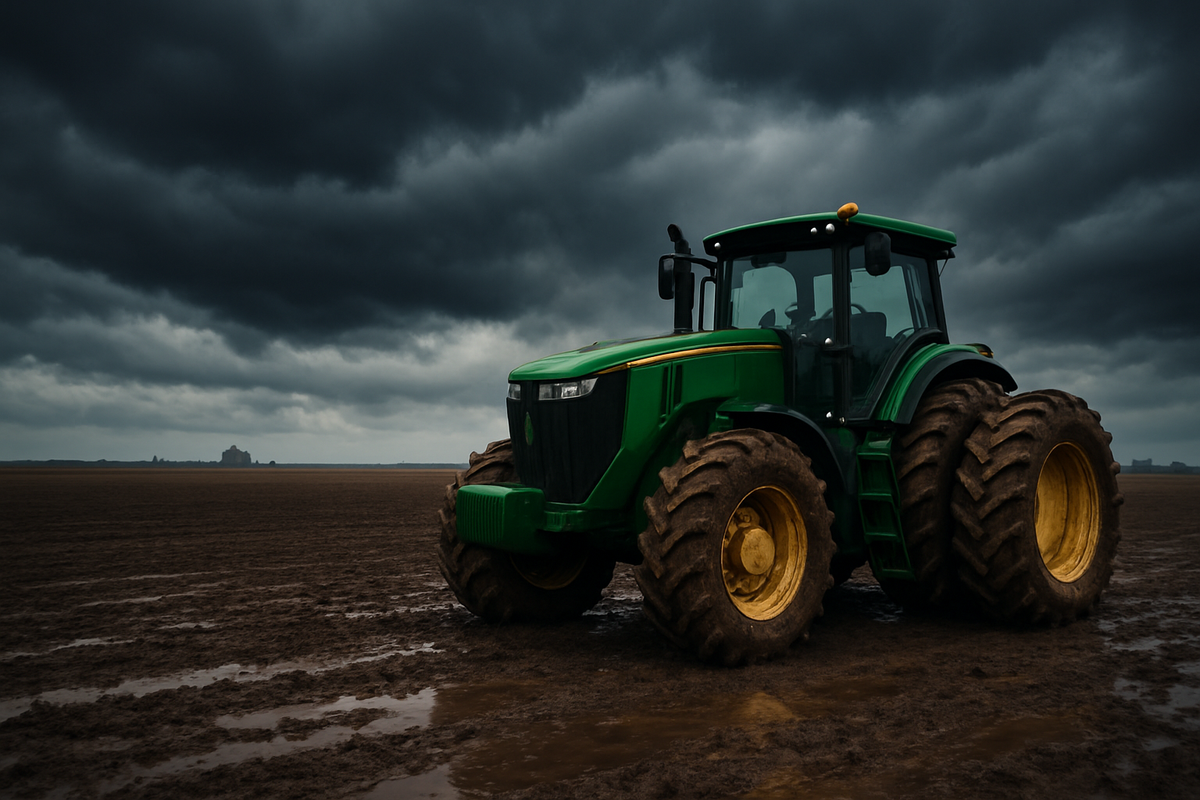
As the mid-April sun typically signals the start of the heavy planting season across the American heartland, the 2026 season is proving to be a frustrating exercise in patience. Farmers across the Corn Belt and Ohio River Valley are currently facing a "hurry up and wait" scenario as the National Oceanic and Atmospheric Administration (NOAA) issues a forecast that could significantly hamper field operations. With above-normal precipitation predicted through April 23, the window for early planting is rapidly closing, forcing many to keep their high-horsepower equipment in the shed while watching the skies.
The immediate implications are stark: soil moisture levels, already high from a wet early spring, are expected to reach saturation points in key producing states like Illinois, Indiana, and Ohio. This weather pattern doesn't just delay the physical act of planting; it threatens the fundamental economics of the 2026 crop cycle. With only 3% of the national corn crop in the ground as of early April, any further significant moisture could push the bulk of planting into May, historically a period where yield potential begins to taper off for corn, potentially triggering a massive late-season shift to soybean acreage.
The Wet Blanket Over the Corn Belt
The current weather disruption is the result of a volatile atmospheric transition. According to NOAA’s Climate Prediction Center, a series of low-pressure systems is expected to track directly across the Midwest, funneling moisture from the Gulf of Mexico into the Great Lakes region. The specific window of April 17 through April 23 is identified as a high-risk period for heavy rainfall, which meteorologists warn could dump twice the average weekly precipitation in the Ohio River Valley. This comes at a time when farmers are already battling a cold snap that has kept soil temperatures below the 50-degree threshold required for optimal corn germination.
The timeline leading to this bottleneck began in late March, when a series of early storms replenished subsoil moisture but left surface conditions "mucky." While many producers in the southern reaches of the Corn Belt were able to make a brief "mud run" in the first week of April, the northern and eastern regions have remained largely sidelined. The stakeholders in this drama—ranging from family-owned farms to massive multinational grain traders—are now recalibrating their expectations for the 2026 harvest. Initial market reactions have been swift, with corn and soybean futures on the Chicago Board of Trade showing increased volatility as traders weigh the risk of a "short-crop" year.
Corporate Impact: Equipment, Inputs, and Logistics
The delay is sending ripples through the balance sheets of major agricultural players. Deere & Co. (NYSE: DE), the world’s leading manufacturer of agricultural machinery, is navigating a challenging landscape where farmers may defer large equipment purchases if their income is threatened by late-season yield losses. Although Deere recently surprised analysts with strong quarterly earnings driven by its pivot to autonomous "Smart Industrial" technology, the company has lowered its net income guidance for the remainder of 2026, citing a "prolonged trough" in demand for high-horsepower tractors as planting windows narrow.
In the seed and chemical sector, Corteva (NYSE: CTVA) is seeing increased interest in its specialized seed treatments and late-planting solutions. Farmers facing wet conditions often turn to premium biotech, such as Corteva’s Enlist E3 soybean system, to ensure every seed that does get planted has the best chance of survival. Similarly, Bayer (OTC: BAYRY) stands to see a shift in product demand; as wet weather increases the risk of soil-borne diseases and fungus, sales of high-end fungicides are expected to climb. However, the overall delay is a double-edged sword for these companies, as it complicates the logistics of delivering inputs to a region that may suddenly try to plant millions of acres in a single five-day dry spell.
Logistics and trading giants like Archer-Daniels-Midland (NYSE: ADM) and Bunge (NYSE: BG) are perhaps the most sensitive to these weather-induced price dislocations. While ADM has faced headwinds recently due to shipping disruptions in international waters, the company often thrives on domestic market volatility. A delayed planting season creates "carry" in the market, allowing these merchandisers to profit from storing grain and managing the price spread between old-crop and new-crop supplies. If the rain persists, ADM and Bunge will be monitoring the potential for a massive shift in acreage from corn to soybeans, which would alter their processing and export strategies for the fall.
Broader Significance and the Fertilizer Crunch
This year’s planting delay is occurring within a precarious global context. Unlike previous wet springs, 2026 is grappling with a "fertilizer crunch" caused by geopolitical tensions in the Middle East. With significant portions of the world’s seaborne fertilizer supply diverted or delayed, nitrogen prices have spiked to levels not seen in years, with Urea hitting $650 per ton. Because corn requires significantly more nitrogen than soybeans, the combination of high input costs and a narrow planting window is creating a powerful incentive for farmers to abandon corn acres in favor of soybeans.
Historically, major planting delays have led to significant price spikes in the grain markets, often referred to as a "weather rally." In 2019, one of the wettest years on record, millions of acres were eventually classified as "prevent plant" for insurance purposes. While 2026 has not yet reached that level of severity, the parallels are being drawn by market analysts. A large-scale shift to soybeans could lead to an oversupply of beans by harvest time, while simultaneously creating a corn shortage that would drive up costs for livestock producers and ethanol plants, adding to inflationary pressures on food and fuel.
The Road Ahead: Navigating the May Window
What comes next depends entirely on the accuracy of the 10-to-14-day outlook. If the rains subside after April 23, the Midwest could witness a frantic "planting marathon." Modern equipment allows the U.S. farmer to plant the majority of the nation’s crop in a remarkably short time—sometimes as little as ten days if the weather holds. However, if the wet pattern persists into the first week of May, the strategic pivot from corn to soybeans will move from a possibility to a necessity for many producers in the northern Corn Belt.
In the short term, investors should expect continued volatility in agricultural commodities. The market will be hyper-sensitive to every updated weather map and USDA Crop Progress report. Long-term, this scenario may accelerate the adoption of precision agriculture and autonomous machinery, as the ability to operate in narrow time windows becomes a critical competitive advantage for large-scale operations. Market opportunities may emerge in the crop insurance sector and for companies providing real-time weather analytics and soil sensing technology.
A High-Stakes Waiting Game
In summary, the 2026 planting season is shaping up to be a test of resilience for the U.S. agricultural sector. The NOAA forecast for heavy April rains has placed a temporary ceiling on productivity, creating a "hurry up and wait" environment that impacts everything from local farm equipment dealerships to global grain trading floors. The key takeaways for the market are the rising probability of an acreage shift toward soybeans and the heightened sensitivity of grain prices to any further moisture.
Moving forward, the market will be watching for the first "clear" window in the forecast. Investors should keep a close eye on weekly planting progress reports and the stock performance of input providers like Corteva and equipment leaders like Deere & Co. While a few weeks of rain do not define a harvest, they certainly set the stage for the economic winners and losers of the 2026 growing season. For now, the most valuable tool in the Midwest isn't a tractor or a plow—it's a reliable weather app and a great deal of patience.
This content is intended for informational purposes only and is not financial advice.