TAIPEI — Taiwan Semiconductor Manufacturing Company (NYSE: TSM) sent shockwaves through the global financial markets today, reporting a massive 35% year-over-year revenue jump for the month of March. The figures, released early Friday, underscore an insatiable global appetite for high-performance computing (HPC) and artificial intelligence (AI) chips, a trend that shows no signs of cooling as the industry enters the second quarter of 2026. With the company’s full quarterly earnings presentation scheduled for April 16, investors are already aggressively pricing in a "beat and raise" scenario, pushing the stock to multi-month highs in pre-market trading.
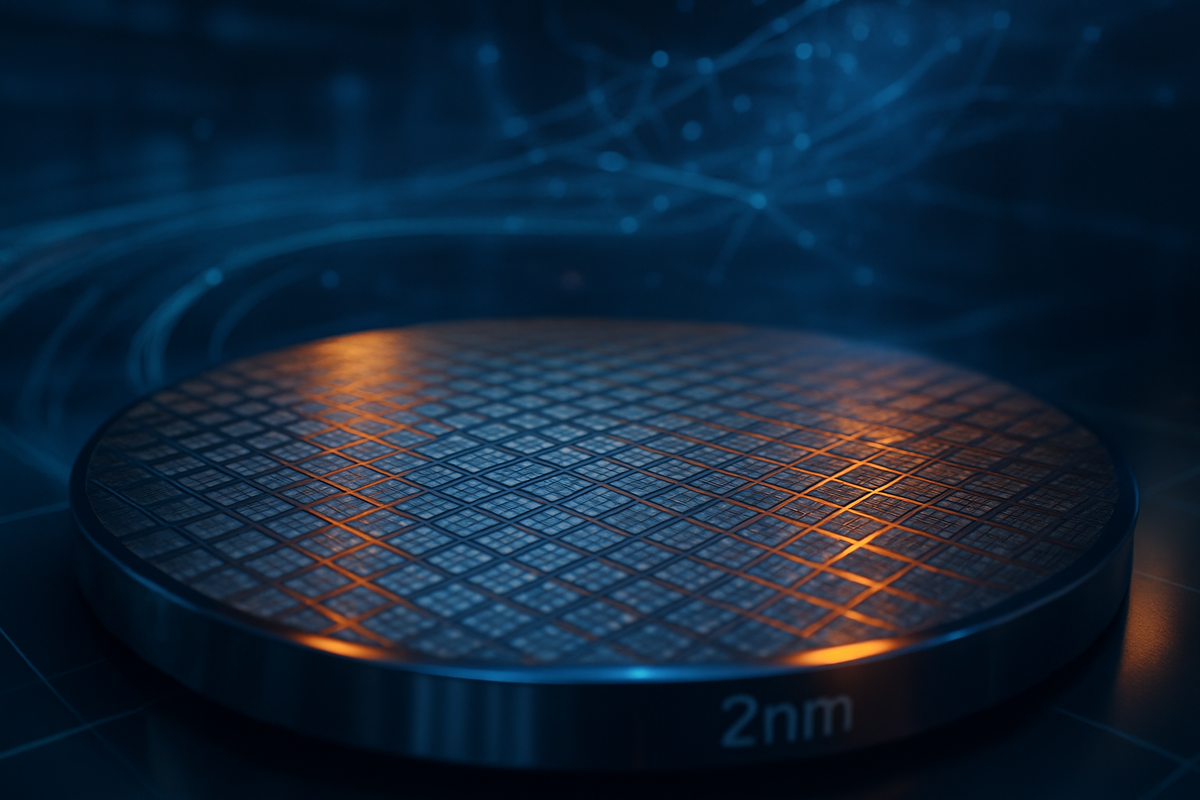
The revenue surge is not merely a seasonal fluke but a definitive signal that the "AI Supercycle" has entered a high-gear phase. As hyperscalers and sovereign nations scramble to secure the silicon necessary for the next generation of Large Language Models (LLMs) and autonomous systems, TSMC stands as the sole gatekeeper of the world’s most advanced 3-nanometer (3nm) and 2-nanometer (2nm) fabrication processes. This morning's report has effectively silenced skeptics who feared a plateau in AI infrastructure spending, proving that the hardware foundation of the digital economy is still expanding at a breakneck pace.
The specific data released today shows March revenue hitting approximately NT$395 billion, representing a 35% increase compared to the same period in 2025. This monthly performance capped off a blockbuster first quarter for the foundry giant, with total Q1 revenue comfortably exceeding the high end of the company’s previous guidance. The timeline of this growth can be traced back to the late-2025 rollout of TSMC’s N2 (2nm) process, which has seen faster adoption rates than any previous node in the company's history. Leading up to this morning's announcement, industry whispers suggested a strong month, but the 35% figure surpassed even the most bullish consensus estimates of 28-30%.
Key stakeholders in this growth story include the "Magnificent" tech titans who have pivoted their entire business models toward AI. Throughout the first quarter, internal sources suggest that production lines for AI accelerators were running at near-100% utilization. The market reaction was instantaneous: within minutes of the data release, Asian markets saw a lift in semiconductor equipment providers, while in the United States, TSM ADRs surged over 4% in early trading. Analysts from major investment banks have already begun revising their price targets upward, citing the "unprecedented visibility" TSMC has into the order books of the world's most valuable tech companies.
The primary beneficiary of TSMC’s success continues to be NVIDIA Corporation (NASDAQ: NVDA), whose latest Blackwell-series and subsequent "Rubin" architecture chips are entirely dependent on TSMC’s advanced packaging and logic nodes. As TSMC’s revenue climbs, it serves as a leading indicator for NVIDIA’s own upcoming quarterly results, confirming that the demand for AI training and inference hardware remains "voracious." Similarly, Apple Inc. (NASDAQ: AAPL) is expected to be a major "winner" in this cycle, as it has reportedly secured the lion’s share of TSMC’s initial 2nm capacity for its upcoming iPhone 18 and M-series silicon, ensuring a competitive edge in "On-Device AI" performance.
Conversely, the pressure is mounting for traditional rivals and those struggling with the foundry transition. Intel Corporation (NASDAQ: INTC) finds itself in a precarious position; while it continues to push its "five nodes in four years" strategy, the widening gap in revenue growth between TSMC and the rest of the market suggests that customers are still overwhelmingly choosing the Taiwanese giant for their most critical designs. Samsung Electronics (KRX: 005930), while making strides in 3nm Gate-All-Around (GAA) technology, has yet to report the same scale of high-margin AI contract wins, leaving them to fight for the leftovers of the mobile and consumer electronics segments.
This event is a cornerstone of the broader "Sovereign AI" trend, where nations are treating chip-making capacity as a matter of national security rather than mere commerce. TSMC’s ability to generate a 35% revenue jump in early 2026 mirrors the historical precedents of the mid-20th century industrial booms, but with a digital-first twist. The wider significance lies in the decoupling of semiconductor growth from traditional consumer electronics cycles; while smartphone and PC sales have remained relatively stable, the exponential growth in data center demand is rewriting the industry’s valuation models.
Furthermore, the ripple effects are being felt in the regulatory sphere. As TSMC's dominance grows, the impetus for the U.S. and European governments to subsidize local manufacturing—via the CHIPS Act and its successors—becomes even more urgent. The concentration of such high-value production in a single company remains a point of geopolitical tension, yet the current data suggests that the world’s technological progress is, for now, tethered to TSMC's success. This creates a "too big to fail" dynamic that influences everything from trade policy to global investment flows.
Looking ahead, all eyes are fixed on April 16, 2026. The full earnings release is expected to provide critical details on TSMC's capital expenditure (CapEx) plans for the remainder of the year. Investors will be looking for a potential increase in the CapEx budget, which would signal that the company plans to accelerate its 2nm capacity expansion even further. A strategic pivot toward more integrated "CoWoS" (Chip on Wafer on Substrate) advanced packaging is also anticipated, as the bottleneck in AI chip production has shifted from raw wafer starts to the complex assembly of multi-chip modules.
In the long term, the primary challenge for TSMC will be managing the immense energy requirements of its new 2nm fabs and navigating the persistent "war for talent" in the semiconductor engineering space. There is also the looming question of "AI digestion"—the possibility that hyperscalers may eventually hit a limit on how much hardware they can deploy before needing to prove the ROI of their software services. However, in the current market environment, the momentum is undeniably on the side of continued expansion, with 2026 shaping up to be a record-breaking year for the foundry.
In summary, TSMC's 35% revenue jump is a watershed moment that validates the multi-year investment in AI infrastructure. The company has successfully transitioned from being a component supplier to becoming the indispensable backbone of the modern economy. For investors, the key takeaways are the clear acceleration in high-margin advanced nodes and the company's uncanny ability to execute even amidst geopolitical and supply chain complexities.
As we move toward the April 16 earnings call, the market will be watching for gross margin guidance and updates on the Arizona and Japan fab projects. While the stock has already performed strongly ahead of these results, the fundamental growth story remains intact. For the coming months, the semiconductor sector will likely remain the primary engine of market growth, with TSMC sitting firmly at the controls.
This content is intended for informational purposes only and is not financial advice.