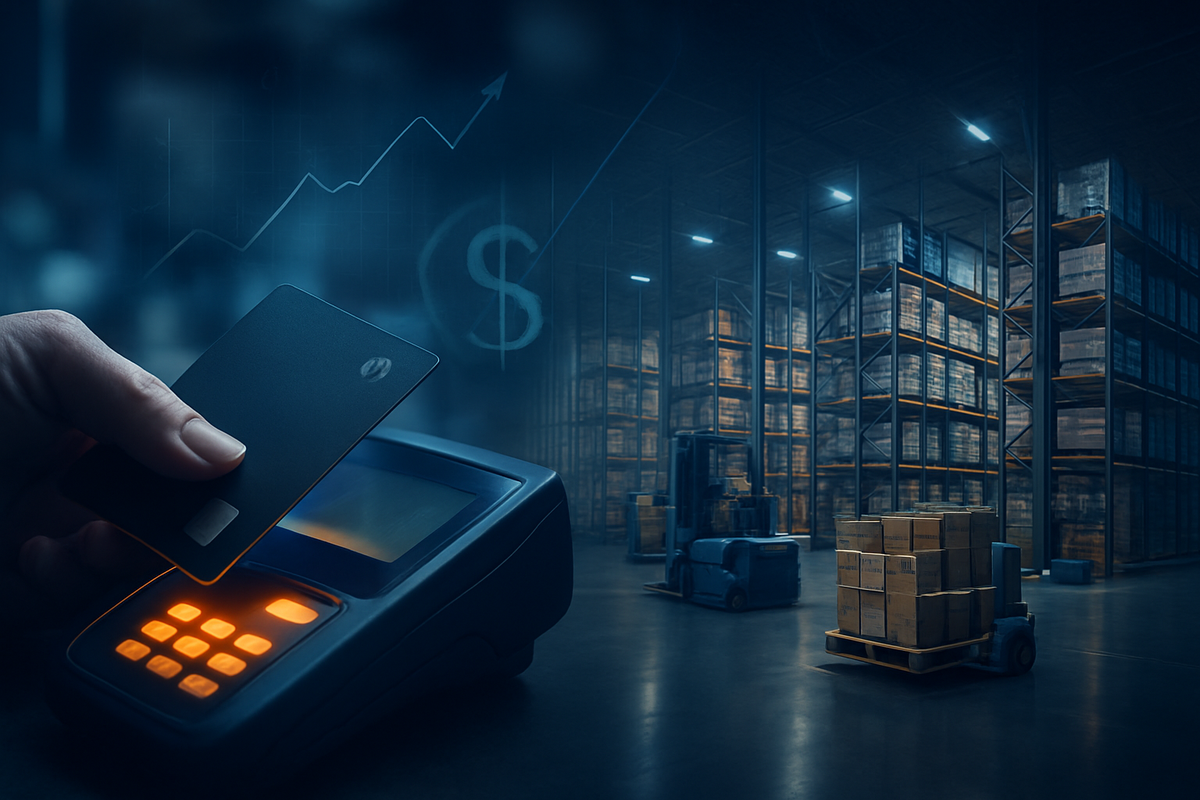
The latest economic data for early 2026 has sent a jolt through Wall Street, revealing a staggering $24.05 billion surge in U.S. consumer credit. This figure, dominated by a sharp rise in credit card borrowing, suggests that while the American consumer remains resilient, the engines of growth are increasingly fueled by high-interest debt. Simultaneously, business inventory data indicates a shift toward a "normalization" phase, with the retail inventory-to-sales ratio climbing toward 1.36, a move that analysts say could act as a double-edged sword for the Federal Reserve’s ongoing battle against inflation.
As of March 6, 2026, these dual metrics provide a complex snapshot of a "no-landing" economic scenario. The massive credit spike indicates that households are maintaining their standard of living despite high interest rates, while the cooling of "just-in-case" inventory levels suggests that businesses are bracing for a more calculated, albeit more expensive, restocking environment. This combination points toward a "sticky" inflation outlook for the remainder of the year, likely hovering between 2.5% and 3.3%, well above the Fed's elusive 2% target.
A $24 Billion Shock to the System
The $24.05 billion increase in total consumer credit, released in the most recent Federal Reserve report for the start of 2026, represents a dramatic acceleration from the modest $4.7 billion gain seen late last year. Economists had initially forecast a more conservative $8 billion rise, making the actual data nearly triple the market's expectations. The breakdown of this debt is even more telling: revolving credit, which consists primarily of credit card balances, skyrocketed by $13.85 billion in a single month. This trend suggests that the holiday spending spree of late 2025 has transitioned into a persistent reliance on plastic to cover the rising "cost of carry" for daily essentials.
The timeline leading to this surge was marked by a period of relative stability in mid-2025, followed by a sudden pivot in consumer behavior during the fourth quarter. Non-revolving credit, encompassing auto and student loans, also contributed a robust $10.20 billion to the total, signaling that demand for big-ticket items has not yet collapsed under the weight of higher APRs. Key stakeholders, including major banking institutions and retail advocacy groups, are now closely monitoring delinquency rates, which have crept up to 7.05% for credit card accounts, the highest level in nearly a decade.
The Winners and Losers of a Leveraged Economy
For the financial sector, the surge in credit is a multifaceted development. Major lenders like JPMorgan Chase & Co. (NYSE: JPM) and Bank of America Corp. (NYSE: BAC) stand to benefit from higher interest income as revolving balances grow. However, the rise in credit card delinquency rates introduces significant credit risk. Companies like Visa Inc. (NYSE: V) and American Express Co. (NYSE: AXP) may see increased transaction volumes and interest revenue, but they must balance this against the "fragility gap" where debt-to-income ratios for many households have now surpassed the 60% threshold.
In the retail space, the normalization of inventories presents a different set of challenges. Large-scale retailers such as Walmart Inc. (NYSE: WMT) and Target Corp. (NYSE: TGT) are managing a delicate transition. While a rising inventory-to-sales ratio—currently projected to hit 1.36—suggests that supply is finally catching up to demand, it also indicates that businesses are no longer benefiting from the cheap, pre-tariff stockpiles of 2024. As these companies restock at 2026 prices, the "tariff transmission" costs are being passed directly to the consumer, which may support revenue growth in the short term but threatens to dampen long-term volume if price sensitivity increases.
Inflation Stickiness and the New Inventory Reality
The wider significance of these numbers lies in their impact on the 2026 inflation trajectory. The combination of robust demand-side credit and rising supply-side costs suggests that the "easy" gains in the fight against inflation are over. By early 2026, the depletion of old, cheaper inventories has forced businesses into a new cycle of restocking under more expensive trade conditions. This "tariff pass-through" is estimated to add at least 50 basis points to headline inflation, keeping the Consumer Price Index (CPI) stubbornly above 2.5%.
Furthermore, this event mirrors historical precedents such as the late-1970s "credit creep," where consumers used debt to stay ahead of rising prices, inadvertently fueling a feedback loop of sustained inflation. Unlike previous years where supply chain bottlenecks were the primary culprit, the 2026 landscape is defined by "demand-pull" inflation. The Federal Reserve now faces a policy dilemma: raising rates further could trigger a wave of defaults among highly leveraged consumers, while cutting rates too soon could pour gasoline on an already overheated credit market.
Looking Ahead: The Tax Refund Buffer
The short-term outlook for the U.S. economy may be saved by a unique fiscal quirk. Under the "One Big Beautiful Bill Act" passed in late 2025, federal tax refunds in early 2026 are expected to be roughly 20% larger than usual. This anticipated $100 billion liquidity boost could provide a temporary lifeline, allowing consumers to deleverage their ballooning credit card balances and supporting real consumer spending growth of approximately 4.1% through the second quarter.
In the long term, however, the market must prepare for a potential strategic pivot. If the inventory-to-sales ratio continues to climb past 1.40, it may signal that businesses are over-estimating consumer endurance. Investors should watch for a "recessionary cooling" if the tax refund stimulus wears off by mid-2026 without a corresponding drop in interest rates. The resilience of the American consumer is being tested at a record-breaking scale, and the next few months will determine if this $24 billion credit spike was a bridge to stability or a warning sign of an impending correction.
Summary and Investor Outlook
The early 2026 data on consumer credit and business inventories paints a picture of an economy running at high velocity on borrowed time. The $24.05 billion surge in credit highlights a consumer base that refuses to blink, but the underlying rise in delinquencies suggests a growing fragility. Meanwhile, the shift in inventory management indicates that the era of "supply chain-driven" disinflation has ended, replaced by a cycle of cost-pass-through that will keep inflation sticky for the foreseeable future.
For investors, the key takeaway is a need for caution in the consumer discretionary and banking sectors. While earnings may remain strong due to high spending and interest income, the tail risk of a sharp credit contraction is higher than it has been in years. Moving forward, the market should closely watch the Q2 2026 retail sales data and the Federal Reserve's rhetoric regarding the "neutral rate" of interest. The "no-landing" scenario is currently in play, but the runway is getting shorter as the debt pile grows higher.
This content is intended for informational purposes only and is not financial advice