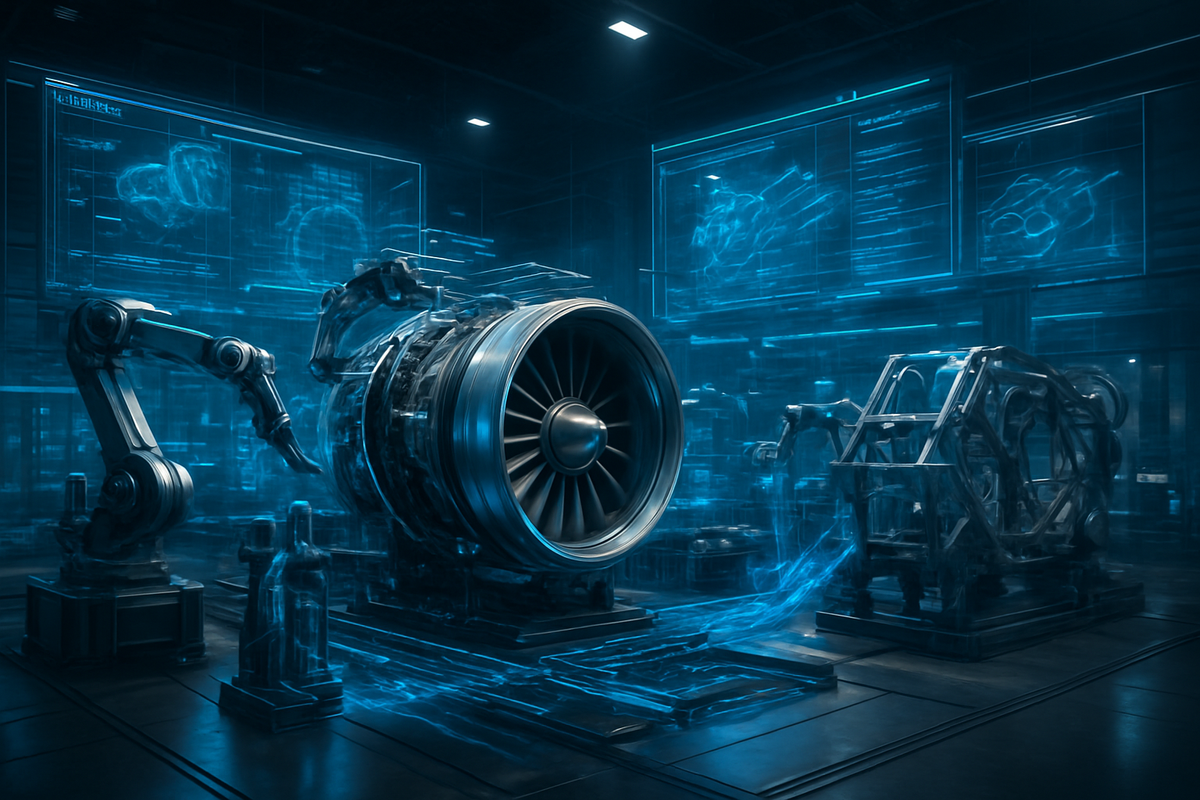
SEATTLE, WA — In a move that signals a seismic shift in the global industrial landscape, reports have surfaced that Jeff Bezos is orchestrating a massive entry into the heavy manufacturing sector. According to sources close to the matter, the Amazon.com Inc. (NASDAQ: AMZN) founder is in the process of raising a staggering $100 billion for a new investment vehicle specifically designed to acquire and modernize "legacy" manufacturing firms. This strategic pivot aims to marry the "atoms" of physical production with the "bits" of advanced artificial intelligence, potentially upending a century of industrial tradition.
The news has sent ripples through both Silicon Valley and the Rust Belt. By leveraging his new AI-centric startup, Project Prometheus, Bezos intends to implement "Physical AI"—models that understand the laws of physics and thermodynamics—directly into the factory floor. This is not merely an investment in automation; it is an attempt to create a closed-loop ecosystem where AI designs, optimizes, and manages the production of complex hardware, ranging from semiconductor chips to aerospace components.
The Rise of Project Prometheus and the $100 Billion Fund
The groundwork for this massive play began in late 2025 with the quiet co-founding of Project Prometheus by Bezos and physicist Vik Bajaj. Unlike the generative AI boom of 2023-2024, which focused on text and images, Prometheus focuses on "embodied AI." This technology is capable of simulating material stress, airflow, and manufacturing tolerances in real-time, allowing for a level of precision previously thought impossible. In March 2026, the Wall Street Journal reported that Bezos is now seeking $100 billion from global asset managers and sovereign wealth funds to begin the "acquisition phase" of this vision.
The timeline suggests a calculated escalation. Following his transition from the day-to-day operations of Amazon (NASDAQ: AMZN), Bezos has increasingly focused on the capital-intensive challenges of Blue Origin. Insiders suggest that the difficulty of scaling rocket production for programs like the New Glenn and the Blue Moon lander served as the catalyst for this manufacturing push. By early 2026, it became clear that Bezos viewed the existing aerospace supply chain as a bottleneck. His solution is to buy the suppliers and "Prometheus-tune" them, cutting production costs through autonomous engineering.
The primary vehicle for these acquisitions is a yet-to-be-named industrial fund that seeks to take controlling stakes in firms with massive backlogs but outdated technological infrastructure. The fund's leadership team reportedly includes David Limp, the CEO of Blue Origin, and several former executives from top-tier robotics firms. This structure indicates that the target companies will not just be financial assets but will be integrated into a broader technological flywheel.
Winners and Losers in the New Industrial Order
The primary winner in this scenario is undoubtedly Blue Origin, which stands to gain a vertically integrated supply chain capable of rapid prototyping and unprecedented cost efficiency. Furthermore, specialized robotics startups like Rivr—which was recently acquired by Amazon (NASDAQ: AMZN)—are poised to become the "nervous system" of these new industrial giants. Investors in AI-adjacent hardware and "smart factory" tech are already seeing a "Bezos Bump" as the market anticipates which firms might be next on his list.
Conversely, traditional "legacy" giants like GE Vernova (NYSE: GEV) and Siemens Energy (OTCPK: SMEGF) may find themselves at a crossroads. While these companies have their own digital transformation initiatives, they lack the "clean sheet" AI integration that Prometheus offers. If Bezos succeeds in significantly lowering the cost of gas turbines or jet engines through AI-driven design, these incumbents could see their market shares erode rapidly. Similarly, major players like Caterpillar Inc. (NYSE: CAT) and 3M Co. (NYSE: MMM) are being watched closely by analysts to see if they will become targets or competitors in this new high-stakes environment.
The aerospace sector is perhaps the most vulnerable. Boeing (NYSE: BA), which has struggled with production quality and delivery delays over the last several years, is frequently cited by analysts as a potential candidate for a "technological takeover." While a full acquisition of a company of Boeing’s scale remains a complex regulatory challenge, Bezos’s fund could acquire critical Tier-1 suppliers, effectively controlling the production flow that Boeing depends on.
A New Era of Industrial Policy and Global Competition
Bezos’s move fits into a broader global trend of "reshoring" and the localization of critical supply chains. In early 2026, Bezos began advising the $10 billion Security and Resiliency Initiative led by JPMorgan Chase & Co. (NYSE: JPM). This collaboration suggests that his industrial ambitions are closely aligned with national security interests, particularly in the realms of semiconductor fabrication and defense manufacturing. By making U.S.-based factories more efficient than their overseas counterparts through AI, Bezos is positioning his fund as a key player in the "Next-Generation Industrial Revolution."
This event mirrors historical precedents such as Andrew Carnegie’s vertical integration of the steel industry or Henry Ford’s creation of the moving assembly line. However, the difference today is the speed of iteration. In the 20th century, industrial improvements took decades; with Prometheus’s physical AI, optimizations that once took years of R&D can now be simulated and implemented in weeks. This "software-defined manufacturing" could lead to a massive consolidation of power in the industrial sector, raising significant antitrust questions for regulators in the coming years.
The ripple effects will also be felt in the labor market. While Bezos’s "Atoms and Bits" strategy promises to revitalize domestic manufacturing, it also relies heavily on high-level automation. This could lead to a shift in the manufacturing workforce, requiring fewer traditional assembly line workers and more "AI supervisors" and "robotic maintainers."
The Path Forward: What Comes Next?
In the short term, the market is waiting for the official closure of the $100 billion fund. Once the capital is deployed, the industry should expect a flurry of mid-sized acquisitions of specialized manufacturers in the aerospace, defense, and energy sectors. These companies will likely serve as "test beds" for Prometheus’s AI, proving the concept before Bezos moves on to larger, more iconic targets.
Long-term, the strategic pivot requires a fundamental adaptation of how physical goods are designed. We may see a shift toward "generative manufacturing," where an AI is given a set of performance requirements and autonomously designs and prints a part that is lighter and stronger than anything a human engineer could conceive. The challenge for Bezos will be managing the sheer complexity of physical production, which is notoriously less predictable than the digital world of cloud computing or retail logistics.
As these scenarios unfold, the market will be looking for the "Prometheus certification"—a sign that a factory has been fully integrated into the Bezos ecosystem. This could become a new gold standard for industrial efficiency, much like the "Amazon Effect" redefined retail a decade ago.
Summary and Investor Outlook
Jeff Bezos’s entry into heavy manufacturing marks the beginning of the "Atoms and Bits" era. By combining a $100 billion acquisition fund with the cutting-edge physical AI of Project Prometheus, Bezos is attempting to do for manufacturing what he did for e-commerce: create a dominant, tech-driven ecosystem that forces every competitor to adapt or disappear. Key takeaways for investors include the potential for massive disruption in the aerospace and energy sectors, the rise of "physical AI" as a dominant investment theme, and the increasing importance of supply chain reshoring.
The market moving forward will be defined by how quickly legacy firms can respond to this threat. Investors should watch for announcements regarding the fund’s first major acquisitions and any regulatory pushback from Washington regarding the consolidation of critical industrial infrastructure. In the coming months, the focus will remain on whether Bezos can successfully bridge the gap between digital intelligence and physical production—a feat that would solidify his legacy as the architect of the 21st-century industrial economy.
This content is intended for informational purposes only and is not financial advice.