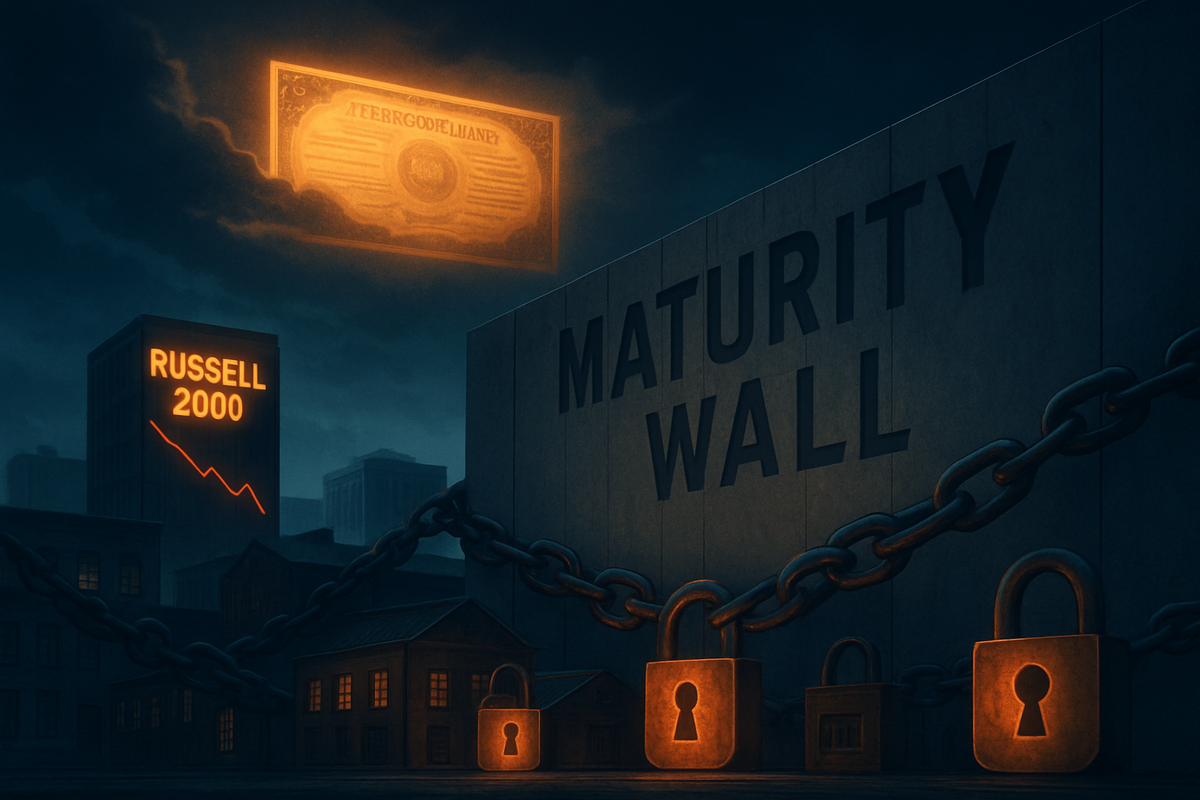
The long-awaited resurgence of America’s small-cap stocks has hit a formidable wall. As of March 20, 2026, the Russell 2000 index—the traditional barometer for the health of smaller, domestic-focused companies—has seen its robust early-year gains evaporate, falling to a precarious year-to-date return of just +0.75%. Only ten days ago, the index sat comfortably at a peak of +8.9%, buoyed by a "January Effect" that many analysts believed signaled a structural shift away from mega-cap dominance. However, a toxic combination of geopolitical instability and a relentless spike in Treasury yields has sent the index into a tailspin, threatening to push it into the red for the year.
The immediate implications are sobering for investors who rotated into small caps in late 2025. The rapid reversal reflects a market that is increasingly fearful of the "maturity wall" facing smaller enterprises. Unlike their large-cap peers, who locked in historic low interest rates during the 2021 pandemic era, many small-cap firms are now grappling with the brutal reality of floating-rate debt in an environment where the "higher-for-longer" mantra has been unexpectedly revived.
A Perfect Storm: Geopolitics Meets the Maturity Wall
The dramatic slide began in late February 2026, triggered by a sudden escalation in the conflict involving Iran, which sent global energy markets into a frenzy. As oil prices surged toward $100 per barrel, fears of a "stagflationary" shock rippled through the bond market. The 10-year Treasury yield, a critical benchmark for corporate borrowing costs, jumped to 4.29% by March 20, up significantly from the mid-3% range seen at the start of the year. This move has effectively neutralized the Federal Reserve’s previous efforts to ease financial conditions.
The Federal Open Market Committee (FOMC) meeting on March 18, 2026, served as the final catalyst for the current sell-off. Despite market hopes for a dovish signal to counter the energy shock, the Fed voted 11-1 to maintain the federal funds rate at 3.50%–3.75%. By pausing and revising its 2026 PCE inflation outlook upward to 2.7%, the central bank signaled that the relief cuts anticipated for the second half of the year are now in jeopardy. This hawkish pause has been particularly devastating for the Russell 2000, which is far more sensitive to the cost of capital than the S&P 500.
Industry reaction has been swift and unforgiving. Traders have aggressively pulled capital from small-cap growth sectors, particularly those that lack consistent free cash flow. The volatility index for small caps has spiked 25% in the last week alone, as the market begins to price in a higher probability of defaults among the most leveraged index constituents.
Winners, Losers, and the "Zombie" Crisis
The current environment has created a stark divide within the small-cap universe. The primary losers are the "zombie companies"—firms that cannot cover their interest expenses with operating profits. Analysts now estimate that a staggering 41% to 46% of Russell 2000 companies fall into this category. These firms are facing a $368 billion maturity wall in 2026, forcing them to refinance debt at rates near 6.5%, compared to the 1-2% rates they may have enjoyed years ago.
Specifically, companies like Benchmark Electronics (NYSE: BHE) and Photronics (NASDAQ: PLAB) have come under intense scrutiny. These firms, while essential to the semiconductor and engineering ecosystems, have been flagged for shrinking returns on capital and high sensitivity to rising yields. Similarly, the regional banking sector, represented by the SPDR S&P Regional Banking ETF (NYSEARCA:KRE), is reeling as small-business borrowers struggle to service their floating-rate loans, raising fears of a spike in non-performing assets.
Conversely, a handful of "fortress" small caps are managing to thrive. Domestic industrials and infrastructure firms are benefiting from the One Big Beautiful Bill Act (OBBBA), a 2025 legislative package that provides significant tax credits for domestic R&D and depreciation. Companies like Fluor Corp (NYSE: FLR) and Applied Industrial Technologies (NYSE: AIT) have remained resilient, as their strong balance sheets and alignment with federal infrastructure spending provide a cushion against the broader market’s volatility.
Broader Significance and Historical Precedents
This event marks a critical juncture in the post-pandemic economic cycle. For the past two years, the narrative has been one of "soft landing" and eventual normalization. However, the current struggle of the Russell 2000 suggests that the "lagged effects" of monetary policy are finally biting the most vulnerable parts of the economy. Historically, small caps have been the "canary in the coal mine" for broader economic slowdowns; their current underperformance relative to the S&P 500 is reminiscent of the late-2007 period, where credit tightening first squeezed small-to-mid-sized enterprises before reaching the mega-caps.
The wider significance also extends to the regulatory and policy sphere. The surge in energy prices and the subsequent rise in yields are complicating the Fed’s dual mandate. If small-cap bankruptcies accelerate, it could lead to a localized credit crunch that forces the Fed’s hand, regardless of the inflation data. Furthermore, the reliance on floating-rate debt (which accounts for roughly 32% to 40% of small-cap liabilities) highlights a structural vulnerability that may prompt future regulatory calls for more stringent corporate hedging requirements.
The Road Ahead: Strategic Pivots and Scenarios
In the short term, the Russell 2000 is likely to remain in a "danger zone" until there is clarity on energy prices and the Fed’s next move in May. Investors should prepare for a period of intense "stock picking," where the broad index performance matters less than the individual balance sheet strength of its members. We may see an increase in "distressed M&A," as larger players with cash-heavy balance sheets move to acquire struggling small-cap competitors at a discount.
Looking into the latter half of 2026, the potential for a "strategic pivot" remains. If the oil shock proves transitory and the maturity wall is navigated through creative private credit solutions, the current sell-off could provide a generational entry point for value investors. However, the more likely scenario involves a continued "K-shaped" recovery, where technology-enabled and infrastructure-aligned small caps diverge permanently from the debt-burdened "zombies" of the previous decade.
Summary and Investor Outlook
The retreat of the Russell 2000 into near-red territory for the year is a potent reminder that the cost of capital is the ultimate arbiter of market success. The index’s fall from a +8.9% peak to +0.75% in less than two weeks underscores the fragility of the small-cap recovery in the face of rising yields and geopolitical unrest. The key takeaways for the coming months are centered on the "maturity wall" and the Fed’s ability to manage a potential stagflationary threat.
As we move toward the second quarter of 2026, investors should watch the 10-year Treasury yield and crude oil prices as the primary lead indicators for small-cap health. The ability of firms to refinance their 2026 debt obligations will determine whether this is a temporary dip or the start of a more profound structural decline for small-cap equities. For now, the "Main Street" index remains on high alert, waiting for a signal that the worst of the yield spike is behind it.
This content is intended for informational purposes only and is not financial advice