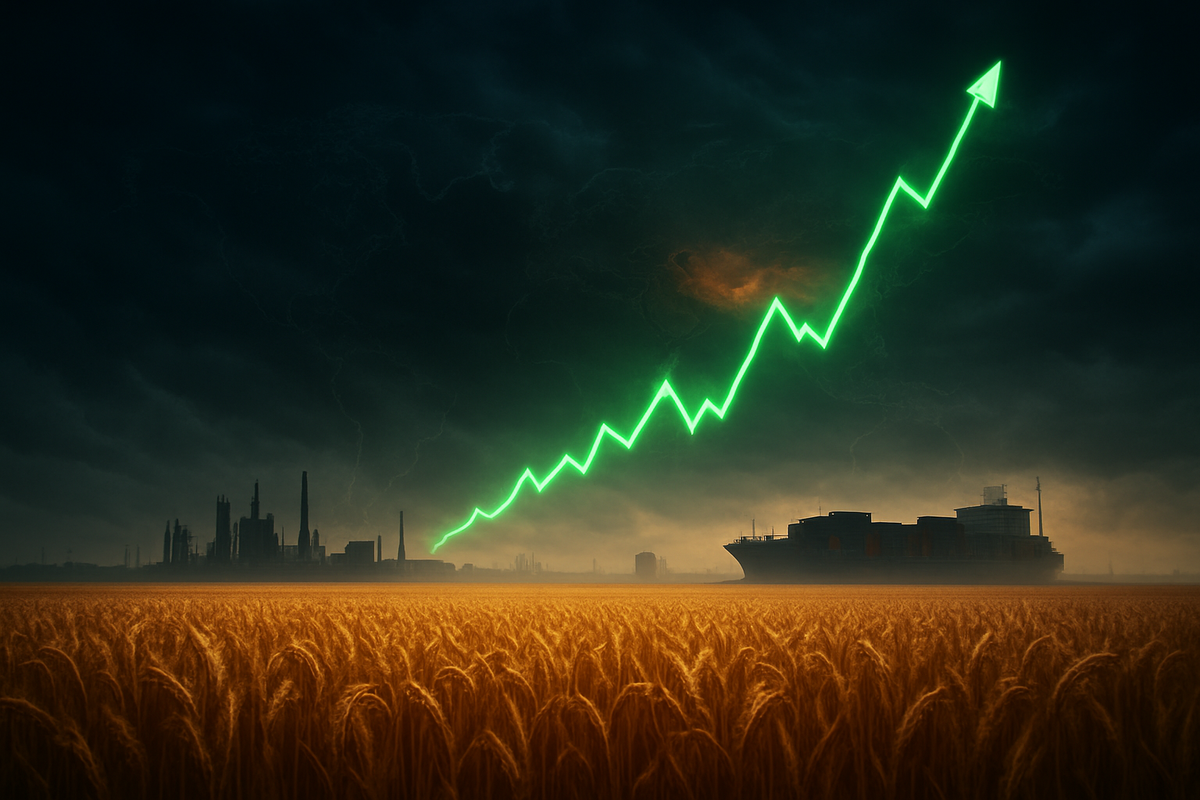
The global agricultural landscape shifted violently this week as wheat futures on the Chicago Board of Trade (CBOT) recorded a dramatic 33-cent surge, signaling renewed fears of a prolonged food security crisis. This sudden spike, which pushed May 2026 wheat contracts to a multi-month high of approximately $6.35 per bushel, is the direct result of a "perfect storm" of escalating geopolitical tensions in the Middle East and a catastrophic supply shock in the global fertilizer market. As of today, March 11, 2026, the market remains on edge, balancing between the prospect of a military de-escalation and the reality of a fractured global trade network.
The immediate implications are stark: bread and cereal prices, which had seen a period of relative stability in late 2025, are now projected to climb significantly heading into the summer. For the agricultural sector, the timing could not be worse. With the spring planting season commencing in the Northern Hemisphere, farmers are facing a dual threat of record-high input costs and extreme commodity price volatility that complicates long-term financial planning and crop selection.
The Convergence of Conflict and Chemistry
The catalyst for this market upheaval can be traced back to the launch of "Operation Epic Fury" on February 28, 2026. This U.S.-led military initiative, targeting infrastructure in Iran, led to a rapid escalation in regional hostilities that culminated in the blockade of the Strait of Hormuz. Because nearly one-third of the world’s seaborne fertilizer supply—specifically urea, ammonia, and phosphates—transits through this narrow artery, the blockade effectively cut off the lifeblood of global industrial farming overnight.
The timeline leading to the current 33-cent surge was marked by high-stakes developments. Following the initial military strikes, speculative "managed money" funds executed one of the fastest pivots in history, shifting from a record net-short position to a net-long position in less than 14 days. On March 6, 2026, the market hit a breaking point, and the 33-cent jump was recorded as traders realized the "planting season without phosphorus" was no longer a theoretical risk but an imminent reality. The situation was further exacerbated domestically on March 10 by a massive explosion at a critical nitrogen production facility in Yazoo City, Mississippi, which severely crippled U.S. domestic supply just as the March WASDE (World Agricultural Supply and Demand Estimates) report from the USDA was being digested by the market.
Winners and Losers in the Ag-Crisis
In the equity markets, the reaction has been a tale of two sectors. Fertilizer giants such as CF Industries (NYSE: CF), Nutrien Ltd. (NYSE: NTR), and The Mosaic Company (NYSE: MOS) initially saw their valuations soar as global prices for urea and ammonia reached heights not seen since the 2022 energy crisis. However, these gains have been tempered by a Department of Justice (DOJ) antitrust investigation into alleged price-fixing, alongside a major class-action lawsuit filed on March 7. While these companies benefit from high product prices, the regulatory scrutiny and the threat of export restrictions pose significant long-term risks to their bottom lines.
On the losing side of the ledger are food processing giants like General Mills (NYSE: GIS) and Mondelez International (NASDAQ: MDLZ). Both companies have signaled a "margin squeeze" as they struggle to pass on rising wheat and energy costs to consumers who are already struggling with high interest rates and inflation. General Mills recently cut its fiscal 2026 guidance, citing an inability to hedge effectively against the current level of volatility. Similarly, agricultural machinery leader Deere & Co. (NYSE: DE) has seen its shares underperform; while wheat prices are high, the broader agricultural economy is suffering from high input costs and lower net farm income for corn and soybean producers, leading to a slowdown in equipment orders.
A Wider Significance: The Food-Energy Nexus
This event fits into a broader, more dangerous trend: the increasing "weaponization" of the food-energy nexus. Wheat is not just a food commodity; its production is inextricably linked to natural gas, the primary feedstock for nitrogen-based fertilizers. With WTI Crude hitting $119.50 per barrel on March 9, the cost of manufacturing agricultural chemicals has reached a point where small-scale farmers in developing nations may be priced out of the market entirely, potentially leading to social unrest in regions like North Africa and the Middle East.
Historically, this event draws comparisons to the 1973 "Great Grain Robbery" and the 2008 global food price crisis. However, the 2026 crisis is unique due to the speed of information and the dominance of algorithmic trading, which has amplified price movements. The regulatory implications are already mounting, with several G20 nations discussing "strategic fertilizer reserves" similar to the Strategic Petroleum Reserve, a policy shift that would fundamentally alter how agricultural companies operate and maintain inventory.
The Path Forward: Peace Signals vs. Structural Deficits
What comes next depends largely on the diplomatic front. As of this morning, March 11, signals from the White House suggesting that the conflict in Iran may be "nearing an end" have caused a temporary 12-cent pullback in wheat futures and a sharp drop in oil prices. If the Strait of Hormuz reopens quickly, we may see a "relief rally" in food processing stocks and a cooling of commodity prices. However, the structural damage to the global fertilizer supply chain—compounded by the Yazoo City explosion—suggests that input prices will remain historically high through the end of 2026.
Strategic pivots are already underway. Leading agricultural handlers like Archer-Daniels-Midland (NYSE: ADM) and Bunge Global (NYSE: BG) are rapidly diversifying their sourcing away from the Middle East toward Brazil and North America to mitigate future geopolitical shocks. Investors should also watch risk management firms like StoneX Group (NASDAQ: SNEX), which has seen record demand for its hedging and brokerage services as market participants scramble to protect themselves from the unprecedented volatility.
Closing Thoughts: A Precarious Market Balance
The 33-cent surge in wheat futures is a stark reminder of the fragility of the global food system. While geopolitical headlines may drive short-term price action, the underlying fertilizer supply shock is a medium-term structural issue that will likely keep food inflation on the radar of central banks well into 2027. The resilience of the agricultural sector is being tested once again, and the divide between those who can afford high-tech, efficient inputs and those who cannot is widening.
For investors, the coming months require a focus on "logistical alpha"—the ability of companies to manage broken supply chains better than their peers. Watch for the next USDA crop progress reports and any updates on the DOJ’s fertilizer probe, as these will be the primary drivers of market sentiment once the dust settles in the Middle East. Moving forward, the agricultural market is no longer just about weather and soil; it is a high-stakes geopolitical battlefield.
This content is intended for informational purposes only and is not financial advice.