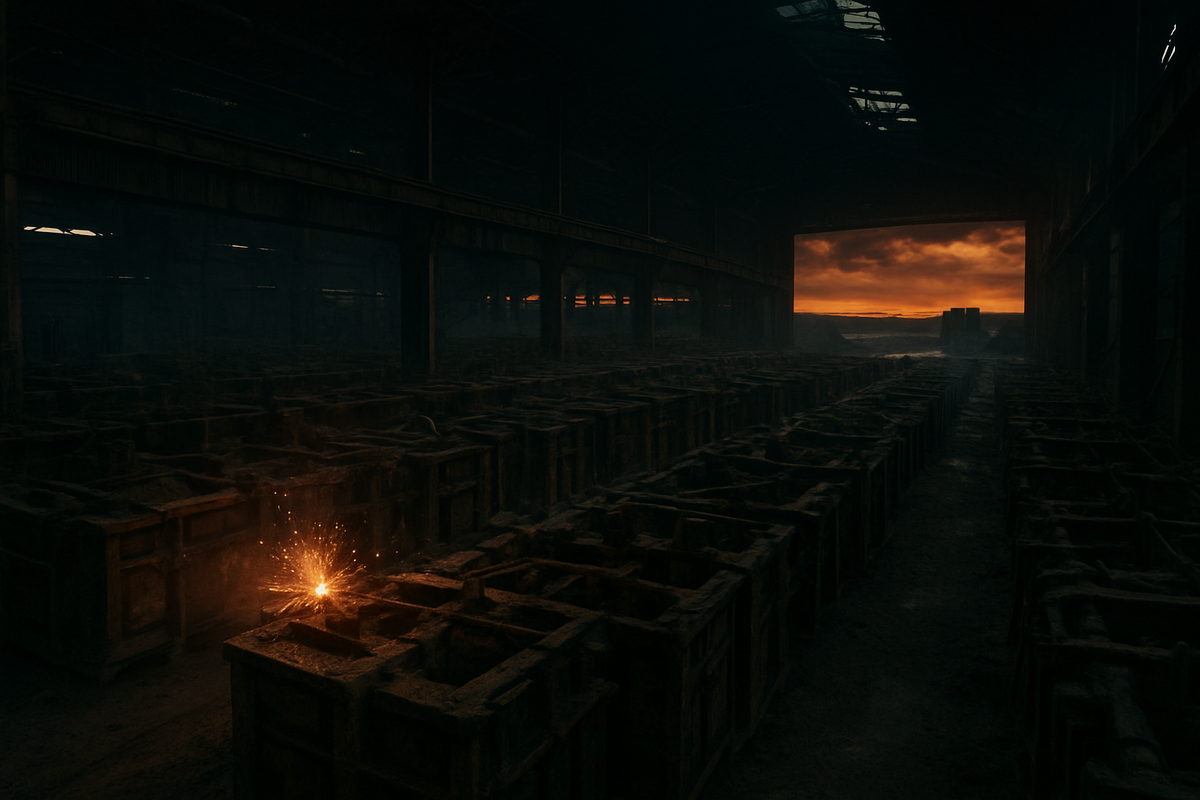
As of mid-January 2026, the global aluminum market is witnessing a profound transformation in South America, driven by the near-total operational collapse of Venezuela’s state-owned smelting sector. Following the dramatic geopolitical shift on January 3, 2026, which saw the capture of Nicolás Maduro by U.S. forces, the Venezuelan aluminum industry remains in a state of paralysis. Decades of underinvestment, a crumbling power grid, and severe technical degradation have left the country’s primary producers—CVG Venalum and CVG Alcasa—unable to meet even basic domestic requirements, let alone re-establish their once-dominant presence in the North and South American markets.
The immediate implications for the regional market are stark. While Venezuela was historically a key supplier of low-cost primary aluminum to the United States and Brazil, it is now struggling to produce metal that meets international purity standards. This supply vacuum, combined with high tariffs on other major producers like Canada, has contributed to a volatile pricing environment, particularly in the United States, where the Midwest Premium has reached historic highs. For manufacturers in Brazil, the lack of reliable Venezuelan imports has forced a reliance on more expensive domestic production and higher-priced global imports, squeezing margins across the automotive and packaging sectors.
A Legacy of Neglect and Infrastructure Failure
The decline of Venezuela's aluminum complex is not a sudden event but the culmination of a decade of systemic mismanagement. CVG Venalum (CVG: VEN), which boasts an installed capacity of 430,000 tonnes per year, is currently operating at a staggering utilization rate of less than 20%, producing roughly 8,000 tonnes per month. Its sister plant, CVG Alcasa, has fared even worse; its primary smelting operations effectively ended after the 2019 blackouts "froze" its electrolytic cells. Today, Alcasa is largely limited to secondary processing and the production of low-value laminates, with its core technology now considered beyond the point of repair.
The technical hurdles are multifaceted. The industry is currently plagued by a lack of essential components such as high-quality anodes and cathodes. Recent reports indicate that in late 2025, smelters were forced to use "wet green coke" in their processes, a substandard material that causes electrical discharge issues and physical cracking in the remaining operational potlines. Furthermore, approximately 50% of the metal currently produced in Venezuela is classified as "off-grade," failing to meet the P1020 standard (99.7% purity). This has limited Venezuela’s export reach to buyers with low technical requirements, such as small-scale manufacturers of household utensils, effectively locking them out of the high-precision aerospace and automotive supply chains.
The timeline of this collapse accelerated sharply in early 2026. Following "Operation Absolute Resolve," the U.S. government has begun a selective rollback of some sanctions to stabilize the Venezuelan economy, but the metals sector remains a low priority for immediate relief. Unlike the oil sector, where infrastructure can be partially revived through foreign partnerships, industry analysts suggest that Venezuela’s aluminum smelters would require a "total rebuild"—a multi-billion dollar project that could take five to ten years to materialize.
Winners and Losers in a Fragmented Market
The ongoing dysfunction in Venezuela has created a unique competitive landscape for public companies in the Americas. One of the primary beneficiaries is Century Aluminum Company (NASDAQ: CENX). As a domestic U.S. producer, Century Aluminum has seen its realizations bolstered by the soaring U.S. Midwest Premium, which hit record levels of 90 cents per pound in early 2026. With Venezuelan imports effectively blocked by a 50% tariff and operational failures, and Canadian supply constrained by separate trade measures, Century Aluminum finds itself in a dominant position to supply the U.S. manufacturing base.
In Brazil, the impact is more nuanced. Companhia Brasileira de Alumínio (BVMF: CBAV3), the country's largest integrated producer, has stepped in to fill the gap left by Venezuelan supply. While Venezuelan metal was historically sold to Brazilian firms at deep discounts—often up to $180 per tonne below market rates for off-grade ingots—those flows have dwindled to a trickle. This has allowed CBA to maintain strong domestic pricing, though it must also navigate the increased energy costs that are affecting the entire South American industrial belt.
On the other hand, global giants like Alcoa Corporation (NYSE: AA) and Rio Tinto Group (NYSE: RIO) are navigating a bifurcated market. While they benefit from higher global prices, the instability in the Southern Hemisphere complicates their long-term supply chain strategies. Meanwhile, Norsk Hydro ASA (OTC: NHYDY), which has significant alumina operations in the region, faces a complex landscape where the demand for raw materials from Venezuelan smelters has essentially vanished, forcing them to find new homes for their bauxite and alumina output in an increasingly protectionist global environment.
The Regional Impact and Broader Market Trends
The struggles of the Venezuelan industry fit into a broader global trend of "near-shoring" and the prioritization of supply chain security over pure cost-efficiency. For years, the U.S. and Brazil relied on Venezuela for cheap, geography-adjacent metal. However, the consistent failure of the Venezuelan grid—despite the massive hydroelectric potential of the Guri Dam—serves as a cautionary tale about the risks of depending on state-controlled monopolies in volatile political climates. The inability to deliver stable power to the Caroní River region, even with the dams nearby, highlights a transmission crisis that is mirrored in other emerging markets.
The regional pricing dynamics have reached a critical juncture. In Brazil, the São Paulo Premium (low-VAT) has remained stable at $220–$250 per tonne because Venezuelan volumes, while helpful, were never enough to dictate the entire market. However, the U.S. market is a different story. The absence of Venezuelan metal has removed a "safety valve" for the U.S. Midwest Premium. When combined with the 50% tariffs currently imposed on Canadian imports, the U.S. market is facing a supply squeeze that is pushing regional prices significantly higher than the London Metal Exchange (LME) benchmarks.
This situation has also forced a shift in how aluminum is traded in the Americas. With so much Venezuelan output being "off-grade," a secondary market has emerged for lower-purity metal, often settled in non-U.S. dollar currencies like the RMB. This fragmentation of the market—between "green," high-purity metal from producers like Vale S.A. (NYSE: VALE) (through their indirect interests and logistics) and the "brown," substandard metal coming out of struggling state enterprises—is a trend that analysts expect to persist through 2026.
Looking Ahead: The Long Road to Reconstruction
In the short term, the Venezuelan aluminum industry is likely to remain in a state of suspended animation. Even if the new transitional government in Caracas secures rapid investment, the physical state of the potlines at Venalum and Alcasa means that production cannot simply be "turned back on." Strategic pivots for the industry will likely focus on the secondary market—recycling and basic fabrication—rather than primary smelting. This shift will require Venezuelan entities to compete more directly with scrap processors across Latin America.
For the market at large, the key scenario to watch is the potential for a massive influx of foreign capital into Venezuela if sanctions are fully lifted and the political situation stabilizes. Major global players might look to Venezuela not for its current capacity, but for its future potential as a low-carbon aluminum producer, given its immense hydroelectric resources. However, such a scenario is at least five years away. In the interim, the challenge for regional manufacturers will be managing high premiums and finding reliable alternatives to what was once the cheapest source of aluminum in the hemisphere.
Final Assessment for the 2026 Market
The operational hurdles facing Venezuela’s aluminum industry have moved from a localized crisis to a regional supply chain disruption. The combination of infrastructure decay, power instability, and the dramatic political turnover of January 2026 has effectively removed Venezuela from the global P1020 aluminum market for the foreseeable future. Investors should expect continued volatility in regional premiums, particularly in the U.S. and Brazil, as these markets adjust to a world without Venezuelan exports.
Moving forward, the focus will shift to the speed of reconstruction and whether a new Venezuelan administration can provide the regulatory certainty required for multi-billion dollar smelter rebuilds. In the coming months, market participants should closely watch for any announcements regarding "private-public partnerships" in the Guayana region. For now, the "off-grade" status of Venezuelan metal remains a bottleneck that protects established producers like Alcoa and Century Aluminum from low-cost competition, maintaining a high-floor for aluminum prices across the Americas.
This content is intended for informational purposes only and is not financial advice