The 44th Annual J.P. Morgan Healthcare Conference opened today in San Francisco with an intensity not seen in years, as the healthcare and technology sectors officially merged their futures. The headline of Day 1 was undoubtedly the announcement of a massive strategic partnership between Eli Lilly and Company (NYSE: LLY) and NVIDIA Corporation (NASDAQ: NVDA), a deal that signals a shift from theoretical artificial intelligence to a new era of "Physical AI" in drug discovery. As thousands of executives descended upon the Westin St. Francis, the atmosphere was one of pragmatic optimism, fueled by a desperate need for Big Pharma to refill pipelines ahead of a looming "patent cliff."
Beyond the individual deal-making, the first day of JPM26 established a clear narrative for the year: 2026 will be defined by the "Dealmaking Superbowl." With an estimated $170 billion in revenue at risk due to patent expirations over the next few years, the industry’s giants are no longer just browsing; they are buying. The convergence of high-performance computing and biological data has reached a tipping point, moving the biotech sector from a period of capital discipline into a high-velocity land grab for innovation.
The Billion-Dollar Lab: Redefining Drug Discovery
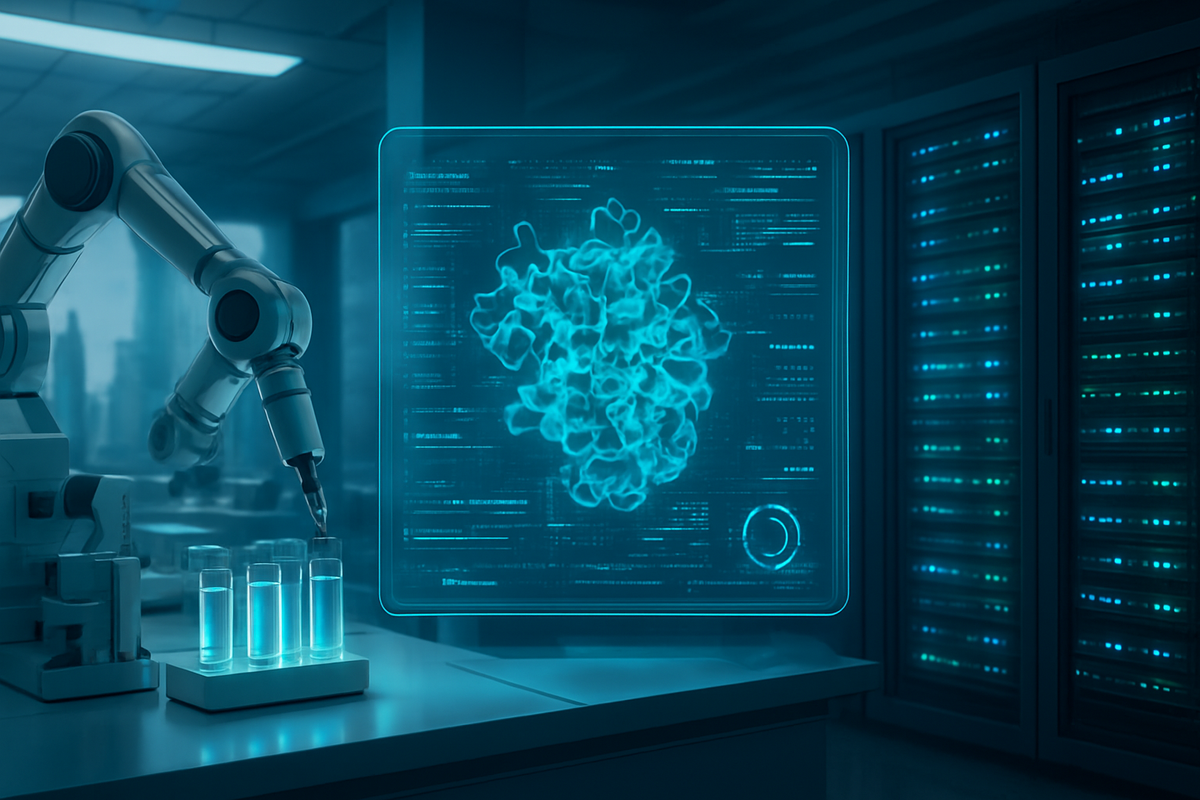
The centerpiece of Day 1 was the unveiling of a $1 billion, five-year strategic partnership between Eli Lilly and Nvidia to establish an AI Co-Innovation Lab in the San Francisco Bay Area. This facility, scheduled to open in March 2026, represents a fundamental shift in how medicines are developed. The lab will utilize a "closed-loop" system where Nvidia’s next-generation Vera Rubin AI architecture and BioNeMo platform are integrated directly with Lilly’s automated "wet labs." In this environment, AI models will generate molecular hypotheses that are immediately tested by robotic systems, with the resulting data fed back into the AI in real-time, creating a 24/7 cycle of autonomous experimentation.
This deal did not emerge in a vacuum. It follows years of incremental progress in generative biology and protein folding. However, the scale of the Lilly-Nvidia alliance marks a departure from the pilot programs of the past. By co-locating biologists and AI engineers, the two giants aim to tackle the "Eroom’s Law" of drug development—the observation that drug discovery has become slower and more expensive over time despite technological gains. The market's reaction was immediate, with shares of both companies seeing a bump in early trading as investors bet on the efficiency gains promised by this "AI factory" approach.
While the Lilly-Nvidia deal dominated the headlines, the M&A market showed signs of explosive growth elsewhere. AbbVie Inc. (NYSE: ABBV) announced a significant acquisition involving RemeGen (HKG: 9995), a deal worth up to $5.6 billion focused on a bispecific antibody for lung and colorectal cancer. This move underscores the primary objective for 2026: securing de-risked, late-stage assets that can provide immediate revenue to offset the loss of exclusivity on older blockbuster drugs.
Winners and Losers in the New AI-Biotech Landscape
Eli Lilly and Company (NYSE: LLY) and NVIDIA Corporation (NASDAQ: NVDA) emerge as the clear early winners of JPM26. Lilly is positioning itself as the most technologically advanced player in the GLP-1 and oncology spaces, while Nvidia has successfully transitioned from a hardware provider to a foundational platform for the entire life sciences industry. By providing the "picks and shovels" for the biotech gold rush, Nvidia has made itself indispensable to the future of medicine.
On the other side of the ledger, legacy pharmaceutical companies that have been slow to integrate deep learning into their R&D pipelines may find themselves at a disadvantage. Companies like Merck & Co., Inc. (NYSE: MRK) and Bristol Myers Squibb (NYSE: BMY) are facing some of the steepest patent cliffs in history, with major assets like Keytruda and Eliquis nearing the end of their protected lifespans. While Merck is rumored to be in talks for a multi-billion dollar acquisition of Revolution Medicines, Inc. (NASDAQ: RVMD), the pressure to execute perfect deals is higher than ever. Those who fail to secure high-quality pipelines during this "Superbowl" of M&A may face years of stagnant growth.
Smaller, AI-native biotech firms are also seeing a resurgence. Companies that have spent the last three years building proprietary datasets are now the primary targets for acquisition. The "winners" here are the firms with "wet-dry" integration, while the "losers" are likely those with "AI-only" models that lack the physical infrastructure to validate their computational predictions.
A Wider Significance: The "Transformer Moment" for Biology
The significance of Day 1 extends far beyond the dollar amounts of the deals. Industry leaders are describing 2026 as biology’s "transformer moment," a reference to the architecture that powered the LLM revolution in tech. We are seeing a shift from "Scarcity to Plenty"—a move away from the scarcity of clinical data and toward an abundance of automated intelligence. This shift is expected to have massive ripple effects on competitors, who must now decide whether to build their own AI infrastructure or pay a premium to partner with tech giants.
Historically, the biotech sector has been cyclical, moving from periods of intense hype to "nuclear winters." The current trend suggests a more sustainable integration. Unlike the genomics boom of the early 2000s, which lacked the computing power to process the data it generated, the 2026 landscape features the hardware (Nvidia) and the software (generative AI) necessary to make sense of the biological complexity. Regulatory bodies are also adapting; the FDA has signaled an increased willingness to accept AI-driven clinical trial designs and digital twins, which could drastically shorten the time it takes to bring a drug to market.
The Road Ahead: What to Expect for the Rest of 2026
In the short term, the market should prepare for a flurry of "copycat" deals. As Lilly and AbbVie set the pace, other Big Pharma players will likely feel the pressure to announce their own AI alliances or major acquisitions before the end of the week. The "hallway chatter" at JPM26 suggests that several more multi-billion dollar deals are in the final stages of negotiation, particularly in the fields of immunology and rare diseases.
Long-term, the challenge will be execution. The Lilly-Nvidia lab is a bold experiment, but its success will be measured in Phase II and Phase III clinical data, not just press releases. If the "closed-loop" system can successfully reduce the 90% failure rate of drug candidates in clinical trials, it will represent the greatest shift in medical history. Investors should watch for strategic pivots toward "Physical AI"—the use of robotics and automation to bridge the gap between digital discovery and physical manufacturing.
Closing Thoughts: A New Era of Intelligent Health
Day 1 of JPM26 has made it clear that the healthcare industry is no longer siloed from the tech sector. The $1 billion Lilly-Nvidia alliance and the aggressive M&A activity from AbbVie are signals that the industry is entering a high-stakes era of "Intelligent Health." The themes of 2026—AI integration, the GLP-1 "plenty" era, and the urgent replenishment of pipelines—will dictate market winners for the next decade.
As the conference continues, investors should keep a close eye on deal flow and the entry of new players like Anthropic into the clinical space. The "Dealmaking Superbowl" is only in the first quarter, and the decisions made this week in San Francisco will likely define the financial and clinical trajectory of the healthcare sector for years to come. The era of speculative AI is over; the era of applied, revenue-generating biological intelligence has begun.
This content is intended for informational purposes only and is not financial advice.