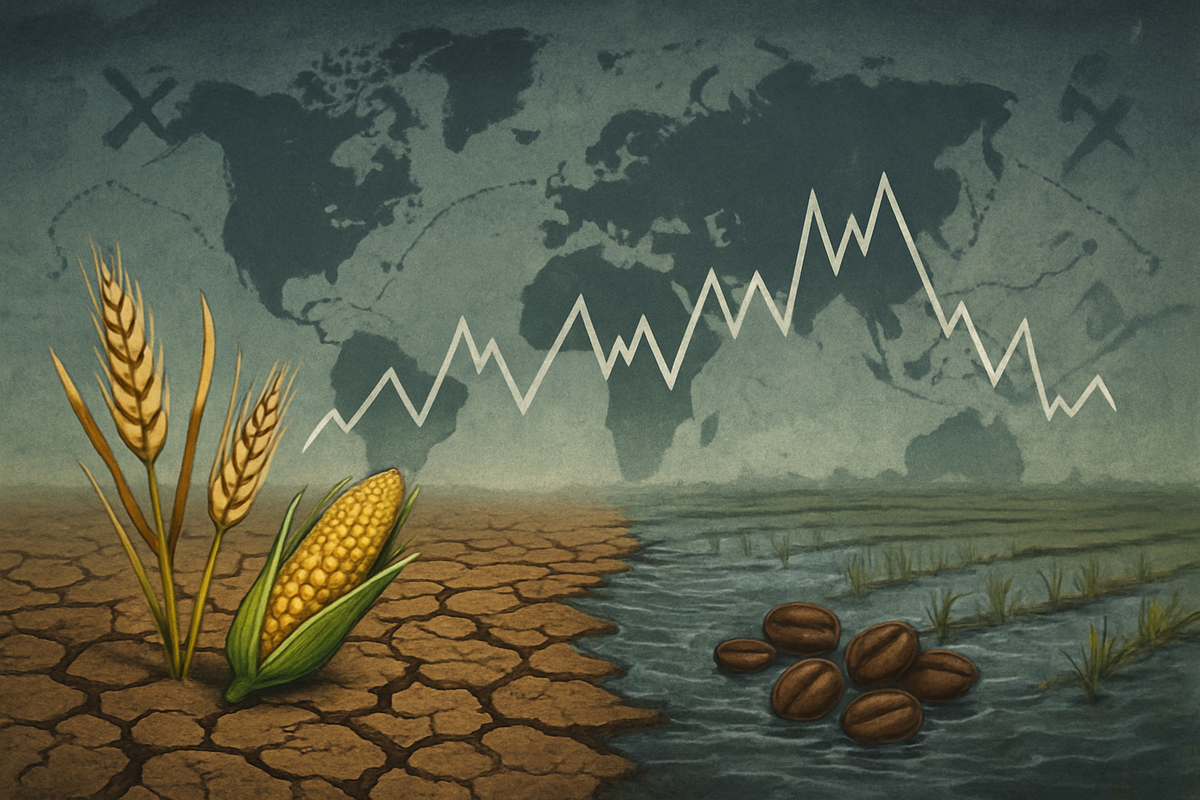
The global agricultural commodity markets are currently navigating a period of intense and escalating price volatility, a trend that has profound and immediate implications for global food security and consumer prices worldwide. From the staple grains that feed nations to the specialty crops like coffee and cocoa, prices are swinging wildly, driven by a complex interplay of environmental shocks, geopolitical instability, and shifting global demand patterns. This turbulence is not merely a cyclical fluctuation but an intensified and unpredictable phenomenon, with significant surges observed since 2007, and particularly acutely in 2021 and 2022.
This persistent unpredictability poses substantial challenges for farmers, who face income uncertainty and difficulties in long-term planning, and for consumers, who grapple with soaring food inflation and diminished purchasing power. Developing nations, heavily reliant on food imports, are particularly vulnerable, facing heightened risks of food insecurity and even political instability. As meteorologists predict a continuation of extreme weather events into 2025, the agricultural sector and global economies must brace for sustained volatility, making strategic adaptation and robust policy responses more critical than ever.
The Perfect Storm: Climate Catastrophes, Geopolitical Tensions, and Shifting Appetites
The current landscape of agricultural commodity price volatility is shaped by a confluence of powerful and often interconnected factors. Climate change stands as a primary and increasingly potent driver, manifesting in a relentless barrage of extreme weather events. Searing droughts in key agricultural regions, catastrophic floods that decimate harvests, and unprecedented heatwaves are fundamentally altering traditional farming cycles and reducing yields globally. For instance, in 2023-2024, cocoa prices (ICE: CC1) soared to record highs, doubling since early 2023, largely due to dry weather and heavy rains in West Africa, alongside chronic underinvestment. Similarly, olive oil prices surged by over 63% by April 2024, following extended droughts in major producing regions like Greece and Italy. The El Niño phenomenon in 2023, for example, triggered floods in India, disrupting rice production and pushing up global rice prices. These climate-induced disruptions are projected to continue, with meteorologists forecasting another year of extreme weather into 2025, ensuring that climate remains a persistent source of market instability.
Geopolitical events further exacerbate these vulnerabilities, disrupting critical supply chains and altering trade dynamics. The Russia-Ukraine war, commencing in February 2022, serves as a stark example. Both nations are major exporters of wheat, corn, and sunflower oil, and the conflict immediately sent prices for these commodities soaring. Wheat prices (CBOT: ZW1) jumped by 38% in March 2022, and while they have receded from their peaks, they remain significantly above pre-war averages. Beyond direct conflict, ongoing trade disputes and protectionist policies by some exporting countries, enacted to control domestic prices, further fragment global markets and contribute to instability. These actions create a ripple effect, pushing importing nations to seek alternative, often more expensive, sources, thereby sustaining upward price pressure.
Compounding these issues are shifts in global demand and persistently high input costs. A robust global economic recovery post-COVID-19, coupled with existing supply constraints, fueled sharp price increases in 2021, with corn prices (CBOT: ZC1) peaking at their highest levels since 2012. Growing demand for livestock feed, particularly from rapidly developing economies, and the diversion of food crops for biofuel production, further tighten global supplies. Simultaneously, elevated prices for energy, such as natural gas and crude oil, directly translate into higher production and transportation costs for agricultural goods. Fertilizer prices, intrinsically linked to energy costs, remain a critical risk, increasing farmers' expenses and ultimately feeding into higher consumer food prices. The increasing involvement of financial investors and speculative trading in commodity markets also plays a role, amplifying price swings based on anticipated movements rather than purely fundamental supply and demand, adding another layer of complexity to market dynamics.
Navigating the Swings: Winners and Losers in a Volatile Market
The turbulent agricultural commodity market creates a distinct divide between potential winners and losers, significantly impacting public companies operating within the food and agriculture sectors. Companies with diversified sourcing, robust supply chain management, and strong financial hedges are better positioned to weather the storms, while those with concentrated production or high reliance on specific volatile commodities face considerable headwinds.
Major agricultural trading houses and processors often find themselves in a unique position. Companies like Archer-Daniels-Midland (NYSE: ADM) and Bunge Global SA (NYSE: BG), with their extensive global networks for sourcing, processing, and distributing crops, can sometimes benefit from price volatility. Their ability to buy low and sell high, leverage storage capacity, and manage complex logistics allows them to capitalize on price discrepancies. However, extreme volatility also introduces significant risk, demanding sophisticated risk management strategies to avoid substantial losses. For these giants, disruptions in shipping lanes or sudden export bans can severely impact their margins and operational efficiency.
Conversely, food manufacturers and retailers often face increased cost pressures. Companies like Nestlé S.A. (SWX: NESN), Kraft Heinz Company (NASDAQ: KHC), and General Mills (NYSE: GIS), which rely on agricultural commodities as primary inputs for their products, see their cost of goods sold rise when commodity prices spike. While they can pass some of these costs onto consumers through higher retail prices, there's a limit to how much the market will bear before demand is affected. This can squeeze profit margins, forcing them to explore cost-cutting measures, reformulate products, or absorb some of the increases, potentially impacting their earnings per share and stock performance.
The agricultural equipment sector, represented by companies like Deere & Company (NYSE: DE), experiences a more nuanced impact. While high commodity prices can incentivize farmers to invest in new machinery to boost yields, thereby increasing sales for Deere, prolonged volatility and reduced farmer profitability can lead to deferred capital expenditures. Farmers facing uncertain incomes may delay purchases of expensive equipment, impacting Deere's sales and revenue forecasts. Similarly, companies involved in agricultural inputs, such as fertilizer producers like Nutrien Ltd. (TSX: NTR) (or NYSE: NTR), can see increased demand and higher prices for their products when crop prices are high, but also face their own input cost challenges and potential demand fluctuations if farmers scale back operations due to overall market uncertainty.
Broader Ripples: Industry Trends, Policy Shifts, and Historical Echoes
The current agricultural commodity price volatility is not an isolated phenomenon but rather an intensified manifestation of several long-term industry trends. Foremost among these is the increasing impact of climate change on agricultural productivity and reliability. As weather patterns become more extreme and unpredictable, traditional farming regions face unprecedented challenges, pushing agricultural innovation towards drought-resistant crops, precision agriculture, and alternative farming methods. This ongoing environmental pressure integrates into broader discussions about sustainable food systems and resilient supply chains, driving investment into agritech and climate-smart agricultural practices.
The ripple effects extend across the entire global economy. Beyond direct agricultural companies, competitors and partners across various sectors are affected. Logistics and shipping companies, for example, face fluctuating demand and fuel costs, impacting their profitability. Energy companies are indirectly linked through biofuel mandates and the energy-intensive nature of fertilizer production. Furthermore, the volatility highlights the interconnectedness of global markets, demonstrating how a drought in one region can lead to food price inflation thousands of miles away, potentially sparking social unrest or political instability in vulnerable import-dependent nations.
Regulatory and policy implications are also significant. Governments worldwide are under increasing pressure to address food security concerns and stabilize domestic prices. This can lead to a range of interventions, from export bans and import subsidies to strategic grain reserves and price controls. While intended to protect domestic populations, such policies can inadvertently exacerbate global market volatility and distort trade flows. There is also a renewed focus on international cooperation and multilateral agreements to manage food crises and build more resilient global food systems. The current environment could also accelerate the adoption of new trade agreements or the revision of existing ones to account for climate risks and supply chain vulnerabilities.
Historically, agricultural markets have always been prone to price swings, with events like the Dust Bowl in the 1930s or the global food crisis of 2007-2008 serving as stark reminders. However, the current confluence of factors—accelerated climate change, persistent geopolitical tensions, and a rapidly growing global population—suggests that the intensity and frequency of these volatile periods are increasing. Comparisons to past crises reveal that the lack of diversified supply sources and adequate strategic reserves often amplifies the impact. Learning from these precedents, there's a growing imperative for nations to diversify their agricultural imports, invest in domestic production capabilities where feasible, and foster greater transparency in global commodity markets to mitigate future shocks.
The Path Ahead: Adapting to a Volatile Future
Looking ahead, the agricultural commodity markets are likely to remain characterized by significant volatility in both the short and long term. In the immediate future, market participants will be closely watching weather patterns in key growing regions, geopolitical developments, particularly concerning major exporting nations, and global energy prices. Any sudden shifts in these areas could trigger rapid price movements. Short-term possibilities include further price spikes for specific commodities if adverse weather persists or if new trade restrictions are imposed. Conversely, a period of favorable weather and stable geopolitical conditions could offer temporary relief, leading to price corrections.
Strategic pivots and adaptations will be crucial for all stakeholders. Farmers will need to continue adopting climate-resilient farming practices, investing in technologies that optimize water usage, and diversifying their crop portfolios to mitigate risks. For agribusinesses, enhancing supply chain resilience through geographical diversification of sourcing, investing in advanced logistics, and leveraging data analytics for predictive insights will be paramount. Companies may also explore more sophisticated hedging strategies to manage price exposure. Food manufacturers and retailers will need to maintain agile pricing strategies, explore alternative ingredients, and strengthen relationships with suppliers to secure stable inputs.
Emerging market opportunities may arise in areas focused on sustainable agriculture, alternative proteins, and food waste reduction technologies, as the drive for efficiency and resilience intensifies. There will also be a growing demand for advanced weather forecasting and agricultural intelligence services. However, significant challenges remain, including the need for substantial investment in infrastructure, research and development, and farmer education. Potential scenarios range from a gradual stabilization of prices through concerted international efforts and technological advancements to prolonged periods of heightened volatility, potentially leading to more frequent food crises and increased social and economic instability.
A Turbulent Horizon: Key Takeaways and Investor Outlook
The current state of agricultural commodity markets underscores a critical juncture for the global food system. The pervasive price volatility, fueled by the accelerating impacts of climate change, persistent geopolitical tensions, and evolving global demand, is not a transient issue but a fundamental challenge that demands strategic and adaptive responses. Key takeaways include the increasing frequency and intensity of extreme weather events as a primary driver, the disruptive power of geopolitical conflicts on supply chains, and the significant financial implications for both producers and consumers.
Moving forward, the market is expected to remain highly sensitive to external shocks. While some commodities may experience temporary relief, the underlying factors contributing to volatility are deeply entrenched. The ongoing need for food security, coupled with a growing global population and finite resources, ensures that agricultural commodities will remain a focal point of economic and political discourse. The market's ability to adapt to these challenges will largely determine the trajectory of global food prices and the stability of food supplies in the coming years.
For investors, the coming months will require vigilant monitoring of several key indicators. These include global weather forecasts, particularly in major agricultural belts, geopolitical developments in grain and oilseed exporting regions, energy price trends (which directly impact input costs), and any shifts in government agricultural policies or trade agreements. Companies with strong balance sheets, diversified operations, robust risk management frameworks, and a focus on sustainable practices are likely to be more resilient. Investors should also consider the long-term potential of agricultural technology and companies innovating in climate-resilient farming and supply chain optimization as potential hedges against ongoing volatility. The landscape ahead is undoubtedly complex, but understanding these dynamics will be crucial for navigating the turbulent waters of the global food market.
This content is intended for informational purposes only and is not financial advice