Ocean plastic pollution is pushing sea turtles toward extinction, while microplastics are increasingly contaminating the human food chain. Scientists warn people may unknowingly ingest a credit card’s worth of plastic weekly, raising concerns about marine ecosystem collapse, human health risks, and urgent global action.
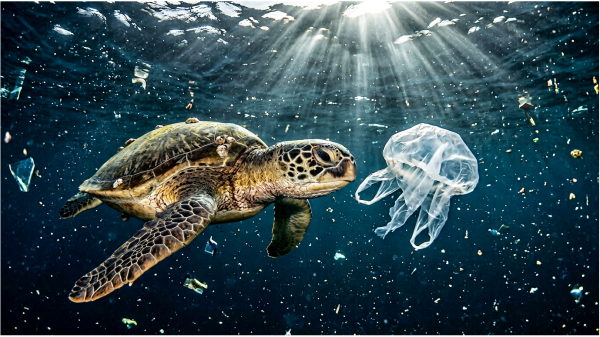
-- Sea turtles are considered keystone species that help maintain balance in marine ecosystems through their natural feeding and nesting behaviours. Leatherback sea turtles consume large quantities of jellyfish, preventing uncontrolled jellyfish population growth in ocean habitats. Without this natural predator, jellyfish populations can expand rapidly and disrupt marine food chains. Adult green sea turtles graze on seagrass beds, keeping marine vegetation healthy and preventing overgrowth that can suffocate other species. Healthy seagrass ecosystems provide shelter and food for numerous marine organisms, including fish, crustaceans, and invertebrates. The presence of sea turtles therefore, supports biodiversity and stabilises marine environments.
Sea turtle activity also benefits coastal ecosystems beyond the ocean. Female sea turtles lay eggs on sandy beaches, which helps create dune ecosystems that support diverse plant and animal life. Their nesting activity helps stabilise sand dunes and reduce coastal erosion that threatens coastal communities. When turtle eggs hatch or fail to hatch, they provide nutrients that enrich beach ecosystems. These nutrients support insects, birds, and other wildlife living near coastal areas. Scientists warn that declining sea turtle populations could trigger cascading ecological consequences across both marine and coastal environments.
Plastic pollution is currently one of the most serious threats facing sea turtles worldwide. Global organisations, including the United Nations Environment Programme, the Sea Turtle Rescue Alliance, and the World Wildlife Fund, have documented the scale of this problem. According to the World Wildlife Fund, approximately 52 per cent of sea turtles worldwide have ingested plastic debris. Sea turtles often mistake floating plastic bags, fragments, or packaging for prey such as jellyfish. Once consumed, plastic can block digestive systems and prevent turtles from feeding normally. In roughly 22 per cent of documented ingestion cases, plastic debris has ruptured internal organs or caused fatal intestinal blockages.
Discarded fishing nets and abandoned fishing gear also pose major risks. Sea turtles frequently become entangled in these materials and are unable to surface for air. Many trapped turtles eventually drown or become vulnerable to predators while immobilised. Marine scientists warn that continued plastic pollution could drive several sea turtle species toward extinction in the coming decades. The loss of sea turtles would remove a critical stabilising force within ocean ecosystems.
Environmental organisations emphasise that reducing ocean plastic pollution is essential to protecting marine biodiversity. Public awareness campaigns are increasingly highlighting the link between plastic waste and marine wildlife survival. Educational initiatives aim to inform communities about the environmental consequences of plastic consumption. One such campaign provides resources explaining how plastic pollution impacts sea turtles and marine ecosystems. Readers seeking more information about sea turtle conservation efforts can visit https://www.everwonderadventure.com/save-sea-turtles. Increasing public awareness can encourage behaviour changes that reduce plastic pollution entering oceans. Scientists stress that preventing plastic waste from reaching marine environments is critical to protecting sea turtle populations.
Contact Info:
Name: H C Yip
Email: Send Email
Organization: Ever Wonder Adventure
Address: One Oxley Rise Singapore, Singapore, Singapore 238714, Singapore
Website: https://www.everwonderadventure.com
Source: NewsNetwork
Release ID: 89188544
In case of identifying any errors, concerns, or inconsistencies within the content shared in this press release that necessitate action or if you require assistance with a press release takedown, we strongly urge you to notify us promptly by contacting error@releasecontact.com (it is important to note that this email is the authorized channel for such matters, sending multiple emails to multiple addresses does not necessarily help expedite your request). Our expert team is committed to addressing your concerns within 8 hours by taking necessary actions diligently to rectify any identified issues or supporting you with the removal process. Delivering accurate and reliable information remains our top priority.