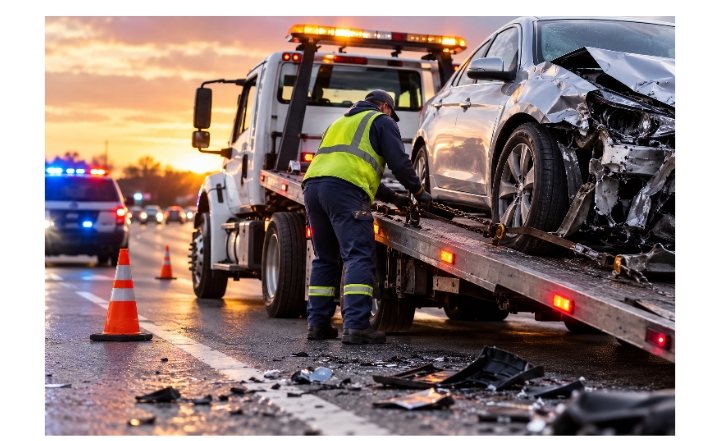
A collision involving a tow truck can be more complicated than an ordinary traffic accident. These vehicles operate differently from passenger cars, often work close to moving traffic, and may carry or pull another vehicle at the time of a crash. A mistake during loading, securing, reversing, lane changing, or roadside recovery can create risks for several people at once. For an injured person, the immediate concerns are usually medical treatment, vehicle damage, lost income, and figuring out how the accident happened. The legal questions can become much harder when the towing company, driver, another motorist, a vehicle manufacturer, or even a road authority may have played a role. That is why understanding liability and evidence early can make a meaningful difference. A strong claim is not simply about proving that a tow truck was involved. It requires connecting the conduct of a responsible party to the injuries and losses that followed.
Why Tow Truck Crashes Are Different From Ordinary Vehicle Accidents
Tow trucks come in several forms, including wheel-lift wreckers, flatbed trucks, heavy-duty recovery vehicles, and integrated towing units. Their size, weight, equipment, and working environment can affect how a collision occurs. A tow operator may be traveling normally when the vehicle is unloaded, but the situation changes once a disabled vehicle is attached. The operator must account for additional weight, altered handling, visibility issues, braking distance, turning radius, and the security of the vehicle being transported.
Roadside assistance creates another layer of risk. A tow truck may be stopped on a shoulder, partially occupying a traffic lane, entering a roadway from a recovery location, or working near pedestrians and disabled vehicles. Federal motor-carrier rules can also become relevant depending on the vehicle, operation, and circumstances. The Federal Motor Carrier Safety Administration provides safety and regulatory resources for commercial motor vehicles, while state laws can impose additional requirements on towing operations.
The Most Common Causes Behind Towing-Related Collisions
Not every tow truck crash is caused by the same type of negligence. Some collisions begin with ordinary driving mistakes, while others originate with the towing operation itself.
Common contributing factors include:
- Unsafe lane changes, turns, backing, or merging.
- Distracted or inattentive driving.
- Excessive speed for traffic or roadway conditions.
- Improperly secured vehicles or towing equipment.
- Mechanical defects or inadequate maintenance.
- Poor positioning during roadside recovery.
- Inadequate warning lights or other roadside safety measures.
- Driver fatigue or insufficient training.
- Failure to account for the size and weight of the loaded vehicle.
- Equipment failure involving straps, chains, winches, hooks, or other components.
One important distinction is whether the accident happened while the truck was simply traveling or while it was actively performing a towing or recovery task. That distinction can affect what evidence should be examined and which parties may bear responsibility.
How Liability Can Extend Beyond the Tow Truck Driver
Finding the responsible party is often more complicated than identifying the person behind the wheel. A driver may be liable for negligent driving, but the towing company can also become involved when company-level conduct contributed to the crash. For example, an employer may face allegations involving negligent hiring, inadequate training, poor supervision, unsafe maintenance practices, or company policies that encouraged unsafe operations.
A separate claim may arise if defective towing equipment contributed to the incident. In that situation, maintenance records, inspection documents, repair histories, and manufacturer information may become important. Other motorists can also share responsibility. Imagine a tow operator is working on the shoulder when another driver moves into the work area and causes a collision. The facts may show that the tow operator, the other driver, or both contributed to what happened. Comparative negligence rules vary by state, so an injured person's potential recovery can depend heavily on local law and the specific allocation of fault.
Evidence That Can Make or Break a Tow Truck Injury Claim
Evidence should be treated as a priority because some records may not remain available indefinitely. A vehicle may be repaired, electronic information may be overwritten, and roadside conditions can change within hours.
A careful investigation may examine:
- Police or crash reports.
- Photographs and videos from the accident scene.
- Dashcam, surveillance, and traffic-camera footage.
- Statements from eyewitnesses.
- Tow invoices and service records.
- Dispatch records and job assignments.
- Driver qualification and training records.
- Vehicle inspection and maintenance documents.
- Towing equipment inspection records.
- Photographs showing how the disabled vehicle was attached.
- Medical records and treatment documentation.
- Employment and income records showing financial losses.
The physical configuration of the tow truck can also matter. A reconstruction specialist may examine vehicle positions, impact points, braking evidence, roadway geometry, visibility, and the movement of the towed vehicle. This is one area where a general statement such as “the tow truck hit me” is rarely enough by itself. The stronger question is what the driver or company did, what safety duty applied, and how that conduct caused the collision.
What Compensation May Be Available After a Serious Crash
The value of an injury claim depends on the actual losses and the applicable law rather than a standard payout amount. Economic damages may include reasonable medical expenses, rehabilitation costs, lost wages, reduced earning capacity, and certain out-of-pocket expenses. Property damage can also be part of the claim when the collision damages a vehicle or personal property. Non-economic damages may apply in jurisdictions that allow recovery for losses such as pain, emotional distress, and reduced quality of life.
A serious injury can create expenses that continue long after the initial emergency treatment. Someone with a significant orthopedic injury, spinal injury, traumatic brain injury, or another long-term condition may require rehabilitation, specialist care, medication, or changes to daily activities. That is why settling immediately after the accident can be risky when the full medical picture is not yet known. A settlement may resolve claims permanently, depending on the agreement and applicable law.
Why Insurance Issues Can Become Complicated
Tow truck businesses may have commercial insurance arrangements that differ from the policies associated with ordinary passenger vehicles. The applicable coverage can depend on the company, vehicle, operation, ownership arrangement, and circumstances of the collision. There may also be questions involving the towing company's policy, the driver's coverage, another motorist's insurance, or other applicable policies.
Insurance adjusters may begin investigating shortly after the crash. Their investigation is generally focused on determining coverage, liability, and the value of the claim from the insurer's perspective. An injured person should therefore keep careful records of medical care, expenses, missed work, property damage, and communications concerning the accident. Do not guess about facts when speaking with an insurer. If you are uncertain about something, it is better to say that you do not know than to speculate.
When Hiring a Tow Truck Accident Lawyer Makes Sense
A lawyer can be particularly useful when the crash involves serious injuries, disputed fault, multiple vehicles, commercial insurance, a detached or improperly secured vehicle, or allegations involving defective equipment. A Tow truck accident lawyer can investigate the circumstances, identify potentially responsible parties, preserve relevant evidence, assess available insurance coverage, and negotiate with insurers on the injured person's behalf.
The legal process may also involve accident reconstruction, medical experts, vocational specialists, engineers, or other professionals when the facts justify their involvement. The goal is not simply to produce more paperwork. Each piece of evidence should help answer a specific question about liability or damages. For a relatively minor property-damage-only collision, hiring counsel may not always be necessary. A serious injury claim with substantial medical expenses and disputed responsibility is a different situation.
What to Do Immediately After a Tow Truck Collision
The first priority after any crash is safety and appropriate medical attention. Once immediate concerns are addressed, preserving information can help protect the claim.
A practical approach includes:
- Seek medical evaluation when injuries are suspected or symptoms develop.
- Report the collision to the appropriate authorities when required.
- Photograph the vehicles, roadway, signs, equipment, and surrounding area when it is safe to do so.
- Obtain contact information from witnesses.
- Keep medical bills, records, prescriptions, repair estimates, and employment documentation.
- Avoid posting detailed statements about the accident on social media.
- Preserve photographs and videos in their original form.
- Notify your own insurer as required by your policy.
- Avoid signing a settlement or release before understanding what rights it affects.
These steps do not guarantee compensation, but they can help preserve the factual record needed to evaluate what happened.
How an Attorney Builds a Stronger Liability Case
A well-prepared case usually begins with identifying the exact sequence of events. The attorney may compare the police report with photographs, witness accounts, vehicle damage, electronic information, medical records, and the towing company's documentation. Suppose a vehicle being transported suddenly shifts and strikes another car. The investigation should not stop at the fact that the vehicle moved.
It should examine how the vehicle was secured, what equipment was used, whether the equipment was appropriate, whether inspections were performed, and whether the operator followed required procedures. Likewise, if a tow truck strikes another vehicle while changing lanes, the investigation may focus on visibility, mirrors, blind spots, signaling, traffic conditions, speed, and driver conduct. This evidence-based approach can prevent the case from becoming a simple disagreement between two drivers.
Conclusion
A tow truck collision can involve much more than a damaged vehicle. The circumstances surrounding the towing operation, the driver's conduct, equipment condition, company practices, insurance coverage, and severity of the injuries can all influence a potential claim. The most valuable step is to preserve the facts early and avoid making assumptions about who is responsible. When injuries are serious or liability is disputed, professional legal guidance can help determine what happened, which parties may be liable, and what compensation may be available. A careful investigation gives an injured person a stronger foundation for dealing with insurers and pursuing a fair resolution under the law.